

Fortune Restoration provides historic landmark painting across Chicago, Oak Park, and the North Shore, combining period-correct color, lead-safe paint removal, and modern paint systems built for Chicago’s climate. We have painted landmark properties since 1979, including Frank Lloyd Wright homes, the Grosse Point Lighthouse, and the birthplace of Walt Disney.
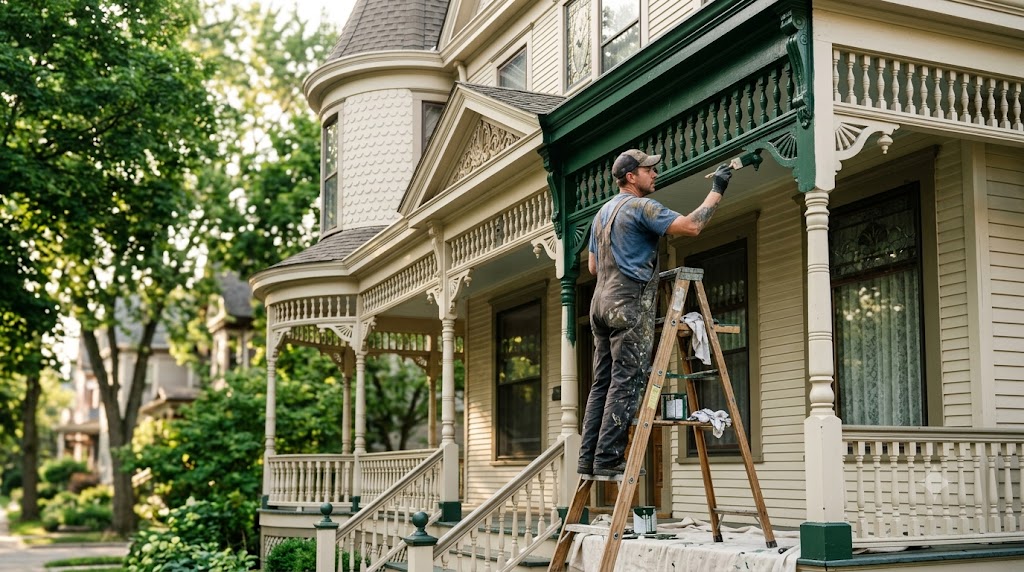
I’m Peter Fortune. Painting a historical landmark is not a bigger version of a regular paint job. It is a different discipline. The substrate is older, the paint stack usually contains lead, the colors carry historical meaning, and on designated properties the work may need approval before a brush ever touches the building. My family has been doing this work in Chicagoland since 1979, and this page explains what landmark painting actually involves, so you can plan your project with confidence. For the full restoration picture beyond painting, see our historic landmark restoration services.
Why Does Painting a Historic Landmark Require a Specialist?
Key Takeaways:
Historic landmark painting requires specialists because old wood, lead paint, and preservation rules punish standard methods. Aggressive prep like sandblasting permanently damages historic woodwork and destroys the paint record. Lead-safe certification, gentle paint removal, and period-correct color are the baseline, not the upgrade.
Three things separate landmark painting from standard exterior work. First, the substrate. Historic wood siding, trim, brackets, and turned porch details are often 100 to 150 years old, and the harsh prep methods that are fine on modern buildings will scar them beyond repair. The National Park Service’s Preservation Brief 10 on exterior paint problems on historic woodwork is blunt about this: sandblasting and other abrasive shortcuts erode the soft grain, flatten carved detail, and are never recommended on historic buildings.
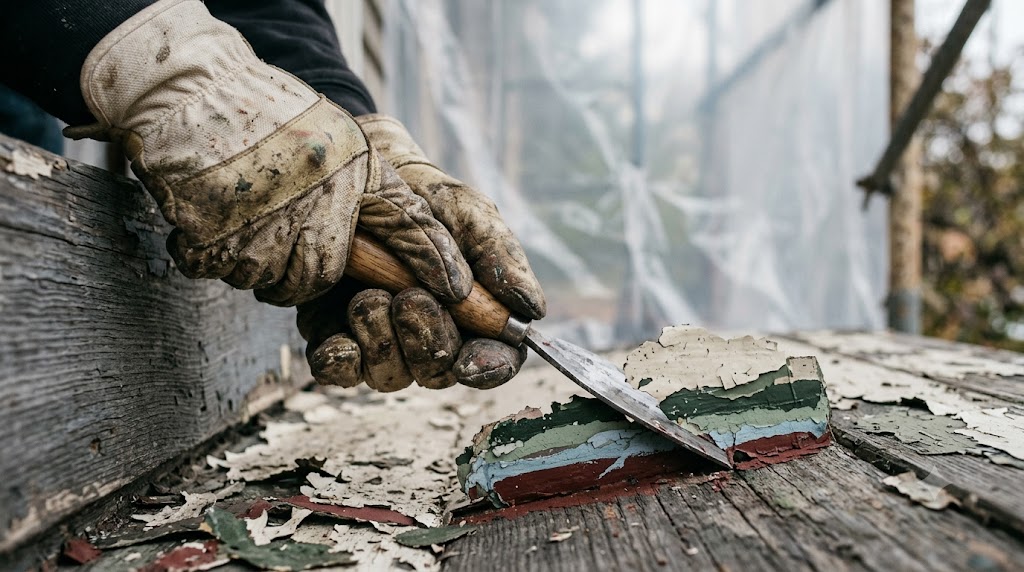
Second, the paint itself is part of the building’s history. The layers on a landmark record every color the building has worn, and careless total removal erases that evidence forever. When removal is needed, we take it slow and document as we go.
Third, virtually every landmark predates 1978, which means lead paint. Disturbing it triggers federal EPA requirements, and our crews are RRP certified for lead-safe paint removal with proper containment on every pre-1978 project.
What Does Historic Landmark Painting Include?
Key Takeaways:
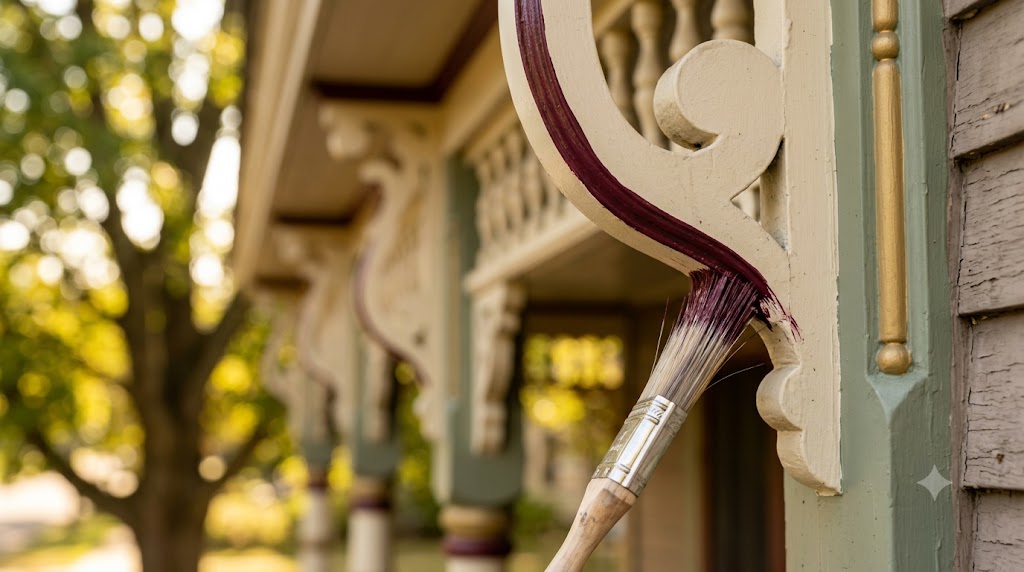
Historic landmark painting includes condition assessment, lead-safe preparation, substrate repair, period-correct color development, and durable modern topcoats. Preparation determines how long the finish lasts, especially on ornate Victorian and Prairie-style detail. Fortune Restoration handles painting, carpentry, and masonry under one contract.
A landmark paint project done right moves through a careful sequence, and most of the work happens before any finish color goes on.
Our Landmark Painting Services
- Condition assessment and paint diagnosis. We identify what is failing and why, from simple chalking that needs cleaning to alligatoring that requires removal, before recommending a scope.
- Lead-safe paint removal and surface preparation. Gentle, EPA-compliant methods paired with our full paint preparation process: washing, scraping, feathering, repair, caulking, and priming.
- Wood stripping and refinishing. Where paint buildup has buried the profile detail, our wood stripping and refinishing service recovers the original crispness of trim, doors, and millwork.
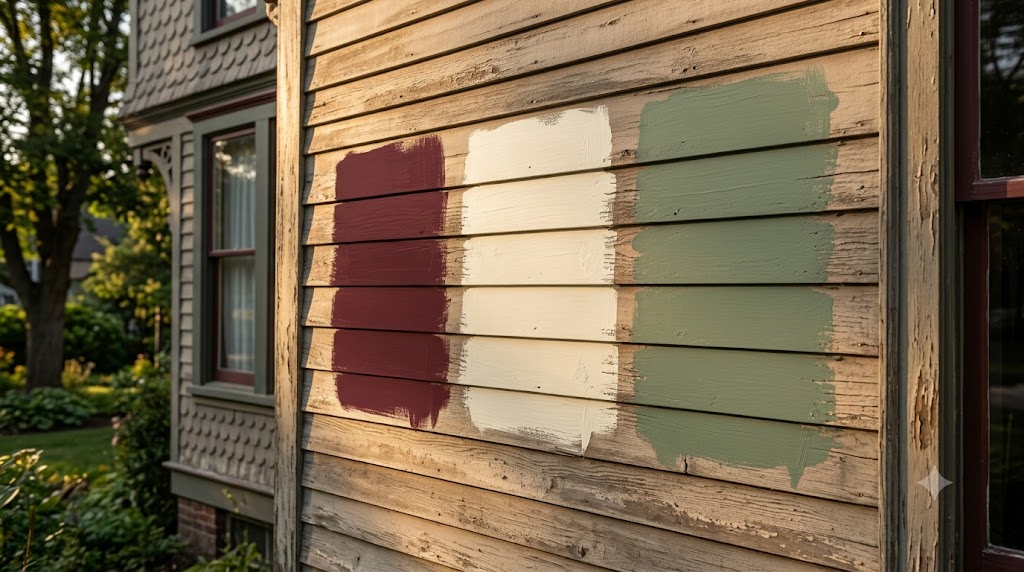
- Period-correct color research and testing. Paint archaeology, historical color documentation, and on-building color testing so decisions are made at real scale in real light.
- Victorian multi-color schemes. Authentic three-to-five color treatments through our Painted Ladies service.
- Coordinated repairs. Landmark paint failure often traces back to rotted wood or failed masonry, so painting is sequenced with carpentry and masonry repair under a single contract.
Request a Free Landmark Painting Estimate
Which Chicago Landmarks Has Fortune Restoration Painted?
Key Takeaways:
Fortune Restoration has painted and restored landmark properties including the birthplace of Walt Disney, Frank Lloyd Wright homes in Oak Park, and the Grosse Point Lighthouse in Evanston. The portfolio spans National Register properties, Chicago Landmarks, and historic churches. Over 45 years of landmark work backs every estimate.
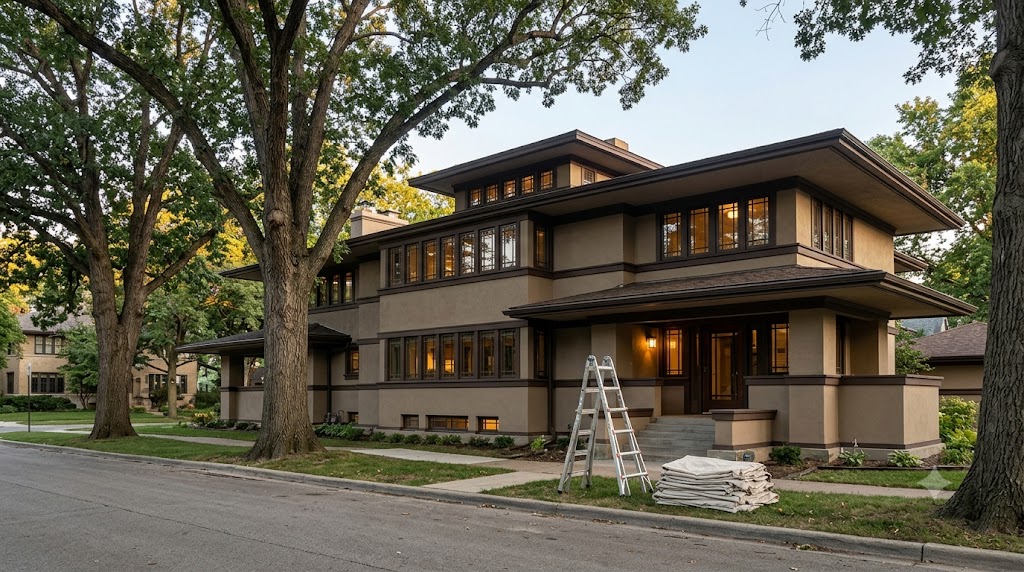
The best answer to “can you handle my landmark” is a portfolio. The birthplace of Walt Disney in Chicago’s Hermosa neighborhood required complete paint removal and a faithful return to its 1890s appearance, and the home now serves as a center for early childhood creativity. We have painted Frank Lloyd Wright homes in Oak Park, where Prairie-style detail demands restraint and precision, and the Grosse Point Lighthouse in Evanston, a National Register property that takes the full force of Lake Michigan weather.
Beyond individual homes, our landmark painting extends to sacred architecture across the region. Our church painting and restoration portfolio covers historic interiors with decorative painting, gilding, and mural work that most painting contractors will not touch.
Some of these properties are designated National Historic Landmarks, the highest federal recognition a building can hold. The National Historic Landmarks Program counts just over 2,500 such places nationwide, and working on buildings of that significance is a responsibility we take seriously.
Why Is Repainting Worth the Investment for a Landmark Property?
Key Takeaways:
Repainting a landmark protects the wood underneath, preserves the building’s historic character, and supports surrounding property values and tourism. Failing paint lets moisture reach historic fabric that cannot be replaced once lost. A properly prepared landmark paint job in Chicago holds for a decade or more.
Paint on a landmark is not decoration. It is the sacrificial layer protecting irreplaceable historic wood from Chicago’s freeze-thaw cycles, UV exposure, and moisture. When paint fails and stays failed, water reaches the wood, rot follows, and the repair bill shifts from painting to carpentry reconstruction. Well-kept landmarks also carry real economic weight: they anchor neighborhood character, draw visitors, and lift surrounding property values, while a deteriorating landmark does the opposite.
The same climate logic that governs our exterior painting in Chicago applies doubly here. Ornate landmark detail creates more edges, more joints, and more places for water to enter, which is exactly why preparation quality, not paint brand, determines how long the job lasts.
Whether your property is a designated Chicago Landmark, a National Register home, or simply a historic building your family is stewarding, we would be glad to walk it with you and give you an honest plan. Fortune Restoration has served Chicago, Oak Park, Evanston, and the North Shore since 1979, and we are licensed, bonded, insured, and EPA Lead-Safe certified.
Frequently Asked Questions About Painting Historical Landmarks
What makes painting a historical landmark different from a standard paint job?
Painting a historical landmark differs from a standard paint job in the substrate, the regulations, and the stakes. Historic woodwork is easily damaged by aggressive preparation methods, lead paint is almost always present in the layer stack, and period-correct color matters to the building’s integrity. Landmark painting also frequently requires coordination with preservation authorities before work begins.
Do landmark buildings in Chicago need approval before repainting?
Designated Chicago Landmark properties often need review by the Commission on Chicago Landmarks before exterior changes, and a visible color change can qualify as an exterior change. Routine maintenance repainting in existing colors is frequently exempt, but the line between maintenance and alteration is subtle on landmark work. Fortune Restoration helps property owners determine what their specific project requires and prepares the documentation for review when needed.
How is lead paint handled when painting a historic landmark?
Lead paint on a historic landmark is handled under the EPA Renovation, Repair and Painting Rule, which requires certified firms, containment, and safe disposal on any pre-1978 building where paint is disturbed. Fortune Restoration is an EPA Lead-Safe RRP certified firm and follows full containment protocols on every landmark project. Gentle removal methods protect both the occupants and the historic woodwork itself.
How are historically accurate paint colors chosen for a landmark?
Historically accurate paint colors for a landmark are chosen through paint archaeology, which examines the original layers preserved on the building, along with period color documentation and architectural style research. Victorian-era buildings typically used three to five coordinated colors rather than two. Fortune Restoration tests candidate colors at full scale on the actual building before any commitment, because color reads differently in real light than on a sample card.
How long does a landmark painting project take?
A landmark painting project in Chicago typically runs three to eight weeks for a full exterior, depending on the amount of paint removal, carpentry repair, and detail work involved. Simple recoats on sound surfaces move faster, while projects requiring commission approval, extensive stripping, or scaffold access take longer. A detailed schedule is provided before work starts so owners know what to expect.
How much does it cost to paint a historic landmark home in Chicago?
Painting a historic landmark home in Chicago generally costs more than painting a comparable modern home because of lead-safe requirements, gentle preparation methods, and multi-color detail work. Elaborate Victorian trim, extensive paint removal, and substrate repairs are the biggest cost drivers. A site assessment is the only honest way to price landmark work, and Fortune Restoration provides free detailed estimates that separate preparation from painting.
Does Fortune Restoration handle repairs discovered during a landmark paint project?
Fortune Restoration handles carpentry, masonry, and millwork repairs discovered during a landmark paint project under the same contract, without handing the work to outside subcontractors. Rotted trim, damaged siding, failing porch elements, and masonry issues are common discoveries once old paint comes off a historic building. Single-contractor coverage keeps the schedule intact and the repairs consistent with preservation standards.