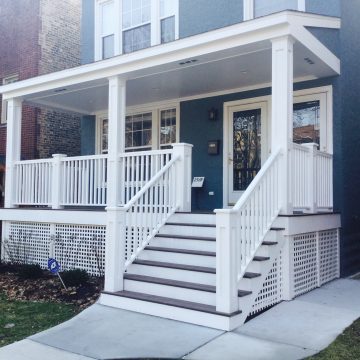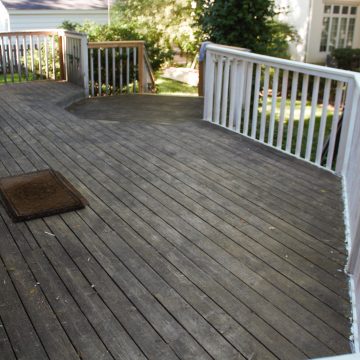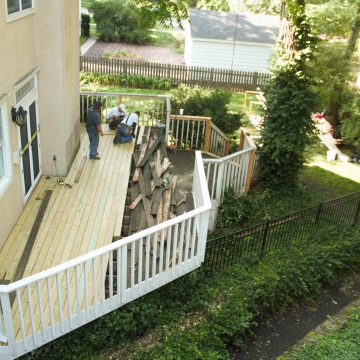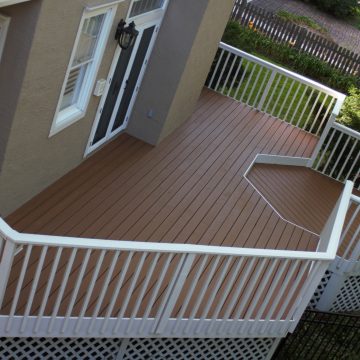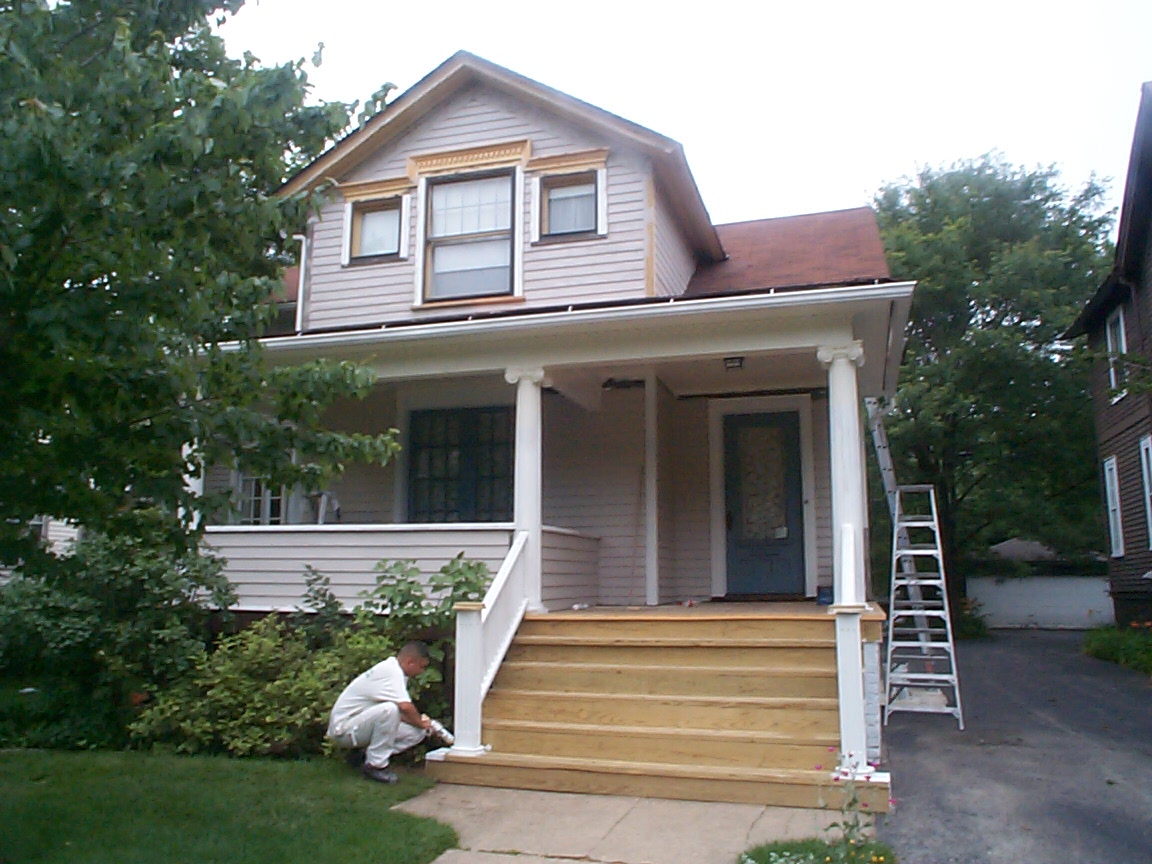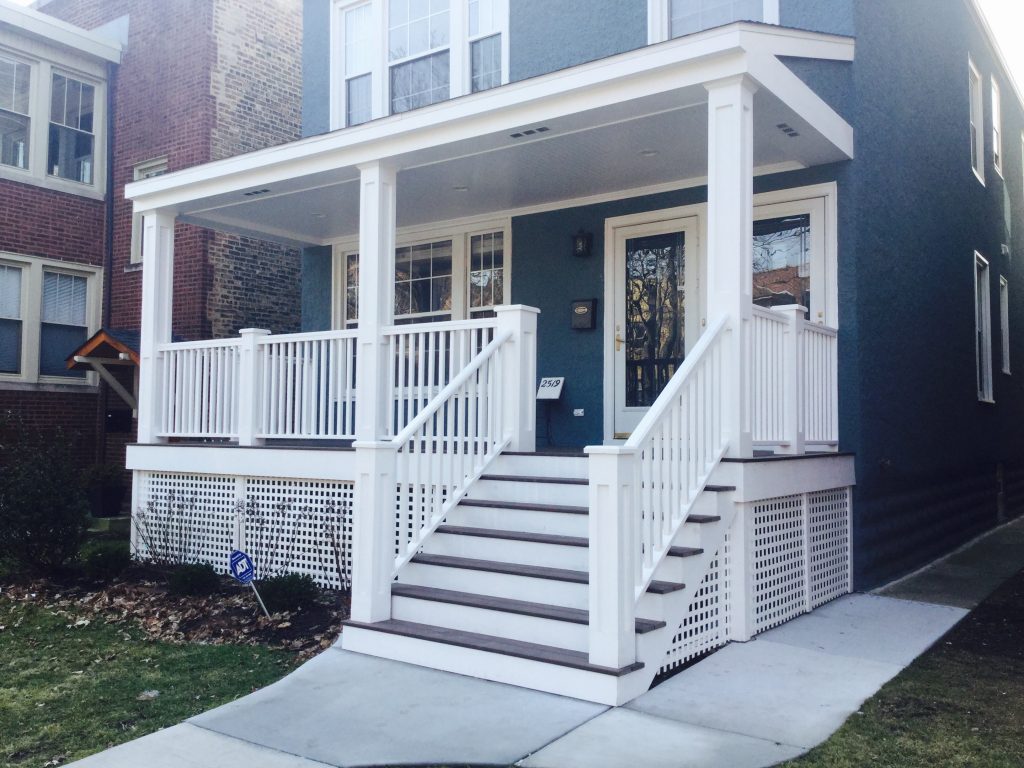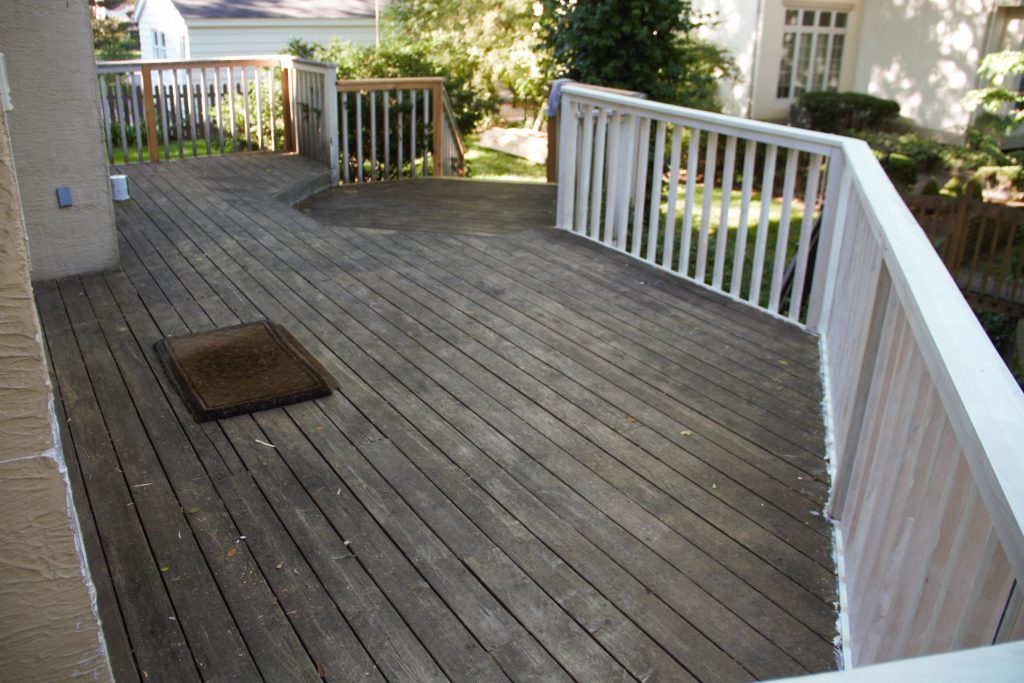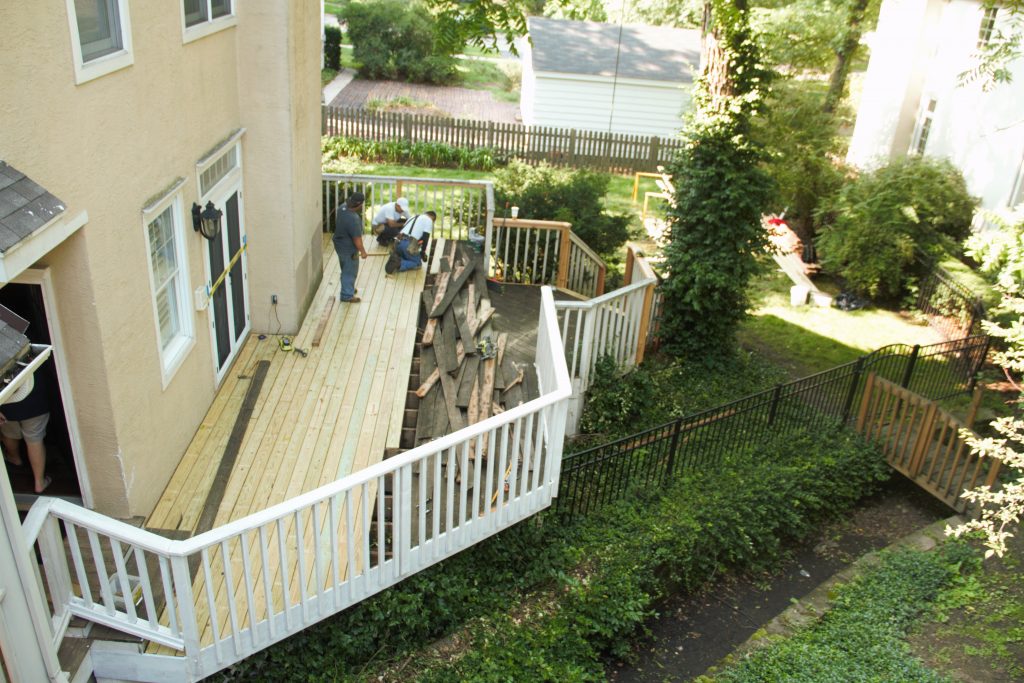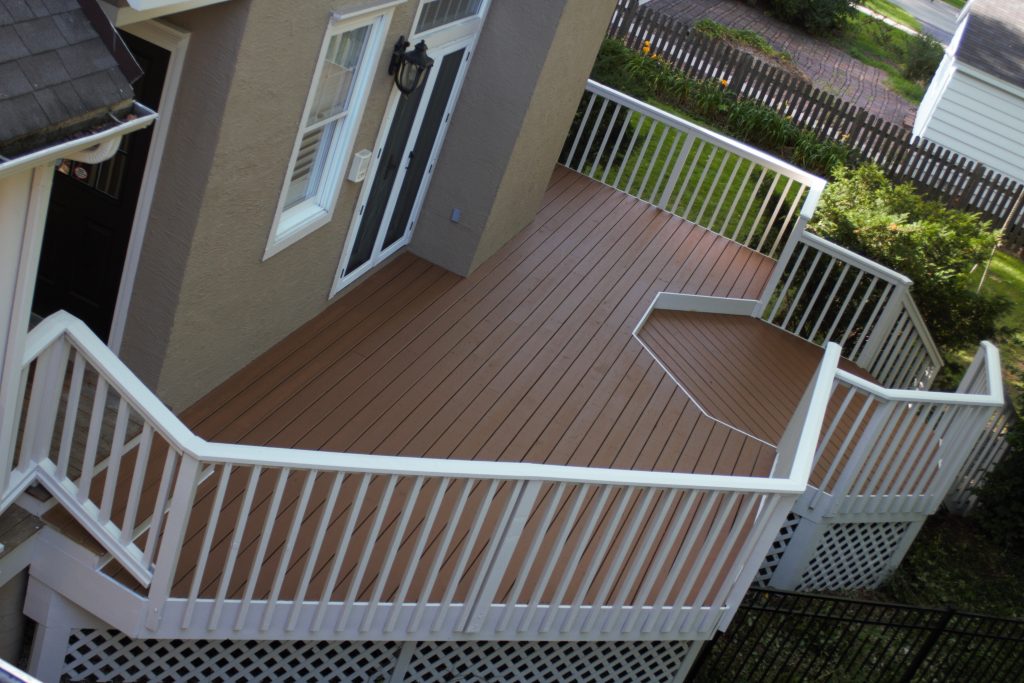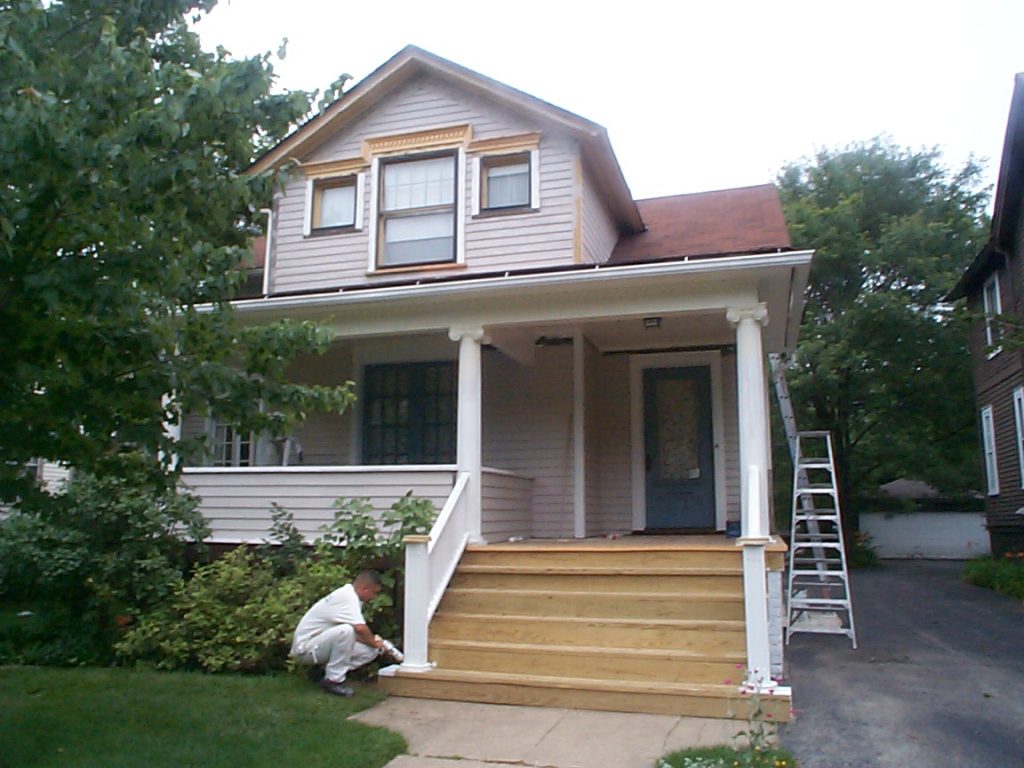

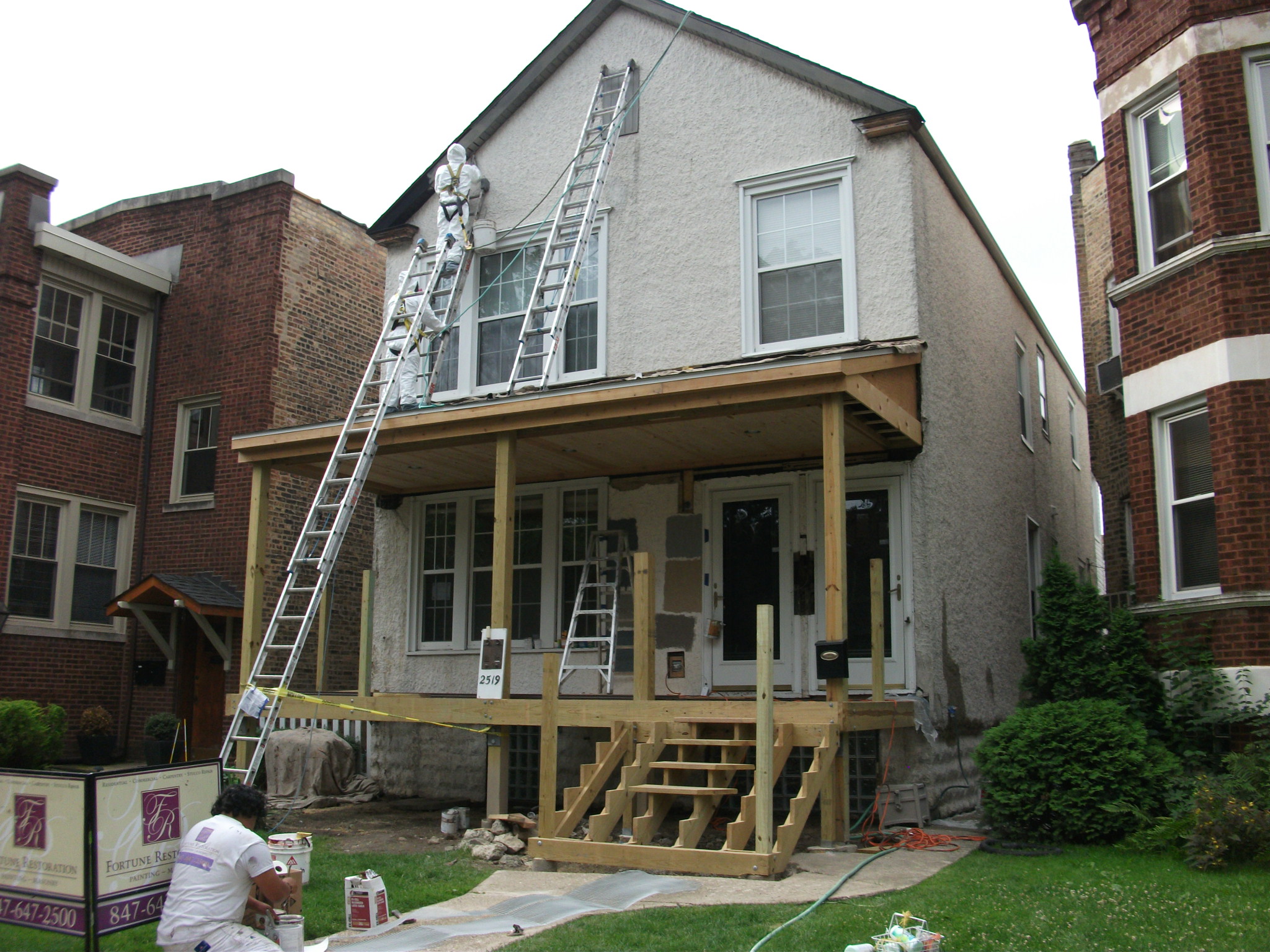
Fortune Restoration provides porch and deck restoration across Chicago and the North Shore - structural repair, deck board replacement, railing and baluster work, column restoration, painting and staining, and complete rebuilds when the porch is too far gone. Family-owned since 1979.
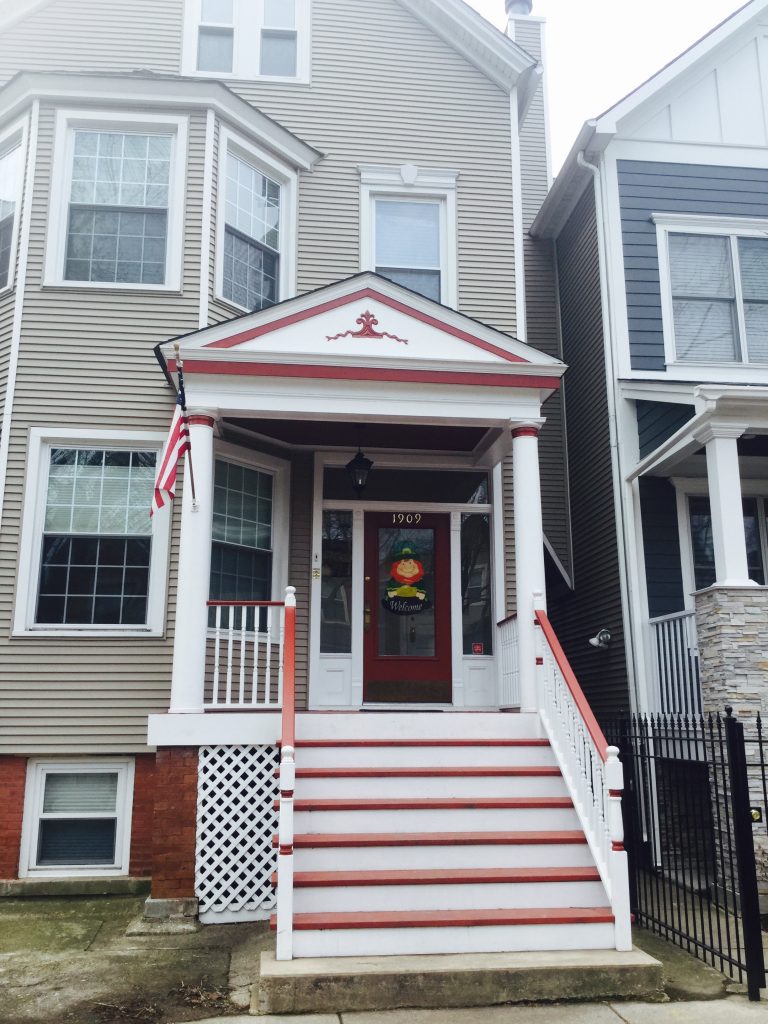
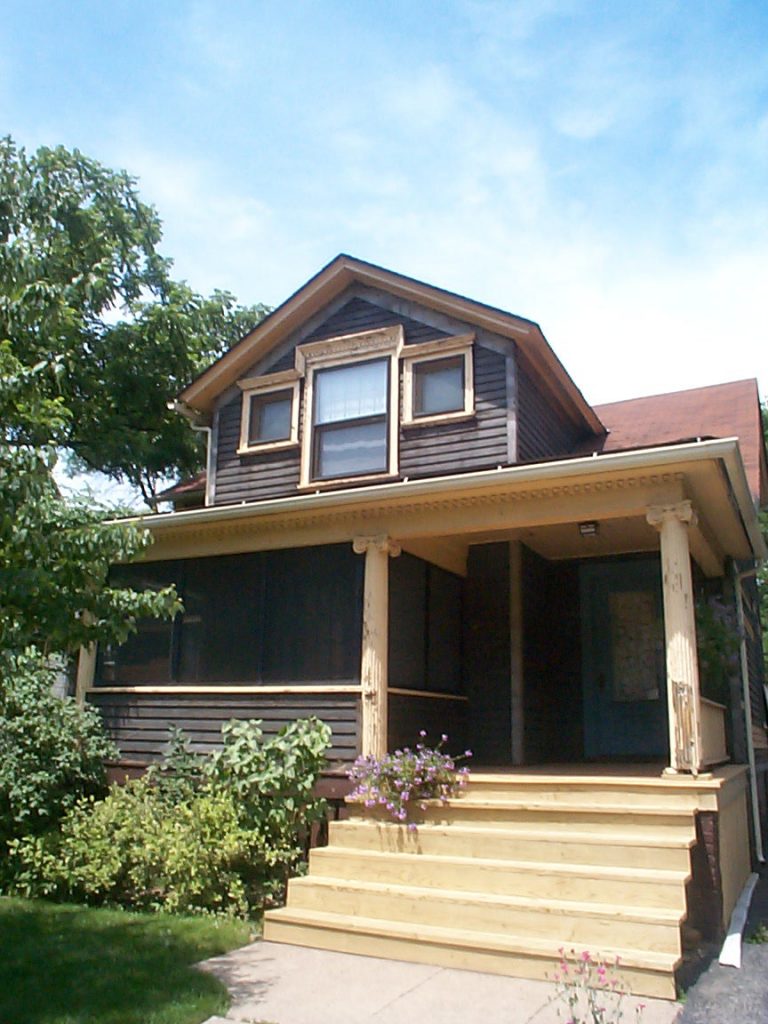
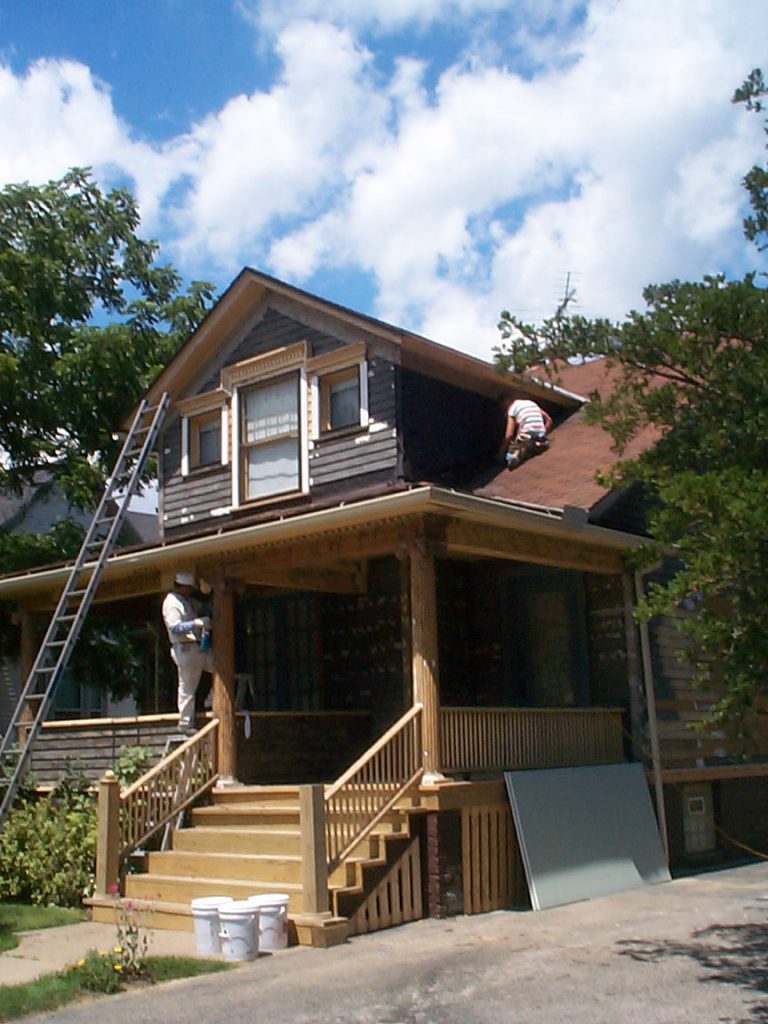
The Chicago front porch is part of how the city looks at itself. Walk down any street in Lincoln Park, Logan Square, Beverly, Bucktown, or any of Evanston’s older neighborhoods and the porches define the streetscape - the deep wraparounds on Victorian frame houses, the stout craftsman fronts on Beverly bungalows, the elaborate spindlework on Painted Ladies in Wicker Park, and the simple working porches on the city’s three-flats and two-flats. They’re functional, they’re social, and they’re architectural.
They’re also among the most maintenance-intensive parts of any building. Exposed to weather on all sides, in direct contact with grade or structural framing, and built primarily of wood, porches and decks deteriorate faster than almost anything else on the house. We’ve been restoring them across Chicagoland for over four decades. Request a free estimate for yours.
Porch & Deck Restoration Services
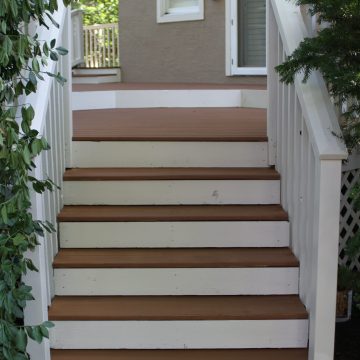
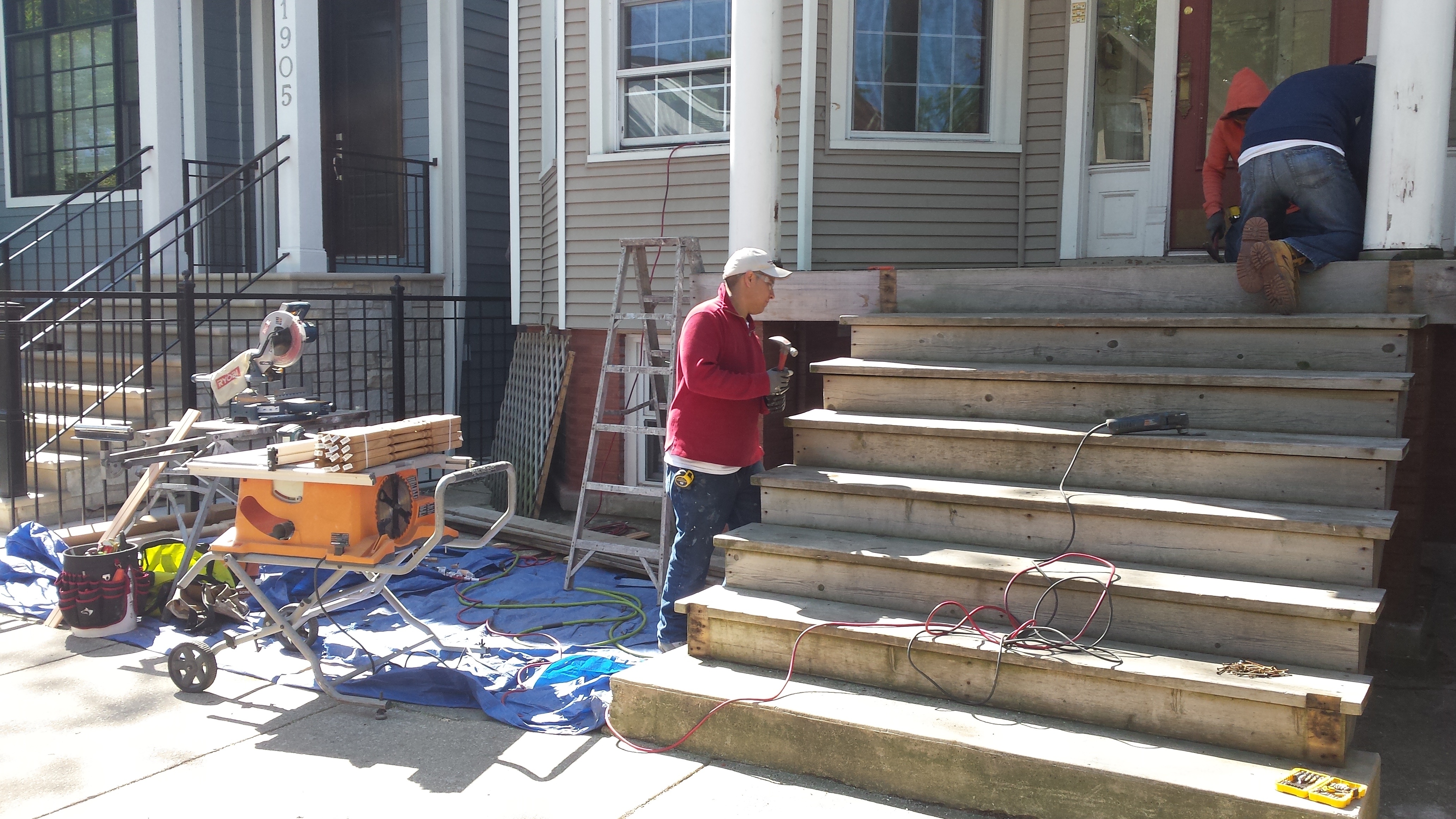
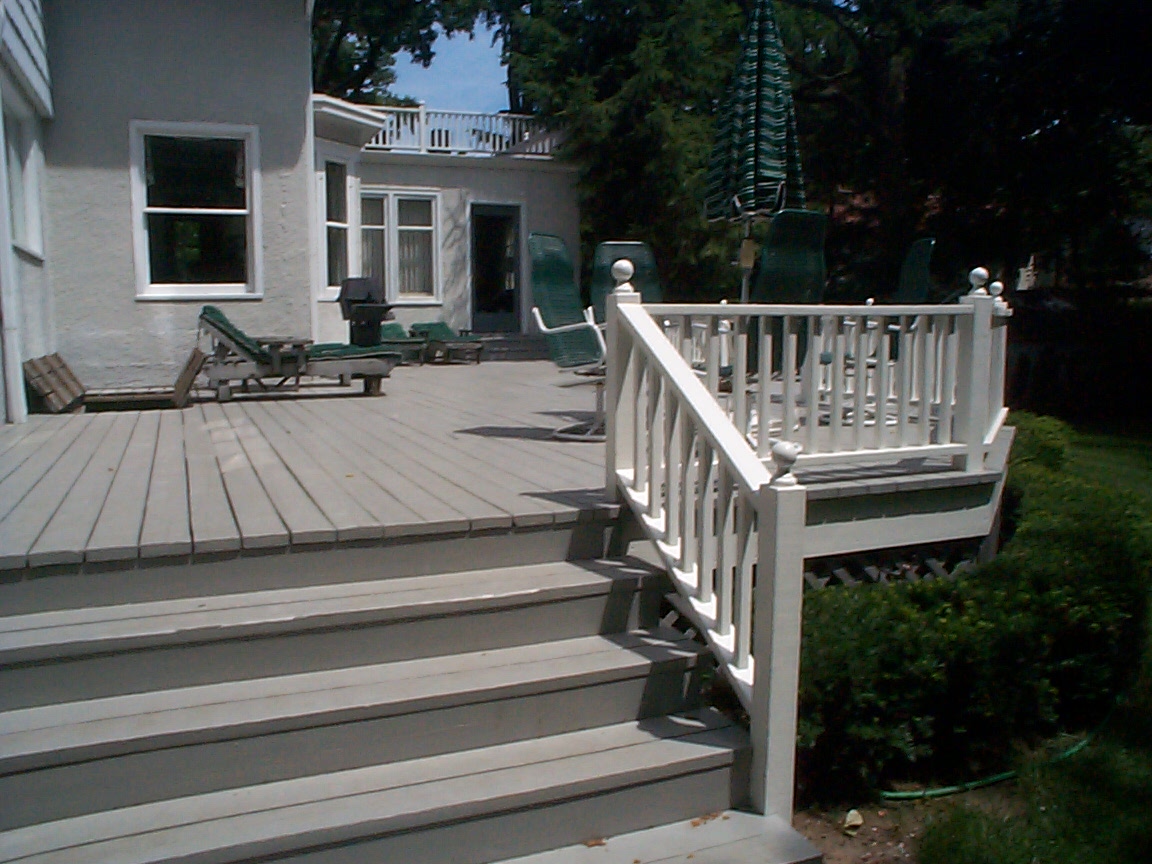
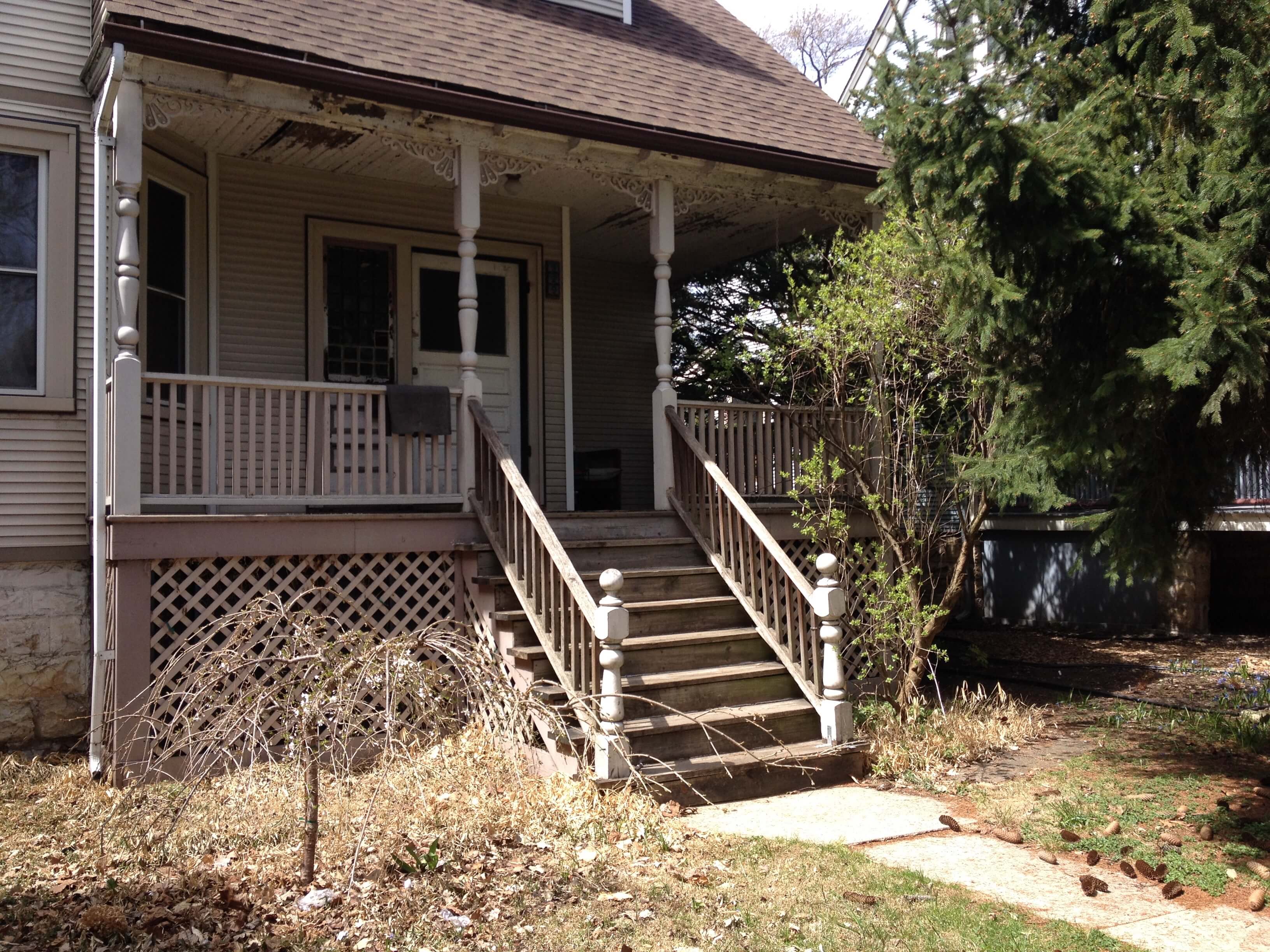
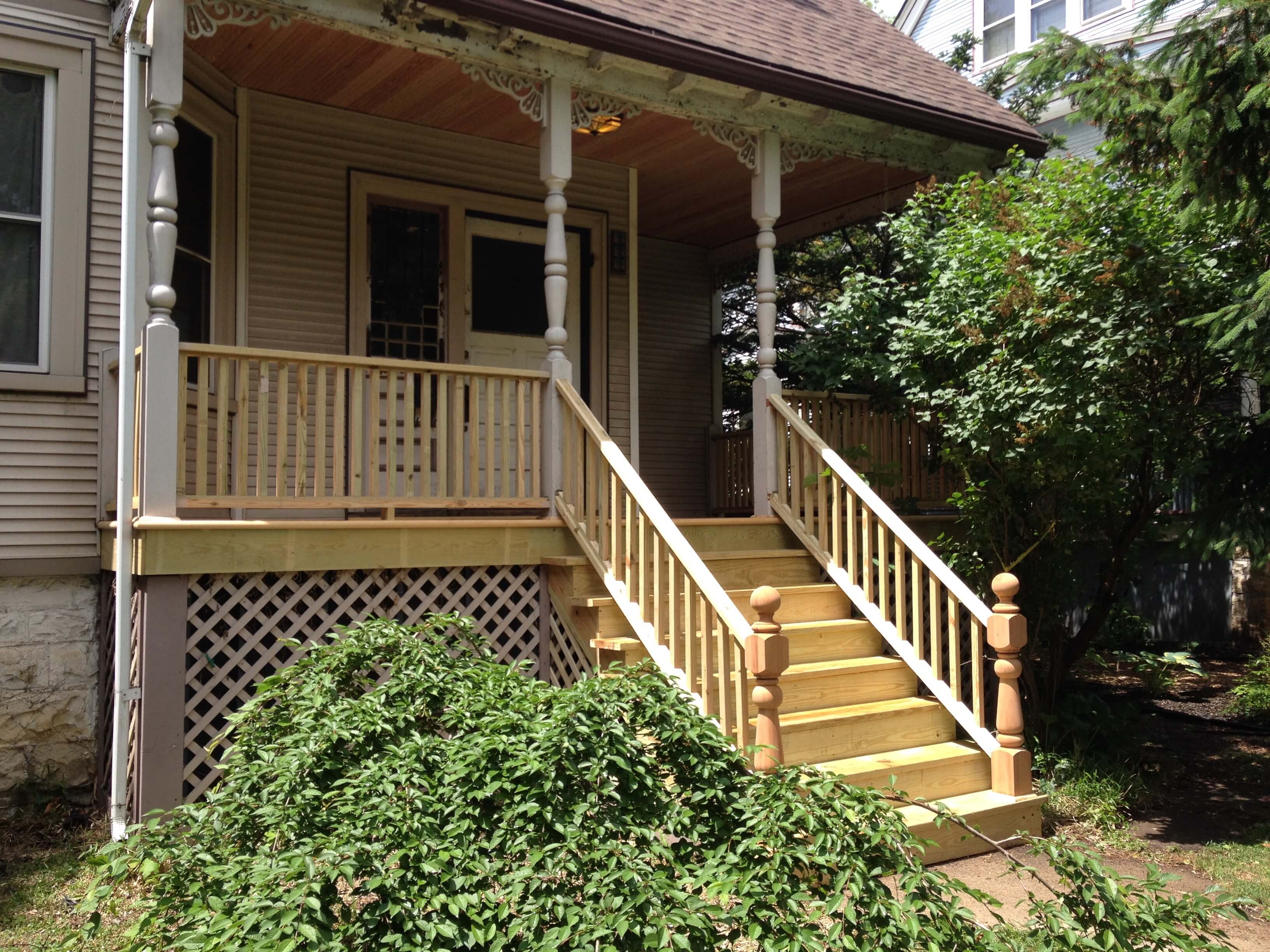
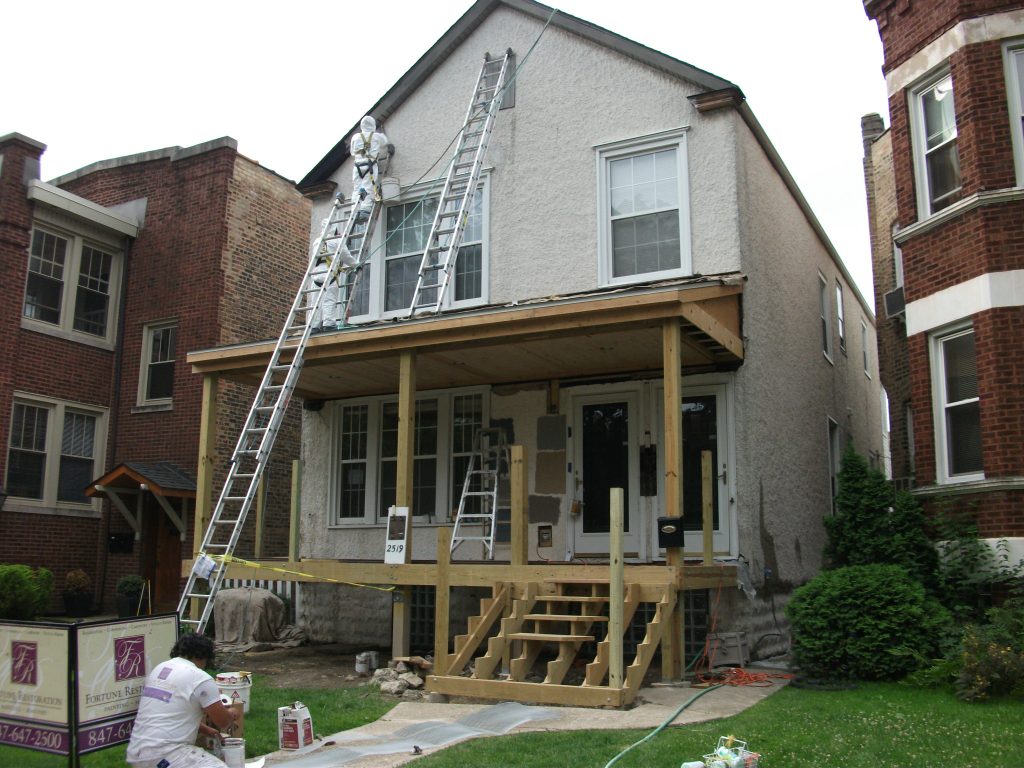
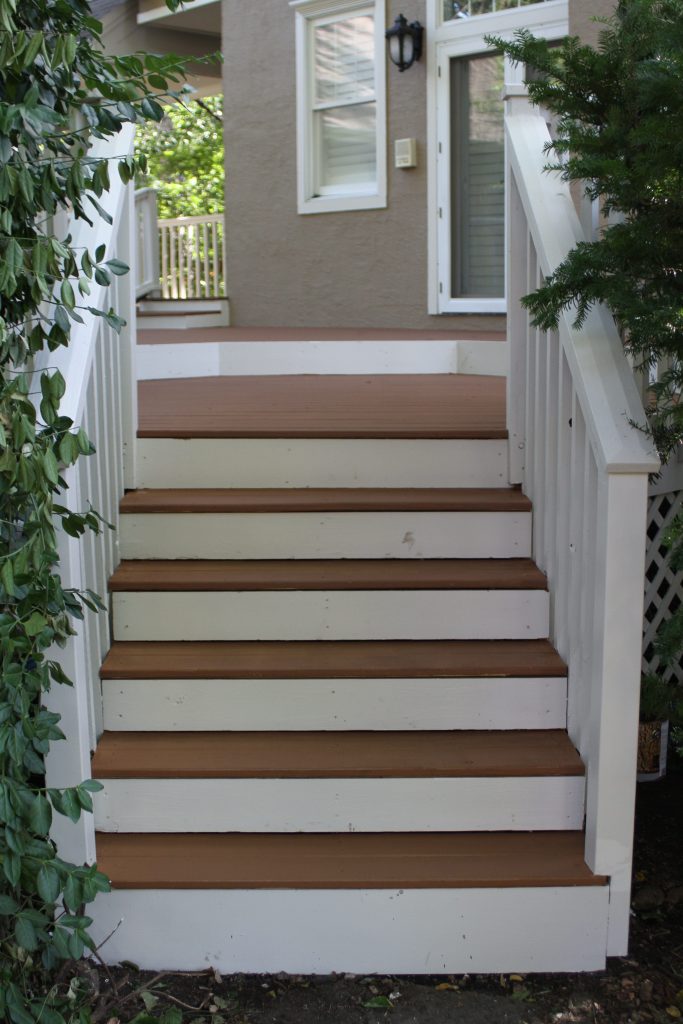
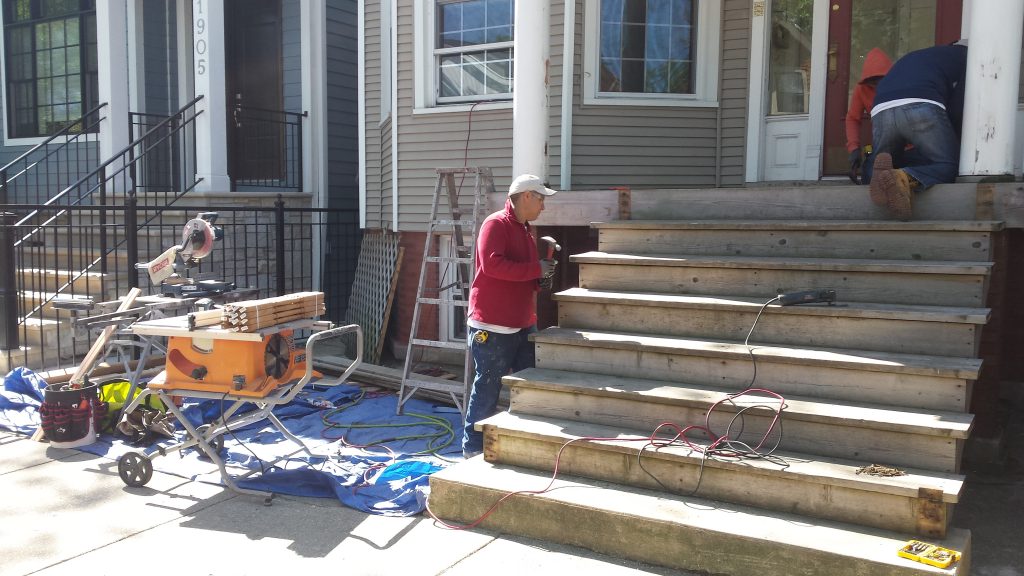
Our porch and deck work covers structural repair, deck board replacement, railing and baluster restoration, column repair, painting and staining, partial rebuilds, and full demolition-to-rebuild projects when the existing structure is beyond saving.
The full scope:
- Structural assessment and engineering coordination on compromised porches
- Deck board, joist, and beam replacement
- Porch column and post replacement (see our column restoration service)
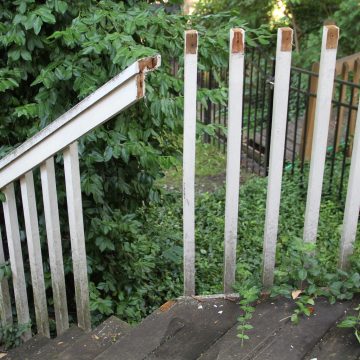
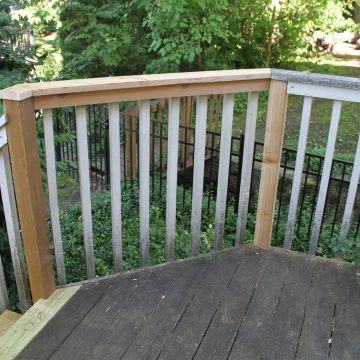
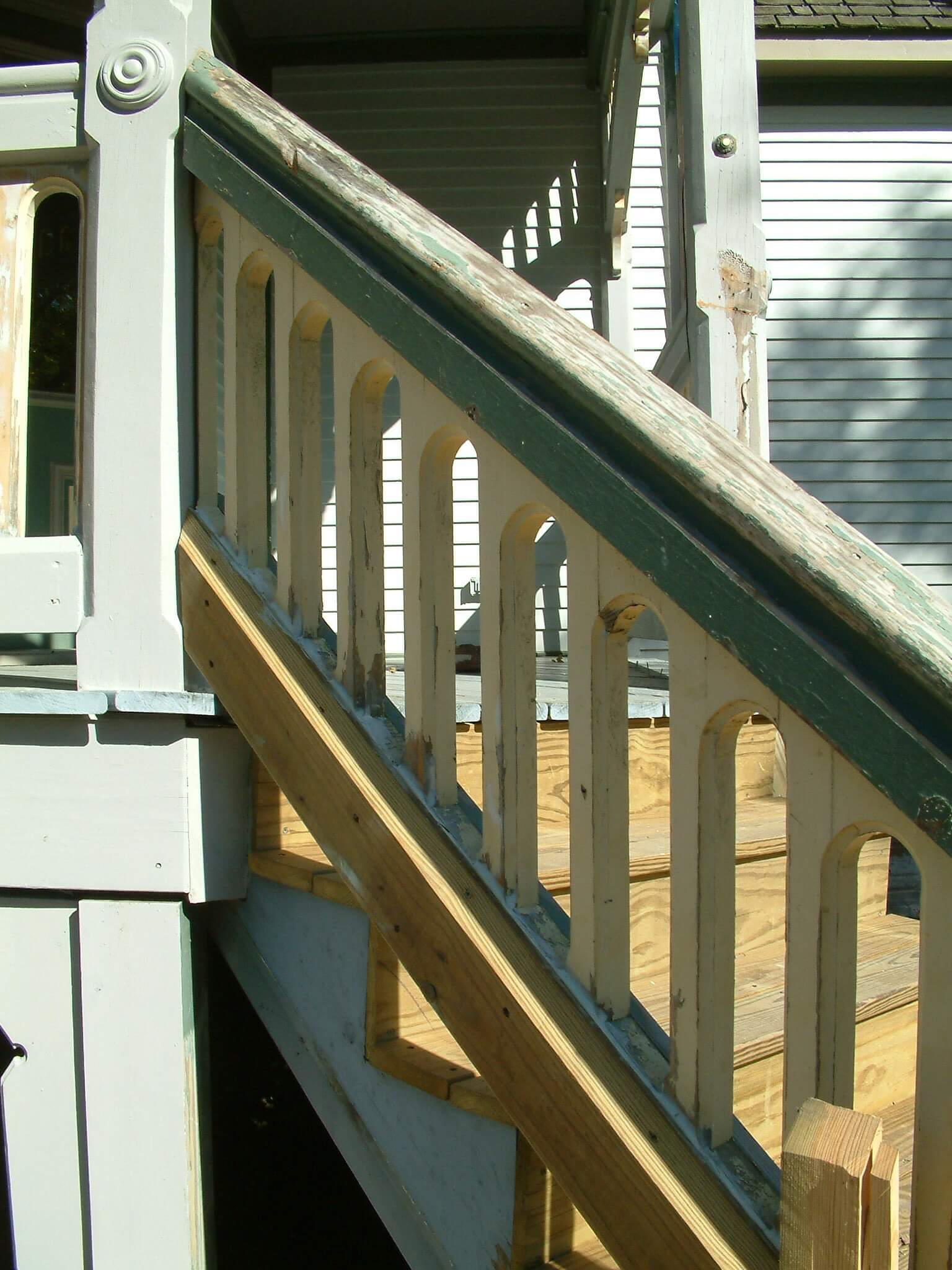
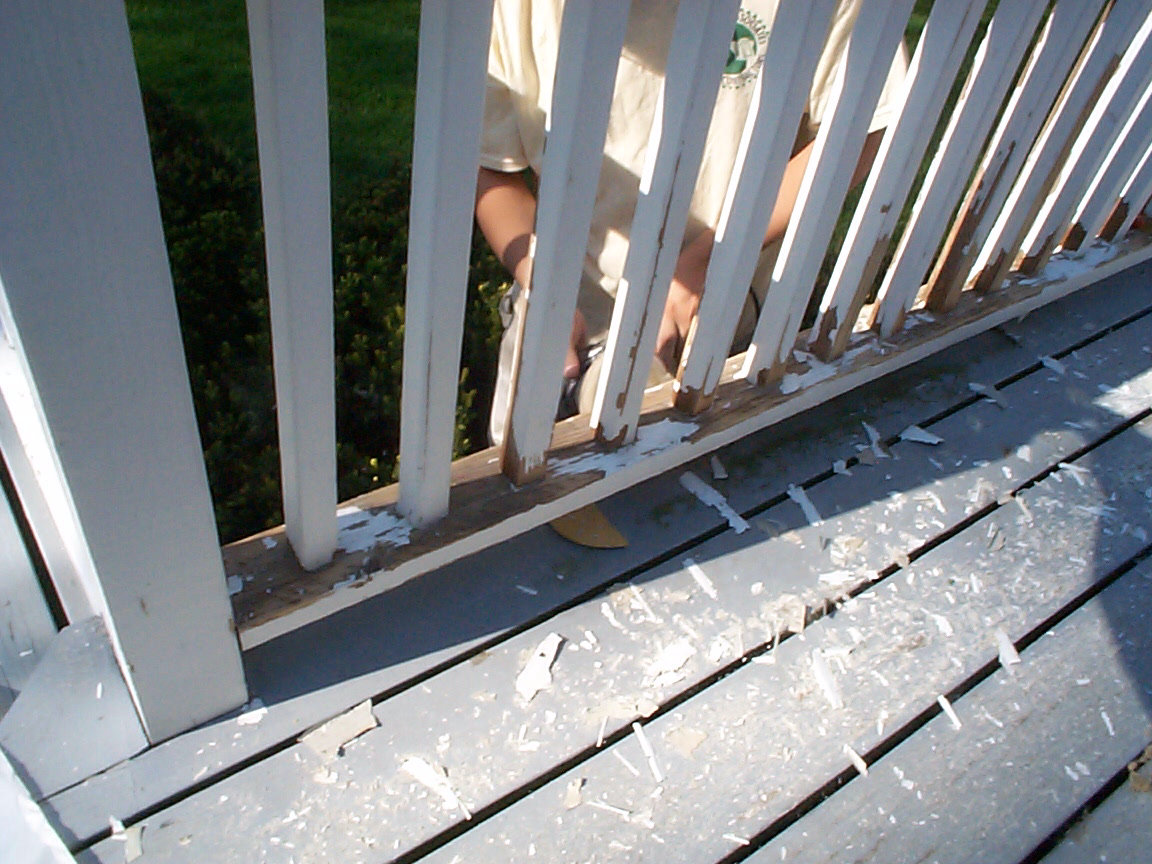
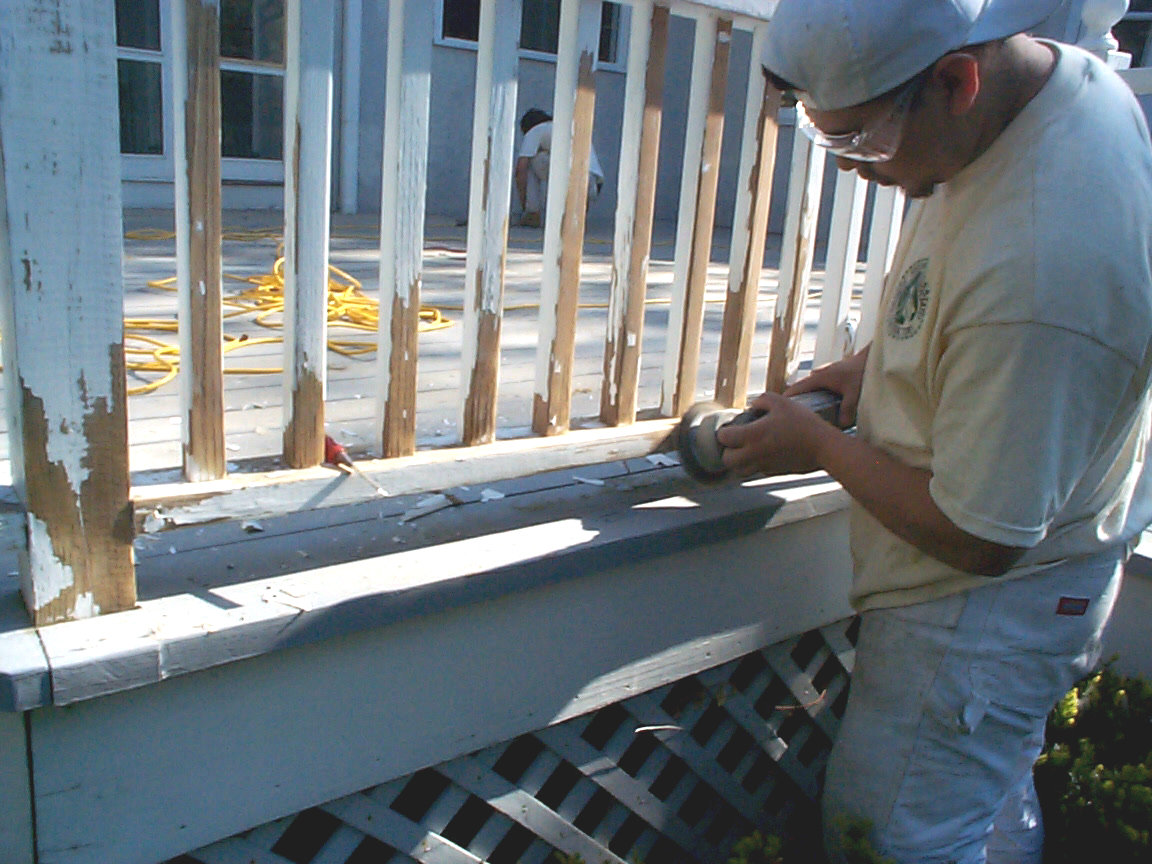
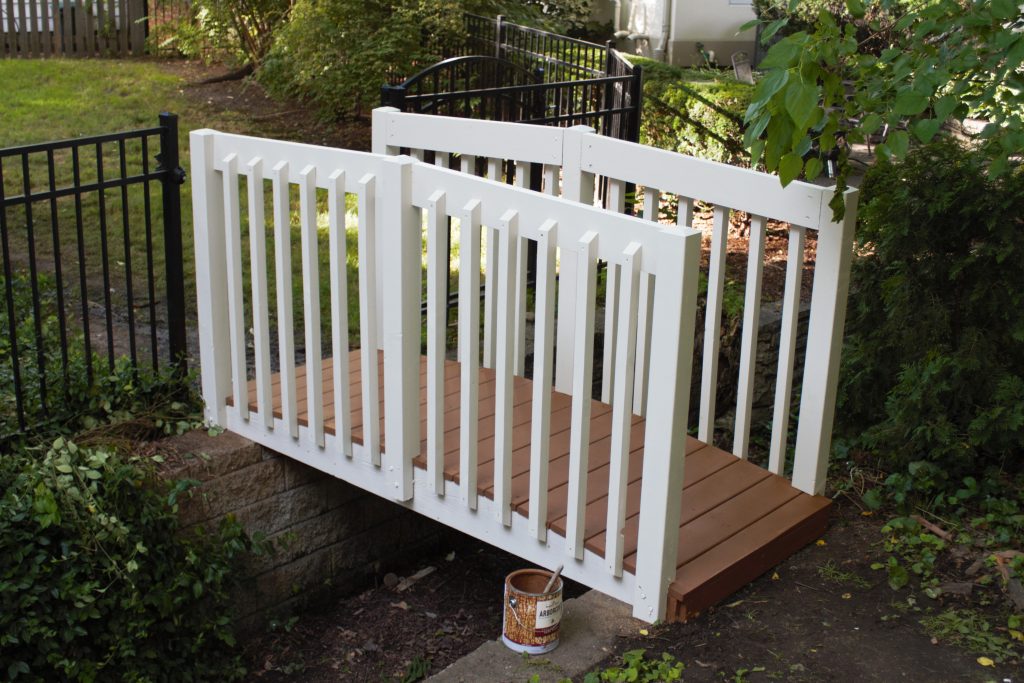
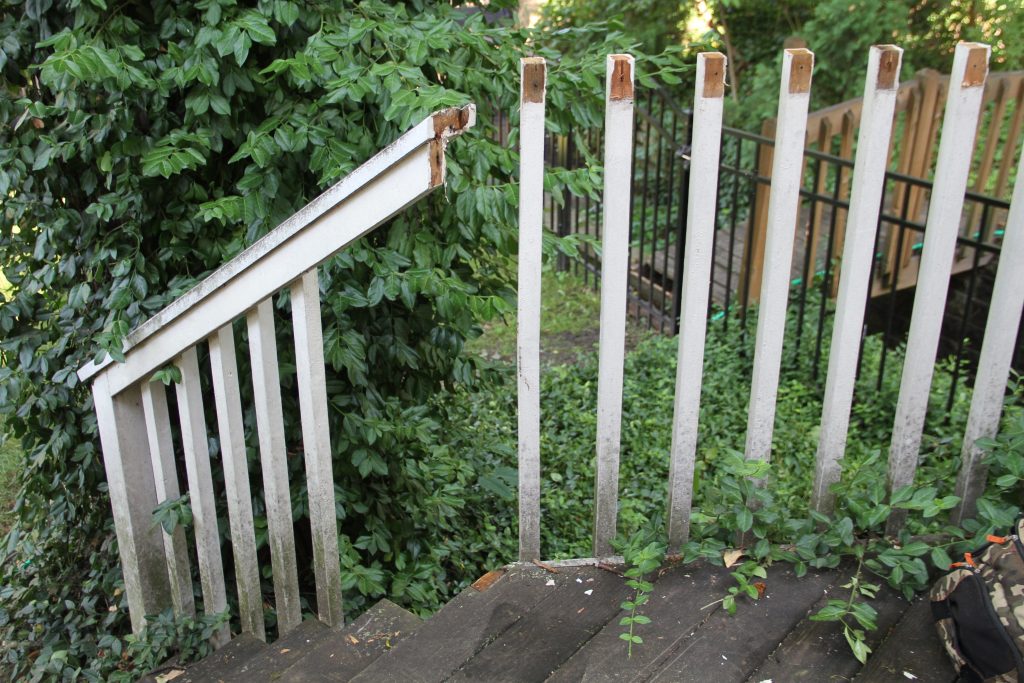
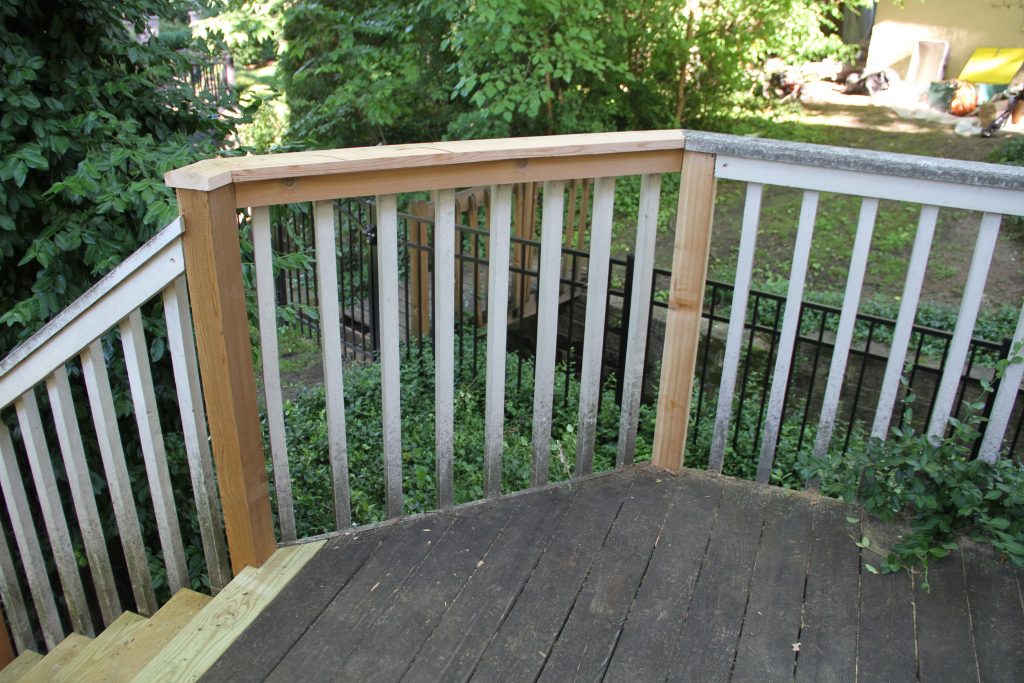
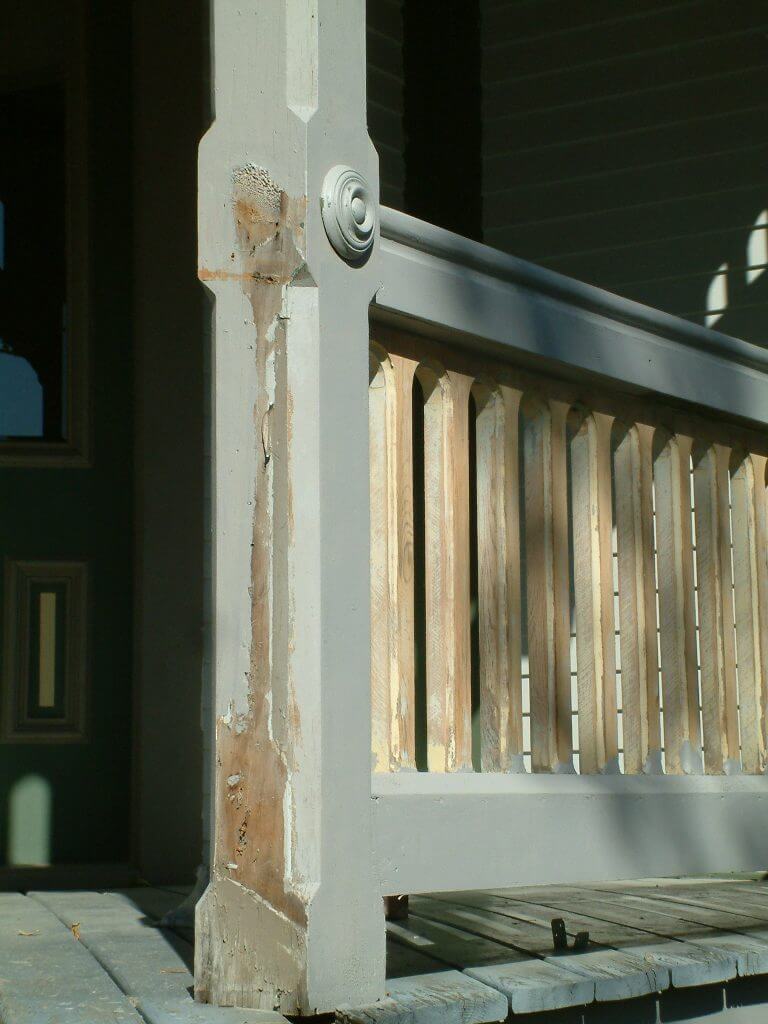
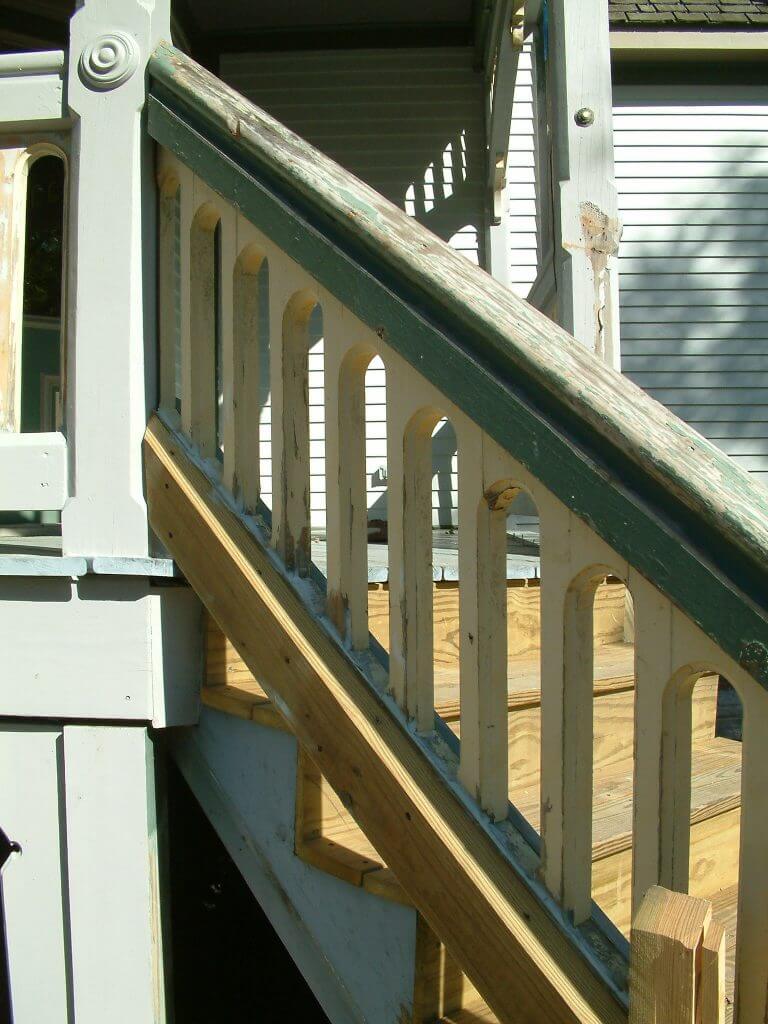
- Railing, baluster, and spindle restoration or replacement
- Newel post repair and replacement
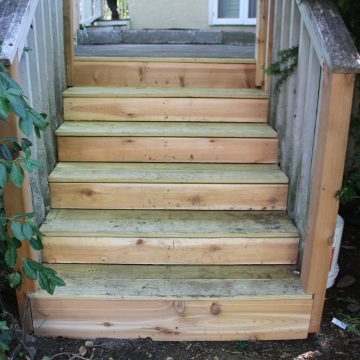
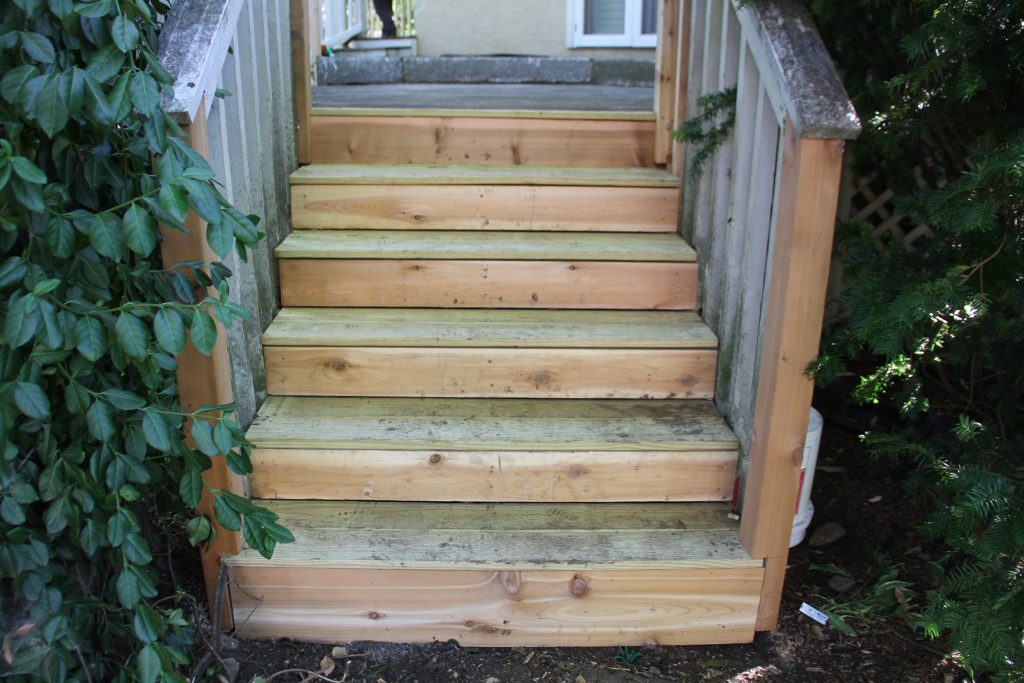
- Stair tread and stringer repair
- Skirt board, fascia, and trim work
- Custom millwork for historic and Victorian porch details (custom millwork service)
- Painting, staining, and porch floor enamel application
- Power washing and surface preparation
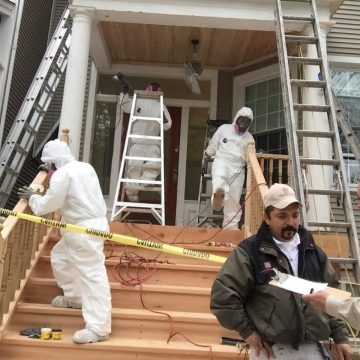
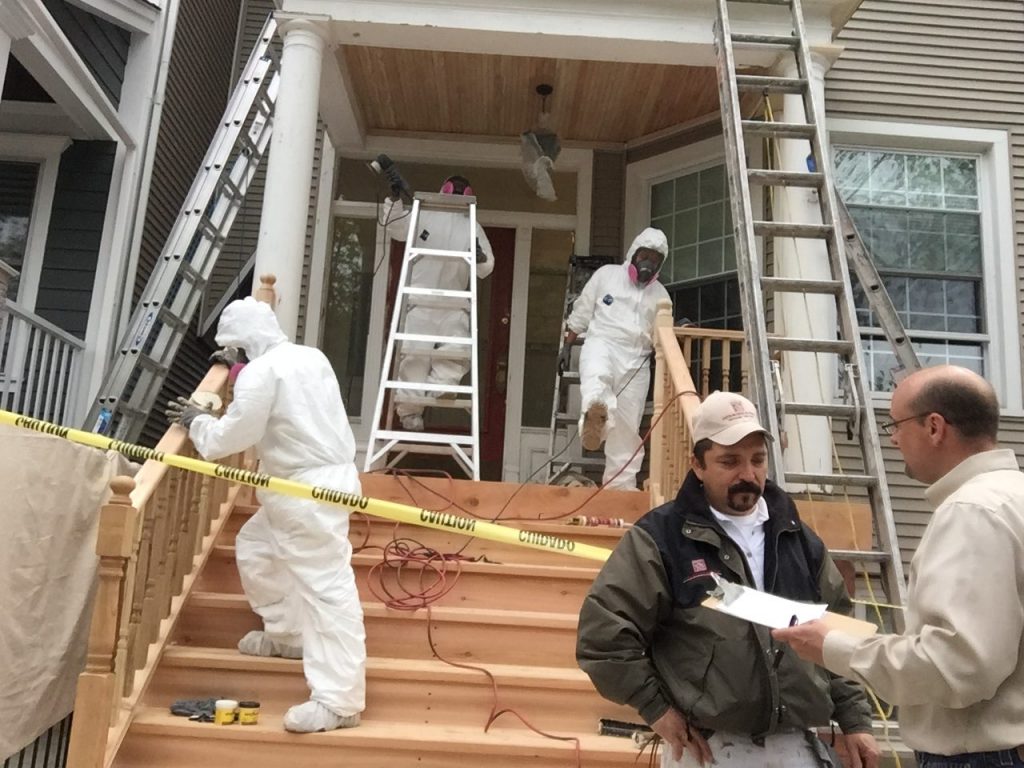
- Lead-safe RRP-certified work on pre-1978 buildings
- Coordination with masonry contractors on porch foundation and stoop work
Common Porch and Deck Problems We Address
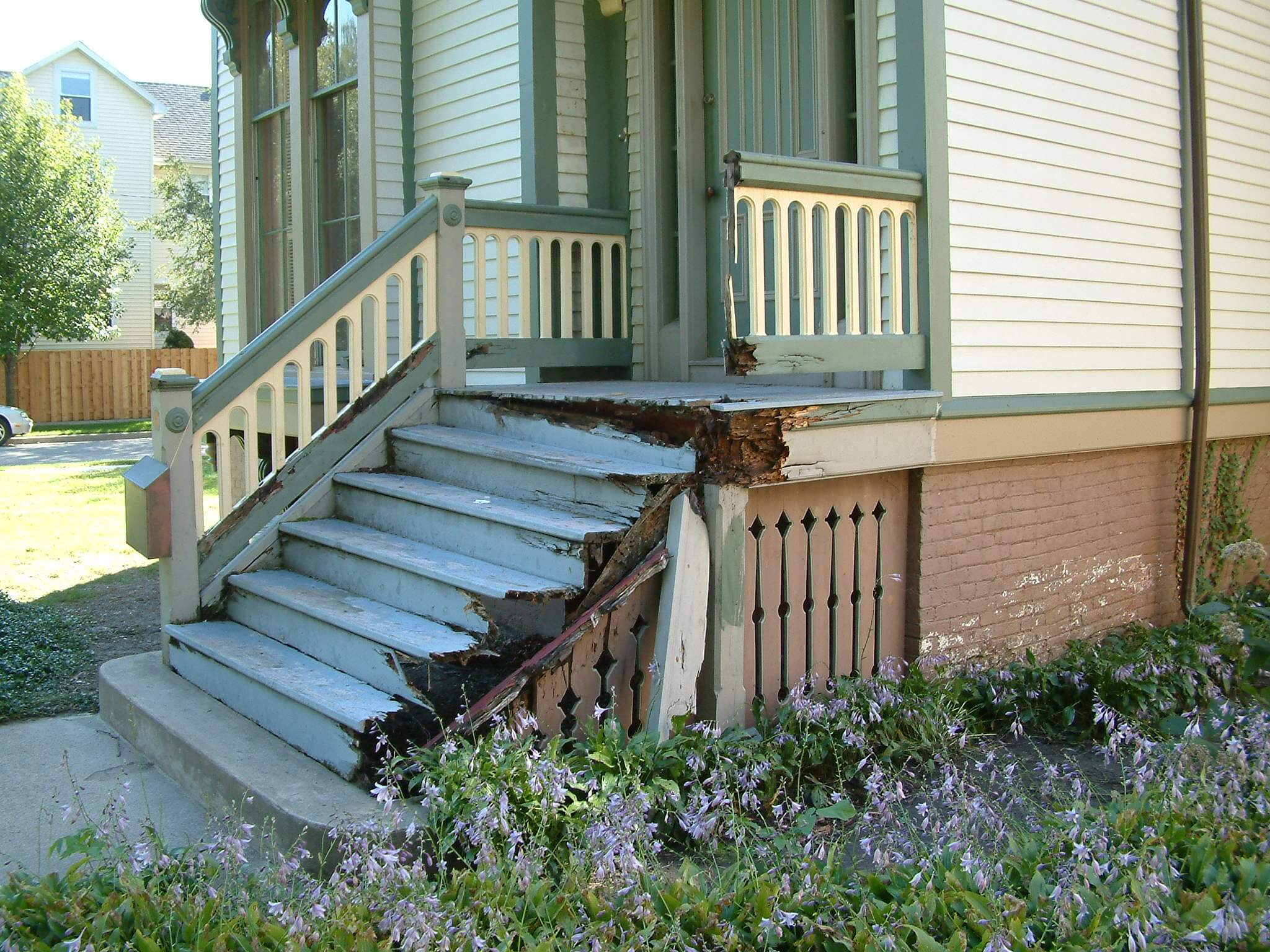
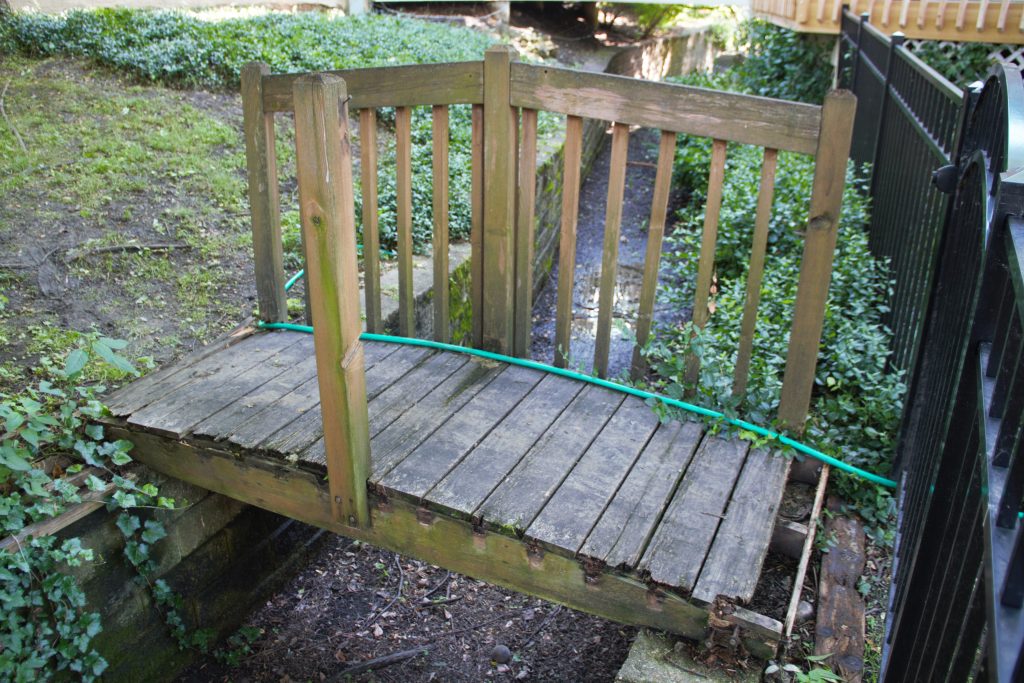
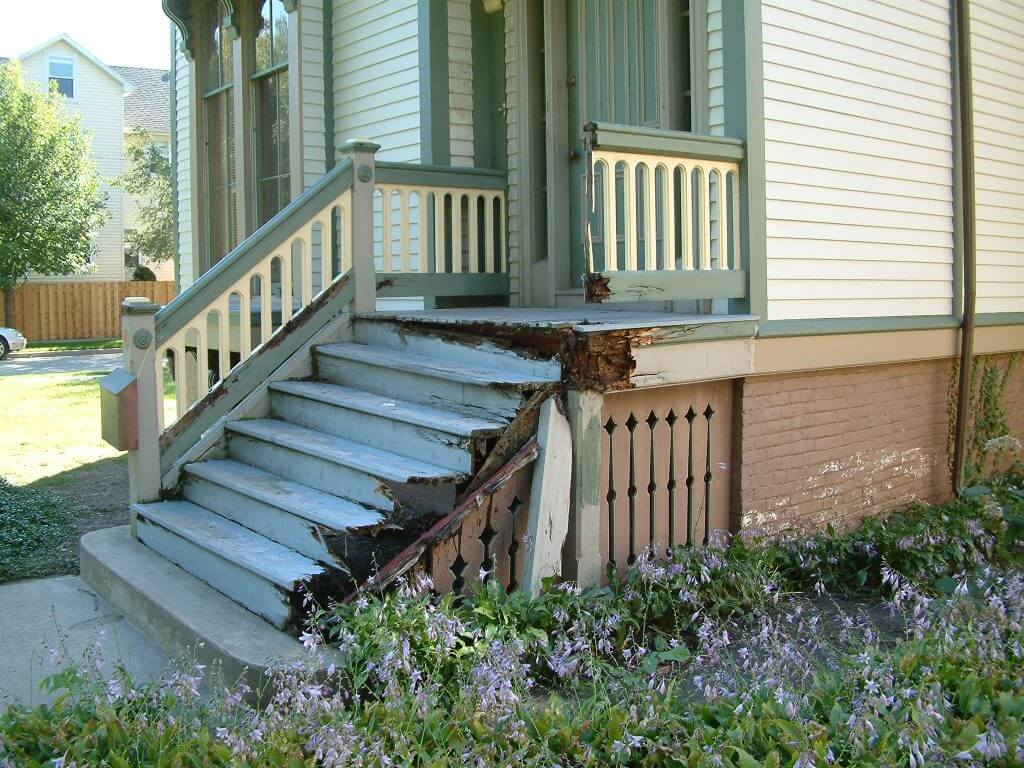
Most porch deterioration in Chicago is moisture-driven. Water gets in through paint failures, missing or failed flashing at the ledger board, ground contact at column bases, or chronic wet conditions under the deck - and from there freeze-thaw and biological decay take over.
Warning signs that your porch or deck needs attention:
- Soft or spongy wood when probed with a screwdriver - indicates active rot
- Paint failure concentrated on horizontal surfaces - flat boards hold water, vertical faces drain
- Gaps or movement at structural connections between columns, beams, and decking
- Loose or wobbly railings - often a structural connection failure, sometimes a code-required height issue too
- Cracked or deteriorated concrete or masonry at the porch foundation or stoop
- Damaged spindles, balusters, or decorative elements on Victorian and Craftsman porches
- Carpenter ant, termite, or carpenter bee damage - the Chicago area has all three
- Sagging or out-of-level floors - almost always a structural issue, not a cosmetic one
The National Park Service preservation brief on wood porches is the authoritative reference on diagnosis and repair sequencing for historic and traditional wood porches. We follow its principles closely on landmark and historic projects, and adapt the same diagnostic approach to standard residential work.
Structural Repair vs. Cosmetic Restoration
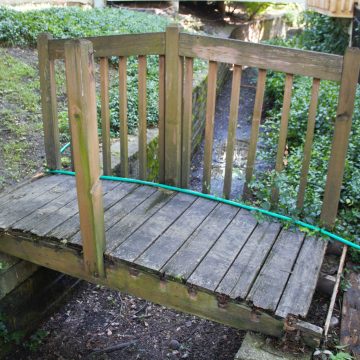
Many porch problems look cosmetic but are actually structural. A column that needs paint may have rotted at the base where it meets the porch floor - a structural failure, not a cosmetic one. Real porch restoration starts with a structural assessment, then moves to finishes.
Key structural components to evaluate before any cosmetic work:
- Ledger board attachment to the building. The connection between the porch structure and the house is the most critical point. Water infiltration here can damage both the porch and the building’s structural members.
- Column bases. Wood columns in contact with concrete or masonry will rot where they meet without proper flashing or post-base hardware.
- Beams and joists. Horizontal structural members are the most susceptible to moisture retention and rot.
- Decking. Surface boards are often the first to fail but the easiest to replace if the structure underneath is sound.
- Railing connections. Loose railings are a fall hazard and often a code violation. The connection at the post, not the railing itself, is usually what fails.
Repair vs. Replace - Making the Right Call
The economics of porch work depend on how much of the structure has failed. Less than 20% of structural members affected: targeted repair. 20 to 50% compromised: partial reconstruction. Over 50%: full demolition and rebuild is usually more economical than chasing repairs.
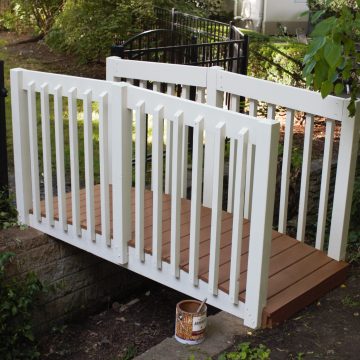
Cosmetic elements - decking, railings, balusters, column wraps - can usually be replaced independently of structural decisions. So a porch with a sound frame but failed surfaces and railings might cost a fraction of a porch with hidden joist or beam rot.
The North American Deck and Railing Association (NADRA) publishes industry guidance on inspection criteria and replacement decisions for residential decks. For historic porches with original detail worth preserving, the calculation is different - often a partial reconstruction with custom-fabricated millwork is the right call even when the cost approaches a full rebuild, because the architectural character is irreplaceable.
Painting, Staining, and Finishing Porch Floors
Porch floors take harder use than any other painted surface on the house - foot traffic, UV exposure, water, ice, snow shoveling. They need a finish system designed for horizontal exterior use, not standard exterior wall paint.
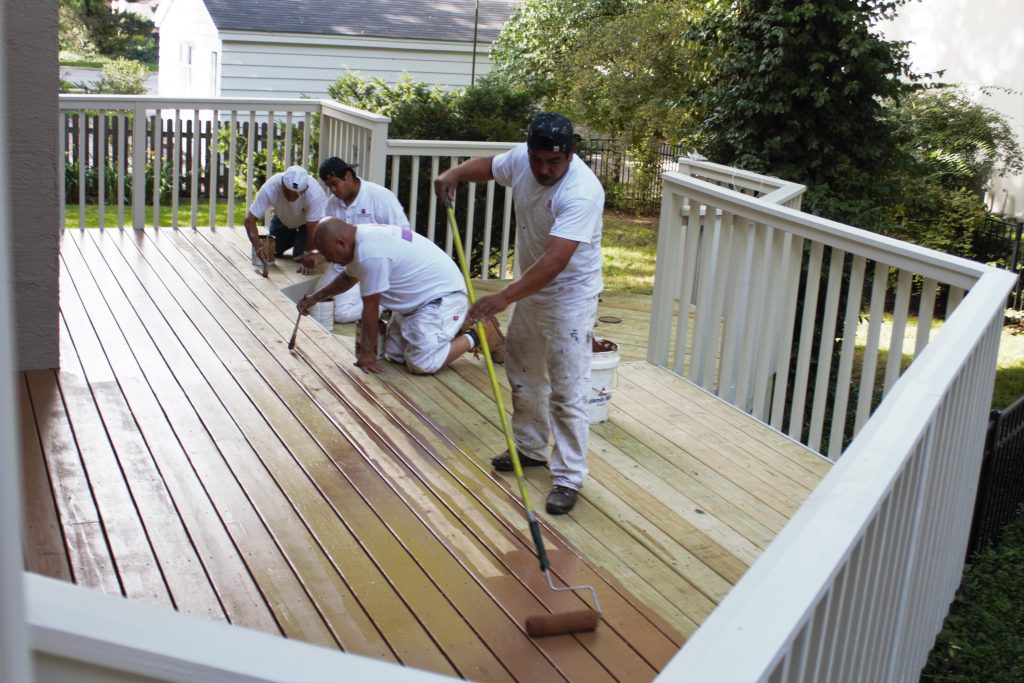
For painted porch floors, porch-and-floor enamel in a quality alkyd or 100% acrylic formula significantly outlasts standard exterior paint. Anti-slip additives can be added for safety on stairs and high-traffic areas. For stained surfaces, a penetrating deck stain in a semi-transparent or solid formula performs well on cedar, redwood, and pressure-treated lumber when applied to a properly prepped surface.
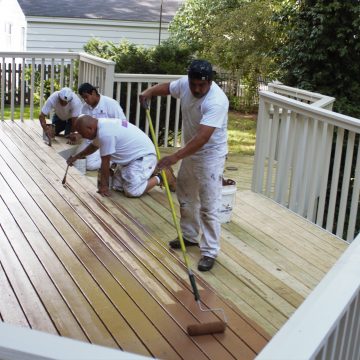
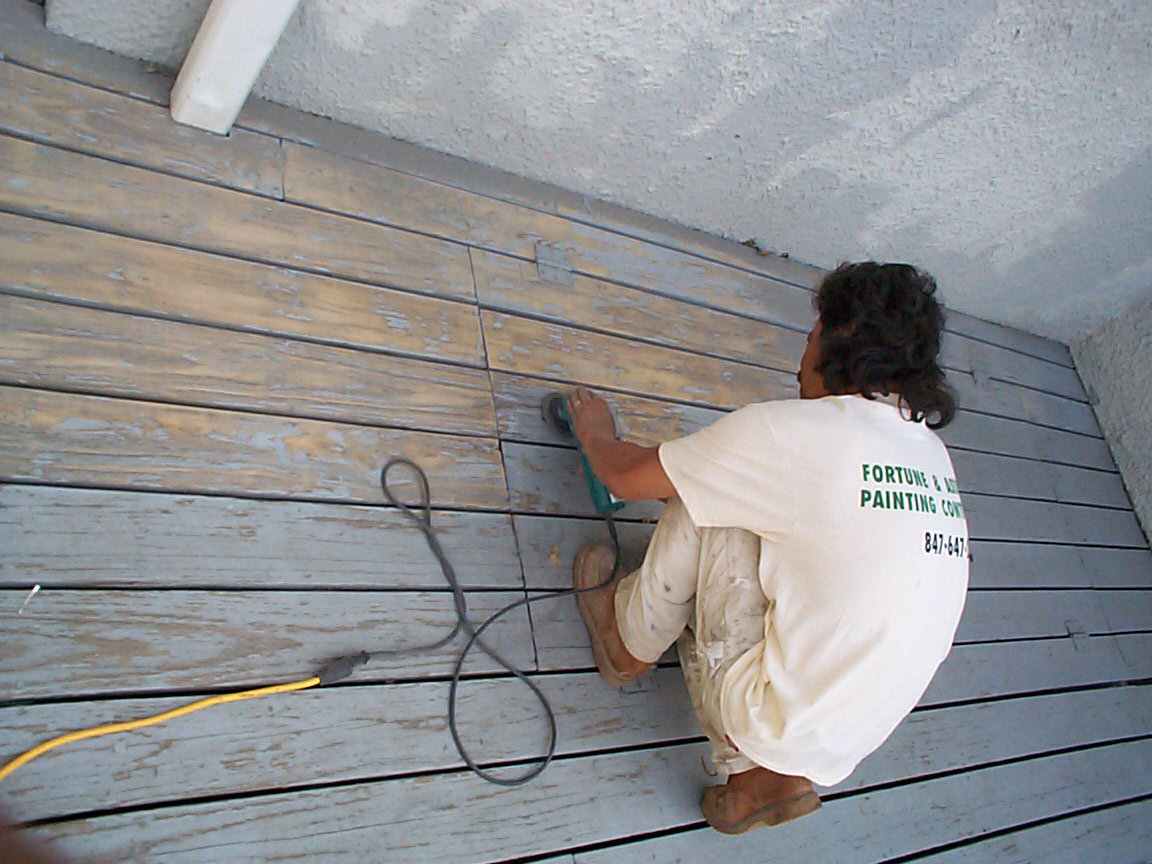
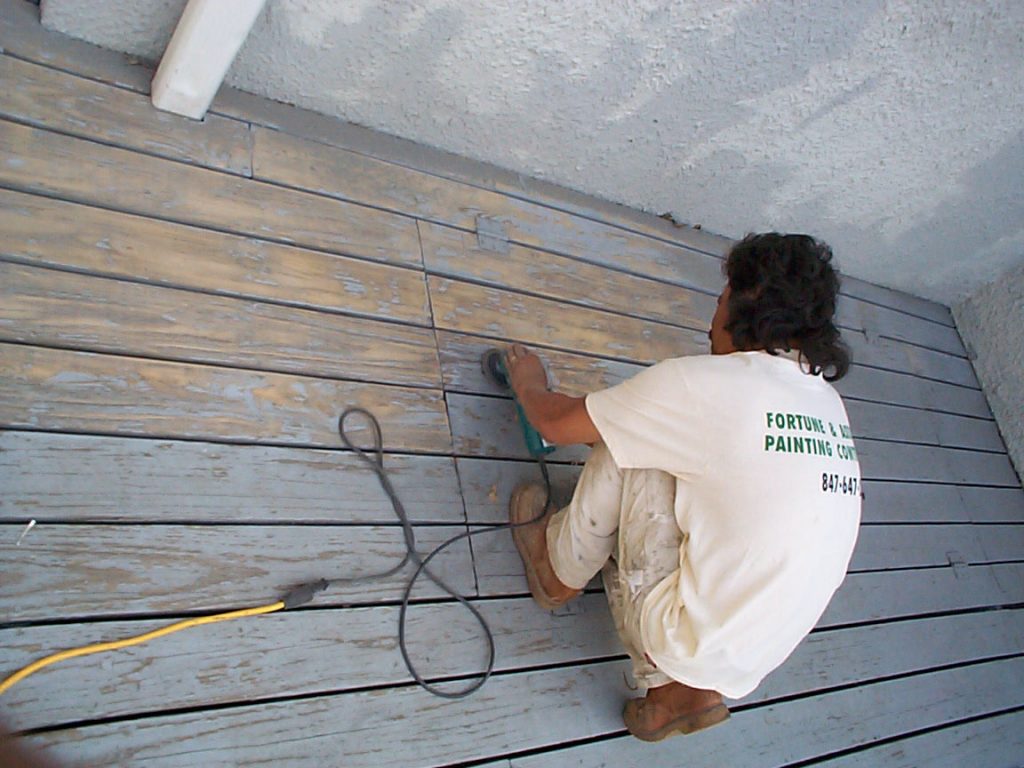
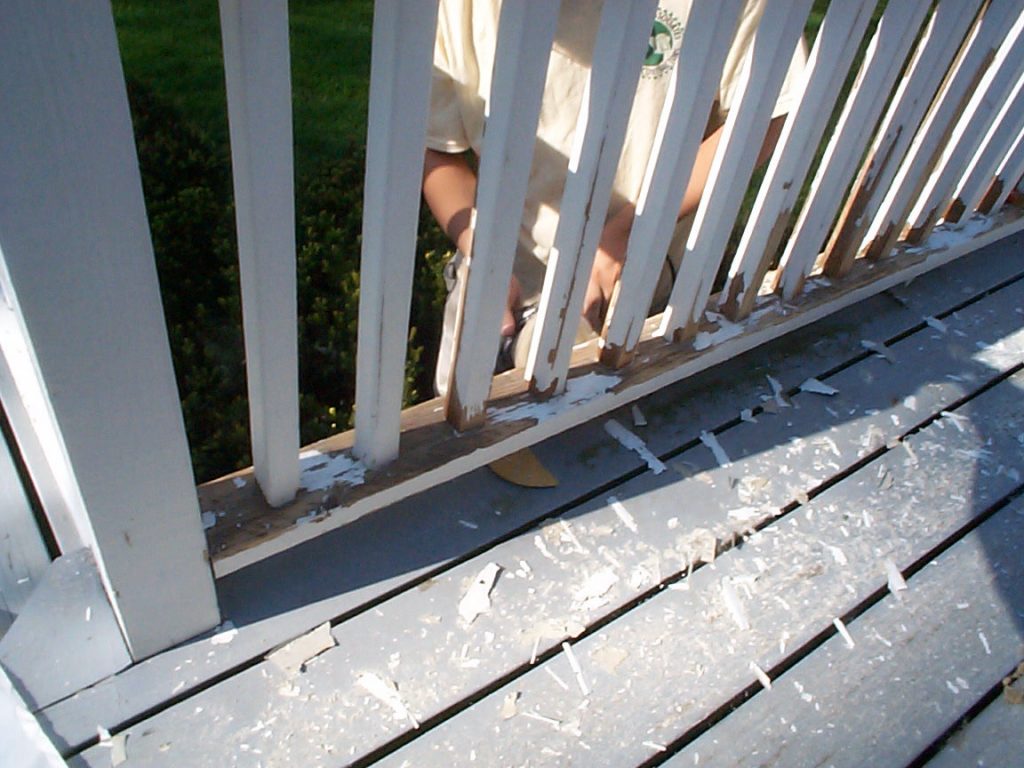
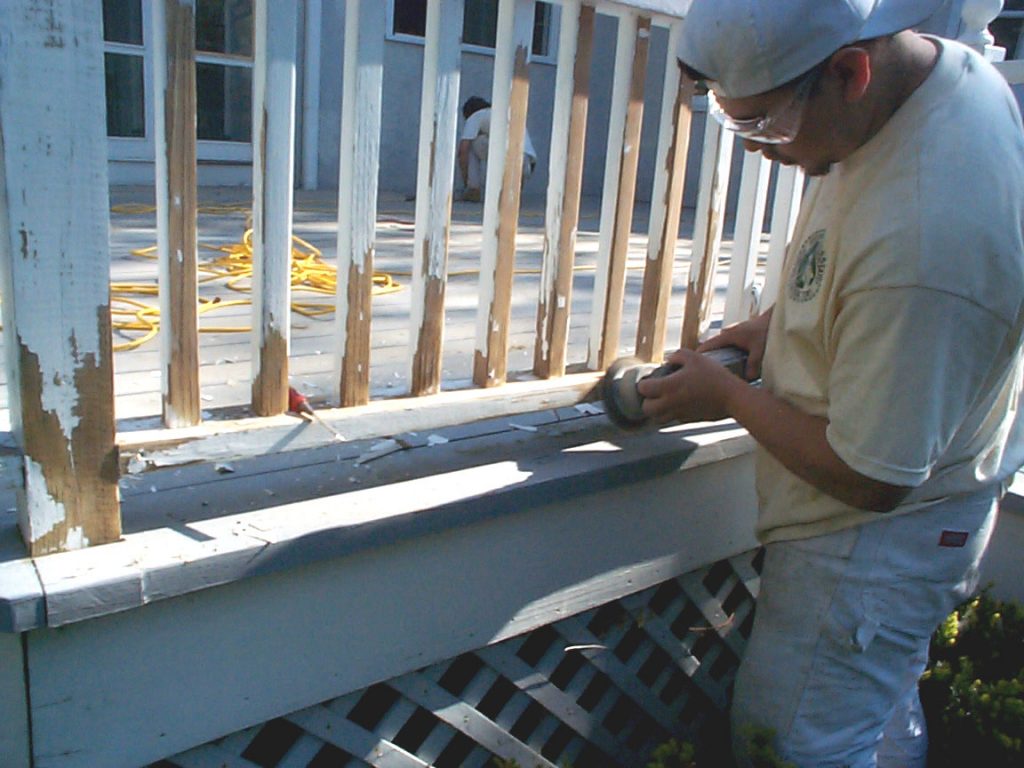
Whichever finish system, prep is what makes it last. We power wash every porch and deck before painting, scrape and feather all loose finish to a firm edge, sand transitions smooth, repair damaged wood, prime bare areas, and only then apply finish coats. Skip any of those steps and the new paint fails in a season or two. See our paint preparation process and power washing service for how we handle the prep.
Historic Porch Restoration
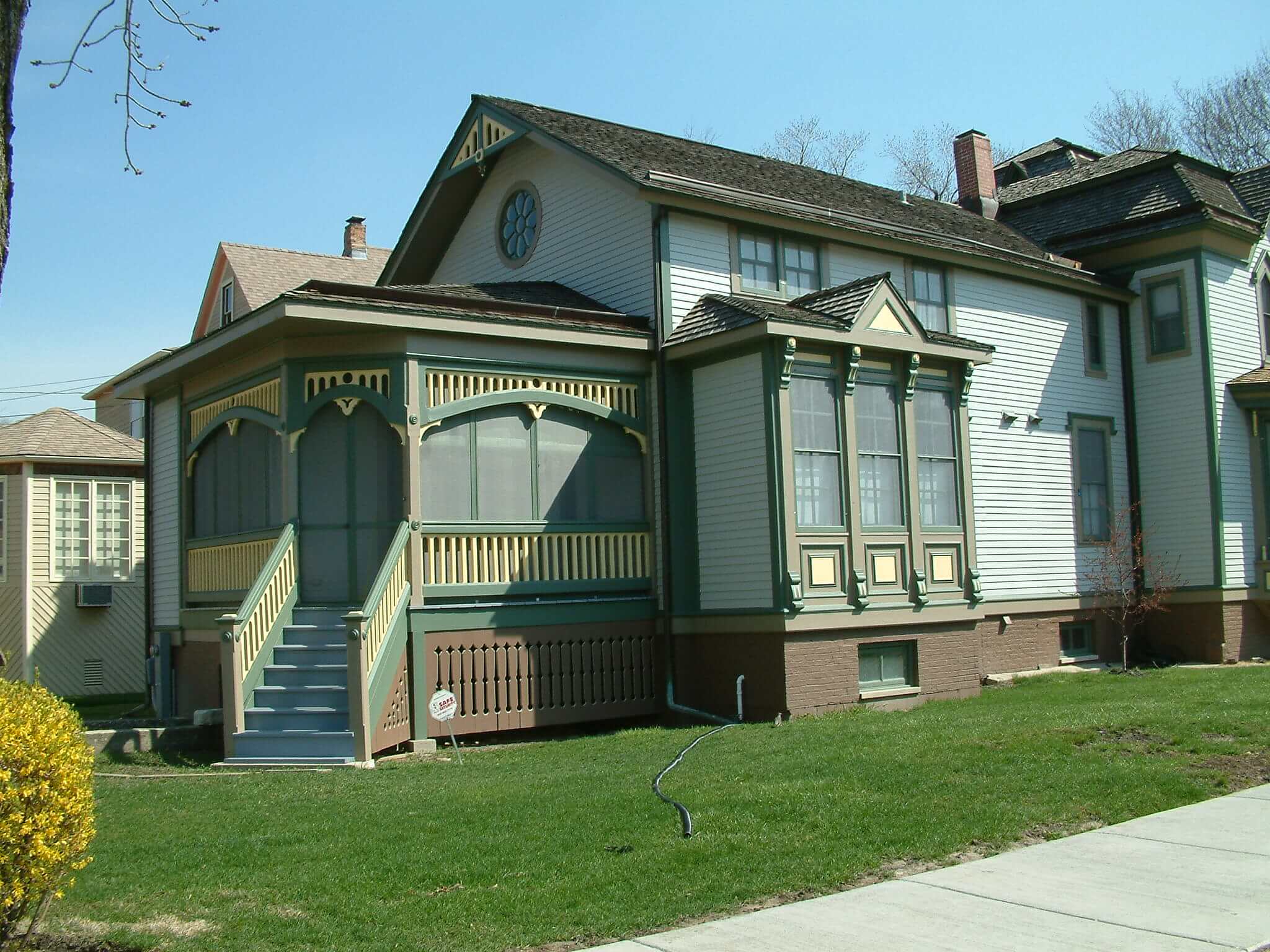
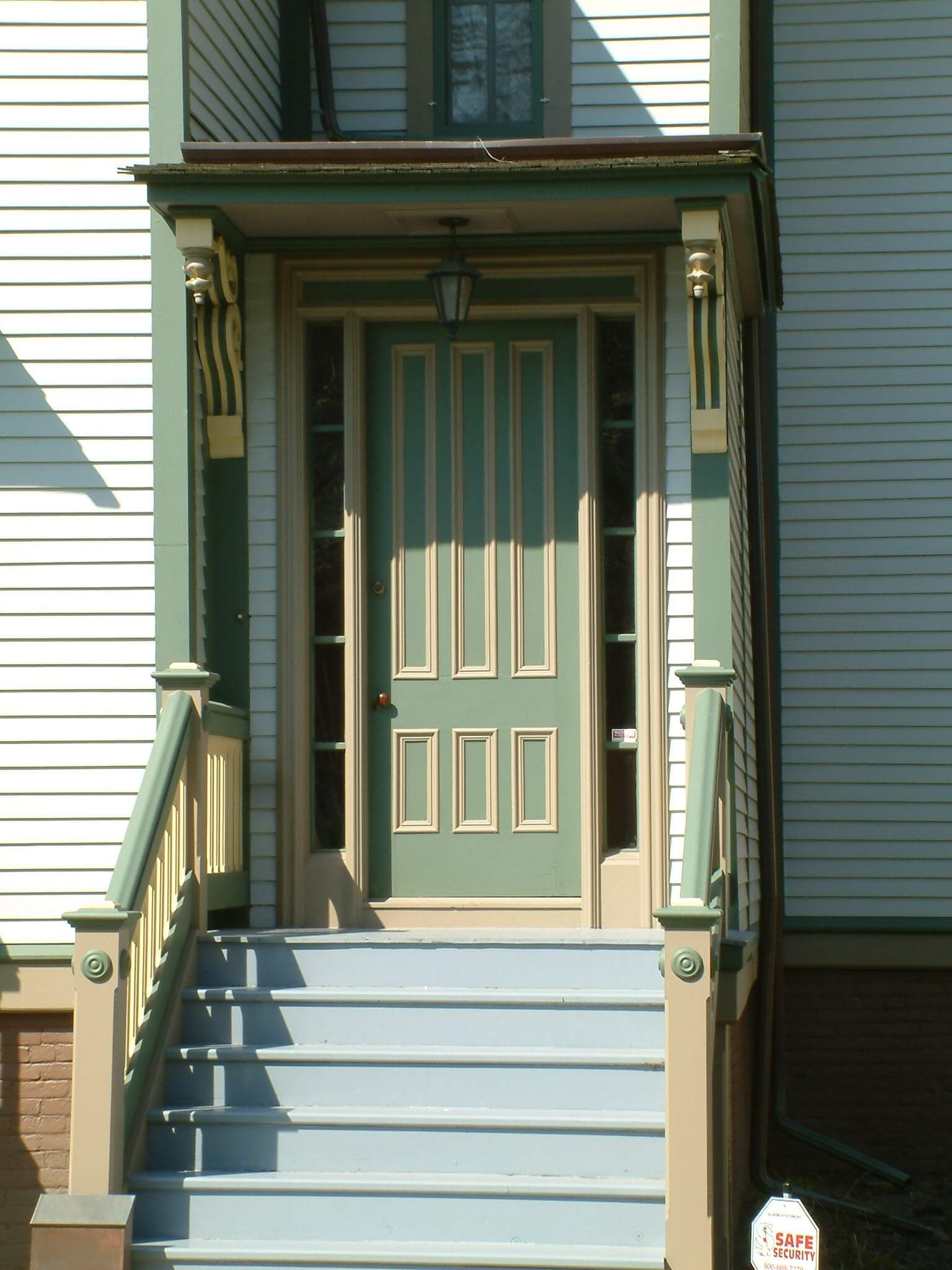
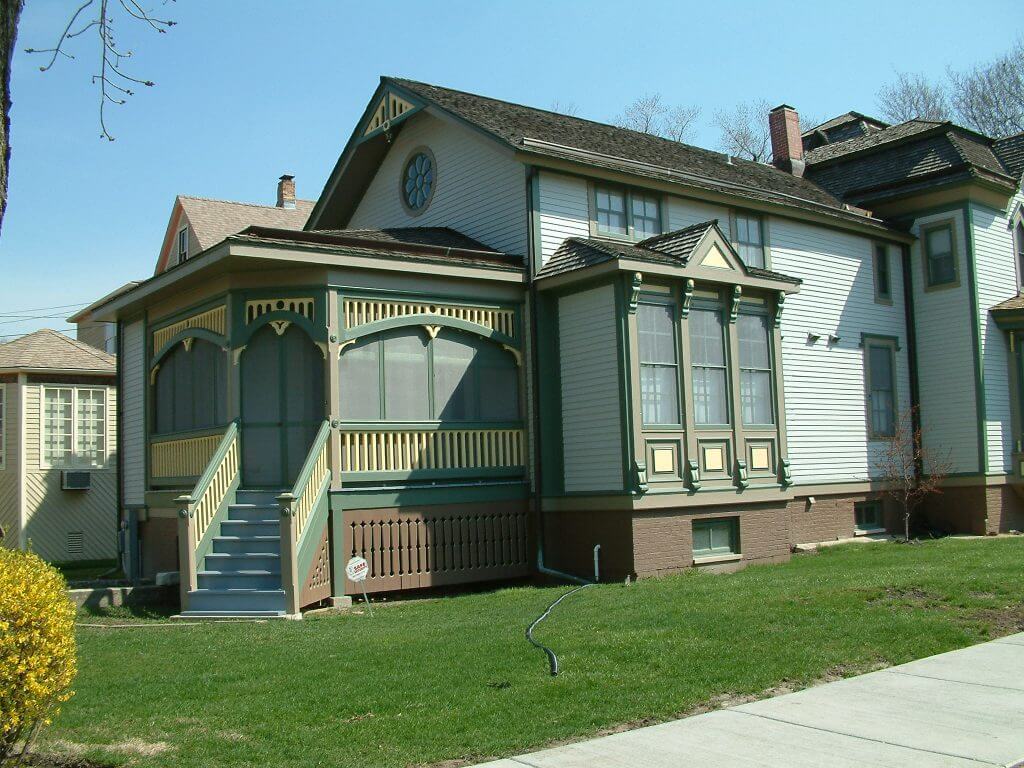
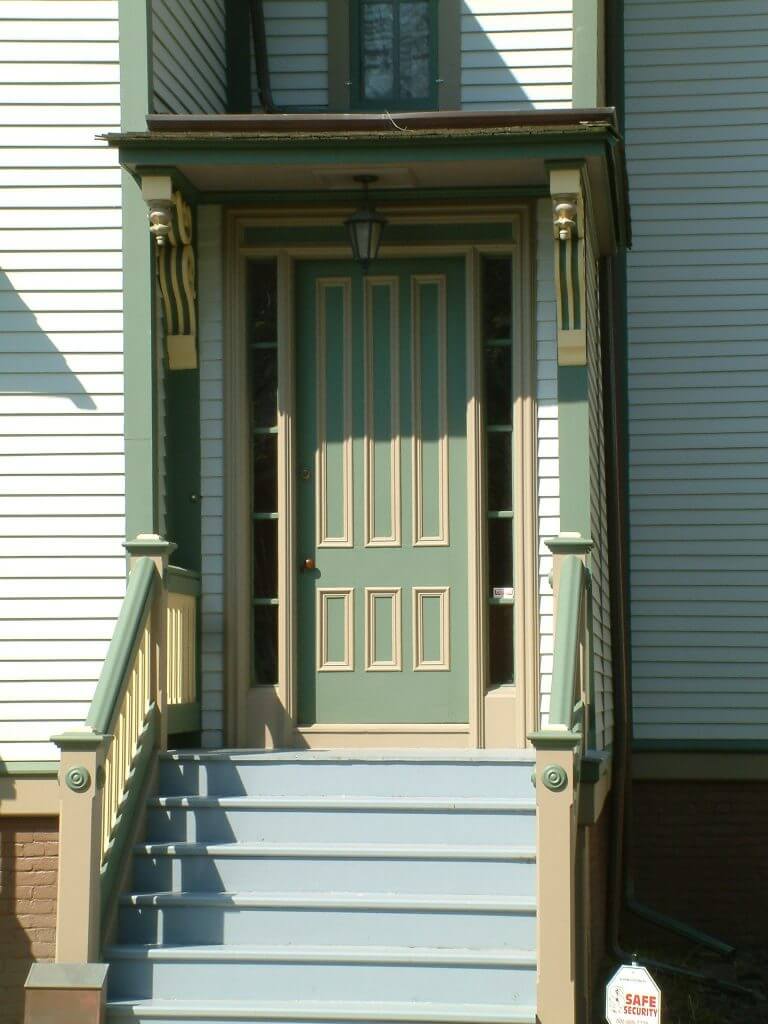
For Chicago’s historic homes - Victorian Painted Ladies, Queen Anne wraparounds, Craftsman bungalows, Italianate two-flats - original porch detail is often irreplaceable through standard lumber yard channels. Custom millwork preserves architectural integrity.
Original porches from the 1880s through the 1920s were built with quarter-sawn old-growth fir and cedar, often with hand-turned spindles, custom-profile column capitals, decorative brackets, and detailing that simply isn’t manufactured today. When pieces are damaged beyond repair, we either restore them through our wood stripping and refinishing service, or we fabricate exact replacements through our custom millwork shop.
For historic homes specifically, see our Painted Ladies service covering Victorian color schemes and detailing, our wood stripping and refinishing service for recovering original wood from layers of accumulated paint, and our historical landmark portfolio. We’ve worked on porches at landmark properties throughout Oak Park, the North Shore, and Chicago neighborhoods.
Related Exterior and Carpentry Services
Porch and deck restoration often coordinates with other exterior work on the same project:
- Exterior painting - full-house exterior paint usually scheduled with porch finishing
- Siding replacement and repair - adjacent siding often needs attention when porch carpentry is being done
- Door and eaves replacement - entry door and overhead carpentry that ties into porch work
- Window replacement - windows above and adjacent to porches
- Shutter replacement and repair - completes the front-elevation appearance
- Column restoration - porch columns specifically
- Masonry repair - porch foundations, brick stoops, and stone steps
Service Area
Fortune Restoration provides porch and deck restoration across Chicago and the surrounding suburbs, with regular work in Oak Park, Evanston, Wilmette, Winnetka, Highland Park, Lake Forest, Hinsdale, Park Ridge, La Grange, and most other communities within roughly 30 miles of our Lincolnwood office.
Within Chicago city limits, we work across virtually every porch-rich neighborhood, including Lincoln Park, Logan Square, Bucktown, Wicker Park, Lakeview, Wrigleyville, Roscoe Village, Lincoln Square, Andersonville, Edgewater, Rogers Park, Old Irving Park, Norwood Park, Beverly, Hyde Park, Kenwood, Pilsen, the Gold Coast, and the West Loop.
Why Choose Fortune Restoration for Porch & Deck Work
- Family-owned and operated since 1979 - over 45 years of Chicago carpentry experience
- Master carpenters on staff with custom millwork capability for historic detail
- Licensed, bonded, and insured
- EPA Lead-Safe (RRP) Certified for pre-1978 buildings - required on most historic Chicago homes
- Single contractor for carpentry, painting, and adjacent masonry - no subcontractor handoffs
- Documented experience on Chicago Landmark and historic Victorian porches
- Structural assessment included with every estimate, not just a cosmetic walk-through
- Free written estimates with material and finish recommendations
Ready to bring your porch or deck back to life? Request a free estimate, contact us, or call 847-647-2500.
Frequently Asked Questions About Porch & Deck Restoration
How much does porch or deck restoration cost in Chicago?
Porch and deck restoration costs in Chicago vary widely with scope. Cosmetic restoration - power washing, scraping, repair of minor damage, and repainting or staining - typically runs $1,500 to $5,000 for an average front porch. Structural repairs add $2,500 to $10,000+ depending on what needs replacing.
Full porch demolition and rebuild on a Chicago two-flat or single-family home typically ranges from $15,000 to $40,000+ depending on size, materials, and historic detailing. Custom millwork for Victorian or landmark properties prices separately.
How long does porch restoration take?
A cosmetic porch restoration - prep, repair, and finish - typically takes three to seven working days. Structural repairs add several days depending on scope. Full porch rebuilds run two to four weeks from demolition through final finish.
For finish work specifically, weather matters. We schedule painting and staining when temperatures are between 50°F and 90°F and humidity is below 85% - generally May through October in Chicago. We give you a day-by-day schedule before work starts.
Should I repair or replace my porch?
Repair makes sense when less than 20% of the structural members are affected and the cosmetic damage is repairable. Replace when more than half the structure has failed, the foundation is compromised, or hidden rot has propagated through joists and beams.
For historic porches with significant original detail, partial reconstruction with custom-matched millwork often beats either pure repair or full rebuild - preserving what’s salvageable and replicating what isn’t. We assess each porch individually before recommending a path.
What’s the best material for a Chicago porch floor?
For traditional painted porch floors, tongue-and-groove fir or pine remains the standard choice - beautiful, period-appropriate for historic homes, and durable when properly painted with porch-and-floor enamel. Pressure-treated southern yellow pine is the budget-conscious alternative.
For decks (as opposed to covered porches), pressure-treated lumber is the most economical, cedar offers a classic look with reasonable durability, and composite decking eliminates most maintenance at higher upfront cost. Each has tradeoffs in cost, appearance, and longevity in Chicago’s freeze-thaw climate.
How often should a porch or deck be repainted?
Painted porch floors in Chicago typically need refinishing every 3 to 5 years on heavily exposed surfaces, longer on covered or shaded areas. Stained decks need attention every 2 to 4 years. Vertical surfaces - railings, columns, skirting - last 5 to 10 years between repaints.
The frequency depends on prep quality, finish system, exposure, and traffic. A porch that was prepped properly the first time and finished with a high-grade enamel can hold significantly longer than one that was repainted over a failing surface.
Do you handle structural porch repairs, not just painting?
Yes. Structural carpentry is core to our porch and deck work - beam replacement, joist sistering, column reconstruction, ledger board repair, and full demolition-to-rebuild projects when needed. We coordinate with structural engineers on projects that require professional engineer involvement.
Cosmetic restoration without addressing underlying structural problems is wasted money. We always assess the structure before recommending finishing scope, and if we find serious structural issues during the project, we stop and discuss options before proceeding.
Can you restore a historic Victorian porch with original detailing?
Yes. Historic porch restoration is one of our specialties. We restore original spindles, balusters, columns, and decorative brackets through our wood stripping and refinishing service when they’re salvageable, and fabricate exact replacements through our custom millwork shop when they aren’t.
For Victorian and Painted Lady restoration specifically, see our Painted Ladies service. We’ve worked on Victorian porches throughout Oak Park, the North Shore, and historic Chicago neighborhoods including Wicker Park and Old Town.