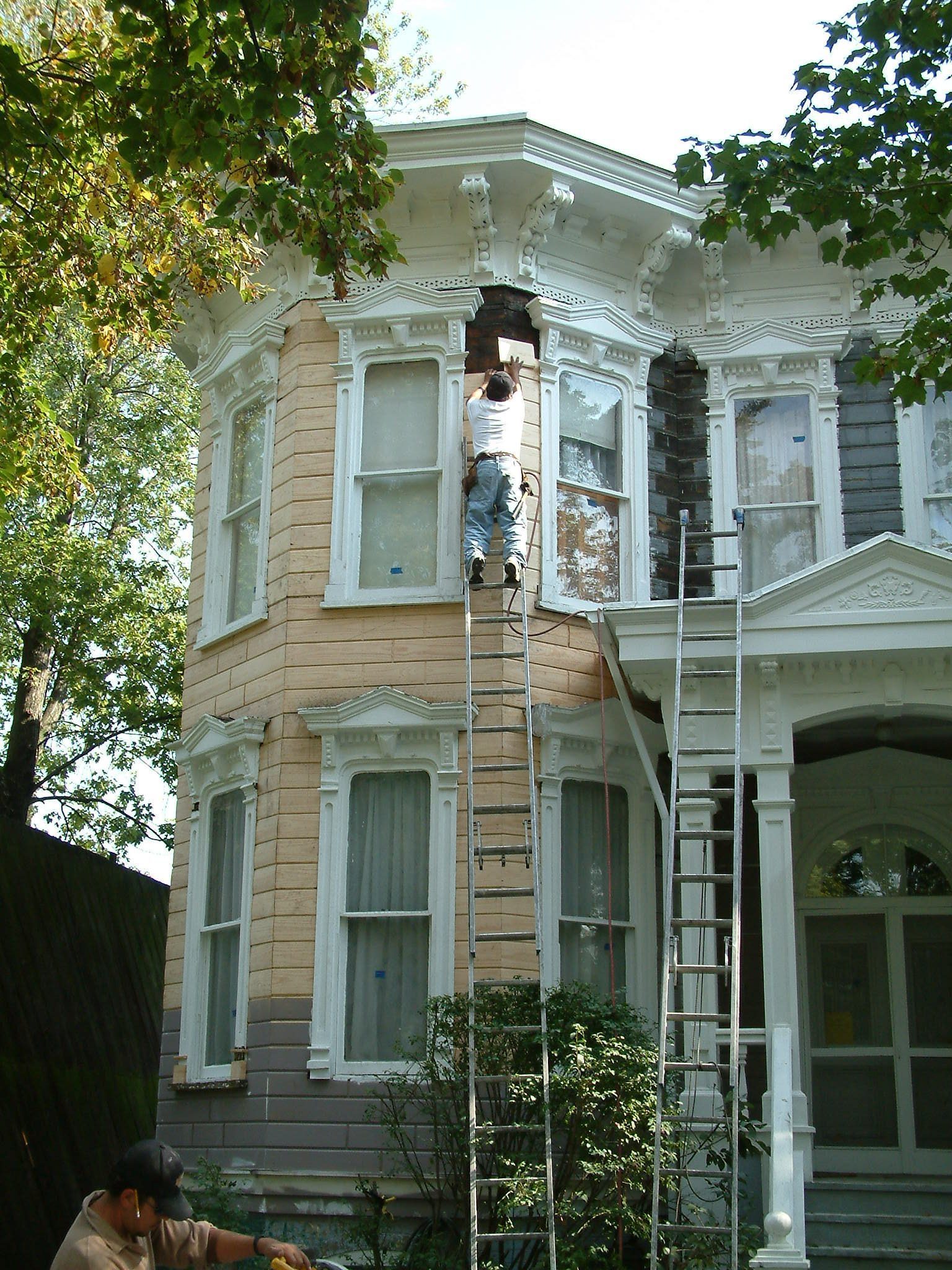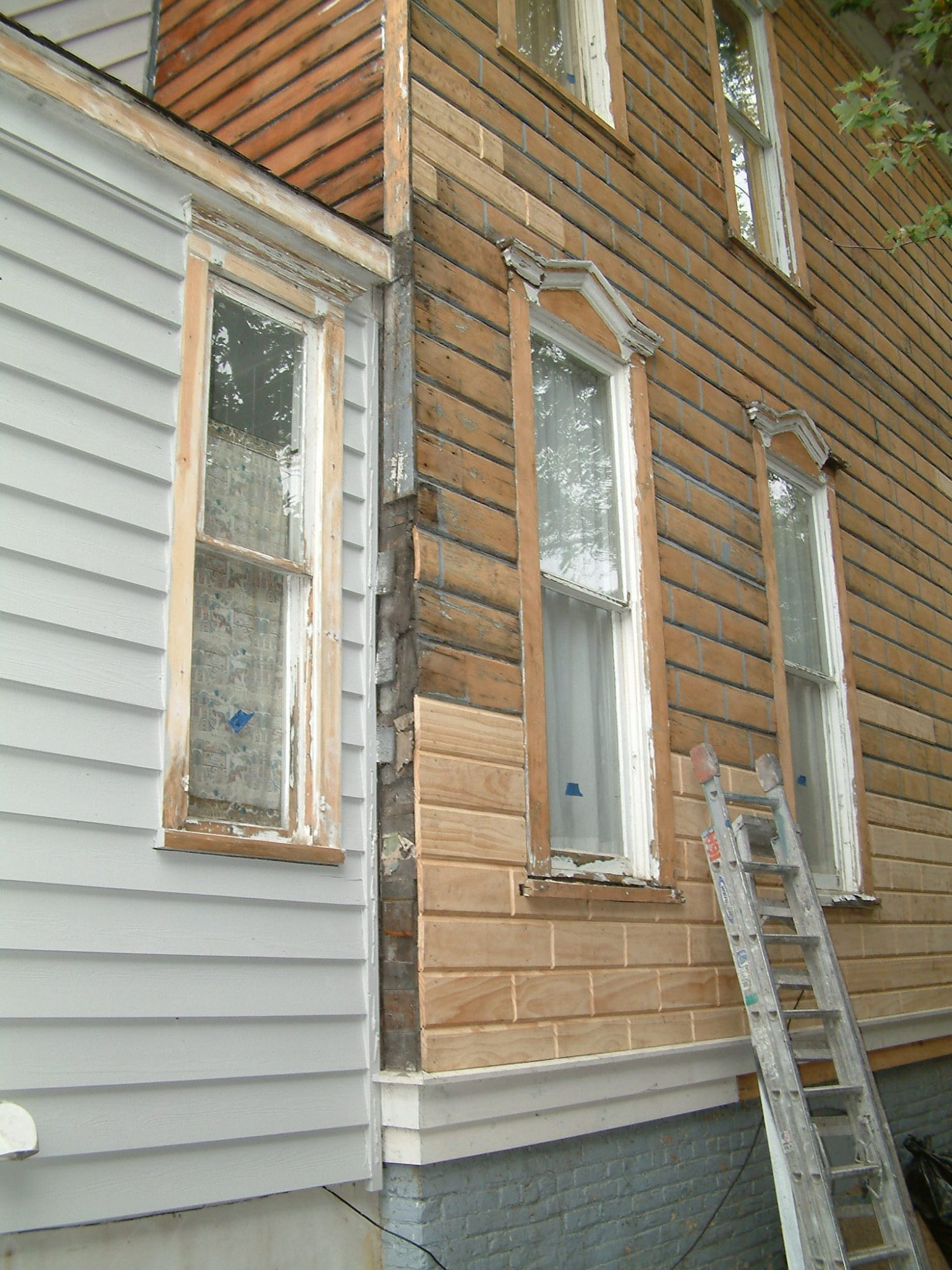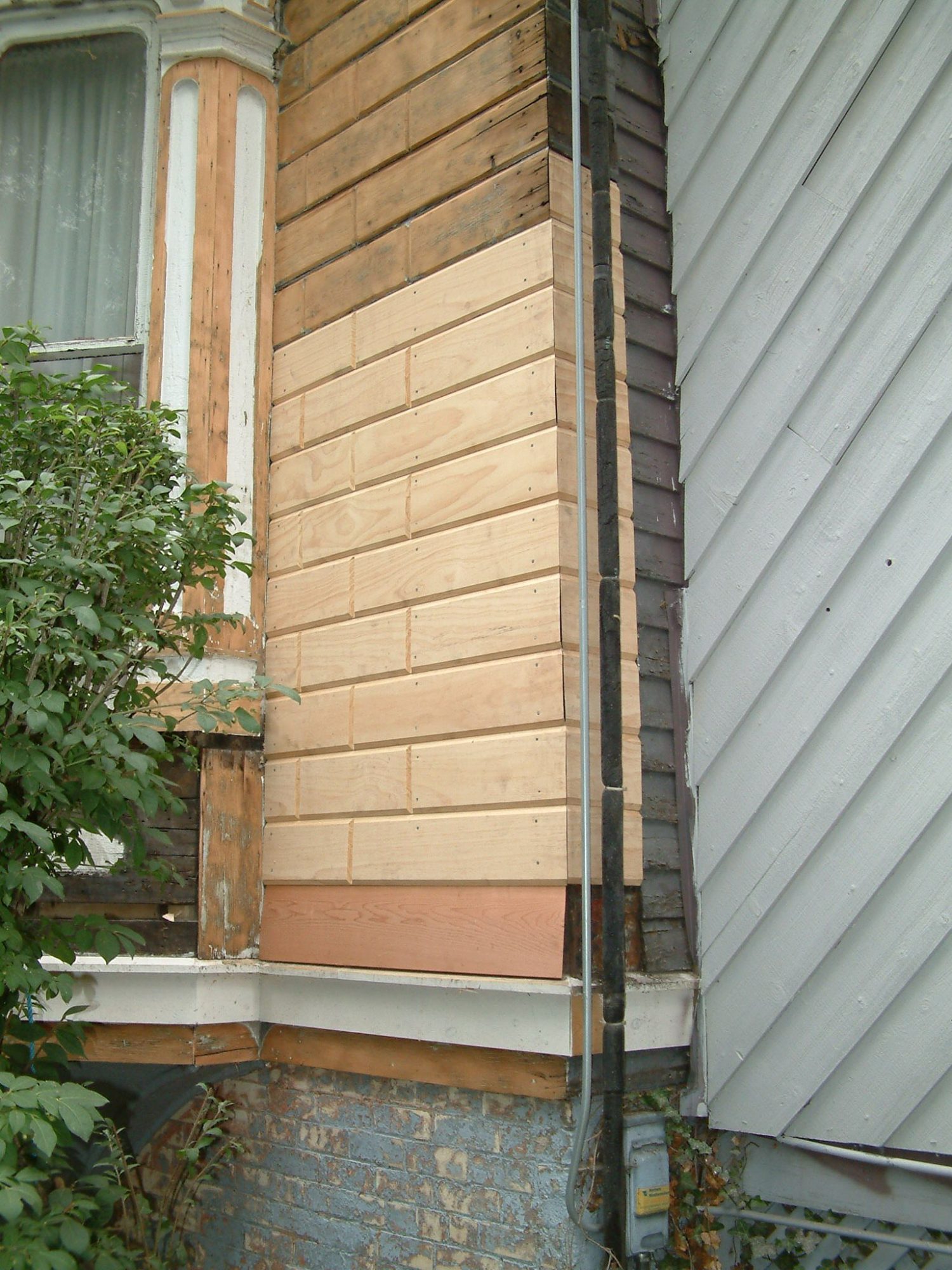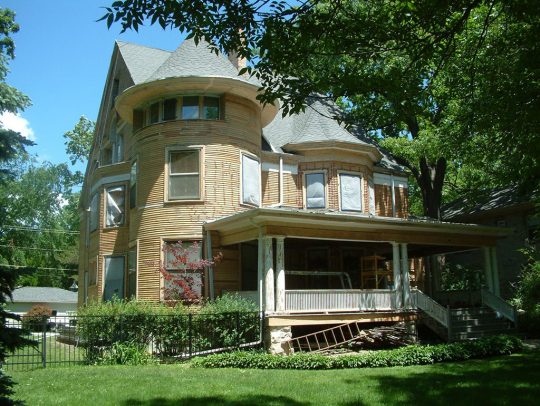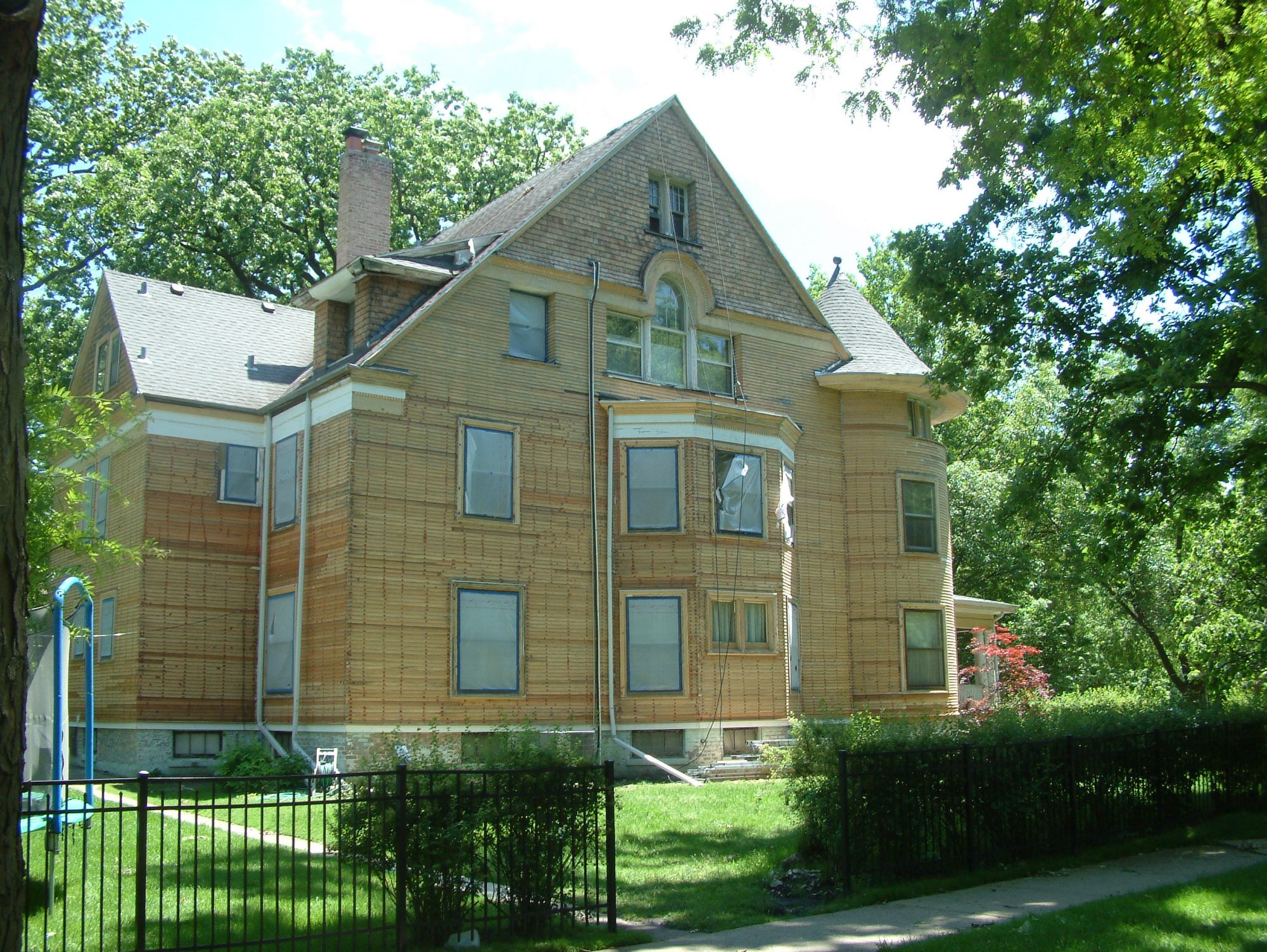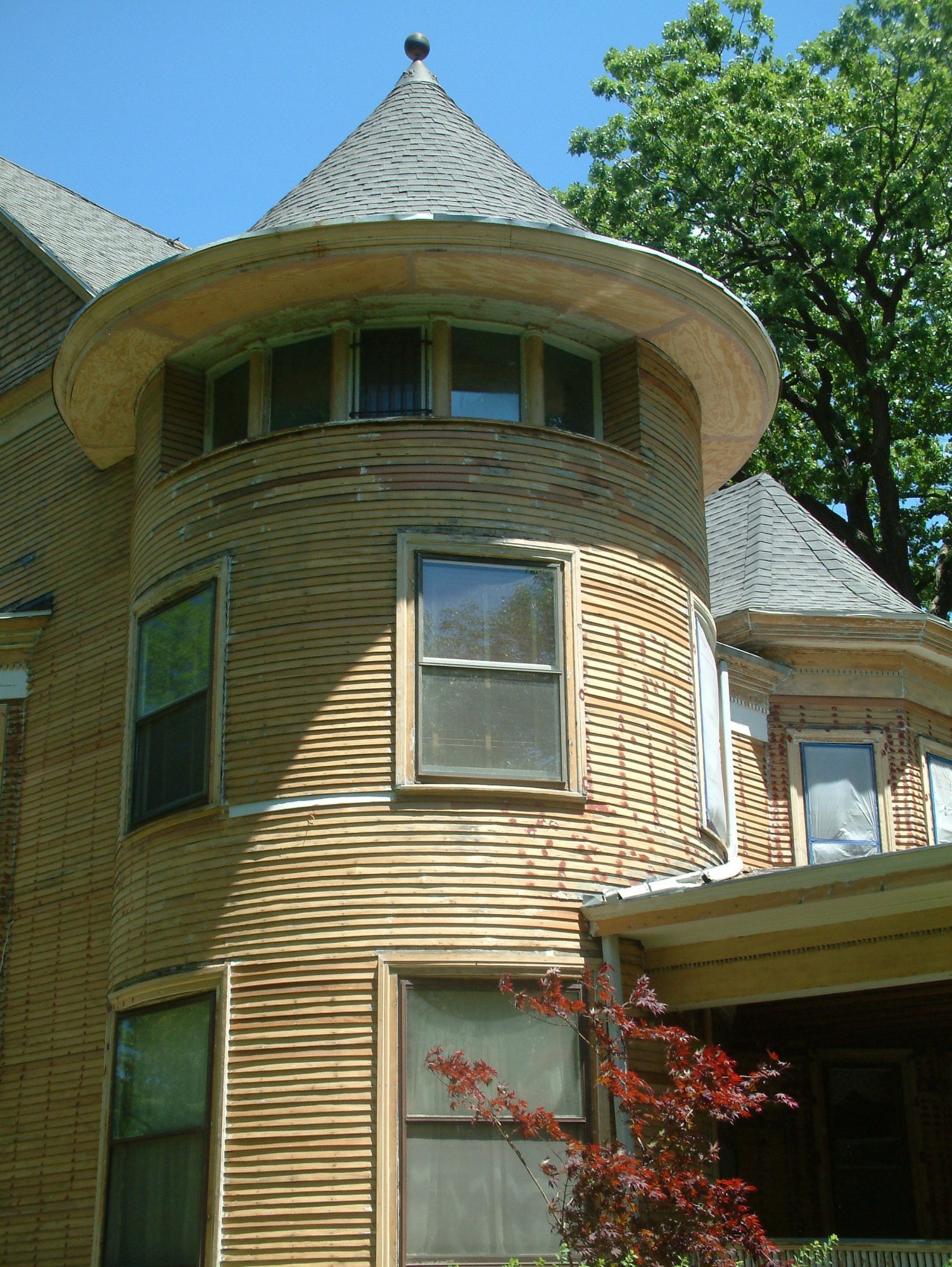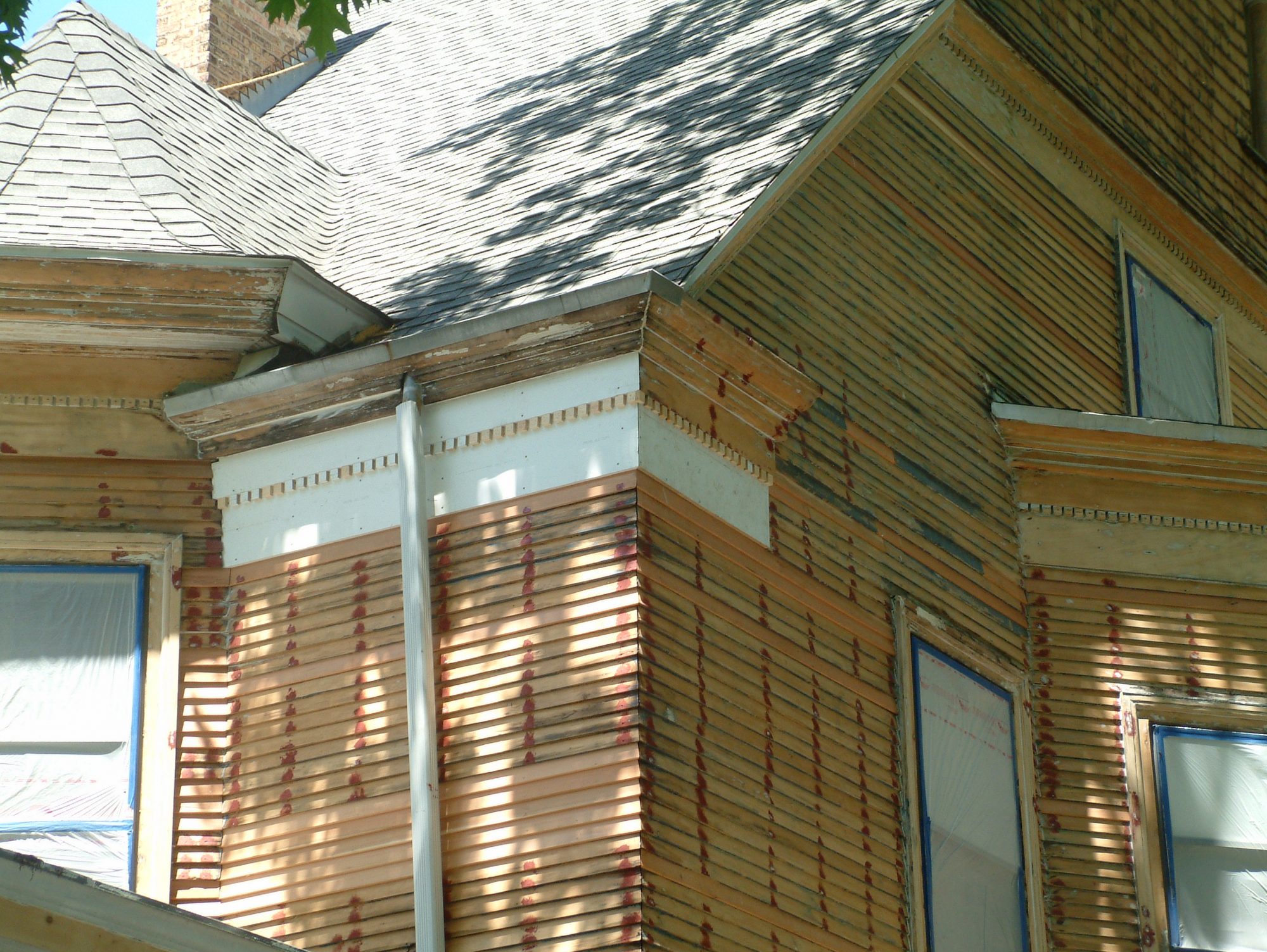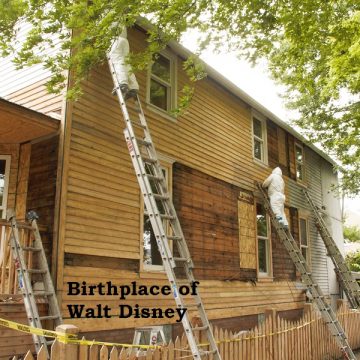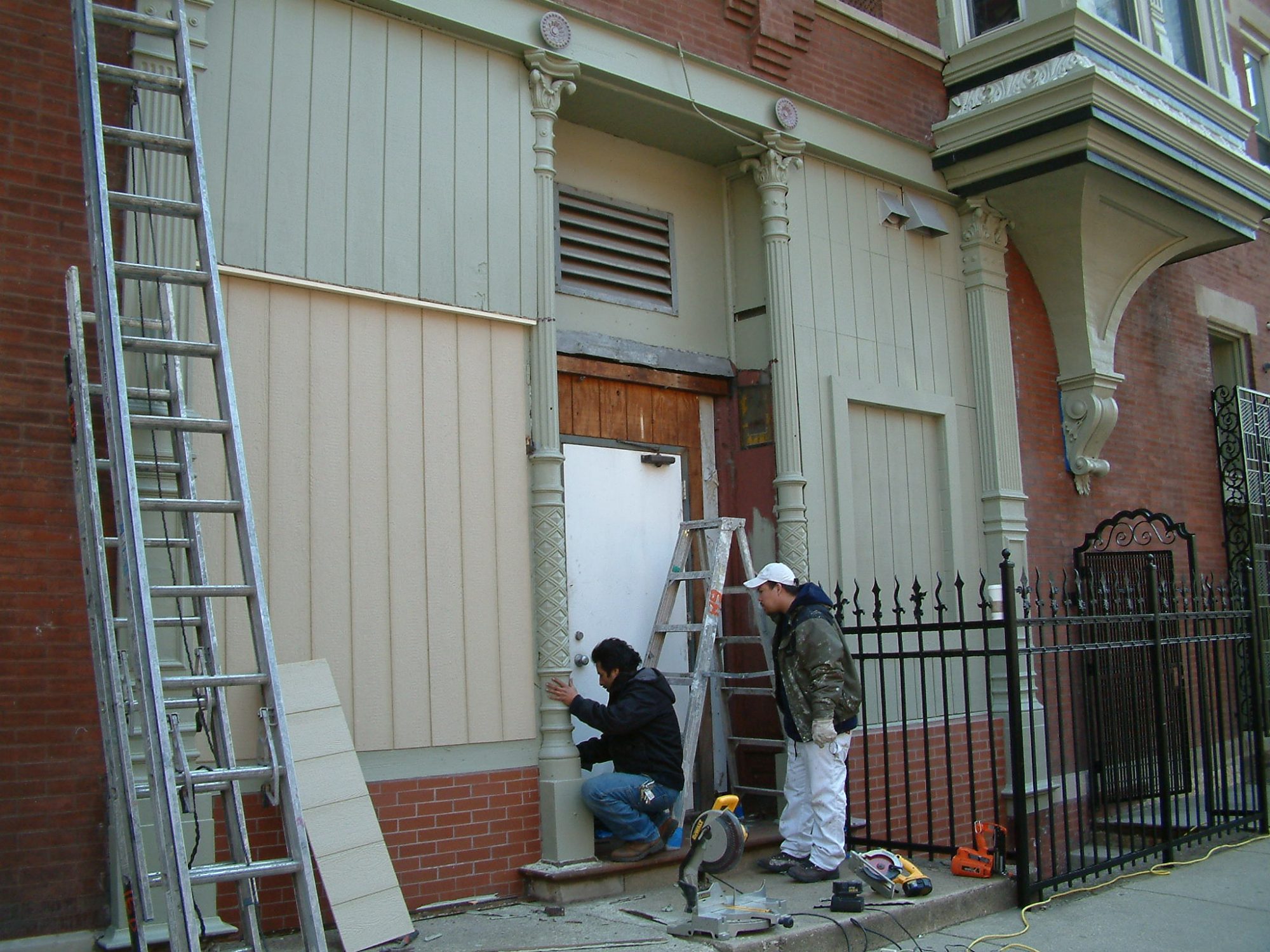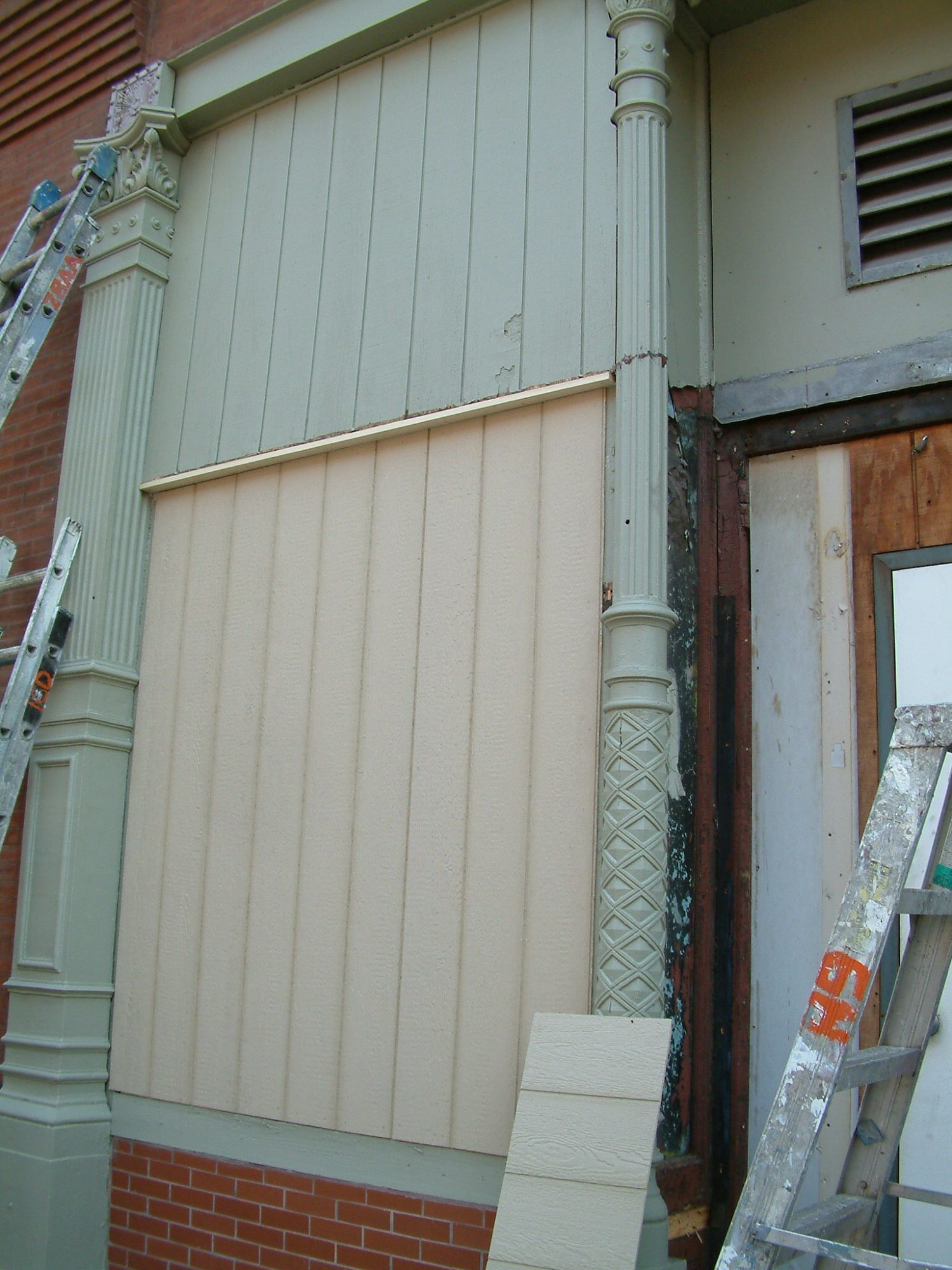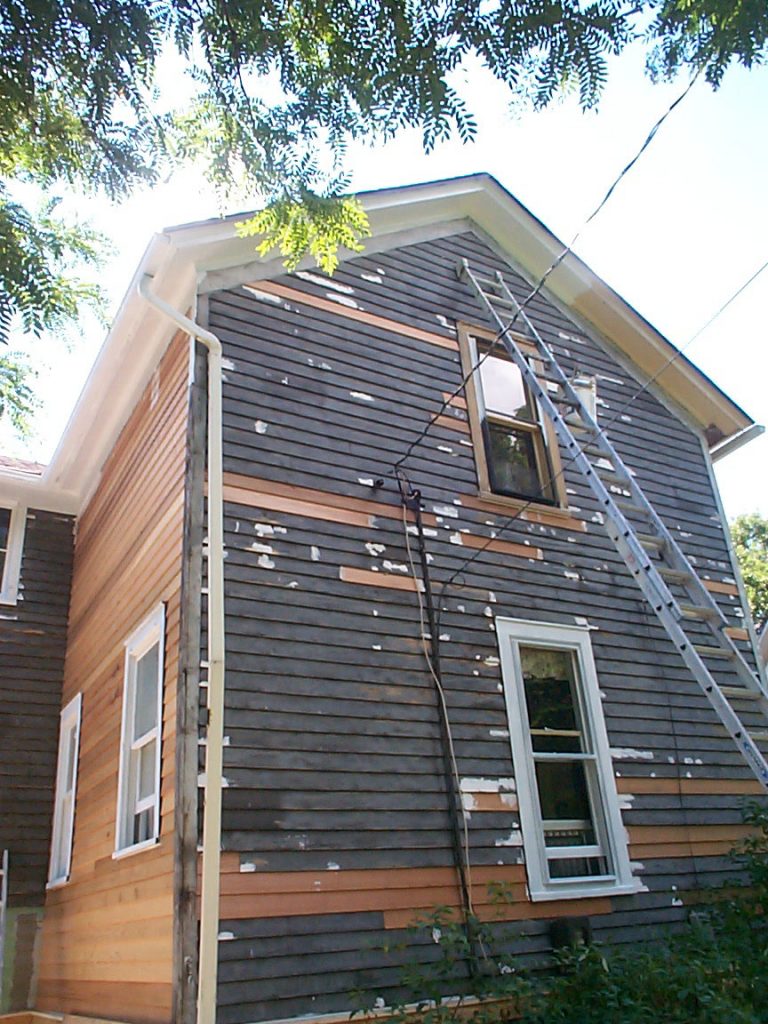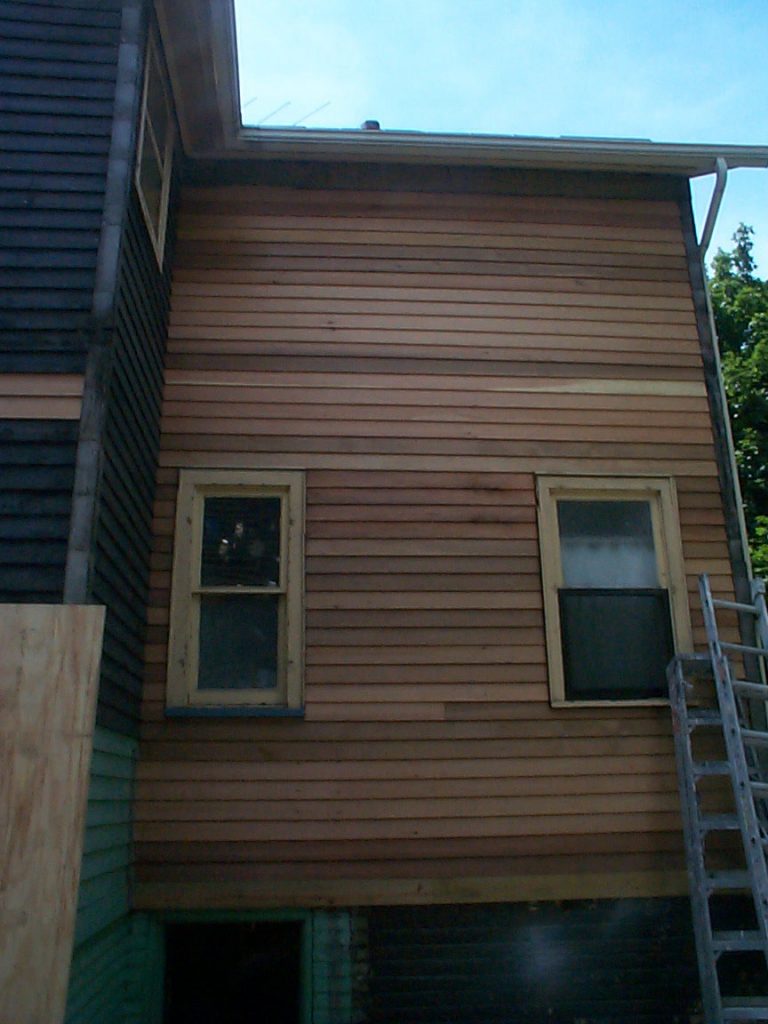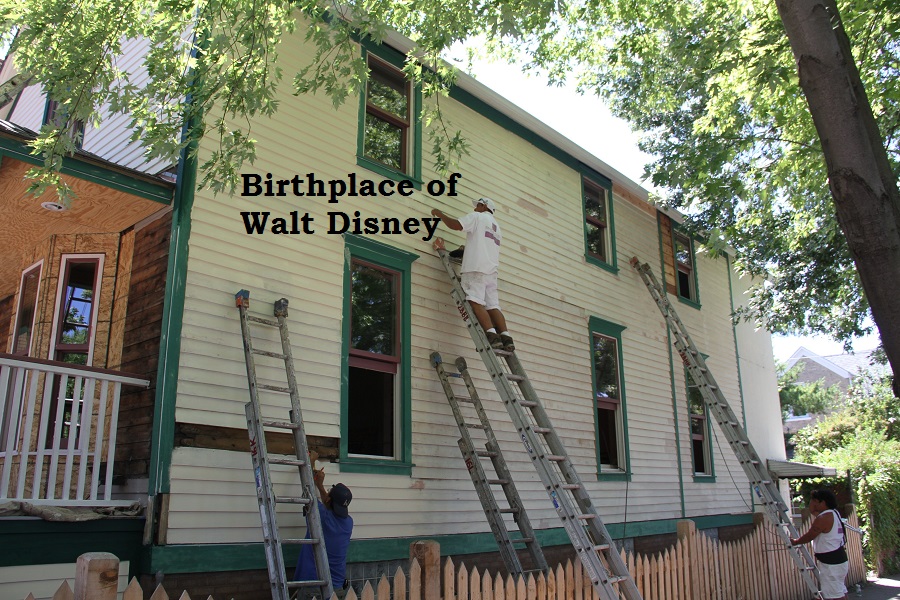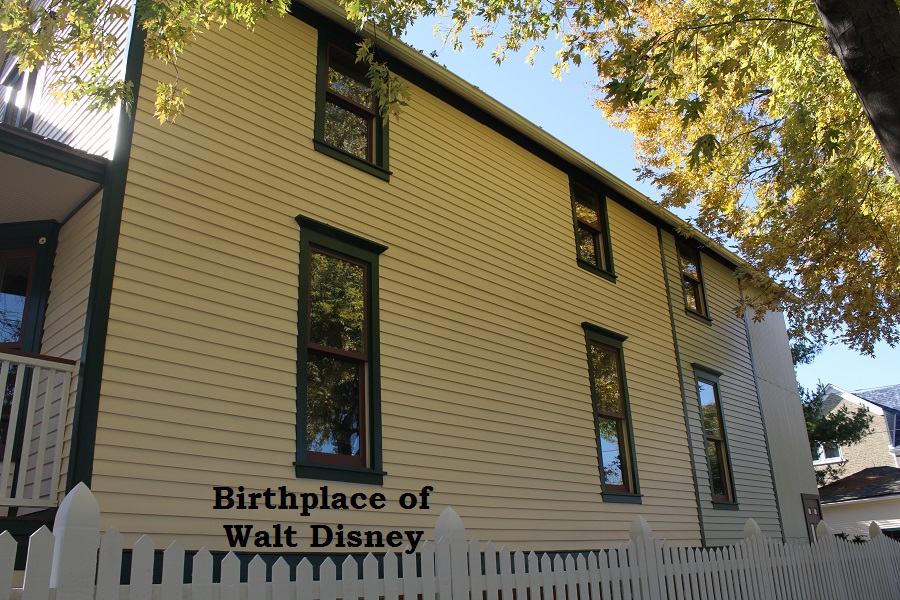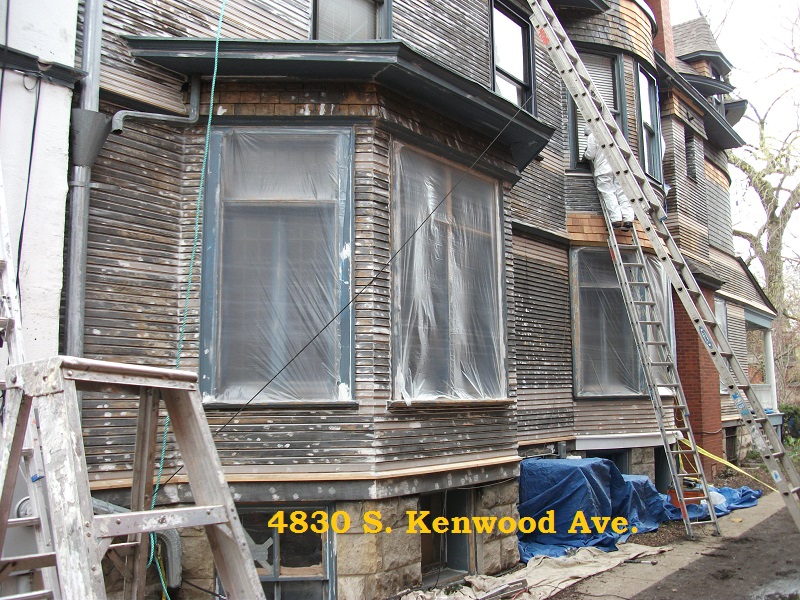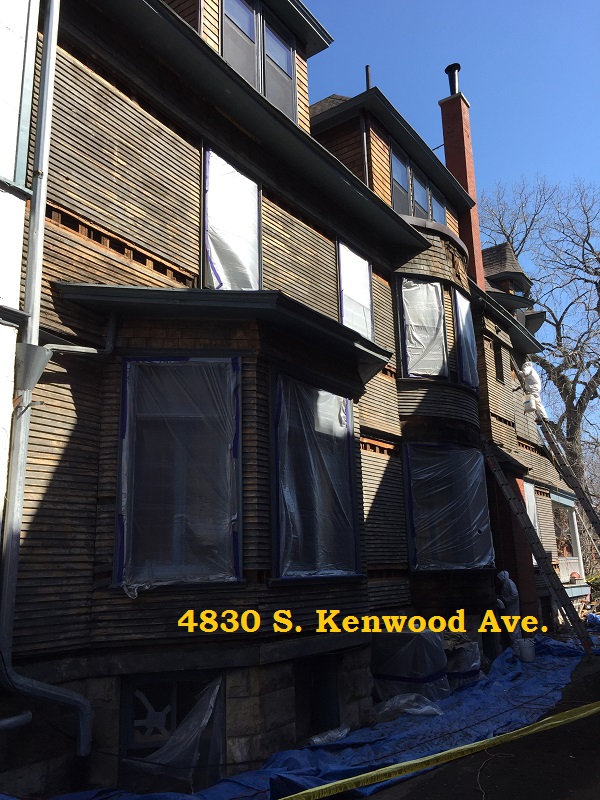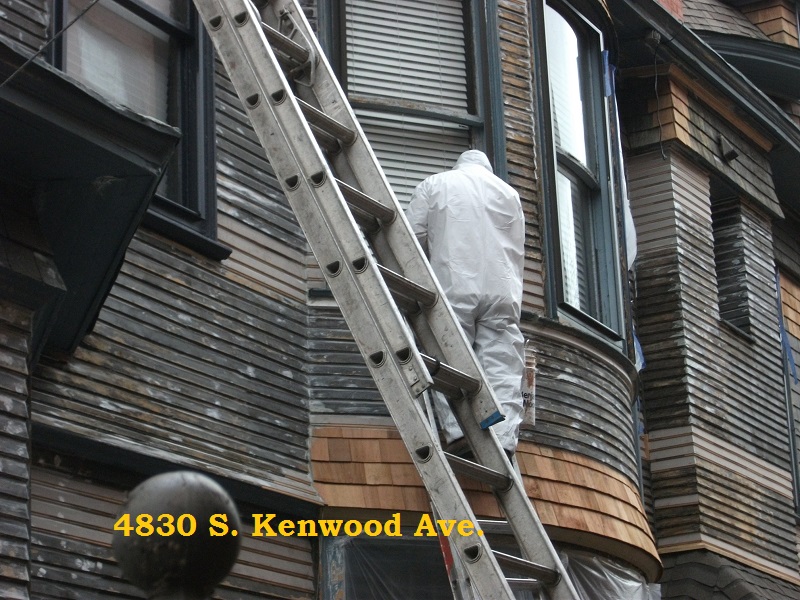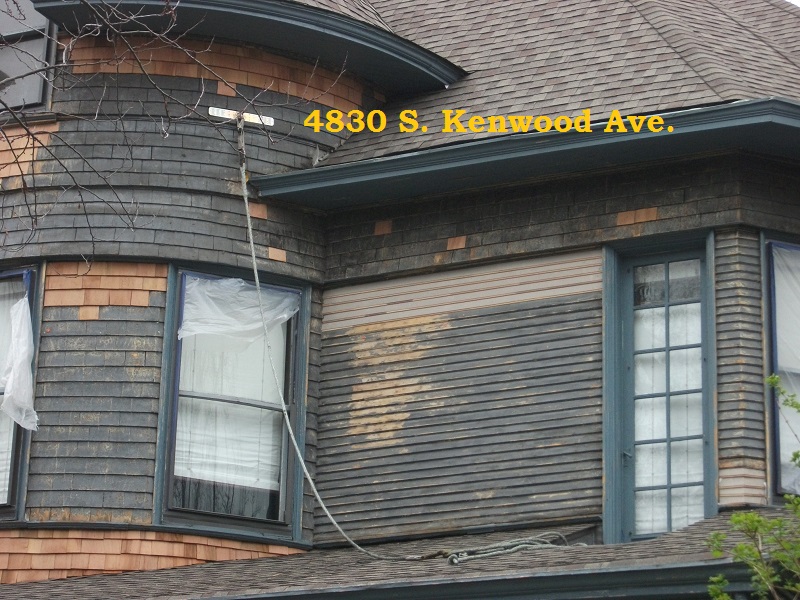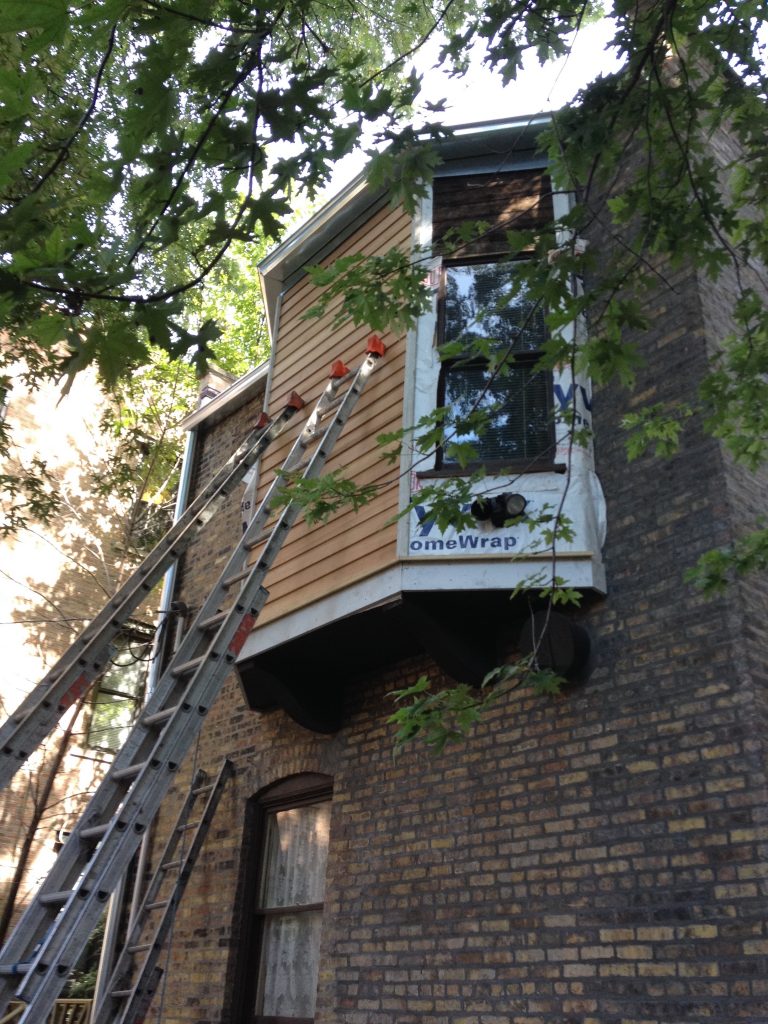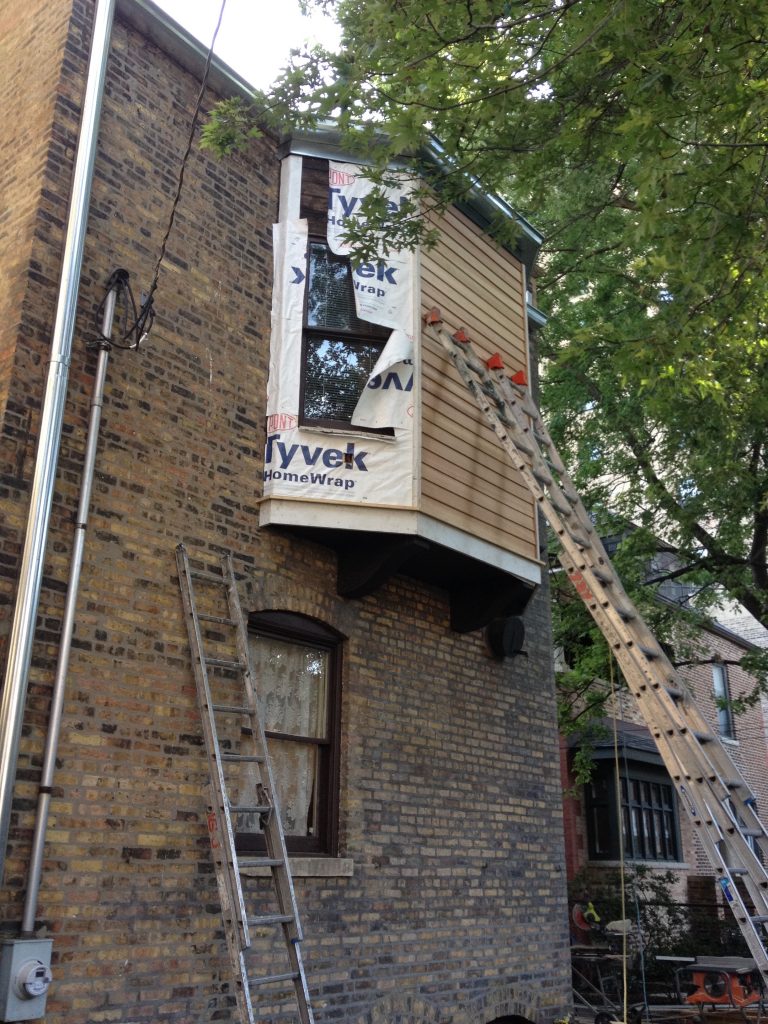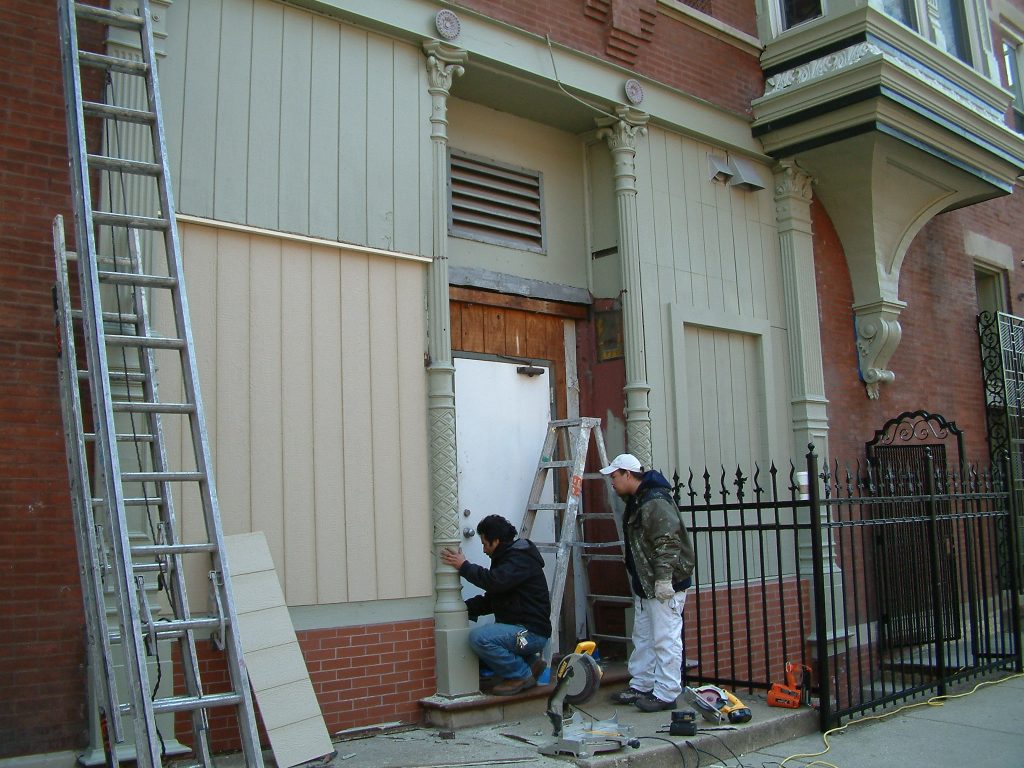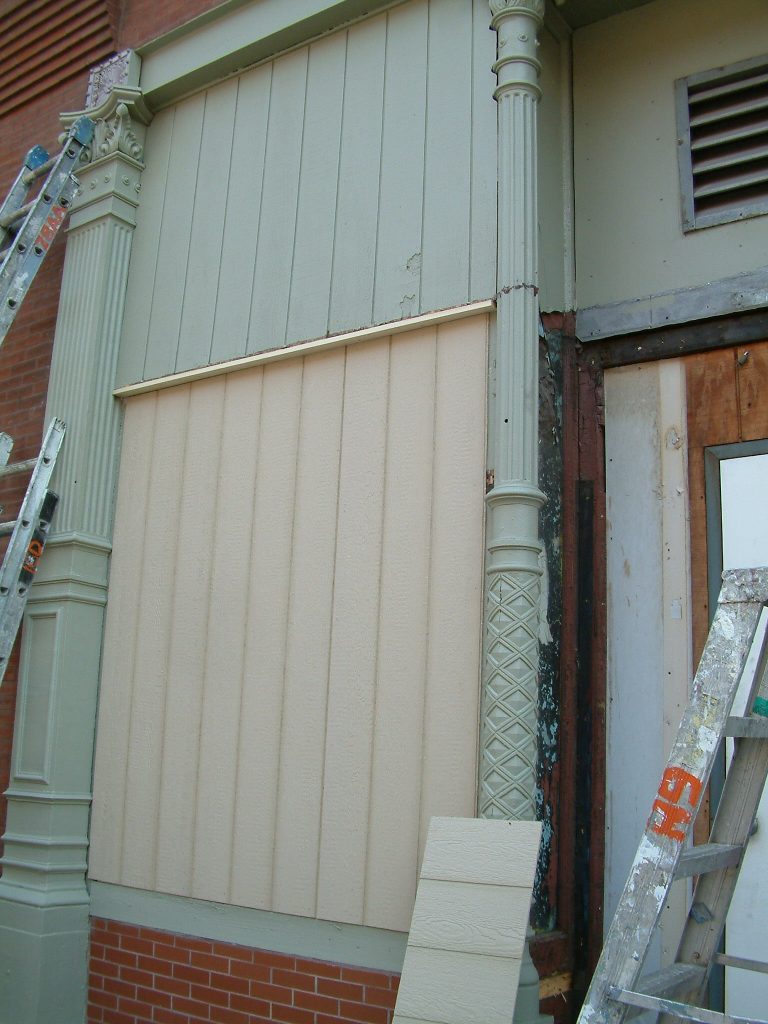

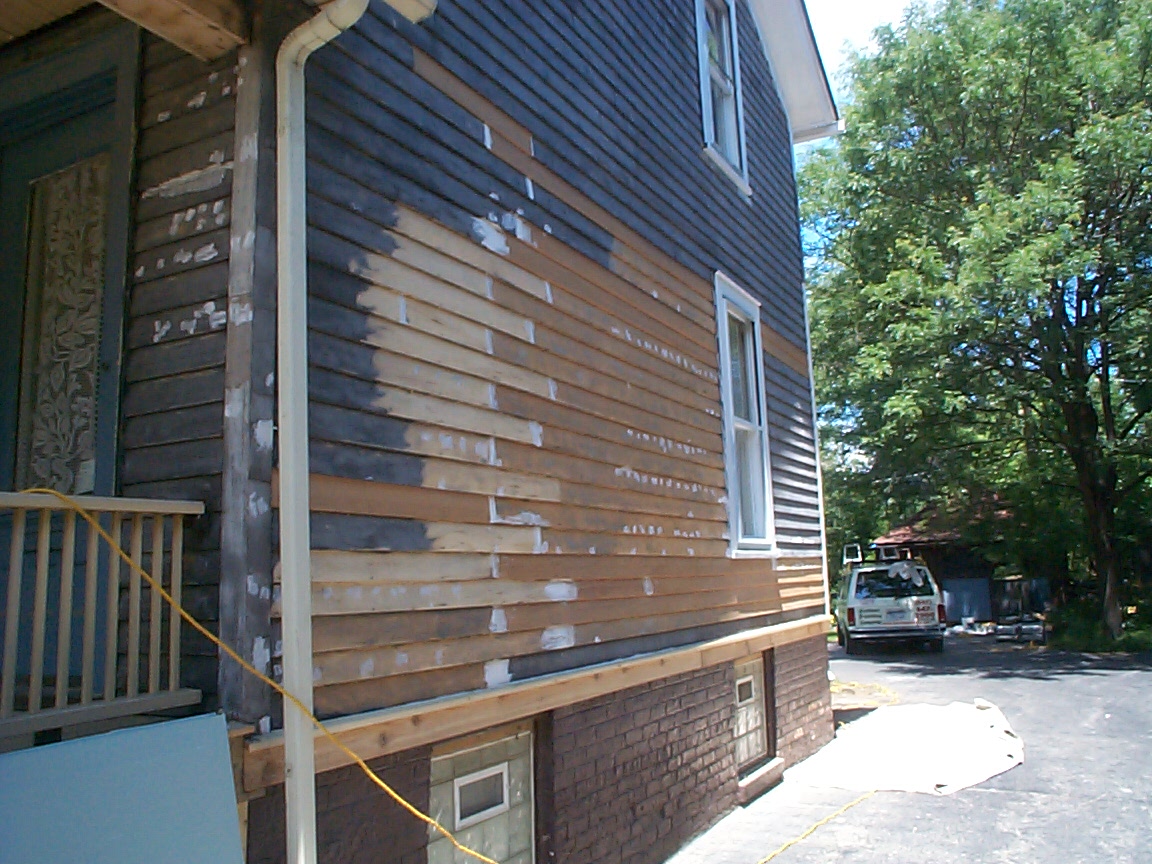
Siding is the protective skin of your home - the system that keeps Chicago’s weather where it belongs (outside) and your living space dry, insulated, and structurally sound. When siding fails, the failure rarely stops at the siding itself. Water gets behind it, sheathing rots, insulation gets compromised, and the cost of repair multiplies the longer the problem is ignored.
Fortune Restoration has been repairing and replacing siding across Chicagoland since 1979 - from clapboard restoration on Old Irving Park bungalows to cedar siding repair on North Shore Colonials to whole-house residing projects in Oak Park, Hyde Park, and Rogers Park. Wood, fiber cement, vinyl, or composite - we work with all of them, and we’ll tell you honestly which one belongs on your house.
Request a free siding estimate or call 847-647-2500.
Common Siding Failure Modes in Chicago
Siding doesn’t fail randomly. The same problems show up over and over in Chicago’s housing stock:
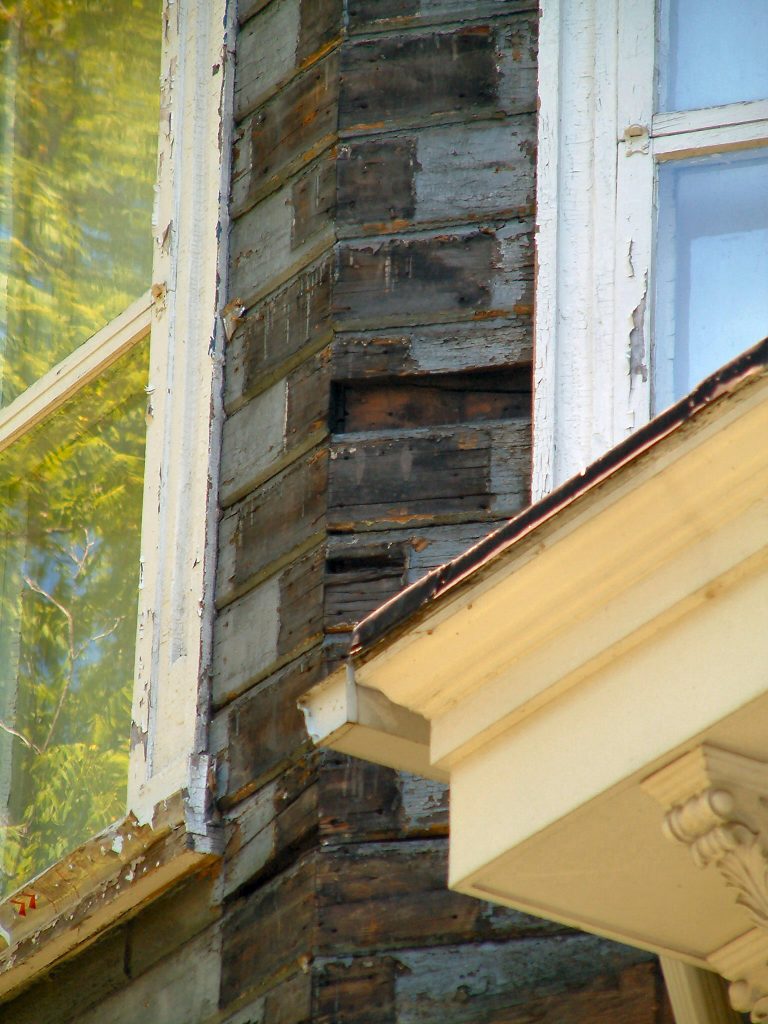
- Wood rot at horizontal joints and bottom courses - water sits where it shouldn’t and wicks into end grain. The most common failure mode on wood clapboard.
- Paint failure that’s actually moisture failure - when paint blisters or peels on siding, the moisture is usually coming from behind the siding (failed flashing, no rain screen, interior vapor drive) rather than from outside.
- Split boards from freeze-thaw cycling - Chicago goes through 40+ freeze-thaw cycles per winter, and water trapped in unsealed end grain expands and splits boards from the inside.
- Failed caulking and flashing - at corners, windows, doors, and roof junctions. These are the actual water entry points; the siding around them just shows the symptoms.
- Insect damage - carpenter ants and termites in the Chicago area, particularly in older homes with untreated framing.
- Mechanical damage - lawnmower hits, ladder dings, hail, dropped branches.
- UV and chalking - on south and west exposures, decades of sun break down the binders in paint and the surface fibers of wood siding.
One critical principle: siding problems are almost always water problems in disguise. Repairing or replacing siding without fixing the underlying moisture path means the new work fails just like the old.
Repair vs. Replace: How We Decide
The economics of siding work depend heavily on how much of the system is compromised. General guidance:
Spot Repair (Less Than 20% of Siding Area Affected)
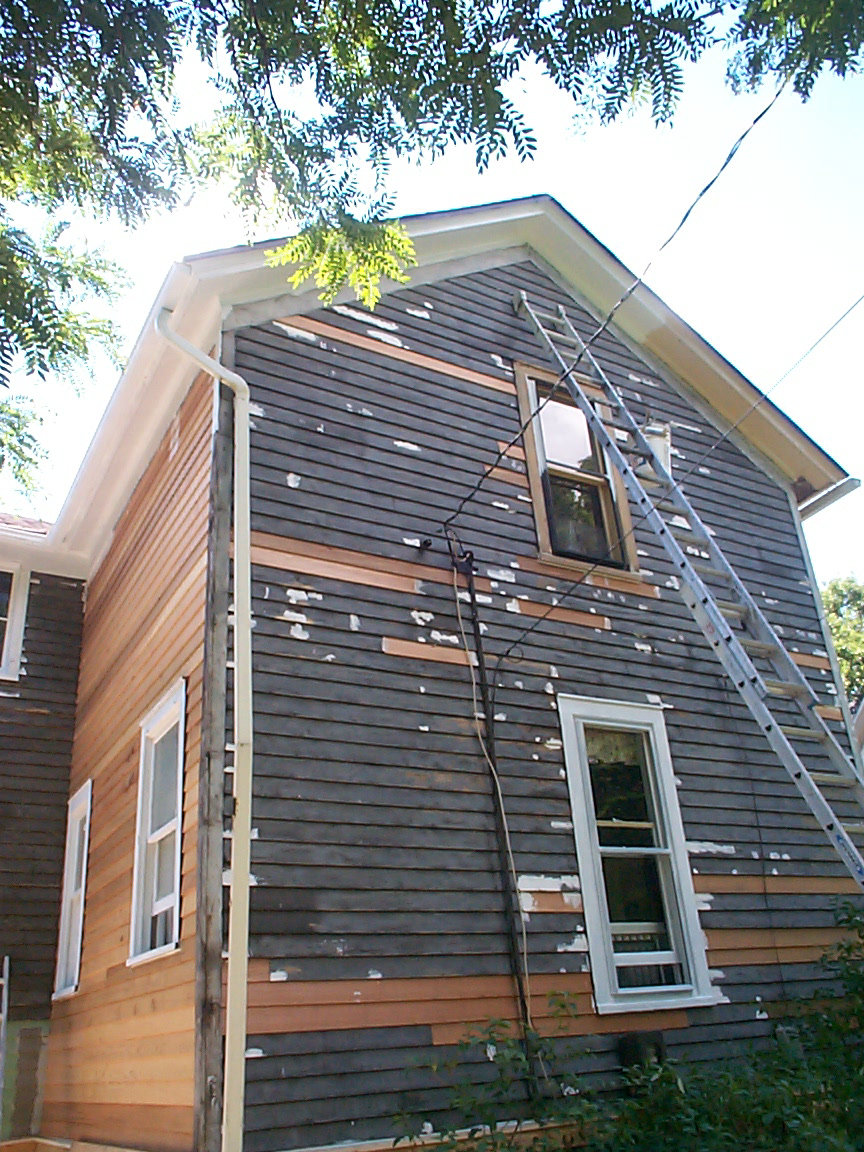
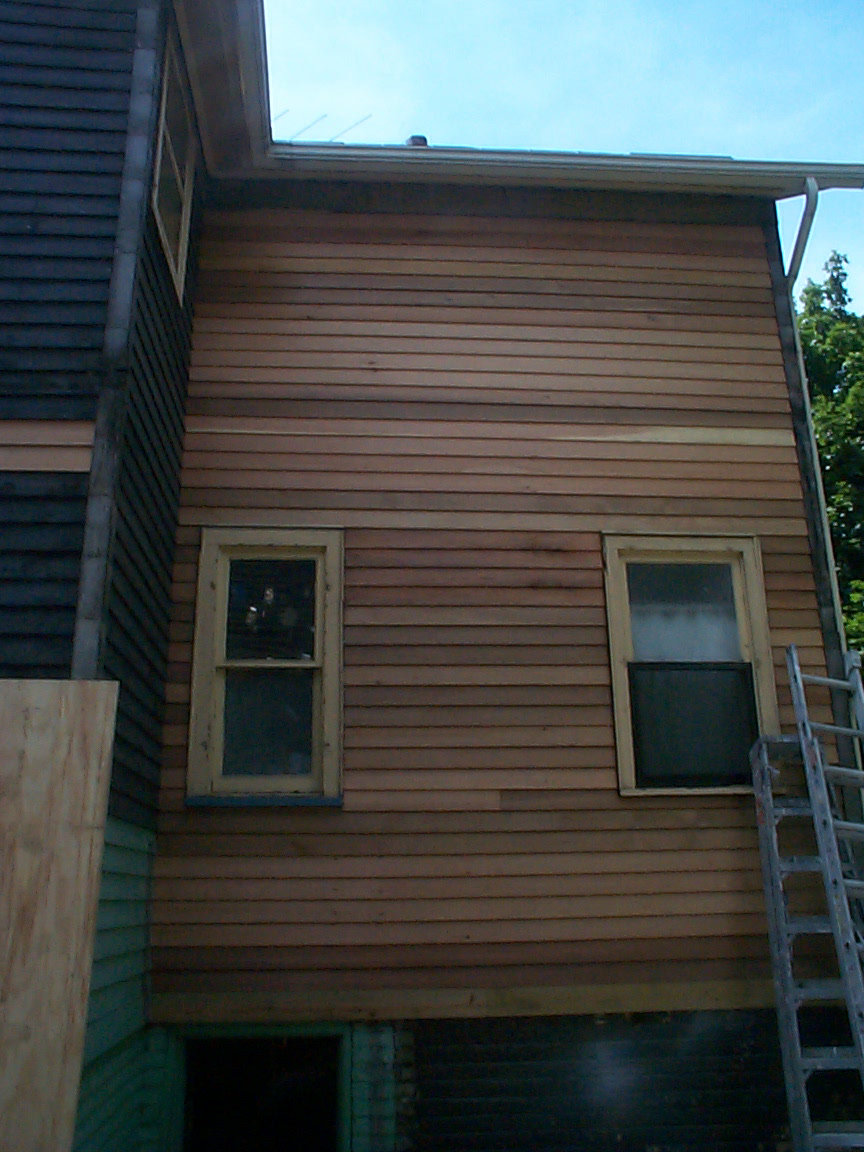
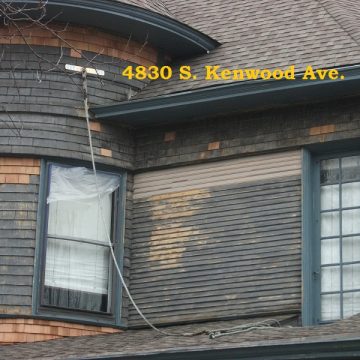
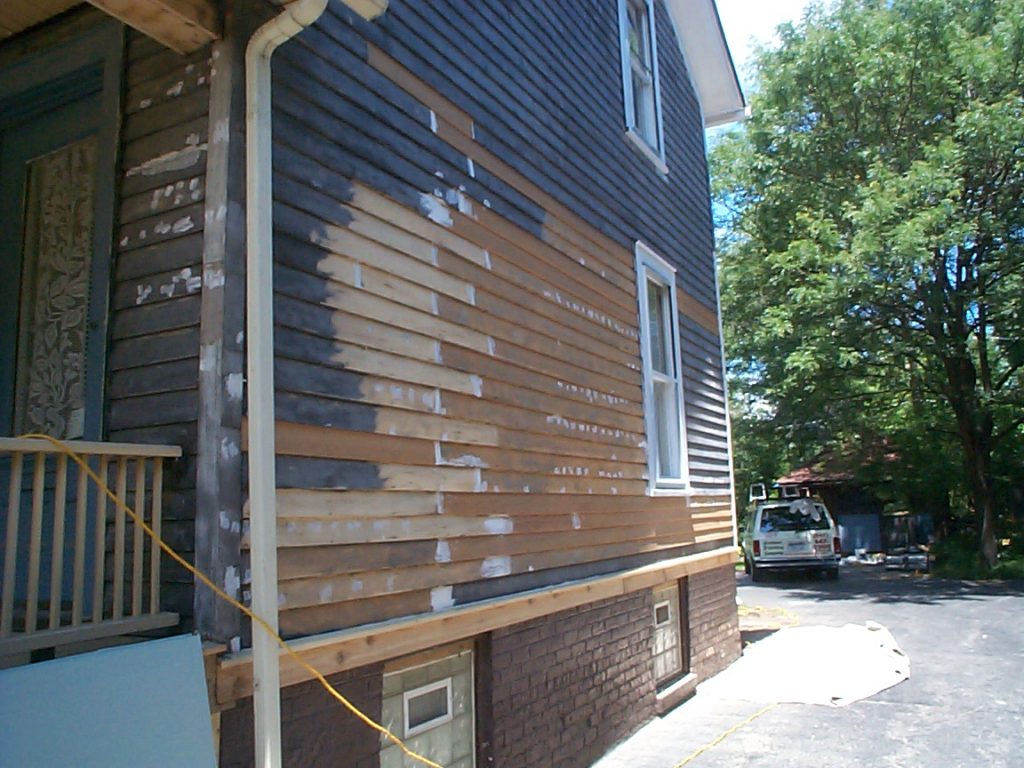
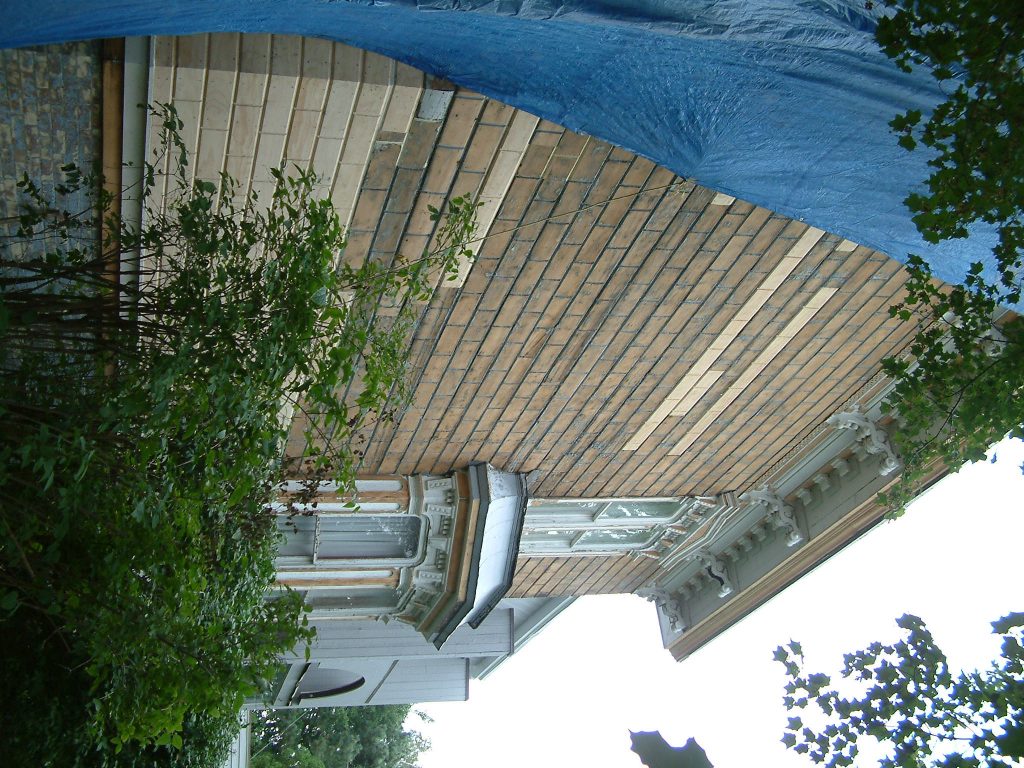
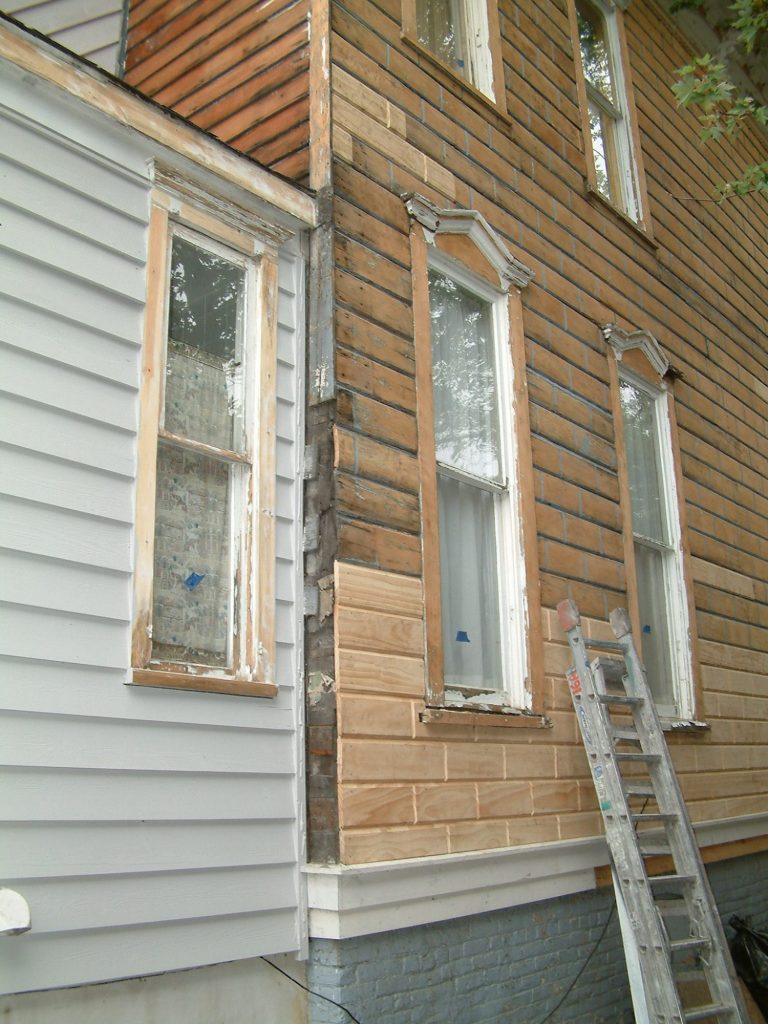
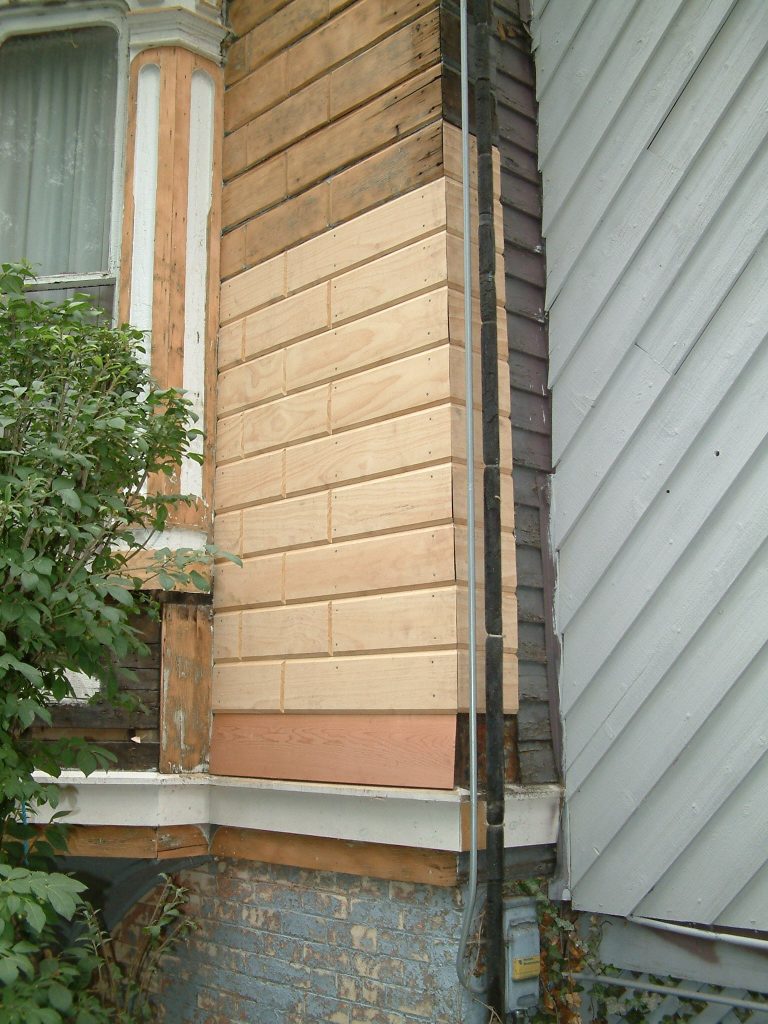
When damage is concentrated - a section of rot at a downspout location, a few damaged boards near grade, isolated impact damage - targeted repair is dramatically more economical than replacement. Match the existing siding material, profile, and grade as closely as possible, address the underlying water issue, and finish to integrate with surrounding original work.
Partial Replacement (20–50% of System Affected)
When damage covers a full elevation or multiple sections but other elevations are sound, partial replacement - sometimes elevation by elevation - can make sense. The challenge is matching new siding to weathered existing siding so the result doesn’t look patched. This sometimes pushes the decision toward full replacement just for visual consistency.
Full Replacement (Over 50% Compromised or System Reaching End of Life)
When wood siding is approaching the end of its service life across the building, or when extensive moisture damage has compromised sheathing behind the siding, full replacement is usually the right call. This is also the opportunity to upgrade insulation, install a proper rain screen, address underlying flashing problems, and choose a material with better long-term performance.
Siding Materials for Chicago’s Climate
Cedar Clapboard
The historic standard and still our recommendation for quality wood siding on Chicago homes. Naturally rot-resistant, dimensionally stable through freeze-thaw cycles, holds paint exceptionally well, and ages beautifully. Western Red Cedar is most common; Eastern White Cedar is also excellent. Higher upfront cost than pine but significantly longer service life - cedar siding maintained properly can last 60–100 years.
Cypress and Redwood
Premium historical options, particularly for high-end restoration work. Excellent durability and finish quality. Increasingly expensive due to supply constraints, but appropriate for landmark properties and Victorian restorations.
Pine and Spruce (Builder-Grade Wood)
Common on production-built homes from the 1970s onward. Affordable but prone to rot, paint failure, and warping in Chicago’s climate. When pine siding fails, we typically recommend upgrading to cedar or fiber cement rather than replacing in kind - you’ll be making the same repair again in 15 years otherwise.
Fiber Cement (James Hardie and Similar)
The performance leader for modern installations. Won’t rot, holds paint indefinitely, dimensionally stable, and rated for high-wind and impact resistance. Visual character is good but not identical to wood up close. Appropriate for homes where maintenance reduction is prioritized over historic authenticity. Heavier than wood - requires proper installation by experienced crews.
Engineered Wood (LP SmartSide and Similar)
Treated wood-fiber composite with significantly better moisture and insect resistance than solid wood, at moderate cost. A reasonable middle ground for owners who want the look and feel of wood with reduced maintenance.
Vinyl
The most maintenance-free option and the lowest-cost replacement. Appropriate for production homes where authenticity isn’t a concern. Not appropriate for historic, landmark, or architecturally significant properties - the visual character is wrong, the installation typically requires removing or covering original trim, and the decision is largely permanent.
Historic and Architectural Siding Restoration
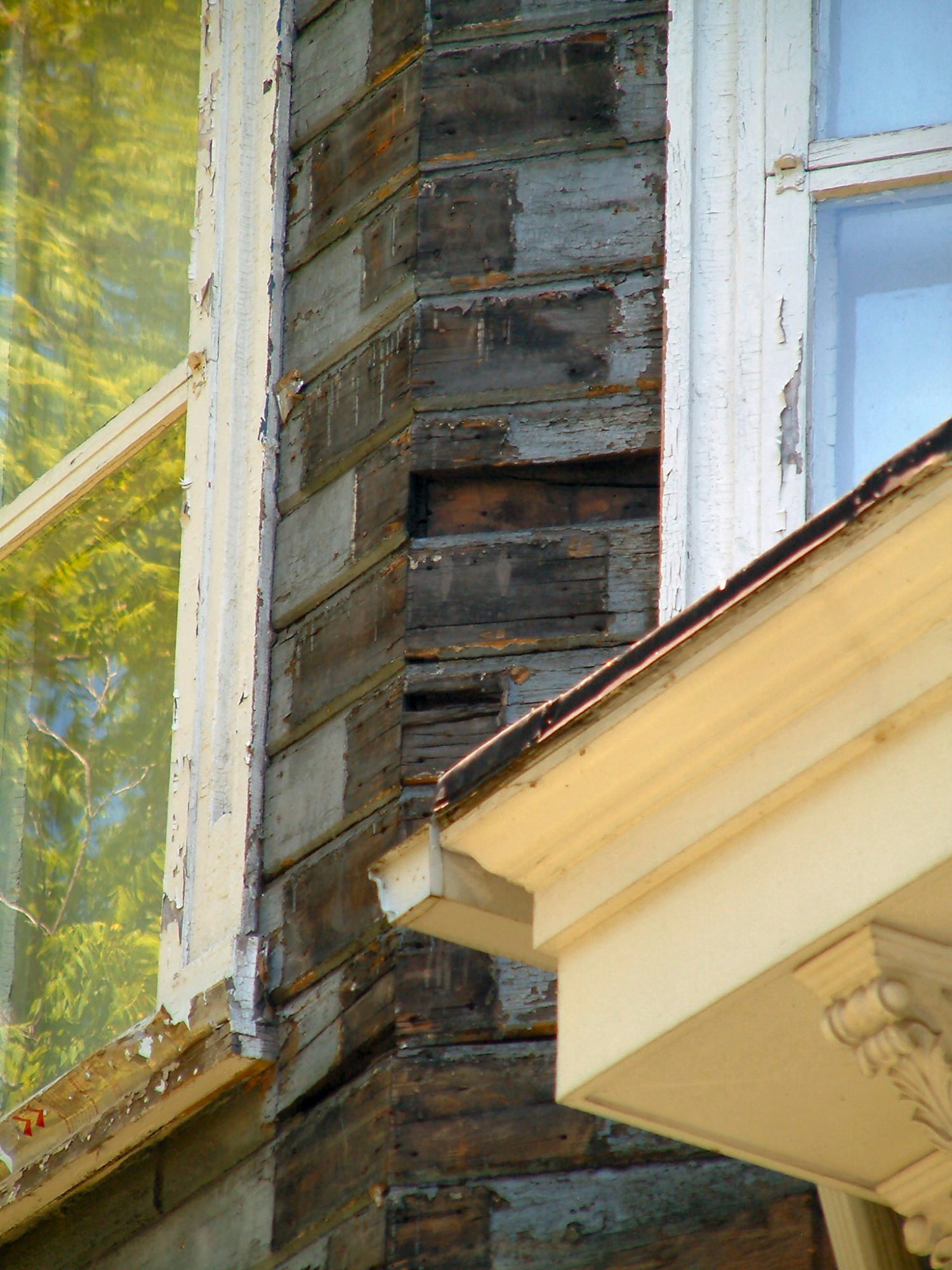
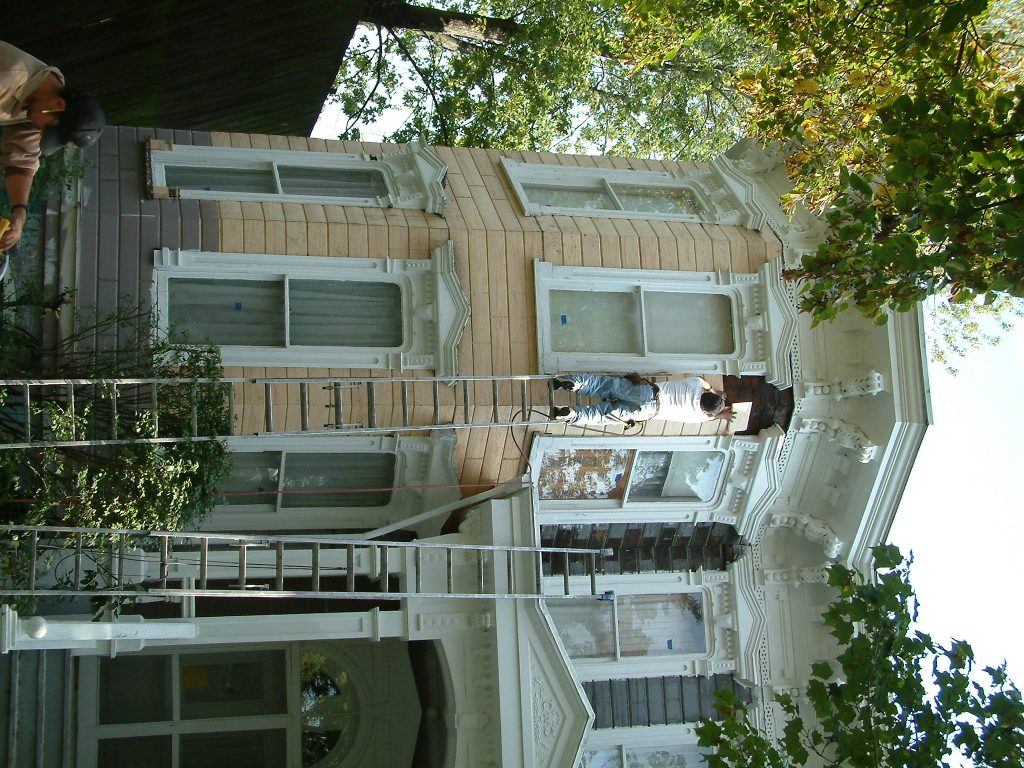
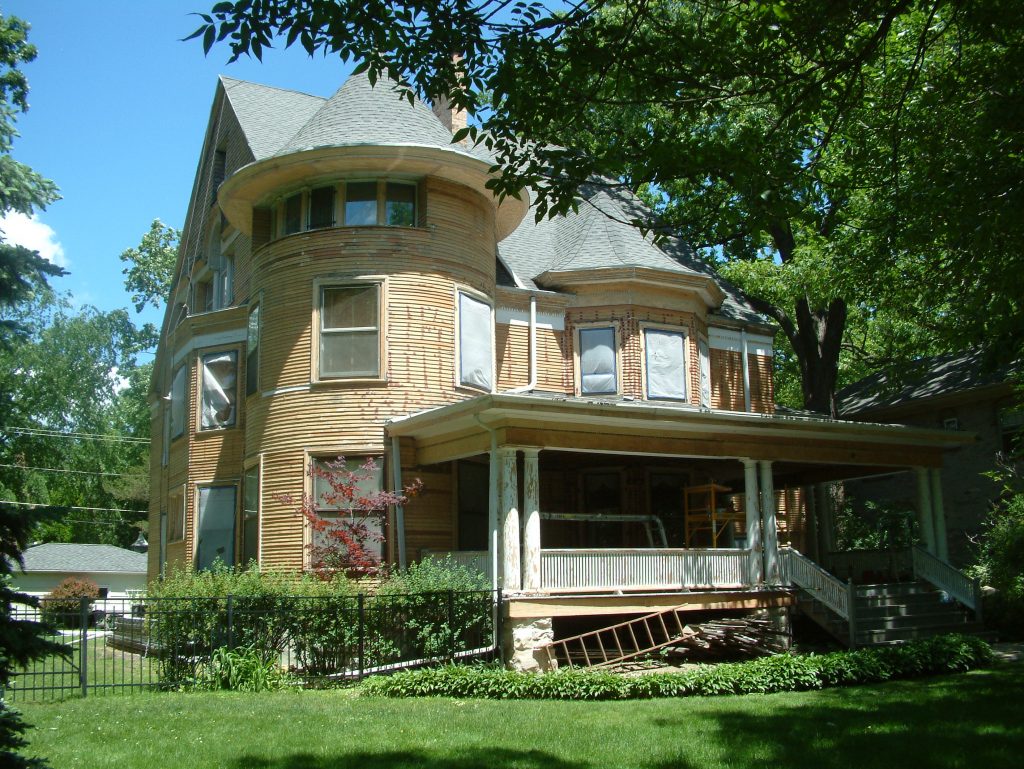
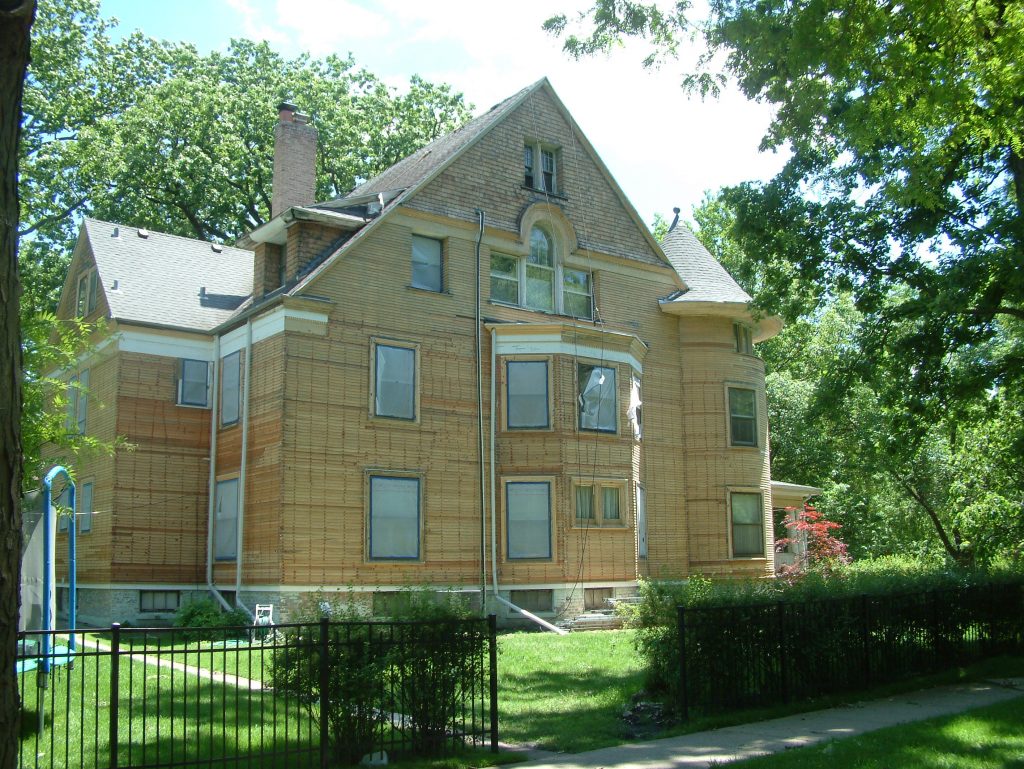
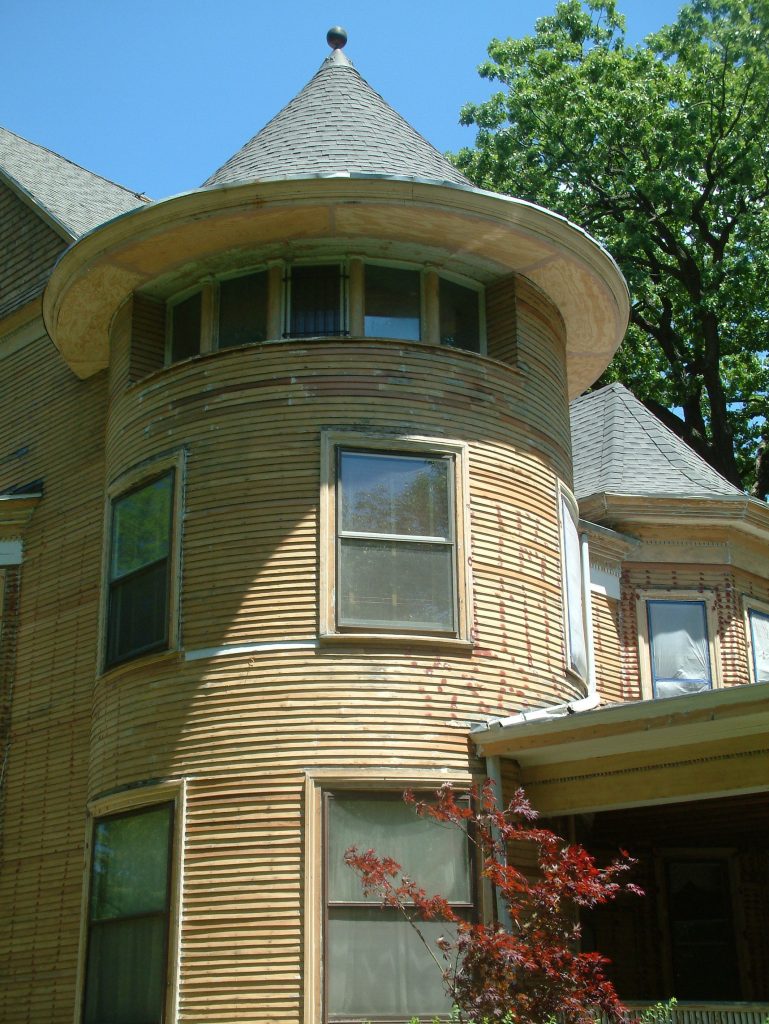
On Chicago’s historic homes - the Victorian-era greystones with elaborate decorative siding, the Painted Ladies with multiple board profiles, the Prairie-style homes of Oak Park with their distinctive horizontal banding - siding is more than weather protection. It’s part of the architectural composition.
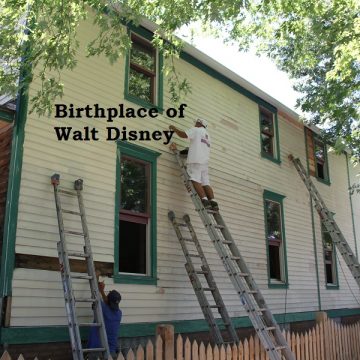
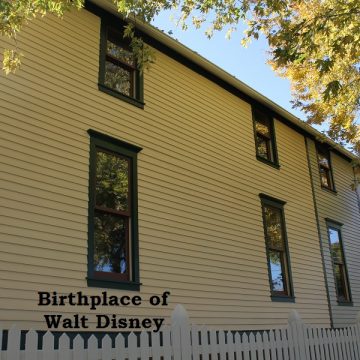
Our approach to historic siding follows NPS guidance on preserving wood siding: repair where possible, replace in kind only when necessary, and never cover original siding with vinyl or aluminum. We’ve restored historic siding on landmark properties including Frank Lloyd Wright homes and the Noble-Seymour-Crippen House.
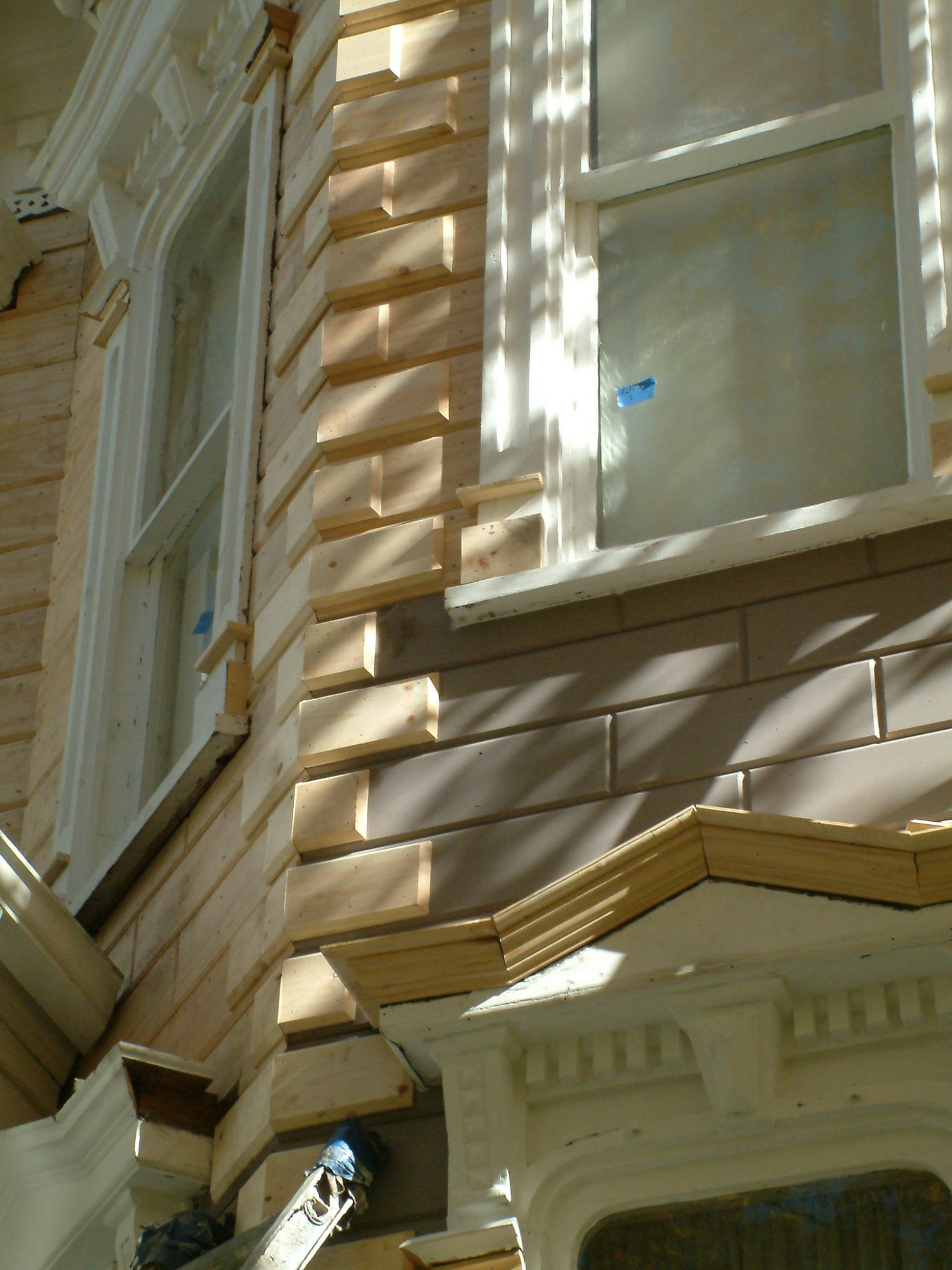
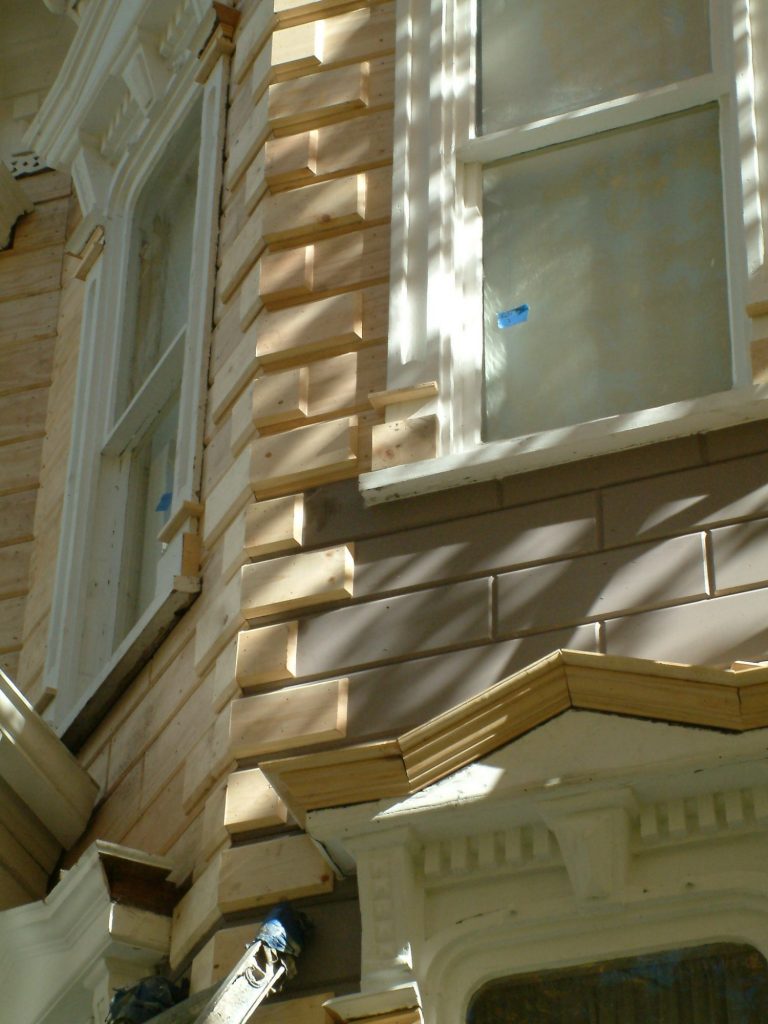
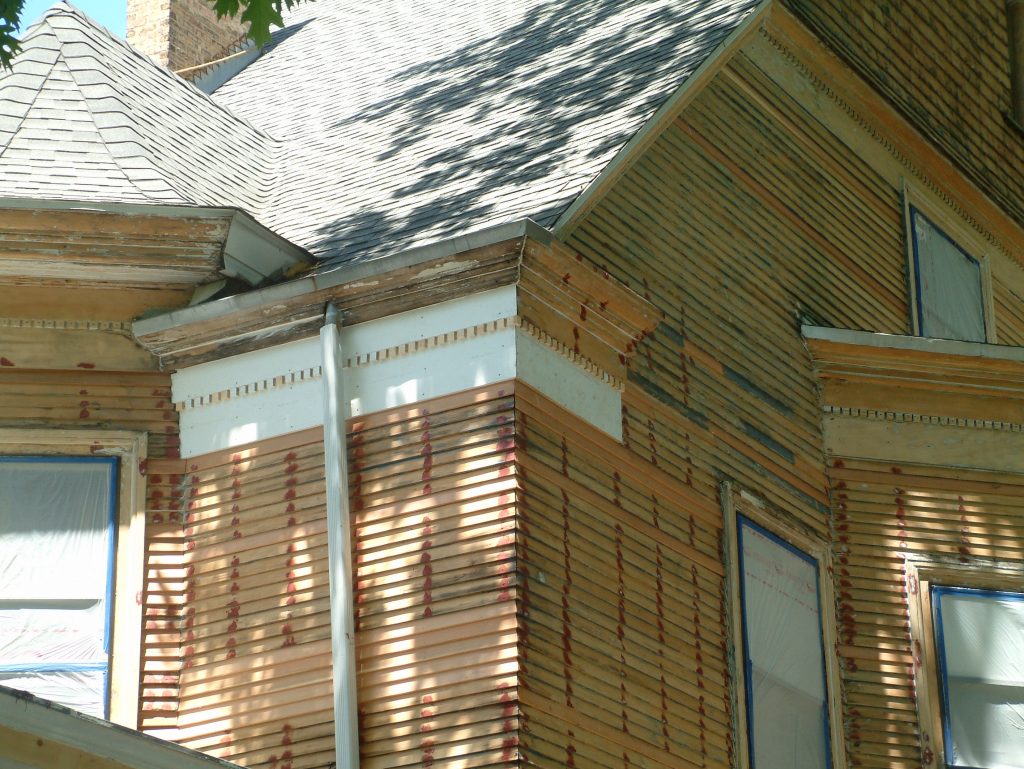
For sections where original siding has to be replaced, our in-house custom millwork capabilities let us replicate historic profiles - including unusual decorative patterns, shingled gable details, fish-scale courses, and the elaborate “stick style” decorative siding found on Queen Anne Victorians.
The Fortune Restoration Process
- Comprehensive assessment. We don’t just look at the visible siding damage - we evaluate flashing, caulking, gutter and downspout drainage, and moisture indicators that point to what’s actually causing the failure.
- Repair or replacement scope. We give you the honest call on repair versus replacement, with the economics and long-term implications spelled out clearly.
- Material selection. Matching existing material on repair work; helping you select the right product for replacement based on architectural character, budget, and maintenance preferences.
- Demolition and substrate inspection. When siding comes off, we inspect the sheathing and framing behind it. Hidden rot is repaired before new siding goes on.
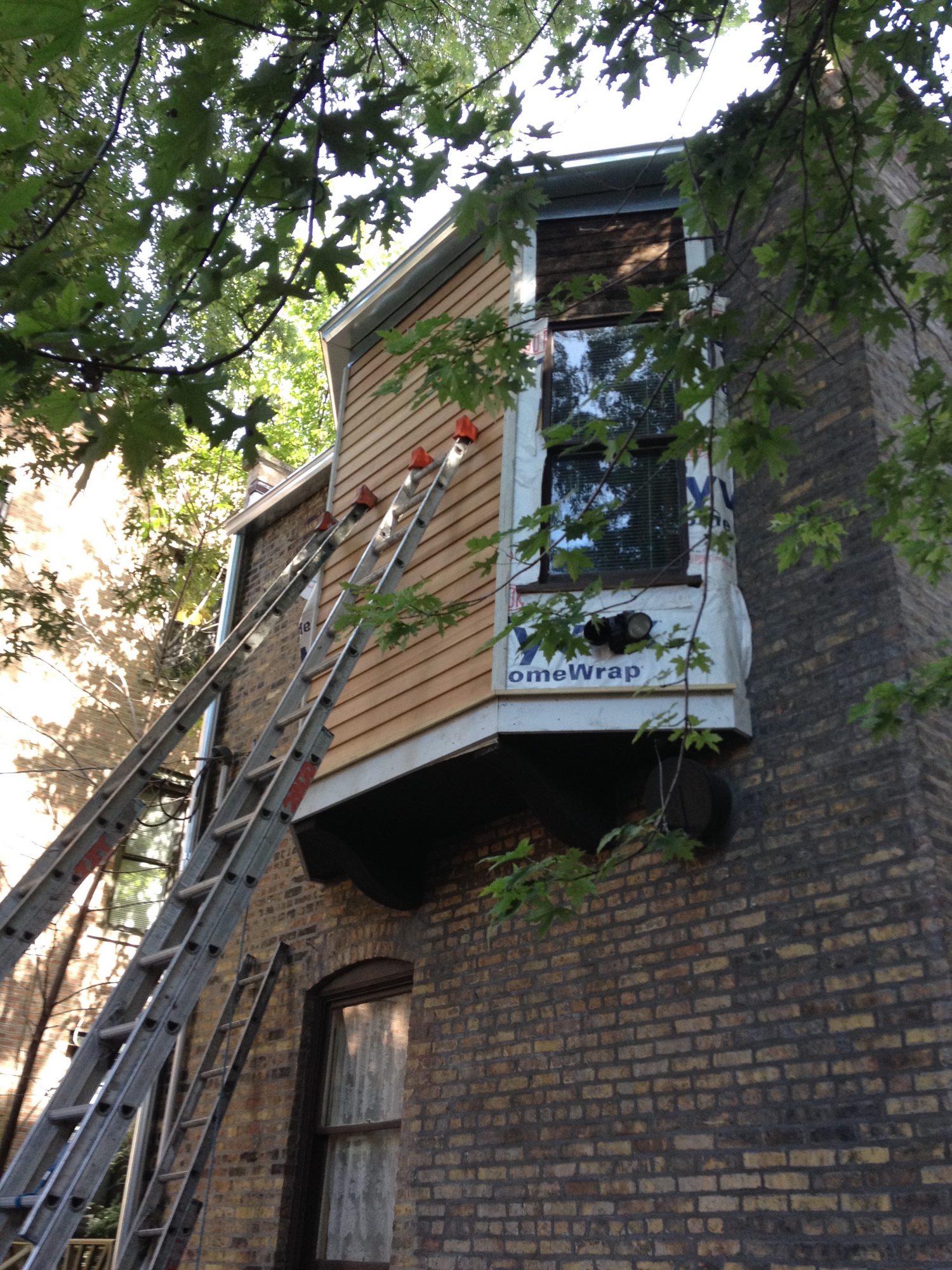
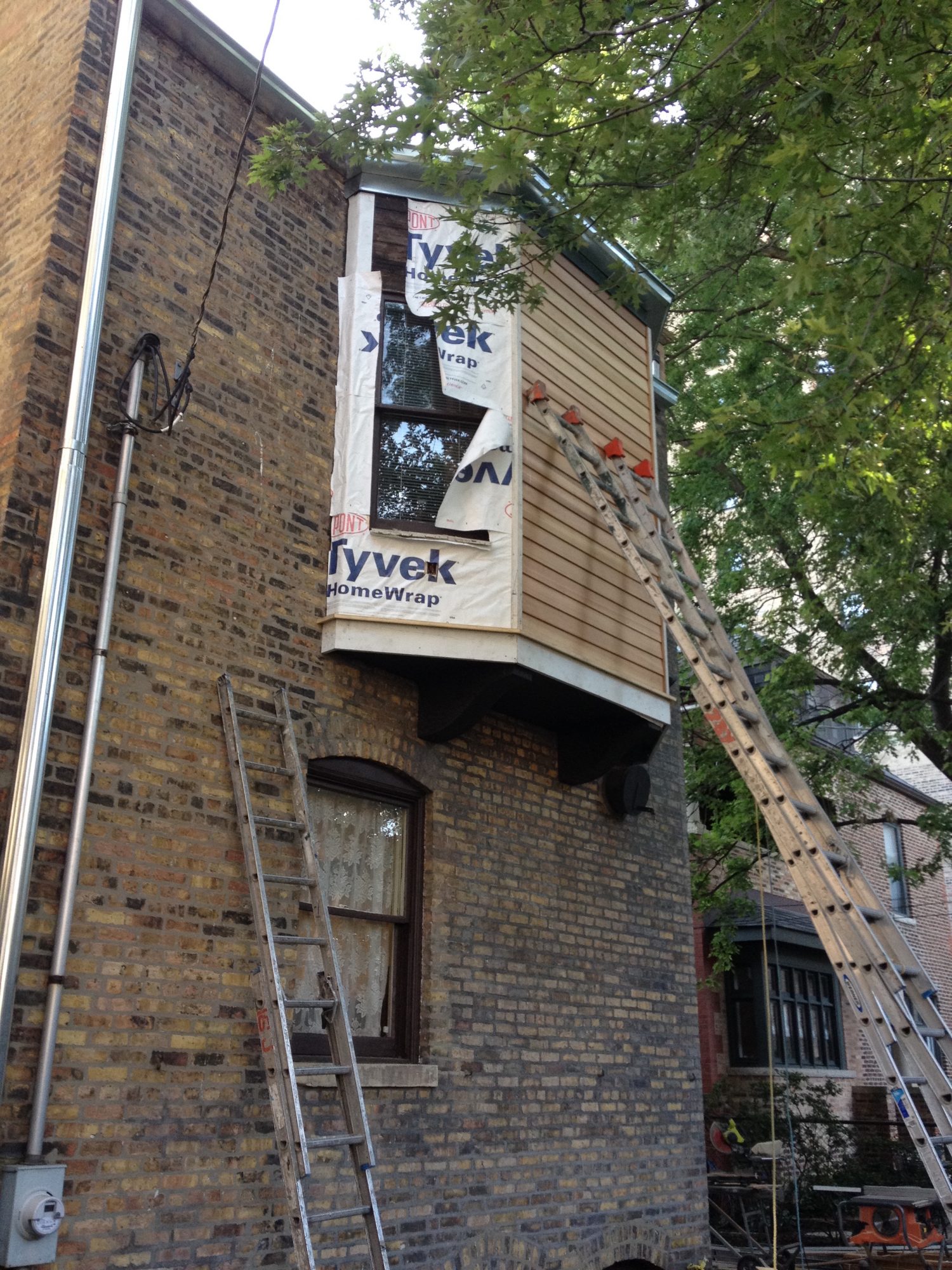
- Water management. Proper housewrap, flashing at openings and penetrations, and rain-screen detail where appropriate.
- Installation. Tight seams, proper exposure, correct nailing patterns, sealed end cuts - the workmanship details that determine whether siding lasts 15 years or 50.
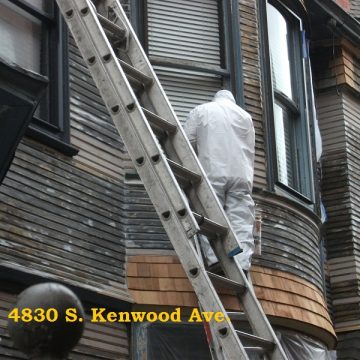
- Finishing. Caulking, priming, and painting integrated with the work - not handed off to a separate trade. Lead-safe practices on all pre-1978 properties.
- Walkthrough. Inspection with the homeowner before sign-off.
Coordinating Siding Work With Other Trades
Siding rarely stands alone. Most projects coordinate with:
- Exterior painting - new or repaired siding needs proper priming and finish coats integrated with the building’s color scheme
- Paint preparation - existing siding that’s being kept must be properly prepped before painting
- Custom millwork - corner boards, water tables, frieze boards, and decorative trim often need work alongside siding
- Column restoration and porch and deck restoration - siding behind and under porch structures is frequently compromised and often missed
- Shutter repair and window replacement - rot behind shutter mounts and at window perimeters is a leading cause of siding failure
- Wood stripping and refinishing - for historic siding with thick paint buildup before refinishing
- Power washing - pre-paint cleaning of existing siding
Service Area
Fortune Restoration provides siding replacement and repair throughout the Chicagoland area:
Chicago (Lincoln Park, Hyde Park, Wicker Park, Beverly, Lincoln Square, Old Irving Park, Edgewater, Rogers Park, Bucktown, Gold Coast) · Evanston · Wilmette · Winnetka · Kenilworth · Glencoe · Highland Park · Lake Forest · Oak Park · River Forest · Hinsdale · Lincolnwood · Skokie · Niles · Park Ridge · Glenview · Northbrook · Deerfield · Wheaton · Naperville
Why Property Owners Choose Fortune Restoration
- 47+ years of Chicagoland siding and exterior restoration experience
- Master carpenters who repair what most contractors would simply tear off and replace
- In-house custom millwork for matching historic siding profiles and decorative patterns
- Multi-trade integration - siding coordinated with painting, millwork, porch restoration, and masonry under a single contractor
- EPA Lead-Safe (RRP) certified for siding work on pre-1978 properties - lead paint on original siding is extremely common
- Historic and landmark experience - trusted on Frank Lloyd Wright homes, Victorian Painted Ladies, and significant Chicago restoration projects
- Licensed, bonded, and fully insured in the State of Illinois
Helpful External Resources
- NPS Preservation Brief #8: Aluminum and Vinyl Siding on Historic Buildings - why historic buildings shouldn’t be covered with modern synthetic siding
- NPS Preservation Brief #10: Exterior Paint Problems on Historic Woodwork - directly relevant to painted wood siding
- EPA Lead Renovation, Repair & Painting (RRP) Program - required reading for pre-1978 home owners
- Energy Star Home Envelope Resources - how siding work ties into overall home energy performance
Frequently Asked Questions
Should I repair my wood siding or replace it entirely?
If damage affects less than about 20% of the siding area and the rest is structurally sound, repair is almost always more economical. If damage covers a full elevation, or if the underlying sheathing has been compromised by long-term moisture, partial or full replacement starts to make more economic sense. Our estimator will give you an honest assessment with both paths priced out so you can decide based on actual numbers.
What’s the best siding material for Chicago’s climate?
For quality wood siding on traditional and historic homes, cedar clapboard is the gold standard - rot-resistant, stable through freeze-thaw cycles, and excellent paint adhesion. For modern installations where maintenance reduction is prioritized, fiber cement (James Hardie and similar) is the performance leader. Pine and spruce builder-grade siding fail quickly in Chicago and aren’t recommended. Vinyl is appropriate only for production homes where authenticity isn’t a concern.
How long does wood siding last in Chicago?
Cedar siding properly installed and maintained can last 60 to 100 years - we routinely work on Chicago homes with original cedar siding from the 1910s and 1920s. Builder-grade pine often starts failing within 15 to 25 years. The key variables are paint maintenance (recoat every 8 to 12 years), flashing integrity at openings and roof junctions, and proper drainage away from the building.
Why does my siding paint keep peeling?
Paint failure on siding is almost always a moisture problem, not a paint problem. Water is entering the wall somewhere - failed caulk at trim, missing flashing, interior vapor drive in winter, or wet sheathing behind the siding - and pushing the paint film off from behind. Repainting without fixing the moisture source produces the same failure within 2 to 3 years. We always identify the water path before specifying paint repair.
Can vinyl siding be installed over my existing wood siding?
Physically, yes - and many production-builder homes have been done this way. We don’t recommend it for historic or architecturally significant homes. Vinyl over original wood traps moisture, covers original trim and decorative detail, and the decision is largely permanent (removing it later reveals damage to the underlying material). On a Chicago Victorian or Prairie-style home, vinyl siding decreases property value compared to repaired original wood. On a generic production house, it can be a reasonable maintenance-reduction choice.
Do you handle lead paint on older siding?
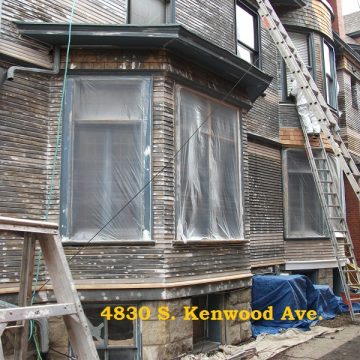
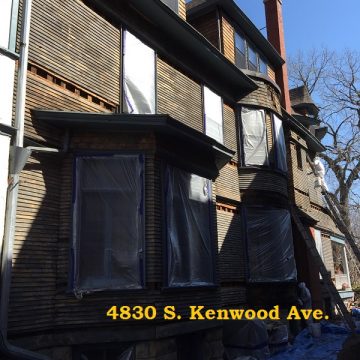
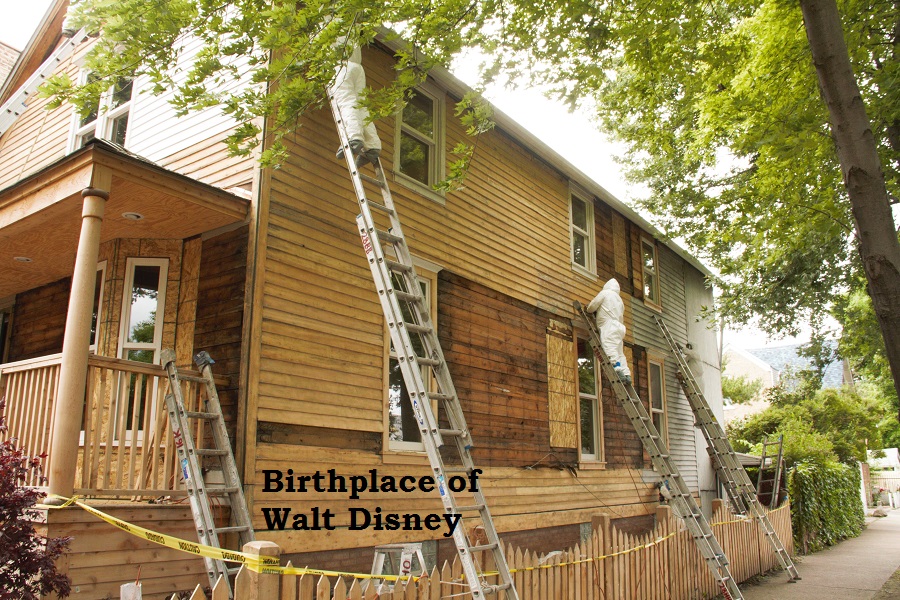
Yes. Fortune Restoration is EPA Lead-Safe (RRP) certified. On any pre-1978 home, we install proper containment, follow safe work practices that minimize lead dust, perform HEPA cleanup, and dispose of stripped material according to EPA RRP protocols. Lead-safe work is the default on every applicable project - not an upcharge.
Can you match the unusual siding pattern on my Victorian or Prairie-style home?
Yes - this is one of the most common requests we handle on historic restorations. Our in-house custom millwork shop can replicate unusual siding profiles, decorative shingle patterns (fish-scale, diamond, octagonal), stick-style trim, and the elaborate decorative siding common on Queen Anne and Italianate homes. New pieces are then finished to integrate with adjacent original material.
Ready to repair or replace the siding on your Chicago-area home?
Call 847-647-2500 · Email sales@fortunerestoration.net · Request a Free Estimate