
Coping Repair & Installation in Chicago
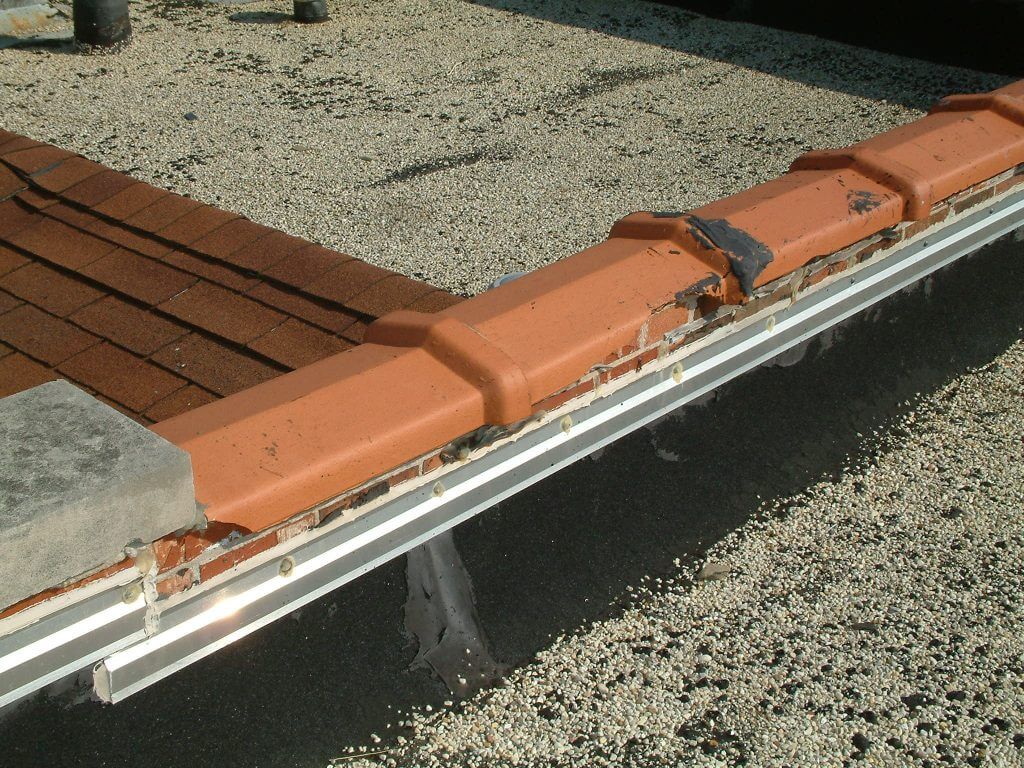
Coping is the protective cap that sits on top of a parapet wall, retaining wall, chimney, or freestanding masonry assembly. It is the single most important water-management element on most Chicago commercial buildings, two-flats, three-flats, and courtyard apartments. When coping is intact, water sheds away from the wall below. When coping fails, water pours straight down through the masonry assembly — causing mortar deterioration, brick spalling, interior staining, and eventually structural damage that costs many times more to repair than the coping itself.
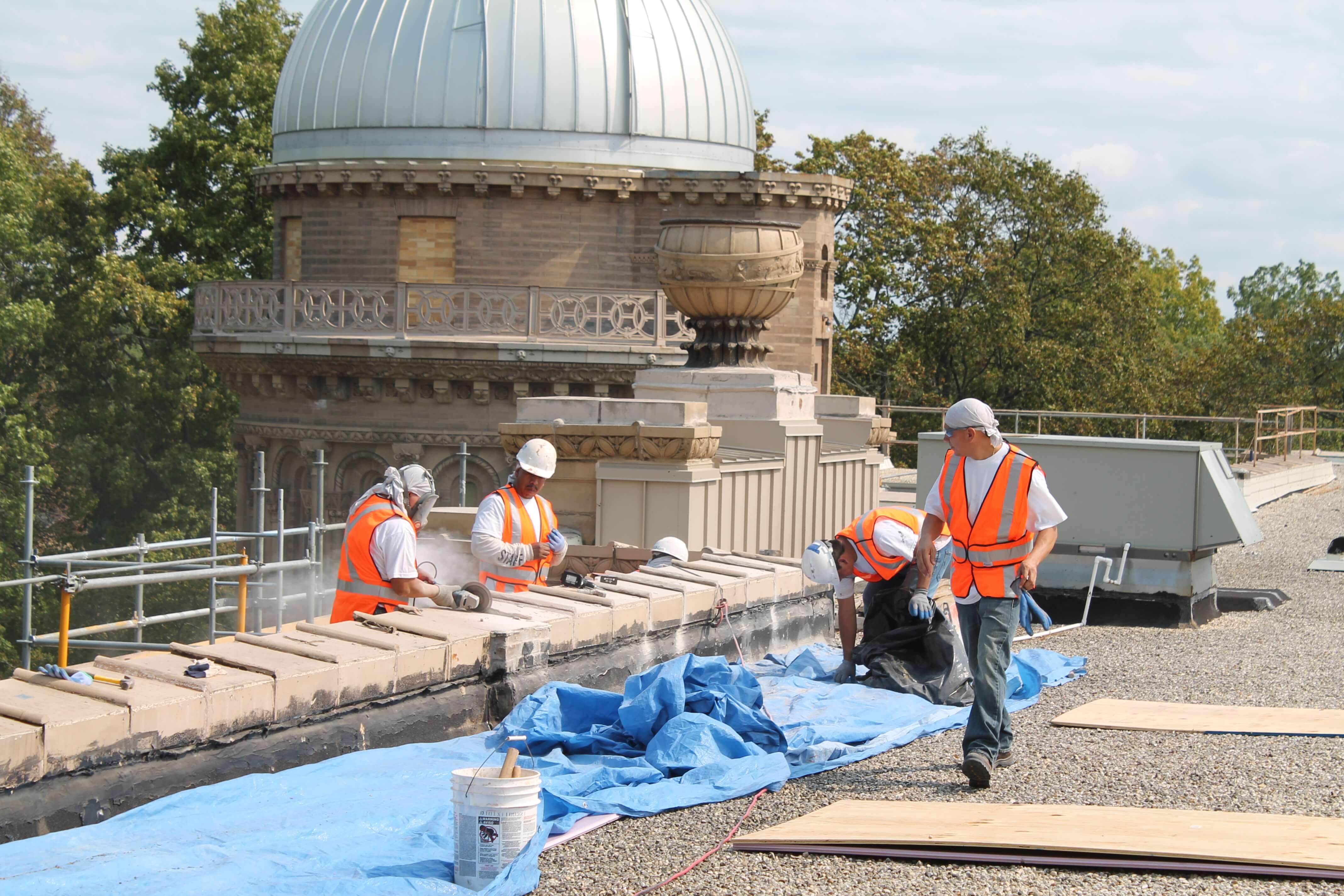
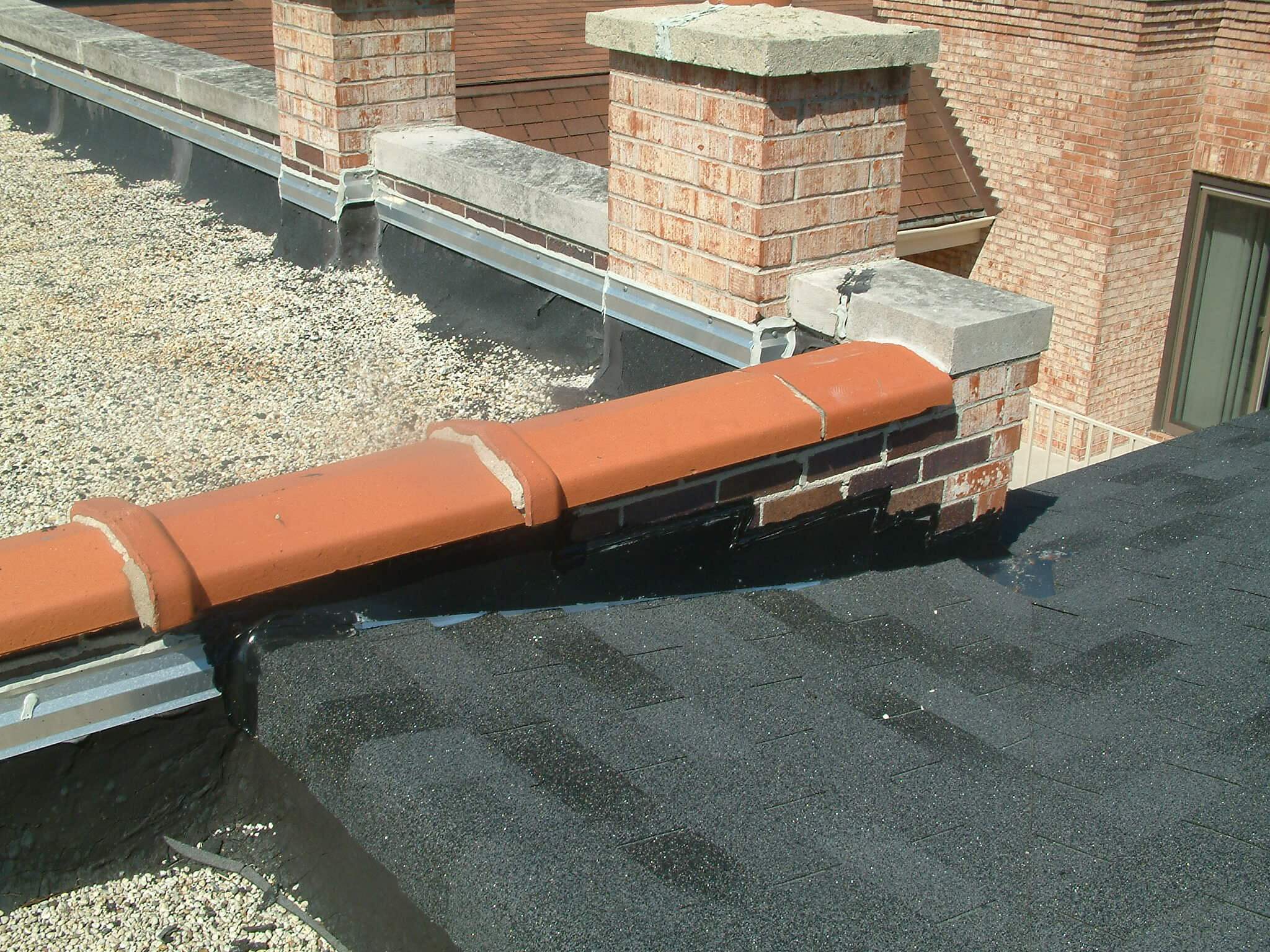
Fortune Restoration has been repairing, replacing, and installing coping across the Chicagoland area since 1979. We work in every common coping material — limestone, Indiana limestone, cut stone, concrete, terra cotta, clay tile, precast, and metal (aluminum, copper, steel) — on residential, commercial, institutional, and landmark properties throughout Chicago and the suburbs.
Request a free coping repair estimate or call 847-647-2500.
What Coping Actually Does
The job of coping is simple and critical: shed water away from the top of a masonry wall. A properly designed and installed coping system has three working parts:
- The coping unit itself — the stone, concrete, terra cotta, or metal cap that physically covers the top of the wall.
- A drip edge or projection on each side — an overhang that throws water clear of the wall face below rather than letting it run down the masonry.
- A back slope or wash — a slight pitch that directs water toward the building side rather than out toward the street. On parapet walls with a roof behind them, this drains water to the roof drainage system.
- Sealed joints — the joints between individual coping units, and between coping and the wall below, are sealed with appropriate caulk or flashing to prevent water from entering through the gaps.
When any one of these elements fails, water enters the top of the wall and works its way down through the masonry. The damage typically appears as mortar joint failure, brick spalling, efflorescence staining, and interior water marks at the top floor — often blamed on a roof leak when the actual source is the coping line.
Common Coping Failure Modes in Chicago
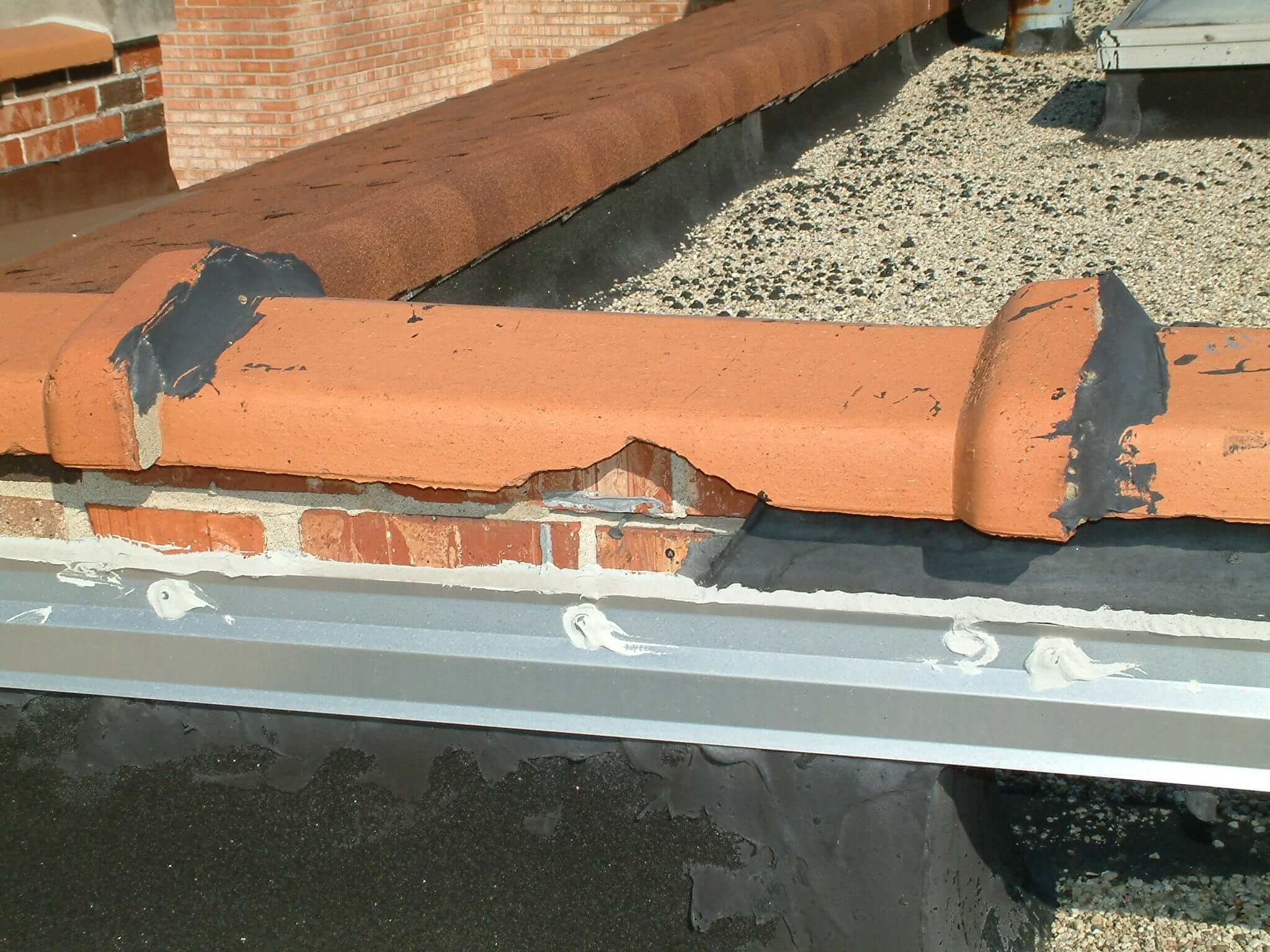
- Cracked or broken coping stones — the most common failure. Stone copings under freeze-thaw stress eventually crack, particularly when joints have failed and water has entered the stone.
- Displaced or shifted coping units — building movement, settling, or repeated freeze-thaw cycling can lift coping off its bed, breaking the seal and creating water entry paths.
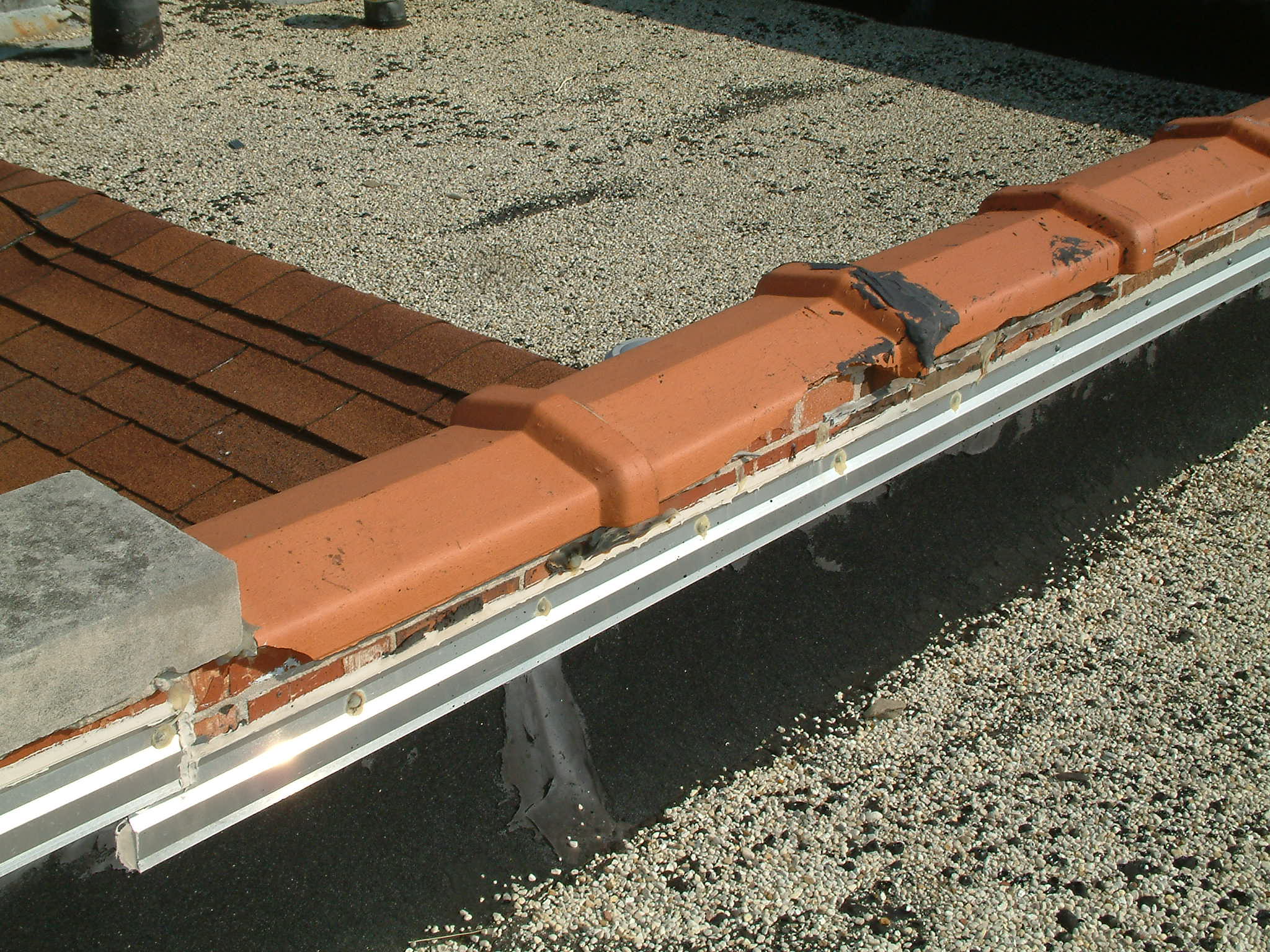
- Failed joint sealant — caulked joints between coping units have a service life of 10 to 20 years; once cured caulk fails, water enters freely until the joint is resealed.
- Missing coping — on some older buildings, sections of coping have been removed during prior repairs and never properly replaced. Open coping is an active water entry point.
- Improper original installation — coping installed without drip edges, without proper bedding mortar, or with the slope running the wrong way. These installations fail predictably regardless of material quality.
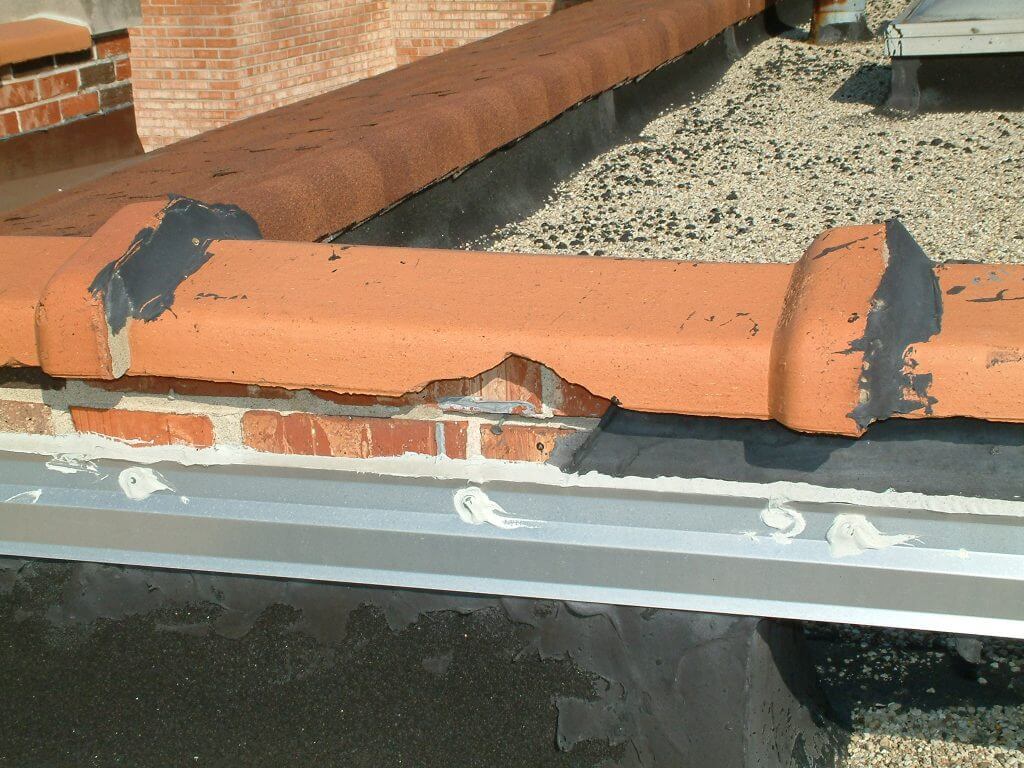
- Corroded or loose metal coping — metal copings (aluminum, copper, steel) have different failure modes than stone: corrosion, loose fasteners, lifted seams, and oil-canning that allows water to pool.
- Spalled or scaled concrete coping — precast concrete and CMU coping eventually fails through surface scaling, particularly with road salts and freeze-thaw exposure.
The diagnostic clue is almost always the same: look for stair-step mortar damage, efflorescence, or spalling on the wall directly below the coping line. That pattern points straight to coping or joint failure above.
Coping Materials We Work With
Limestone & Cut Stone Coping
The historical standard on Chicago commercial buildings, courtyard apartments, and quality two-flats. Indiana limestone, in particular, was the dominant material from the 1880s through the 1940s and appears on much of the city’s pre-war housing stock. Durable, beautiful, and matching replacement stones are still available for most original profiles. We work with stone yards and quarries that can supply matching units for historic restoration projects.
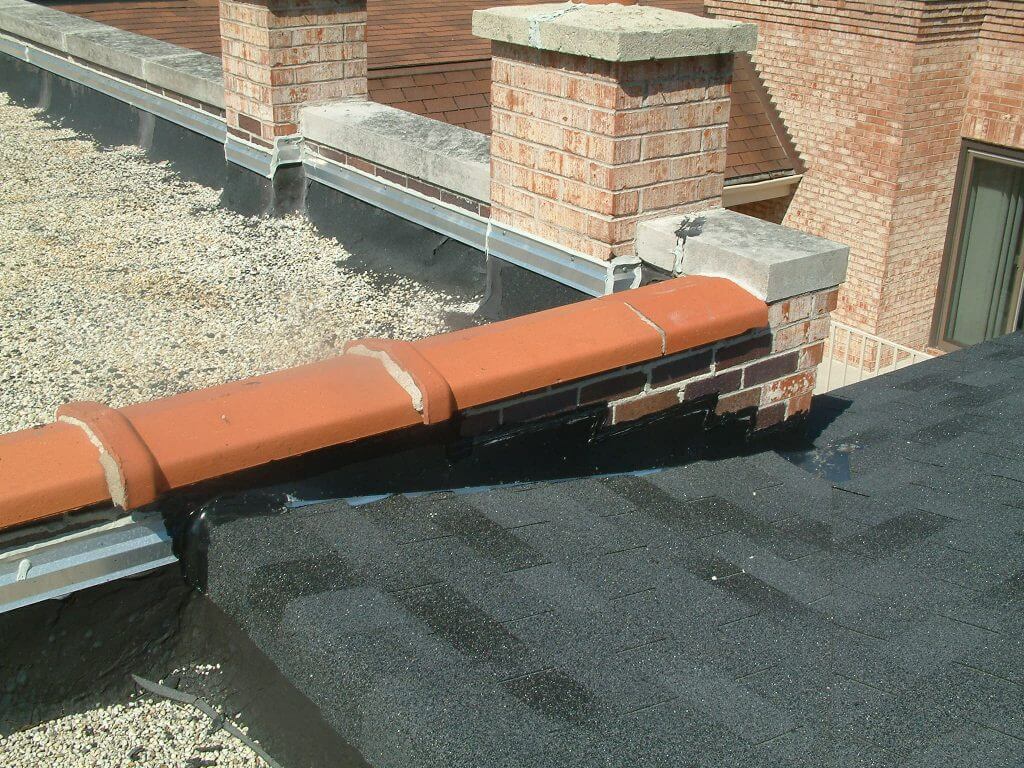
Terra Cotta & Clay Tile Coping
Common on Chicago courtyard apartment buildings, churches, and ornamental commercial buildings from the early 20th century. Terra cotta coping is beautiful and historically important but vulnerable in Chicago’s freeze-thaw climate — once the glaze is broken, the ceramic body absorbs water and spalls. Repair and replacement require specialized handling and matching materials, as documented in the National Park Service’s preservation brief on historic glazed architectural terra-cotta. See our terra cotta restoration service for the broader scope of this work.
Concrete & Precast Coping
Standard on mid-century and modern commercial buildings, retaining walls, and CMU walls. Cost-effective, available in custom profiles, and durable when properly sealed. Material specification benefits from the technical resources published by the Portland Cement Association, the industry research body for concrete and cement materials. Surface scaling and edge spalling are the typical failure modes; replacement is straightforward with matching precast units.
Metal Coping (Aluminum, Copper, Steel)
Used on commercial buildings, modern residential, and as replacement on historic buildings where the original coping has been entirely lost. Pros: light, won’t crack, comes in long lengths reducing joint count. Cons: requires proper detailing at corners and transitions; loose fasteners and failed seams are common failure points. We work with prefabricated systems and custom-fabricated metal coping.
Brick & Rowlock Coping
The simplest historical coping — bricks laid on end across the top of a wall, sealed with mortar. Common on humble residential masonry. Vulnerable to freeze-thaw deterioration since the joints are numerous and exposed. Often replaced with stone or metal coping during major restoration work.
Repair vs. Full Replacement: How We Decide
Repair (Targeted, Localized)
Appropriate when only a few coping units are damaged, when joint sealant has failed but the units themselves are sound, or when isolated cracking can be addressed without disturbing adjacent material. We re-bed displaced units, replace cracked stones with matching new pieces, and re-caulk failed joints with appropriate sealants. Most cost-effective when overall coping condition is good and damage is concentrated.
Selective Replacement (Run-Long or Elevation-By-Elevation)
When coping along an entire elevation or a long run is deteriorated, replacement of that section makes more sense than spot repairs. New stones or units are matched to existing where the building has historic significance; otherwise, complementary material is specified.
Full Replacement
When coping across the entire building is failing, or when original installation was improper, full replacement is the right call. This is often the right time to upgrade detailing — adding proper drip edges, improving slope, integrating better flashing systems — that the original installation lacked.
Coping work almost always coordinates with parapet wall repair on flat-roofed Chicago buildings — the coping is the cap, the parapet is the wall it caps, and they typically need attention at the same time.
The Fortune Restoration Coping Process
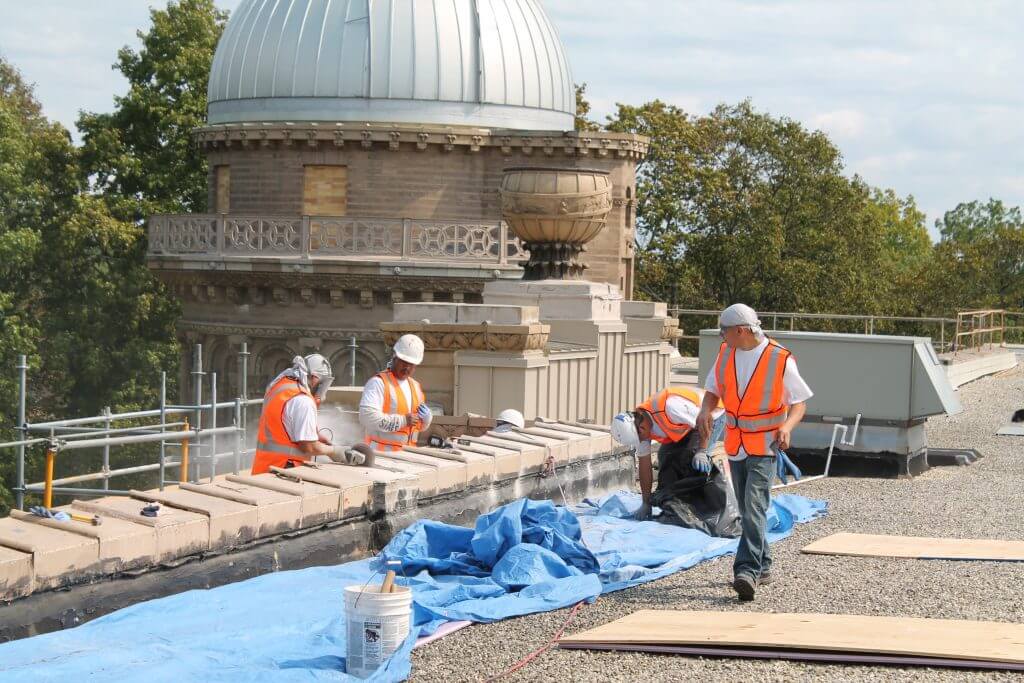
- Building assessment. Inspecting coping condition across all elevations, checking for joint failure, displacement, cracking, and damage to the wall below the coping line that may indicate ongoing water entry. On tall buildings, this typically requires scaffold, boom lift, or rope access — see our scaffolding and boom and lift capabilities.
- Material identification and matching. Confirming original coping material, profile, and supplier where possible — particularly important on historic buildings where replacement must match.
- Coordination with roofing trade. On parapet walls, coping interfaces with the roofing system and cap flashing. Repair and replacement are sequenced with the roofing contractor where applicable.
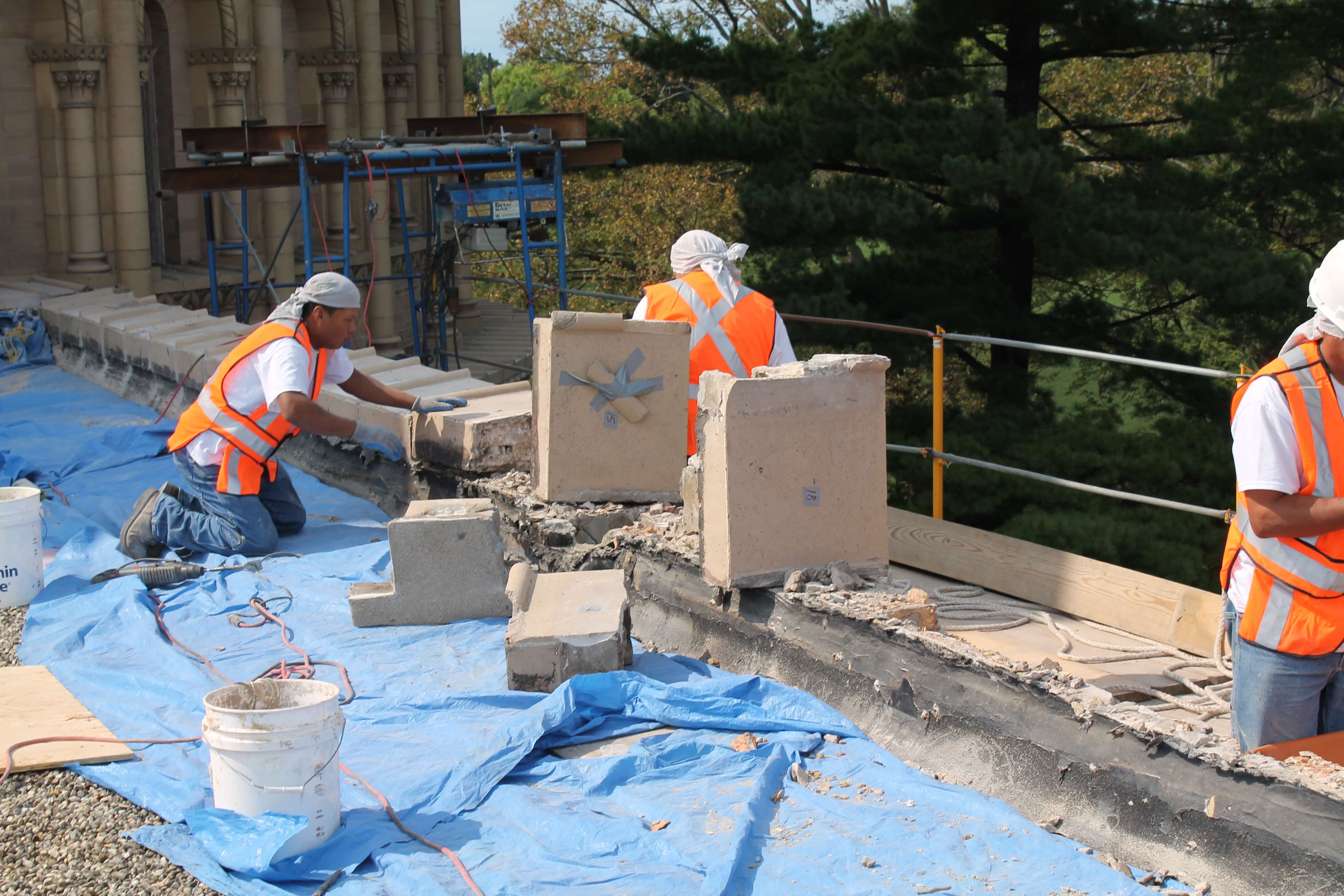
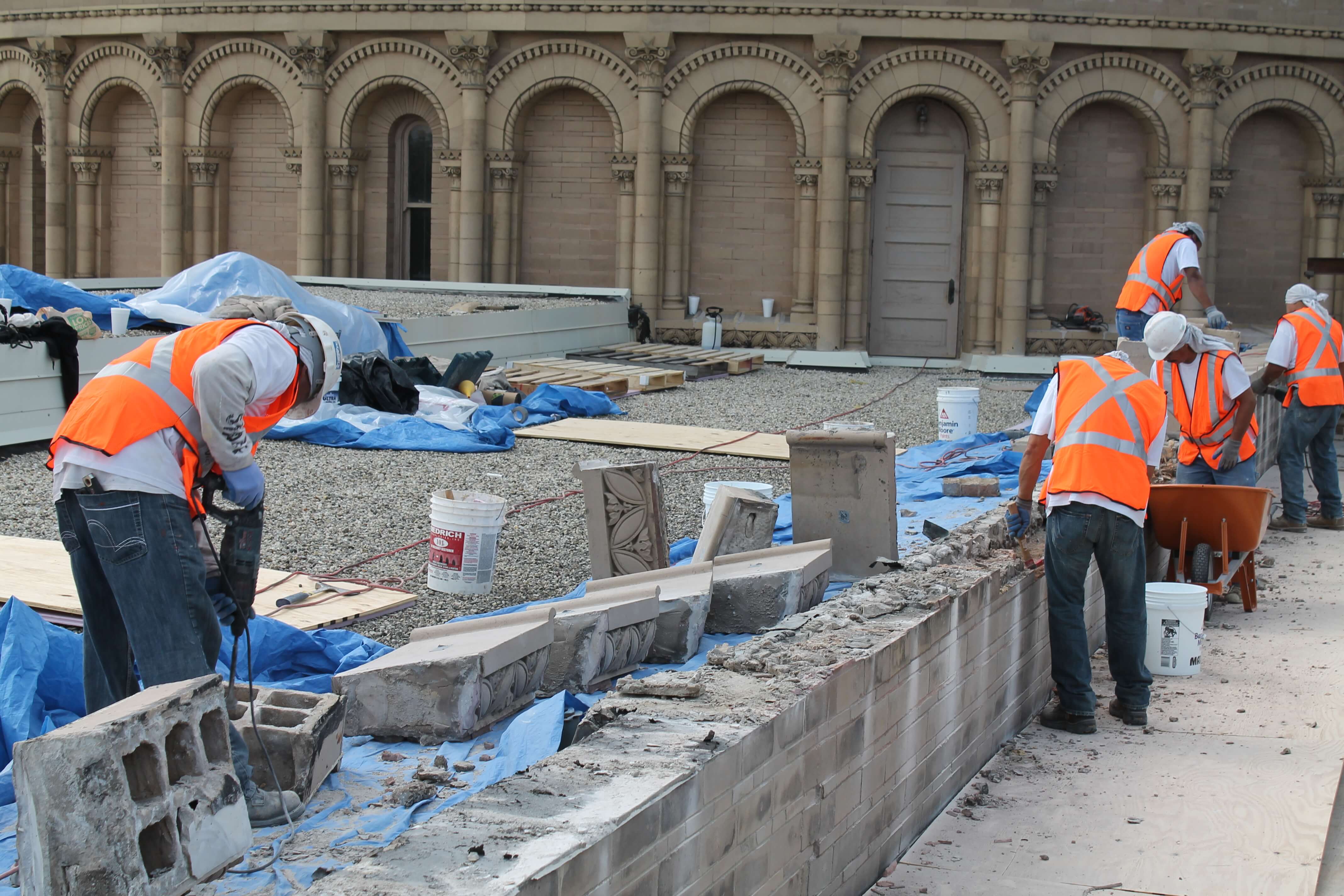
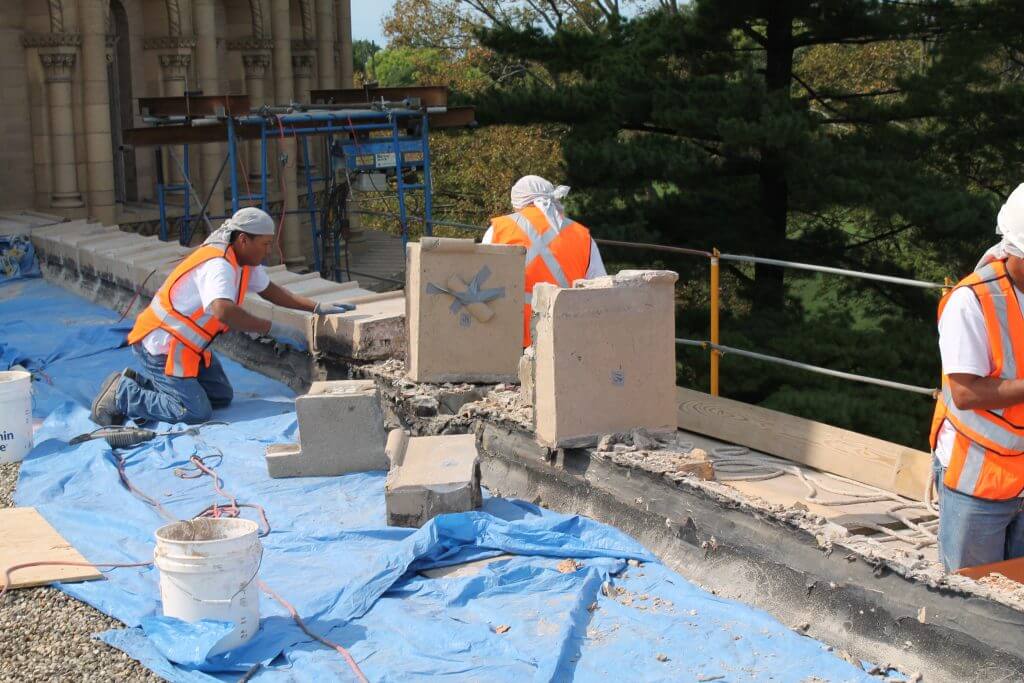
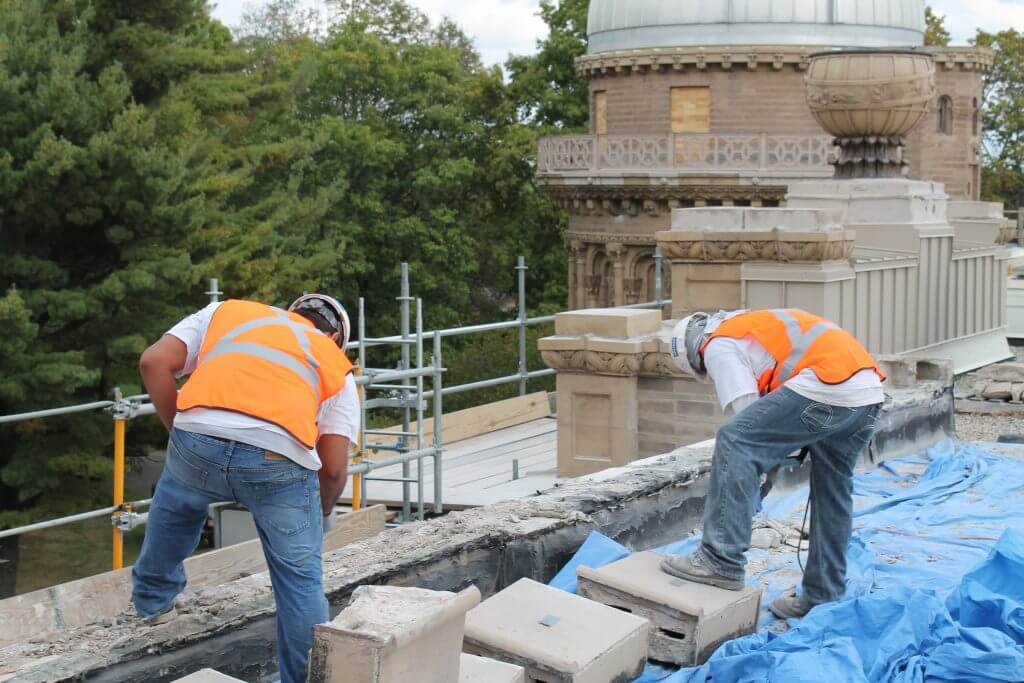
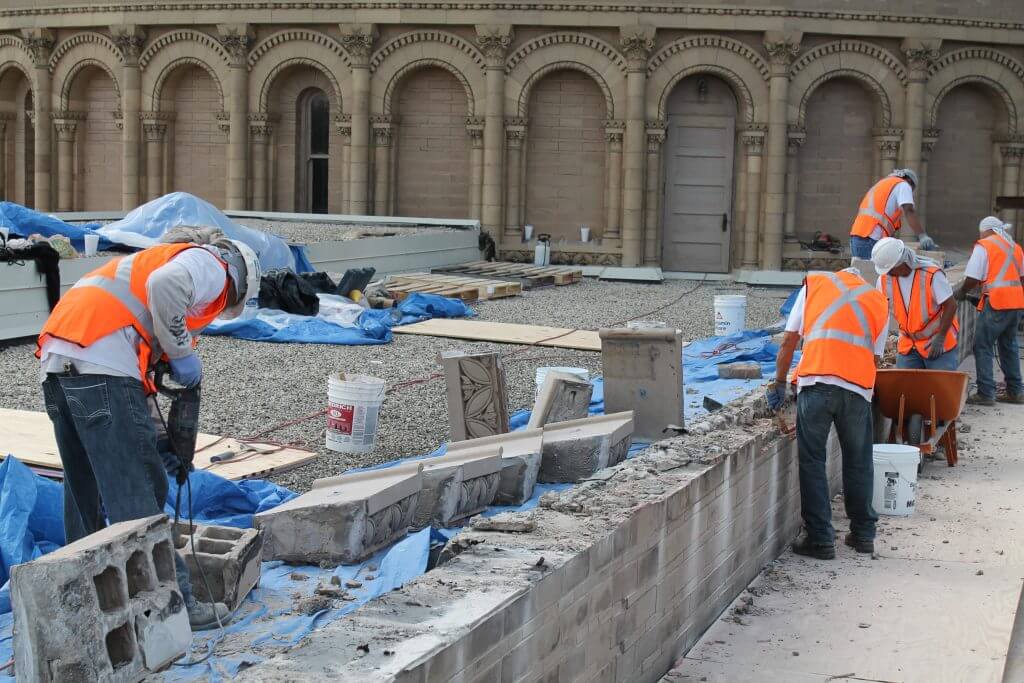
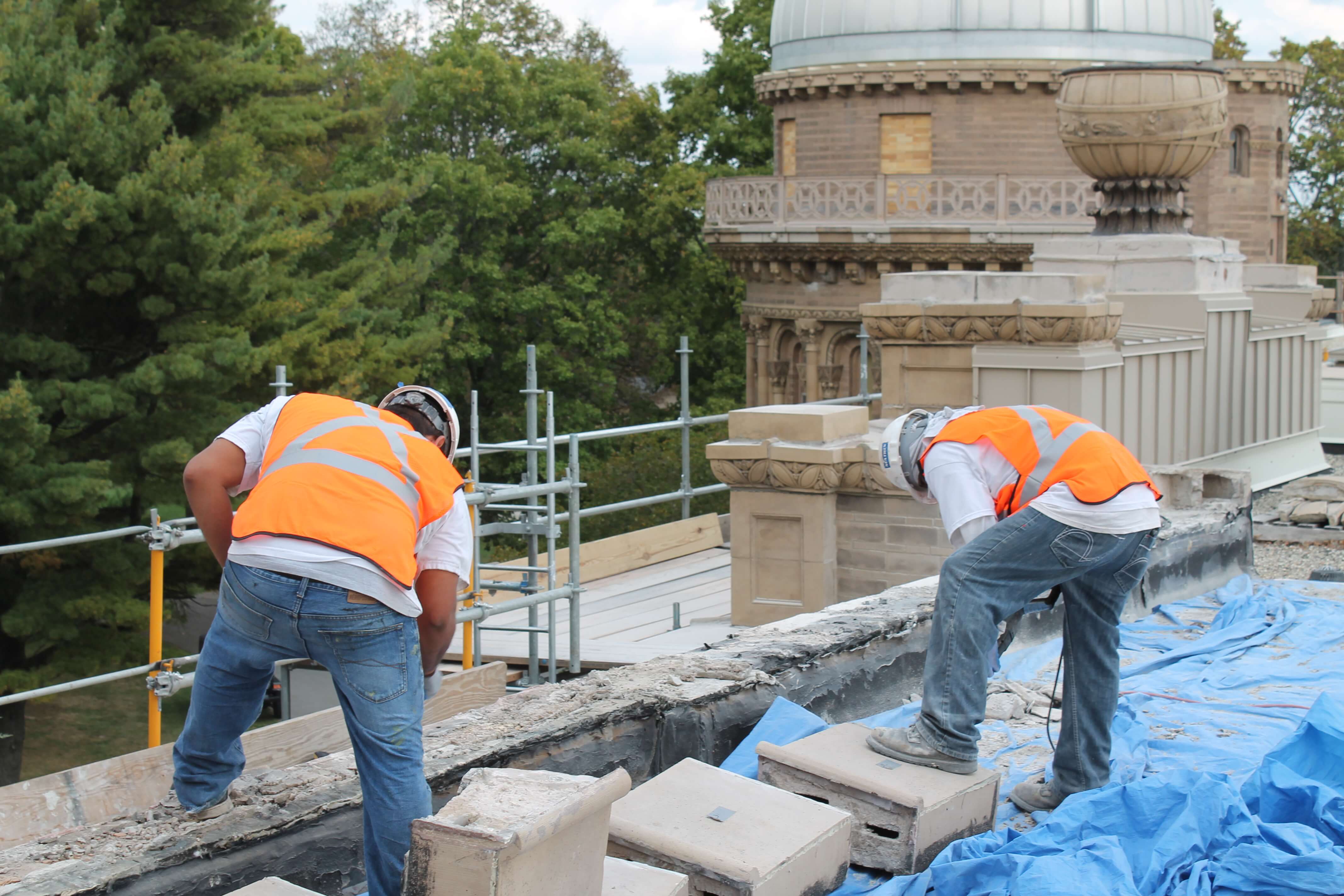
- Demolition and substrate inspection. When coping is removed, we inspect the wall and parapet structure beneath. Hidden damage is addressed before new coping goes on.
- Installation. Proper bedding mortar, correct slope, drip edges, and integration with flashing where present. New stones set with mortar that follows the NPS preservation guidance on repointing mortar joints in historic masonry — type S or type N depending on adjacent masonry — not whatever is cheapest in the truck.
- Joint sealing. High-quality polyurethane or silicone sealants at all coping joints and at the coping-to-wall interface, properly tooled.
- Waterproofing where appropriate. On stone and concrete coping, breathable penetrating water repellents extend service life — coordinated with our masonry waterproofing service.
- Final inspection. Walkthrough with the property owner before sign-off.
Coping on Different Building Types
Two-Flats, Three-Flats, and Courtyard Apartments
Coping on these classic Chicago residential buildings typically caps the parapet at the flat roof line. Limestone or cut stone is common on quality buildings; brick rowlock is common on more modest structures. Coping failure here is one of the most common causes of water infiltration in Chicago multi-unit buildings.
Commercial Buildings
Larger commercial and institutional buildings often have more elaborate coping — cut stone with carved profiles, copper-clad systems, or terra cotta. Property managers responsible for these buildings need to inventory coping condition during regular building assessments.
Single-Family Homes
On residential homes, coping usually appears on chimneys, garden walls, and freestanding masonry features. Chimney cap repair is closely related to coping work and often handled together.
Retaining Walls and Garden Walls
Freestanding masonry walls in residential landscapes — particularly the limestone garden walls common in older North Shore properties — require coping that’s resistant to ground-line moisture and freeze-thaw cycling on both faces.
Historic and Landmark Buildings
On designated landmark properties and historic churches, coping replacement may require landmark commission review and use of historically appropriate materials following the Secretary of the Interior’s Standards. We have extensive experience navigating these requirements.
Coordinating Coping Work With Other Trades
- Parapet wall repair — coping caps parapets; the two are typically addressed together
- Tuckpointing — mortar joint repair on the masonry below the coping
- Brick replacement — for the spalled and damaged brick that coping failure typically causes
- Chimney repair and chimney cap replacement — functionally similar to coping work on a smaller scale
- Masonry caulk and sealant — coping joints are one of the most important sealant applications on any building
- Masonry waterproofing and sealing — protective treatment applied after coping repair
- City of Chicago violation correction — failed coping creating falling-hazard or water-infiltration conditions can trigger building code violations
Service Area
Fortune Restoration provides coping repair and installation throughout the Chicagoland area:
Chicago (Lincoln Park, Hyde Park, Wicker Park, Bucktown, Old Irving Park, Edgewater, Rogers Park, Wrigleyville, Lincoln Square, Beverly, Gold Coast) · Lincolnwood · Evanston · Wilmette · Winnetka · Kenilworth · Glencoe · Highland Park · Lake Forest · Skokie · Niles · Park Ridge · Oak Park · River Forest · Hinsdale · Glenview · Northbrook · Deerfield · Wheaton · Naperville
Why Property Owners Choose Fortune Restoration
- 47+ years of Chicagoland masonry experience
- All coping materials — limestone, terra cotta, concrete, precast, brick, and metal systems
- Historic property expertise — matching original materials and navigating landmark commission requirements
- Multi-trade integration — coping coordinated with parapet, tuckpointing, brick replacement, and waterproofing under one contractor
- Property manager-friendly — experience with building assessments, capital reserve planning, and City of Chicago violation correction
- In-house scaffolding and boom lift for tall building access
- Licensed, bonded, and insured in the State of Illinois
Frequently Asked Questions
What is coping on a building?
Coping is the protective cap that sits on top of a parapet wall, retaining wall, chimney, or freestanding masonry structure. Its job is to shed water away from the top of the wall, preventing water from entering the masonry assembly below. Common coping materials include limestone, cut stone, concrete, precast, terra cotta, brick, and metal (aluminum, copper, or steel).
How do I know if my building’s coping is failing?
The most reliable signs are visible directly below the coping line: stair-step mortar cracking in the upper courses of brick, brick spalling at the top of the wall, efflorescence (white chalky deposits), or interior water staining on the top floor near exterior walls. Looking up at the coping itself, watch for cracked or broken stones, displaced or shifted units, open joints where caulk has failed, and any sections that look missing or out of alignment.
How often does coping need to be repaired or replaced in Chicago?
Coping joint sealants typically need replacement every 10 to 20 years. The coping units themselves last much longer — limestone and quality stone coping can last 80 to 100+ years when joints are maintained. Metal coping systems typically have a 25 to 40 year service life. Concrete and precast coping generally lasts 30 to 50 years. The variable that drives most repair work is joint maintenance, not unit failure.
What’s the difference between coping and a chimney cap?
They serve the same function (shedding water away from masonry below) but on different elements. Coping caps a long horizontal element like a parapet wall, retaining wall, or garden wall. A chimney cap is a smaller version specifically for the top of a chimney. The principles are identical — drip edge, slope, sealed joints — just at different scales. We handle both: see our chimney cap repair service for chimney-specific work.
Can damaged coping cause water damage inside my building?
Yes — and it’s one of the most common causes of interior water damage in Chicago multi-unit buildings. Water entering through failed coping pours straight down through the masonry assembly, often appearing on interior walls of the top floor as staining, peeling paint, or efflorescence. The damage is frequently misdiagnosed as a roof leak when the actual source is the coping line. Addressing failed coping early prevents what can become extensive interior remediation.
Do I need to replace all the coping on my building, or can I just fix the damaged sections?
Depends on the extent of failure. If only a few units are damaged or only isolated joints have failed, targeted repair is dramatically more economical than full replacement. If coping is failing across multiple elevations or shows widespread material deterioration, full replacement makes more sense — and is also the opportunity to upgrade detailing that the original installation may have lacked. Our estimator will give you both options priced out so you can decide based on actual numbers.
Can coping replacement help resolve a City of Chicago masonry violation?
Yes, in many cases. Chicago Department of Buildings violations related to falling brick hazards, deteriorated parapet conditions, or water infiltration issues frequently trace back to failed coping. Addressing coping properly, along with the parapet wall and any damaged brick below, typically clears the violation. We work with property owners and managers facing active violation notices and prioritize this work on tight compliance timelines.
Need coping repair or installation in the Chicago area?
Call 847-647-2500 · Email sales@fortunerestoration.net · Request a Free Estimate