Look, I get it. You probably walked past your brick house a hundred times without really seeing it. Then one day you noticed something. Maybe the mortar between those bricks looked a bit…crumbly? Or you saw little gaps where there shouldn’t be gaps.
That’s when you started Googling. And here you are, trying to figure out what the heck tuckpointing is and why everyone keeps telling you your house needs it.
Well, good news. I’m gonna break it all down for you. No fancy jargon. No complicated explanations. Just straight talk about why tuckpointing services might be exactly what your brick walls are crying out for.
So What Exactly IS Tuckpointing?
Here’s the simple version: tuckpointing is when we remove old, damaged mortar from between your bricks and replace it with fresh stuff. That’s it. Seriously.
But here’s where it gets interesting. Your brick walls? They’re not actually held together by the bricks themselves. It’s the mortar – that gray or tan stuff between the bricks – that does all the heavy lifting. And mortar doesn’t last forever.
Over time, weather beats it up. Rain soaks into it. Winter comes and that water freezes. Then it expands. Then it thaws. Rinse and repeat for a few decades, and you’ve got yourself some seriously deteriorating mortar joints.
The difference between tuckpointing and repointing is something people ask me about constantly. Honestly? Most folks use the terms the same way. Traditional tuckpointing means filling the joints and then adding a thin line of contrasting mortar color for that fancy look. Repointing brick is the general term for just replacing the mortar. But these days, most masonry contractors (including us) use the words pretty much interchangeably. If you want to dive deeper into the technical details, This Old House has a great guide on tuckpointing basics.
Why Your Mortar Matters More Than You Think
Think of mortar like the glue holding your house together. Except it’s not really glue – it’s more like a flexible cushion that lets your brick walls breathe and move just a tiny bit. (Yeah, walls move. Wild, right?)
When that mortar starts failing, water gets in. And water? Water’s the enemy. It causes brick deterioration, damages the structure behind your walls, and can even mess with your foundation over time.
I’ve seen brick and mortar repair situations where homeowners waited too long. What could’ve been a straightforward masonry repair job turned into something way more expensive because water got behind the walls and caused real damage.
Ready to protect your investment? Request an estimate today and let’s take a look at your brick before small problems become big ones.

How Do I Know If My House Needs Tuckpointing?
Great question. Here are the signs your brick needs tuckpointing – and trust me, some of these are super obvious once you know what to look for:
Crumbling mortar. If you can stick a screwdriver or even your finger into the mortar joints, that’s bad. Really bad. The mortar should be hard, not crumbly like old cookies.
Missing chunks. Look at the joints between your bricks. See gaps? Holes? Places where the mortar has literally fallen out? Time for tuckpointing repair.
Cracks in the mortar. Little hairline cracks might not seem like a big deal. But they let water in. And water always makes things worse.
White powder on your bricks. That’s called efflorescence on brick. It means water’s getting through your mortar, picking up salts, and depositing them on the surface. Not a great sign.
Loose bricks. If bricks are wiggling or actually coming loose, the mortar’s totally failed. This is urgent brick wall repair territory.
Water damage inside. Seeing water stains on interior walls near exterior brick? The water’s getting through those failing brickwork joints.
The “Screwdriver Test” (Try This Right Now)
Grab a regular screwdriver. Go to your brick wall. Try to dig the tip into a mortar joint.
If the mortar’s in good shape? You won’t be able to dig in more than a tiny bit. But if that screwdriver slides right in – or if the mortar crumbles away – you’ve got your answer. Your house needs help.
This is one of those things a professional masonry contractor checks during a masonry inspection, but you can do a quick version yourself right now.
What Happens During a Tuckpointing Project?
Alright, so you’ve decided your brick needs some love. What actually happens when tuckpointing contractors show up?
First, we assess everything. Not just the obvious problem spots – we’re looking at your entire brick structure. Chimney tuckpointing, walls, anywhere there’s brick and mortar.
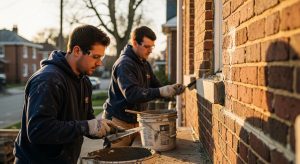
Then comes the grinding part. We use specialized grinders to carefully remove the old, damaged mortar. We go deep – usually about 3/4 to 1 inch, which is the mortar depth requirement for a solid repair.
Here’s what makes Fortune Restoration different. We’ve been doing this since 1979. That’s over 40 years of masonry services in Chicago. We’re fully licensed, bonded, and insured. And we don’t just grind out mortar and slap in new stuff. We match the color. We get the consistency right. We use the appropriate mortar mix for your specific type of brick.
Because here’s something most people don’t know: lime mortar vs cement mortar actually matters. Older buildings need lime-based mortars that are softer and more breathable. Using the wrong type can actually damage historic brick.
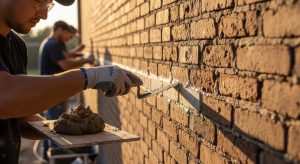
After grinding, we clean everything out. Then we mix the new mortar, carefully matching mortar color to blend with your existing joints. We fill the joints using hand-tooled mortar joints technique – no shortcuts here. And then we let it cure properly.
The result? Your brick walls look fresh. They’re protected from water. And they’ll last for decades with proper preventative masonry maintenance.
Curious about what tuckpointing could do for your property? Get a free estimate from Chicago’s trusted masonry experts.
How Much Does Tuckpointing Cost? (The Real Numbers)
Okay, let’s talk money. Because this is what everyone actually wants to know when they search for “how much does tuckpointing cost” or “cost to repoint brick wall.”
The truth? It varies. Like, a lot.
For residential masonry projects, average tuckpointing cost typically runs anywhere from $5 to $25 per square foot. I know – that’s a huge range. But there are factors that affect masonry pricing.
Building height. Ground-level work costs less than second-story or three-story work. We need scaffolding or lifts for higher walls, which adds to labor.
Mortar damage extent. If only a small section needs work, great. If three walls need complete structural masonry repair, that’s a different story.
Brick type. Clay brick repair is different from limestone masonry repair or working with CMU block wall repair. Each material has different needs.
Access. Can we park our truck nearby? Or do we have to haul equipment through your neighbor’s yard? Little things impact masonry repair costs.
For a typical single-family home masonry repair, you might be looking at $3,000 to $15,000 depending on how much work your house needs. Chimney tuckpointing cost alone can run $700 to $3,000.
Now, I know that’s not exactly pocket change. But here’s what you need to understand: the cost of delaying masonry repairs is way higher. I’ve seen homeowners put off a $5,000 tuckpointing job only to face $25,000 in repairs two years later after water damage spread.
Does Masonry Repair Increase Home Value?
Short answer: yes.
Long answer: absolutely yes. Well-maintained brick is a major selling point. Buyers see fresh mortar and know the house has been cared for. Plus, you’re preventing bigger problems that could tank your home’s value.
Some real estate folks say proper exterior masonry repair and home improvement can add 1-3% to your home’s value. But more importantly? It prevents value loss from obvious deterioration.
Different Types of Buildings, Different Needs
Not every tuckpointing job is the same. A single-family home is different from an apartment building tuckpointing project. And both of those are different from commercial masonry restoration services.
For multi-unit building masonry services, we coordinate with property managers to minimize disruption for tenants. We understand property management masonry services need to be efficient and tenant-safe masonry repairs are non-negotiable.
We also work with HOA masonry maintenance projects. These often involve matching work across multiple buildings so everything looks consistent.
And commercial facade repair? That’s a whole different level. We’ve worked on retail and industrial masonry restoration projects all over Chicago. Our team understands that commercial properties can’t afford lengthy shutdowns.
We’ve even done work on historical landmarks throughout the area. Historic brick preservation requires special knowledge – you can’t just use modern materials on a 100-year-old building and call it good. The National Park Service has detailed guidelines on repointing historic masonry that we follow religiously when working on landmark properties.
Property Managers: This Part’s For You
If you’re managing rental properties or condo buildings, you know masonry maintenance isn’t optional. It’s about protecting the investment and keeping residents safe.
We handle everything from small brick wall repair jobs to complete facade restoration projects. And we work within your budget and timeline. Want to learn more about our property management services? We’ve got dedicated programs just for property managers.
Managing a multi-unit building that needs masonry work? Contact us for a detailed assessment and timeline that works for your residents.
Common Masonry Problems (And How We Fix Them)
Over four decades, we’ve seen pretty much every common masonry problem you can imagine. Here are the big ones:
Spalling brick. This is when the face of the brick flakes off. Usually it’s from freeze-thaw mortar damage or water penetration in brick walls. Sometimes we can repair it. Sometimes we need to do brick replacement.
Cracked lintels. Lintels are the support beams above windows and doors. When they rust and crack, it causes masonry support failures. We handle lintel replacement regularly.
Parapet wall issues. The top of your building’s exterior wall? That’s the parapet. It takes a beating from weather. Parapet wall repair is super important because these areas leak easily.
Chimney problems. Brick chimney deterioration, chimney crown repair, chimney flashing issues, chimney water intrusion – chimneys have a lot of potential failure points. Our chimney repair services cover all of these.
Foundation issues. Foundation tuckpointing protects your home’s base from water damage.
Water damage. This is the big one. Masonry moisture control is critical. We use breathable masonry sealers that protect against water while still letting moisture escape. Waterproofing vs sealing masonry – they’re different, and we know when to use which approach.
Can You DIY Tuckpointing?
Technically? Yes, you can try.
Should you? Probably not.
I’ve seen more improper tuckpointing signs from DIY jobs than I can count. Wrong mortar mix. Joints too shallow. Color that doesn’t match. Mortar that crumbles within a year.
The tools alone cost several hundred dollars. Plus there’s a real learning curve to mixing mortar correctly and tooling joints properly. Most homeowners who try DIY tuckpointing end up calling us to fix what they started.
If you’ve got a tiny section – like a few square feet – maybe give it a shot. But for anything bigger? Call a licensed masonry contractor. We’ve got the experience, the right tools, and masonry contractor warranties that protect your investment.
Why Choose Fortune Restoration?
Look, I could give you a whole sales pitch here. But I’d rather just tell you the facts.
We’ve been serving Chicago since 1979. That’s over 40 years. We’re a licensed and bonded masonry contractor. We carry full insurance. Our team follows all Chicago building code masonry requirements and masonry safety standards.
We’re not the cheapest option in town. But we’re the ones who do it right the first time. We match mortar properly. We understand period-correct masonry restoration for historic buildings. We use the right materials for your specific situation. Our work meets International Masonry Institute standards for quality and safety.
Check out our customer reviews masonry contractors ratings on Angie’s List and BBB. We’ve got an A+ rating because we show up when we say we will. We do what we promise. And we stand behind our work.
Plus, we handle all the permitting. Masonry permits Chicago can be complicated, but we navigate that stuff daily. You don’t have to worry about any of it.
We work on everything from residential brickwork repair service to massive commercial masonry projects. From tiny single-family home repairs to multi-unit building complete restorations.
Want to work with Chicago’s most experienced masonry team? Get your free estimate now – no pressure, just honest assessment.
When Should You Get Tuckpointing Done?
Timing matters. The best time of year for tuckpointing is spring through fall when temperatures stay above 40°F consistently. Mortar needs warmth to cure properly.
We typically recommend having your brick masonry inspected every 5-10 years. But if you notice any of those warning signs I mentioned earlier? Don’t wait.
When should brick be repaired? As soon as you notice problems. Seriously. Every month you wait, more water gets in. More damage happens. The job gets bigger and more expensive.
Is cracked brick dangerous? It can be. If the cracks are structural or if they’re letting significant water in, yes. That’s a safety issue that needs immediate attention.
What happens if you don’t fix mortar? Eventually, the bricks come loose. Water gets behind the walls. Wood rot happens. Steel support beams rust. Your “small” problem becomes a massive structural issue.
How Long Does Tuckpointing Last?
Good quality tuckpointing should last 25-30 years, sometimes longer with proper care. The tuckpointing lifespan depends on weather exposure, the quality of materials used, and the skill of the mason who did the work.
That’s why using experienced stone mason professionals matters. Cheap work might save you money today but cost you way more down the road.
Frequently Asked Questions About Tuckpointing and Masonry
How long does a tuckpointing project take?
For a typical house, most projects take 3-7 days depending on the scope. Larger commercial buildings or historical building restoration projects can take several weeks. Weather affects timing too – we can’t work in rain or when it’s too cold.
Will tuckpointing make a mess?
Not gonna lie – there’s dust from grinding. But we use dust control measures, protect your landscaping, and clean up thoroughly when we’re done. Professional masonry contractors know how to minimize mess.
Can you tuckpoint just one wall or does the whole house need it?
You can definitely repair just the damaged sections. But if one wall needs work, there’s a good chance other walls aren’t far behind. We’ll give you an honest assessment of what needs attention now versus what can wait.
What’s the difference between grinding out mortar and replacing bricks?
Tuckpointing replaces the mortar between bricks. If the bricks themselves are damaged – cracked, spalling, or broken – that’s brick replacement. Sometimes you need both. A good contractor will tell you exactly what your walls need.
Do I need to be home during the work?
Nope. As long as we have access to the exterior of your building, we can work while you’re away. We’ll coordinate everything beforehand.
How do I maintain my brick after tuckpointing?
Keep gutters clean so water drains away properly. Check for any new cracks or problems annually. Consider applying a breathable masonry sealer every few years for extra protection. That’s really it – brick is pretty low maintenance when the mortar’s in good shape. For more seasonal maintenance tips, the Chicago Tribune’s home maintenance guide covers what Chicago-area homeowners should watch for.
What if I have an older historic home?
Historic homes need special care. We’ve worked on countless landmark masonry requirements projects. We understand matching historic mortar and using appropriate materials that won’t damage old brick. Check out our work on historical landmarks throughout Chicago.
The Bottom Line on Tuckpointing
Here’s what it all comes down to: your brick house is tough, but it’s not invincible. The mortar holding those bricks together wears out over time. That’s not a flaw – it’s just reality.
The question isn’t whether your house will eventually need tuckpointing. It’s when. And whether you’ll address it proactively or wait until you’re dealing with bigger, more expensive problems.
I’ve been in this business long enough to know that homeowners who stay on top of masonry maintenance save money in the long run. They protect their investment. They avoid emergency repairs. And they keep their properties looking great.
If you’ve read this far, you probably suspect your house needs attention. Trust that instinct. Take a close look at your mortar joints. Do the screwdriver test. Look for those warning signs.
And if you see problems? Don’t panic. But do call us. Because we’ve fixed thousands of brick buildings across Chicago. We know exactly what your house needs. And we’ll give you straight answers about costs, timeline, and whether the work is urgent or if it can wait a bit.
We’re Fortune Restoration. We’ve been Chicago’s best masonry contractor in chicago since 1979. We’re licensed. Bonded. Insured. And we actually care about doing quality work that lasts.
Ready to give your brick house the care it deserves? Request your free estimate today. Let’s protect your home together.
Fortune Restoration has been serving Chicago and surrounding areas since 1979. We’re a licensed, bonded, and insured masonry contractor specializing in tuckpointing, brick repair, and complete restoration services for residential and commercial properties. Call us at 847-647-2500 for a free consultation.