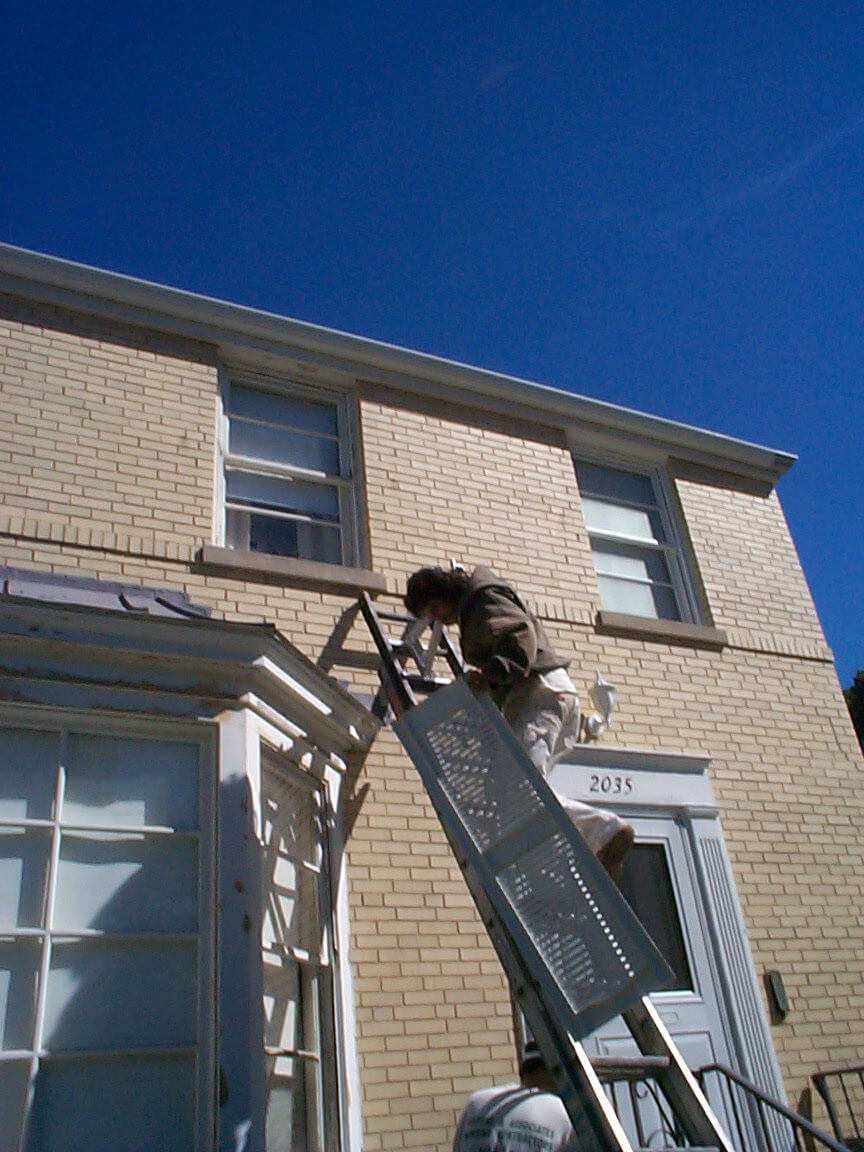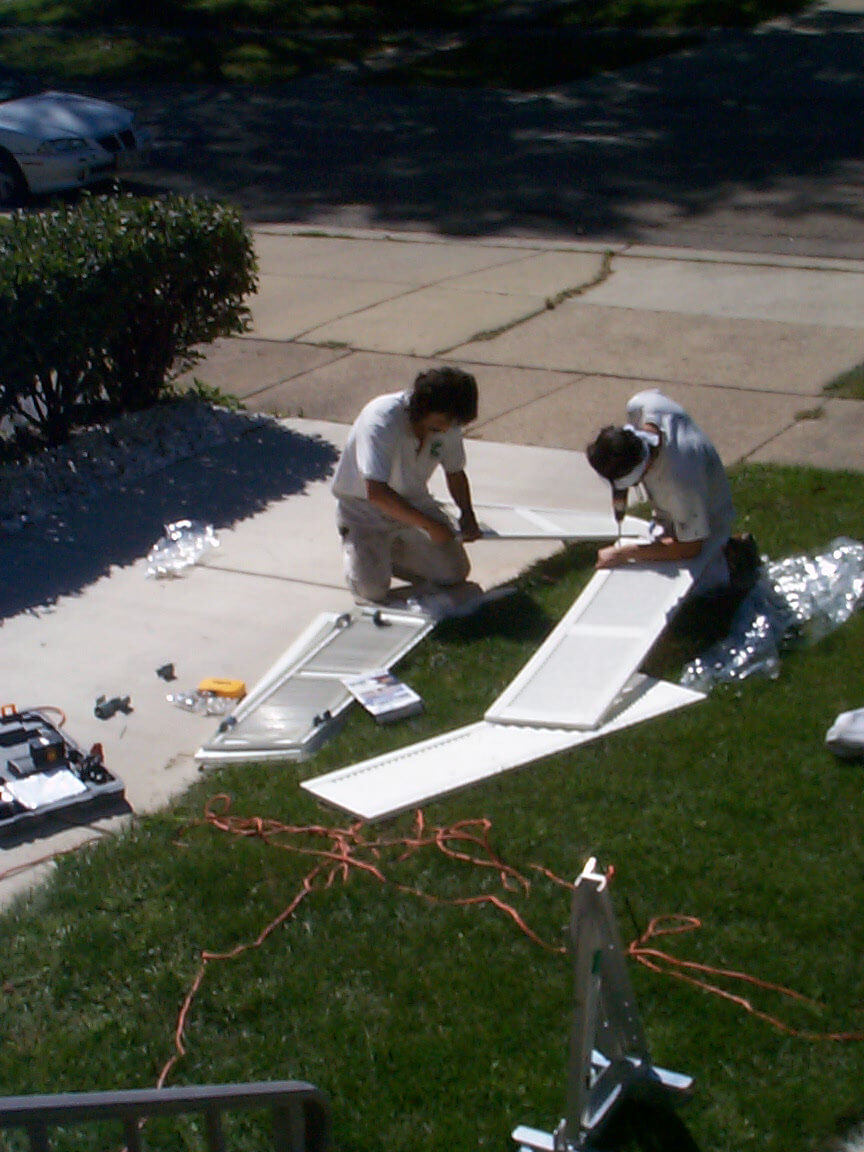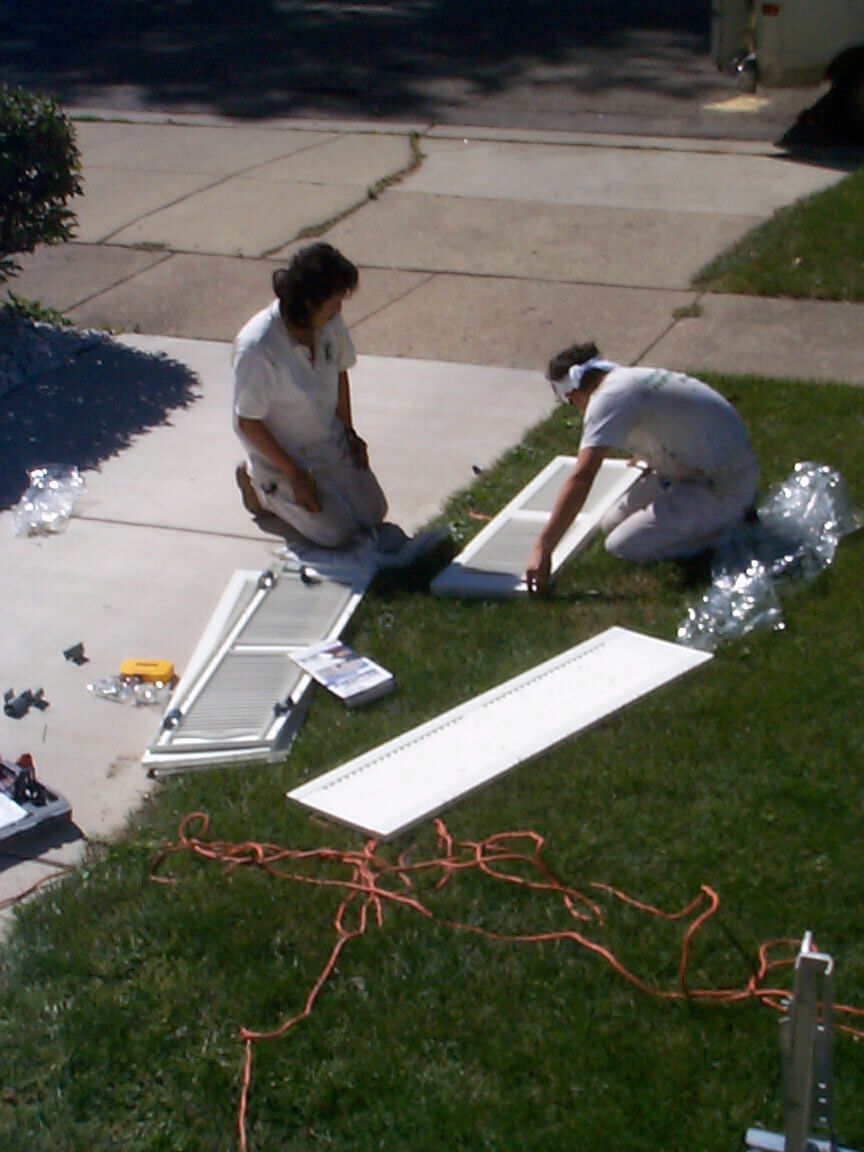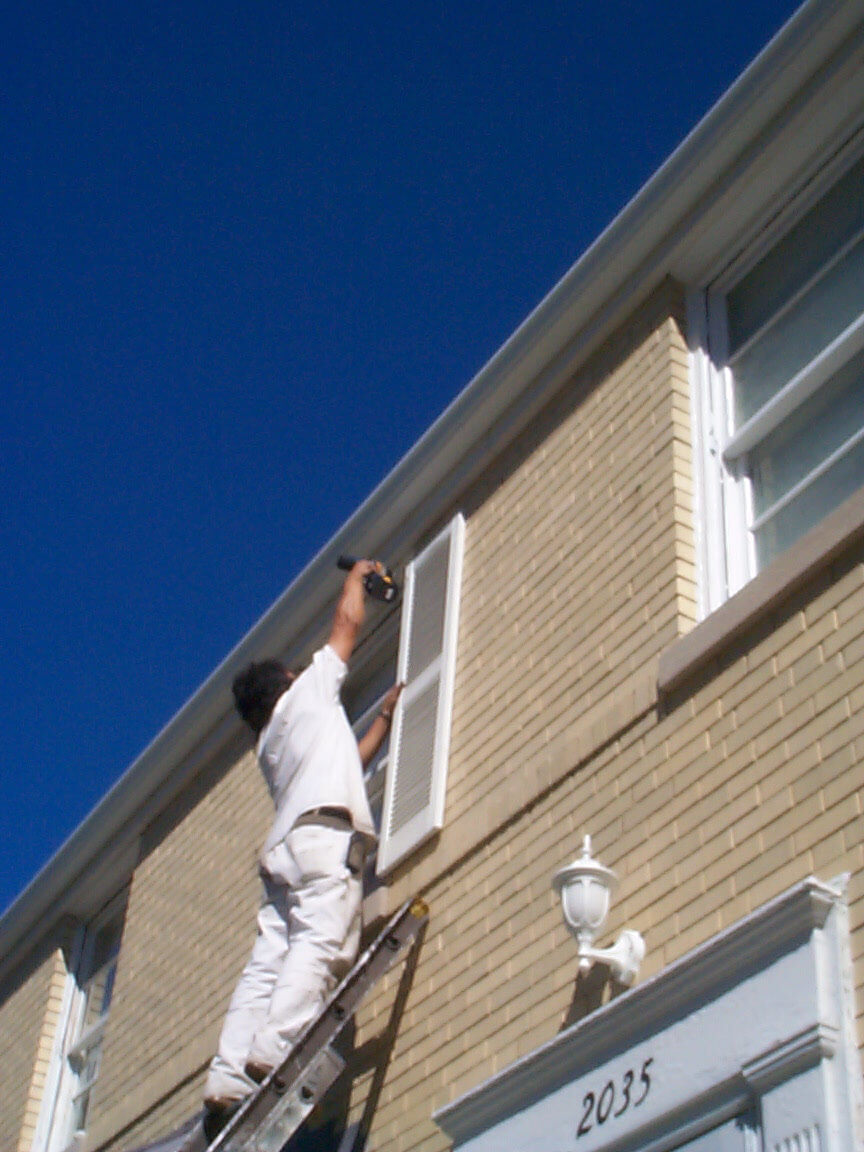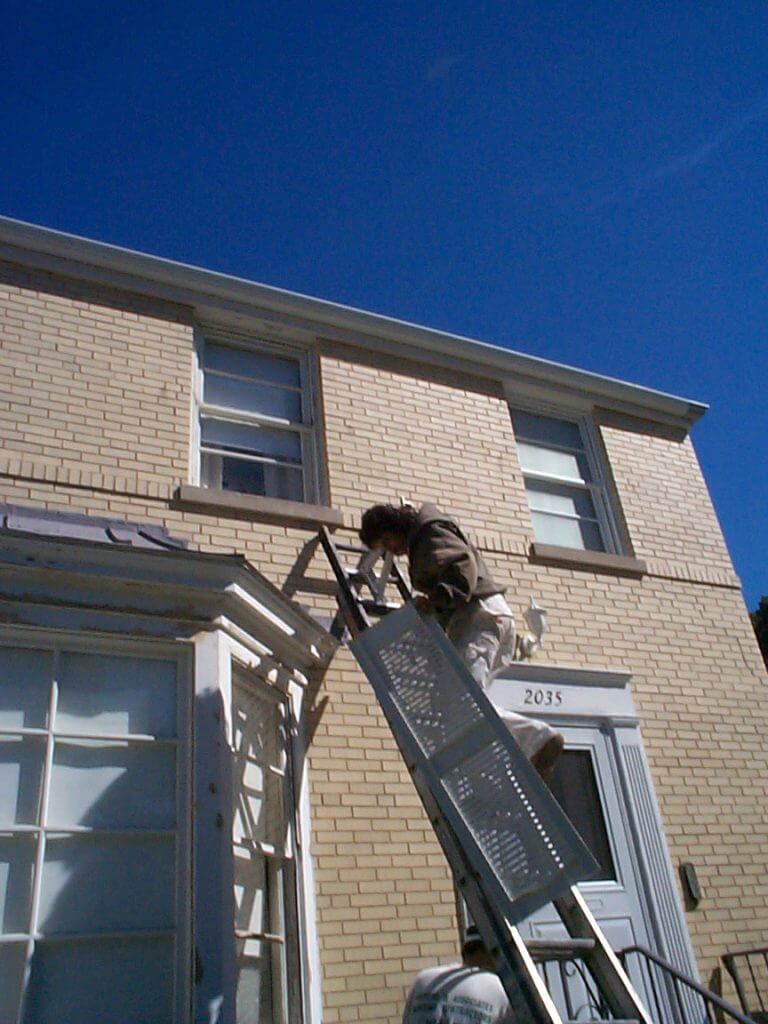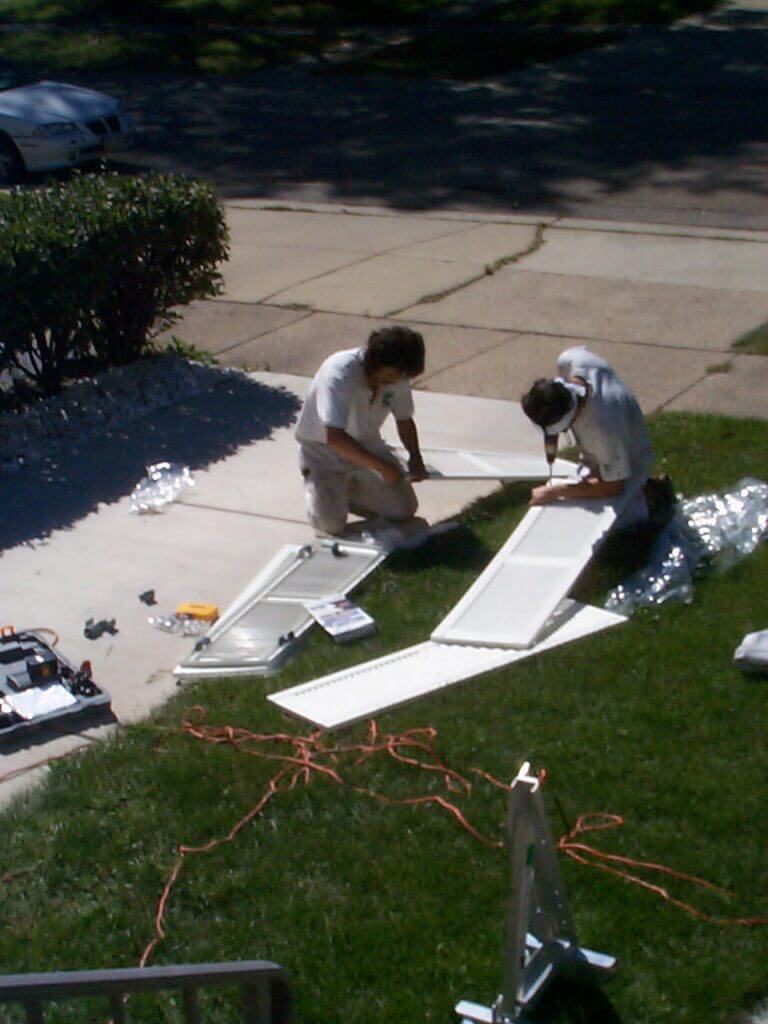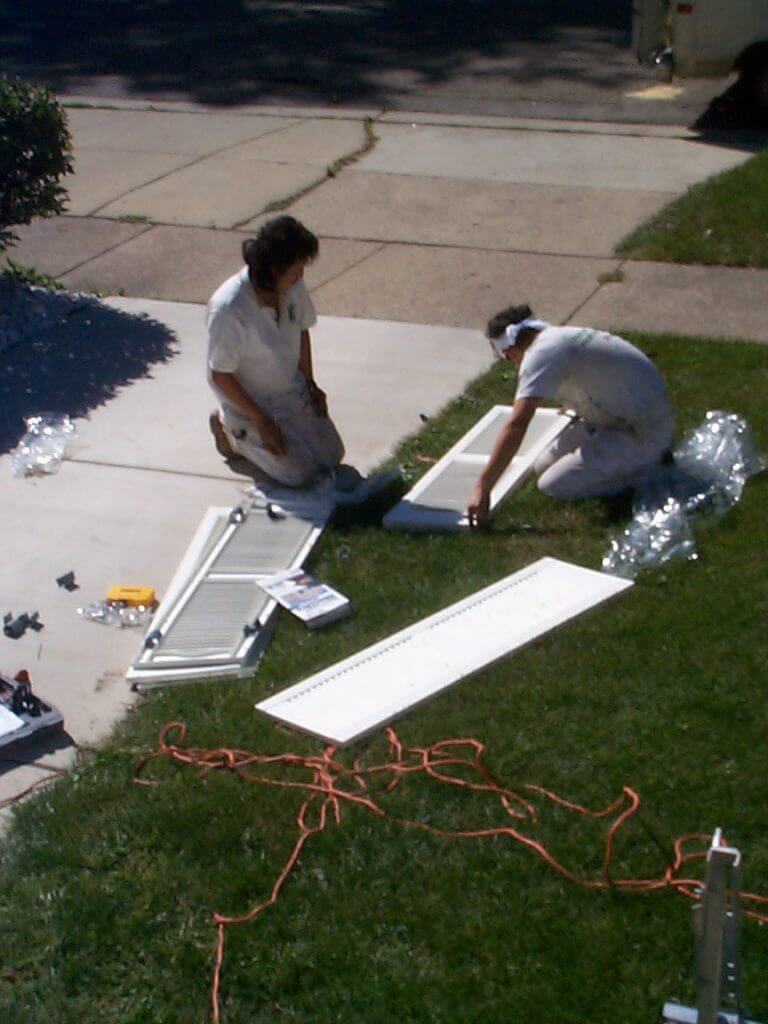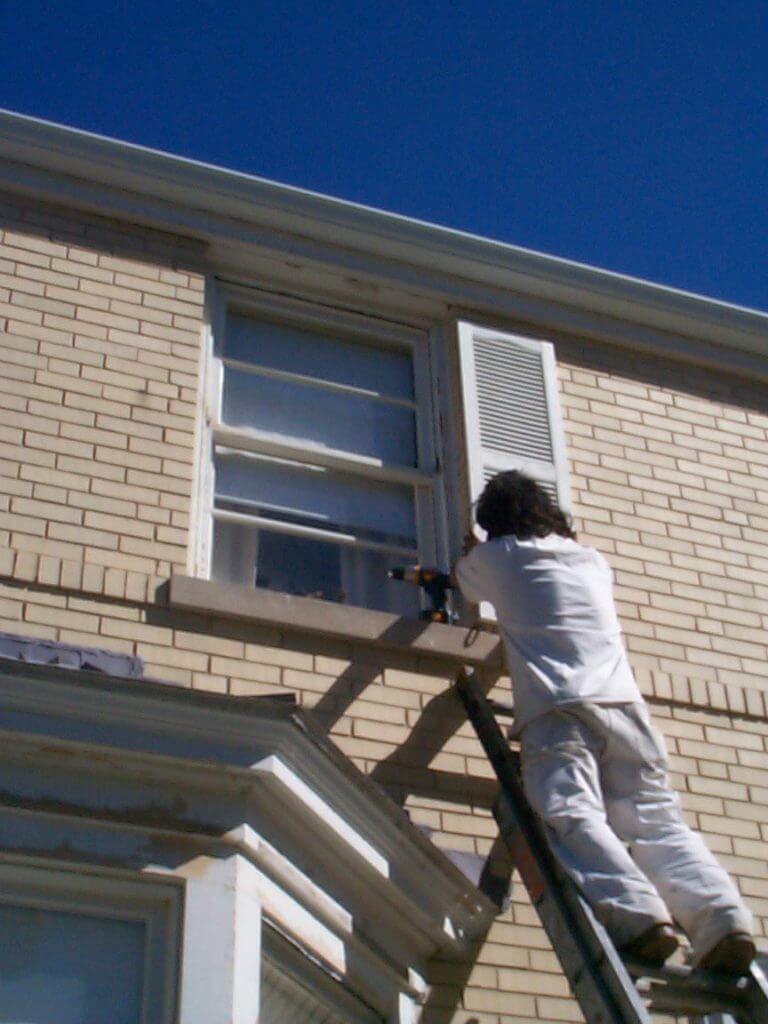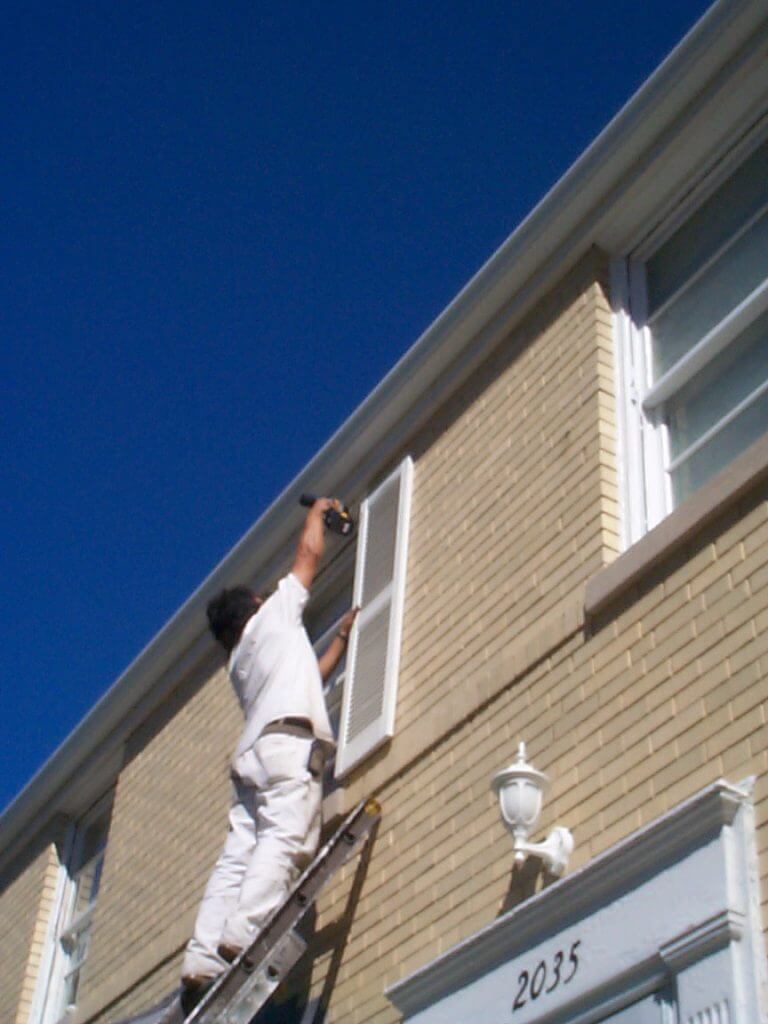

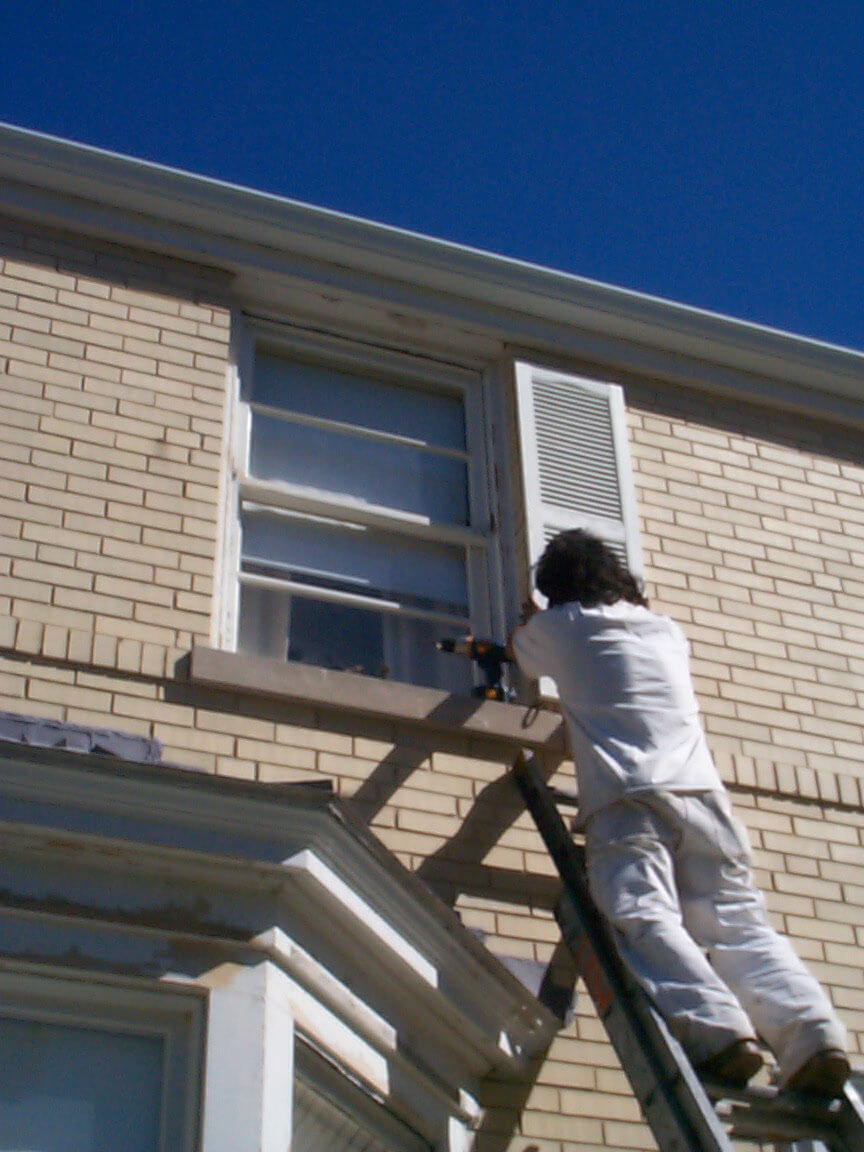
Shutter Replacement & Repair in Chicago
Wooden shutters define the exterior character of countless homes across Chicago, the North Shore, and the western suburbs - from Victorian Painted Ladies in Wicker Park to colonial-style homes in Wilmette to Georgian Revivals in Lake Forest. When shutters are well-maintained, they finish a window beautifully. When they’re damaged, loose, mismatched, or missing entirely, they pull down the look of the whole house.
Fortune Restoration has been repairing, replacing, and custom-matching exterior shutters across the Chicagoland area since 1979. Our master carpenters handle everything from one missing shutter that needs to be matched to the originals, to whole-house shutter restoration on historic properties.
Request a free shutter estimate or call 847-647-2500.
Decorative vs. Functional Shutters: Why the Distinction Matters
Before any repair or replacement decision, the first question is what kind of shutters are on the house:
- Decorative (fixed) shutters - the most common type on modern Chicago-area homes. Mounted permanently flush against the siding or masonry, sized to flank the window for visual symmetry. They don’t open or close. Repair focuses on the shutter face, hardware, and mounting points.
- Operable (functional) shutters - mounted on hinges, designed to actually close over the window. Common on historic homes, where they once served real weather protection and privacy roles. Repair involves the hinges, pintels, shutter dogs (the S-shaped hardware that holds shutters open), and the operating mechanism in addition to the shutter itself.
Mistaking one for the other - for example, installing decorative shutters with operable-shutter proportions, or removing operable hardware on a historic home and converting to fixed - is one of the most common mistakes we correct. Our team identifies what your shutters were designed to do before recommending an approach.
When to Repair vs. Replace
Shutter repair is almost always more economical than replacement - when the damage allows for it. Our master carpenters can address:
- Loose or missing slats and louvers
- Cracked or split shutter rails and stiles
- Rot at the bottom rail (the most common failure point - water sits where the shutter meets the siding)
- Loose or stripped mounting hardware
- Damaged or corroded hinges, pintels, and shutter dogs on operable shutters
- Failing paint, with full stripping and refinishing where needed - see our wood stripping and refinishing service
- Hanging adjustment so shutters sit evenly and proportionally with the window
Replacement makes more sense when:
- The shutter is missing entirely and needs to be matched to others on the house
- Structural damage (severe rot, split rails, broken joinery) is beyond economical repair
- The existing shutters are out of proportion or stylistically wrong for the house, and the owner wants to upgrade
- The original shutters were a cheap builder-grade material that has failed prematurely and the owner wants something more durable
For replacements, we can match existing shutters on the house - same dimensions, same panel or louver pattern, same profile - using our custom millwork capabilities when off-the-shelf options don’t fit.
Shutter Materials and Their Tradeoffs
Western Red Cedar
The gold standard for exterior wood shutters. Naturally rot-resistant, stable through Chicago’s freeze-thaw cycles, and holds paint exceptionally well. Higher upfront cost than pine but significantly longer service life. Our preferred material for both repair pieces and full replacements on quality homes.
Mahogany
Premium hardwood option for historic homes and high-end exterior work. Excellent durability, beautiful grain when finished clear or with a transparent stain, and extremely stable. Appropriate for landmark properties and homes where the shutters are a featured architectural element.
Pine and Spruce (Builder-Grade Wood)
Common on production-built homes from the 1970s onward. Affordable but prone to rot, paint failure, and warping in Chicago’s climate. When pine shutters fail, we typically recommend upgrading to cedar rather than replacing in kind.
Composite and PVC
Engineered options have improved significantly. Appropriate for owners prioritizing maintenance reduction over historic authenticity. Won’t rot, hold paint indefinitely, but lack the depth and grain of real wood up close. Not appropriate for landmark properties or for homeowners who want the look of original wood.
Getting the Proportions Right
A shutter that’s the wrong size for its window looks worse than no shutter at all - and it’s one of the most common mistakes on production-builder homes. Proper shutter proportions follow a simple rule:
Each shutter should be approximately half the width of the window opening - so that if the shutters were closed (whether they actually operate or not), they would meet in the middle and cover the window completely. Two shutters that combined are narrower than the window read as decorative-only afterthoughts. Shutters that are wider than the half-window width look oversized and clumsy.
Height should match the window opening, not the window casing. Shutters that are shorter or taller than the visible window opening break the architectural logic of the facade.
When we replace or match shutters, we measure and produce them to the correct proportions for each window - not just to whatever fits the box at the store.
Coordinating with Painting, Window Work, and Carpentry
Shutter work rarely happens in isolation. Most projects coordinate with one or more of:
- Exterior painting - shutters are typically painted to coordinate with the house’s color scheme, and the right time to repaint shutters is during a full exterior paint cycle
- Window replacement - new windows often mean re-evaluating whether the existing shutters still fit proportionally
- Door and eaves replacement - entry detailing changes the visual weight on the facade and may require shutter adjustments to maintain symmetry
- Siding repair - rot behind shutter mounting points is common; siding repair often needs to happen before new shutters are installed
- Wood stripping and refinishing - for historic shutters with decades of paint buildup, stripping back to bare wood is the right starting point
Bundling these scopes under a single contractor eliminates the sequencing and finger-pointing problems that come with multiple trades on one facade.
Historic Shutter Restoration
For landmark and historically significant properties, shutter work is more involved. Original operable shutters often have hardware that’s no longer commercially available, joinery techniques that aren’t used in modern production, and profiles that need to be replicated from the originals rather than ordered from a catalog.
Our approach to historic shutter restoration follows the National Park Service’s guidance on historic exterior woodwork - preserve where possible, replace in kind only when necessary, match materials and profiles accurately, and use compatible paint systems. We’ve completed shutter work on landmark homes including Frank Lloyd Wright properties and the Patterson-McCormick Mansion.
Service Area
Fortune Restoration provides shutter repair, replacement, and matching throughout the Chicagoland area:
Chicago (Lincoln Park, Old Irving Park, Wicker Park, Beverly, Lincoln Square) · Lincolnwood · Evanston · Wilmette · Winnetka · Glencoe · Highland Park · Lake Forest · Kenilworth · Skokie · Niles · Park Ridge · Glenview · Northbrook · Oak Park · River Forest · Hinsdale · Wheaton · Naperville · Deerfield
Why Property Owners Choose Fortune Restoration
- 47+ years of Chicagoland carpentry experience
- Master carpenters who can repair shutters most contractors would simply replace
- Custom matching via our in-house millwork capabilities - we can produce replacement shutters that match originals exactly
- Multi-trade integration - coordinate shutter work with exterior painting, window replacement, and siding repair under one contract
- Licensed, bonded, and insured in the State of Illinois
- EPA Lead-Safe (RRP) certified for shutter work on pre-1978 properties (lead paint on original shutters is extremely common)
Helpful External Resources
- NPS Preservation Brief #10: Exterior Paint Problems on Historic Woodwork - directly applicable to historic painted shutters
- NPS Preservation Brief #9: The Repair of Historic Wooden Windows - window and shutter restoration principles overlap heavily
- EPA Lead Renovation, Repair & Painting (RRP) Program - important guidance for owners of pre-1978 homes
Frequently Asked Questions
Can damaged wooden shutters be repaired, or do they need to be replaced?
In most cases, repair is the right call. Loose slats, split rails, rotted bottom rails, failed hardware, and paint failure are all repairable by skilled carpenters. Full replacement makes sense when shutters are missing entirely, structural joinery has failed beyond economical repair, or the existing shutters are the wrong proportions or material for the house. Our estimator can assess shutter by shutter on a site visit.
What size should exterior shutters be?
Each shutter should be approximately half the width of the window opening, so that if closed, the pair would cover the window completely. Height should match the visible window opening, not the casing. Shutters that are narrower than half the window width or shorter than the window itself look like afterthoughts - one of the most common errors on builder-grade homes.
What’s the best shutter material for Chicago’s climate?
For traditional wood shutters, Western Red Cedar is the gold standard - naturally rot-resistant, stable through freeze-thaw cycles, and holds paint exceptionally well. Mahogany is the premium option for historic or high-end homes. Pine and spruce builder-grade shutters fail quickly in Chicago and we generally recommend upgrading to cedar when replacing them. Composite and PVC are valid maintenance-reduction options for owners who don’t need wood authenticity.
Can you match shutters that are still in good condition on the rest of the house?
Yes - this is one of the most common requests we handle. Our in-house custom millwork capabilities let us replicate existing shutters in dimension, panel or louver pattern, profile, and material. The replacement is then painted to match the existing color, including any aging or weathering considerations.
How long do exterior shutters last in Chicago?
Highly variable by material and exposure. Quality cedar shutters with proper paint maintenance can last 30 to 50 years or longer. Builder-grade pine shutters often start failing within 10 to 15 years. Composite and PVC shutters can outlast the paint they’re finished with but eventually need replacement when UV breaks down the material. South and west exposures see faster wear due to UV.
Do you handle painting the shutters too?
Yes. We offer full exterior painting services and routinely paint shutters as part of either a standalone shutter project or a broader whole-house paint cycle. For historic shutters with significant paint buildup, we recommend stripping back to bare wood before refinishing.
Are decorative shutters worth installing if they don’t actually function?
Yes - well-proportioned decorative shutters significantly improve the curb appeal and architectural completeness of a home. They define windows, add visual weight to the facade, and signal traditional architectural intent. The only time decorative shutters look bad is when they’re poorly sized, poorly maintained, or applied to a house whose architecture doesn’t call for them.
Ready to repair or replace your home’s shutters?
Call 847-647-2500 · Email info@fortunerestoration.com · Request a Free Estimate