
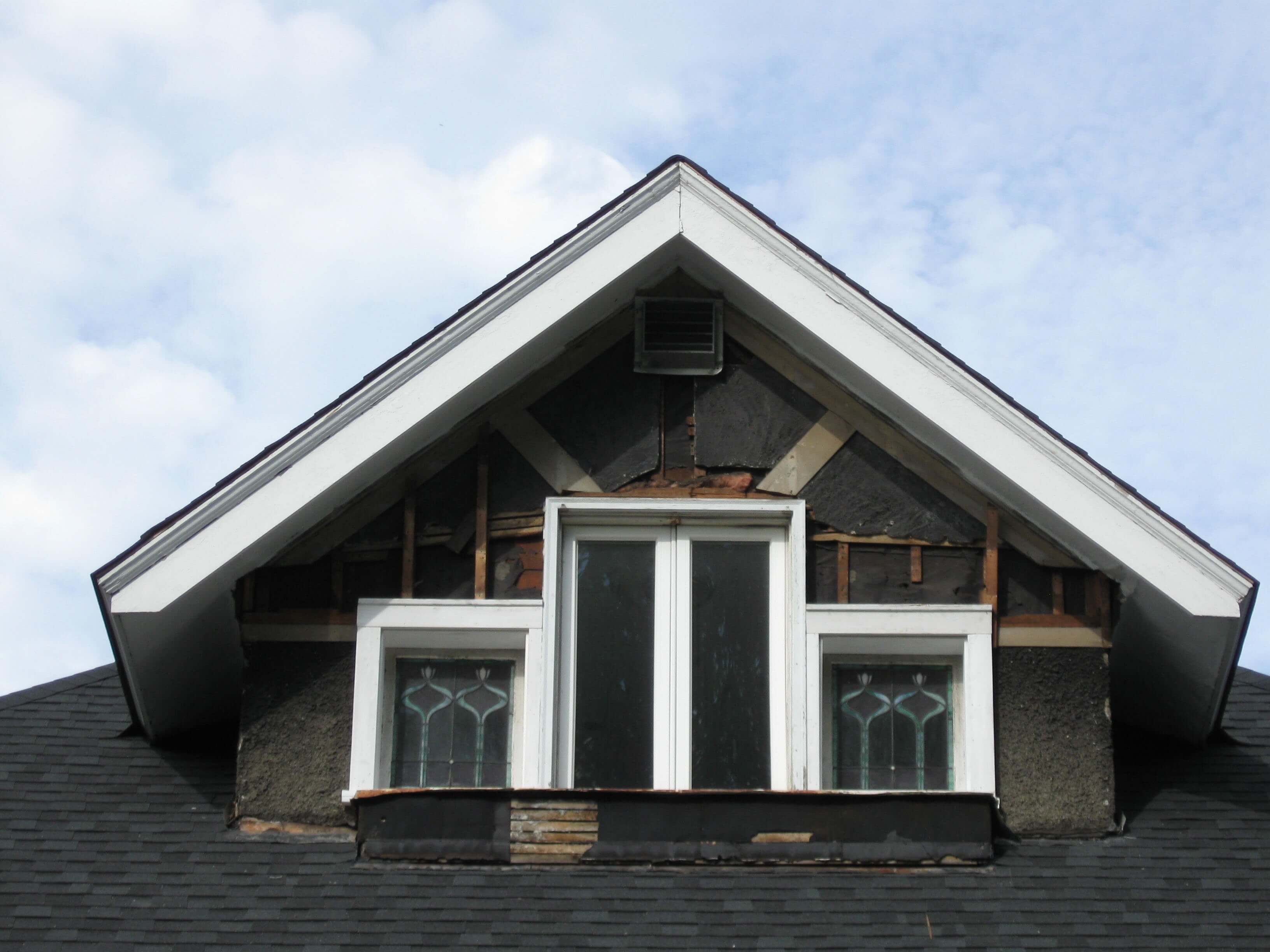
Energy-Efficient & Historic-Compatible Windows for Chicagoland Homes
Window replacement in Chicago means choosing units that perform in Climate Zone 5 — sub-zero winters, humid summers, and 100°F annual temperature swings — while respecting the architectural character of the building. Fortune Restoration has been installing replacement windows and restoring original wood windows on Chicagoland homes since 1979, from Lincoln Park greystones and Oak Park Prairie homes to North Shore Victorians and new construction condos throughout the city.
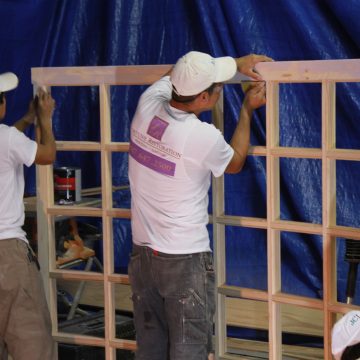
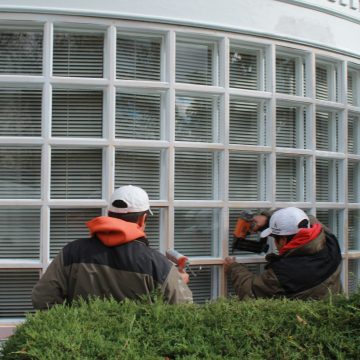
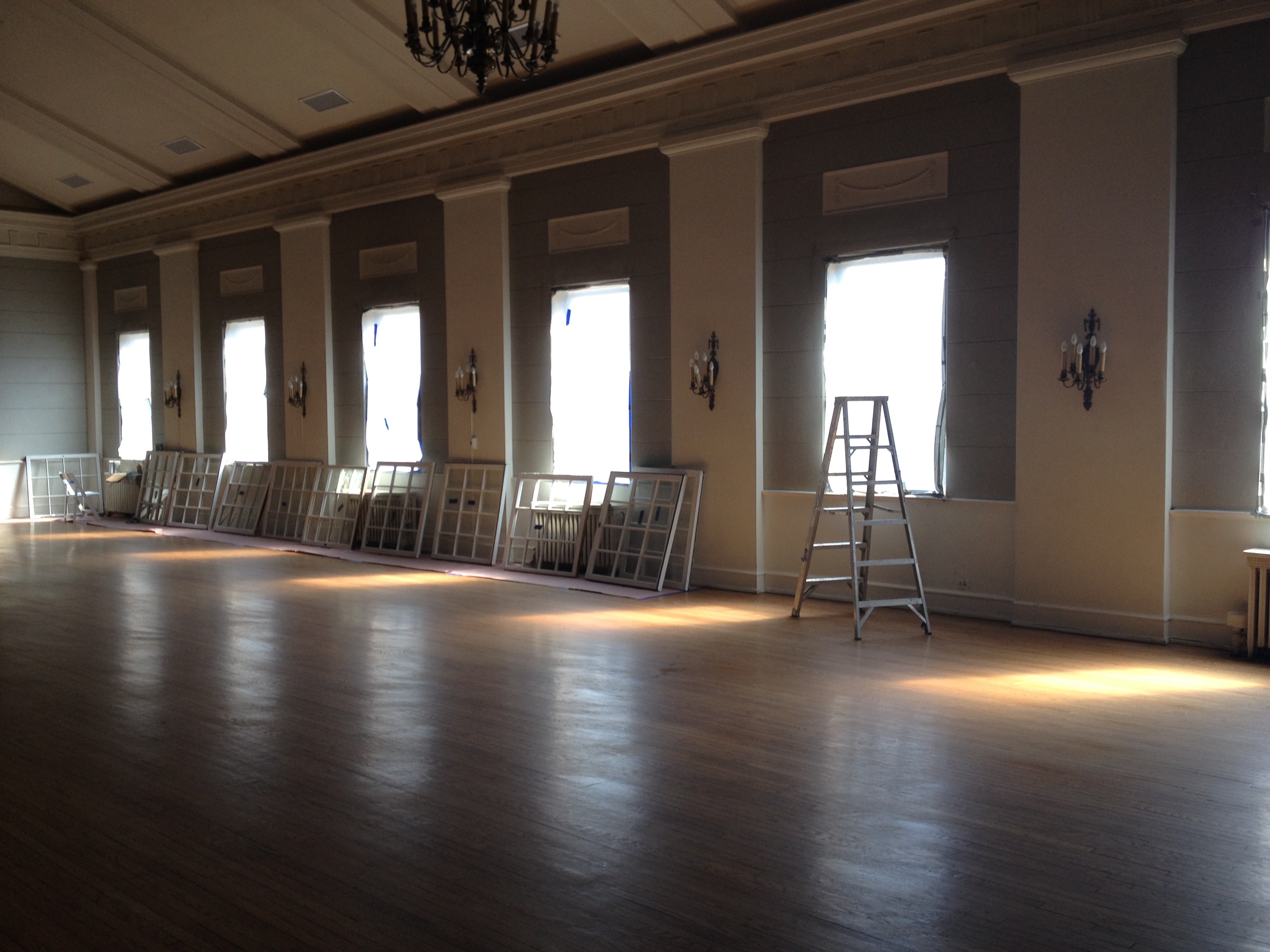
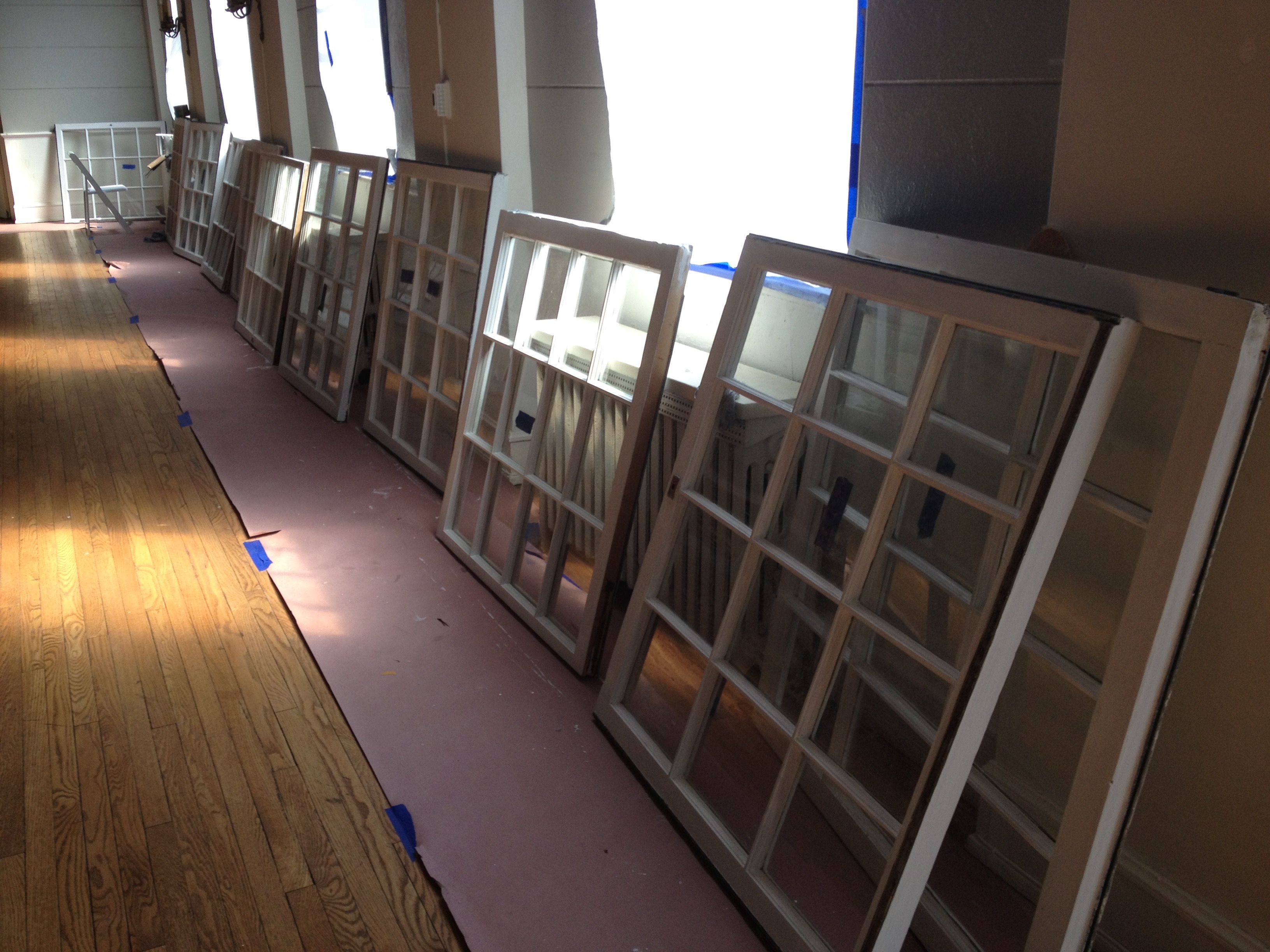
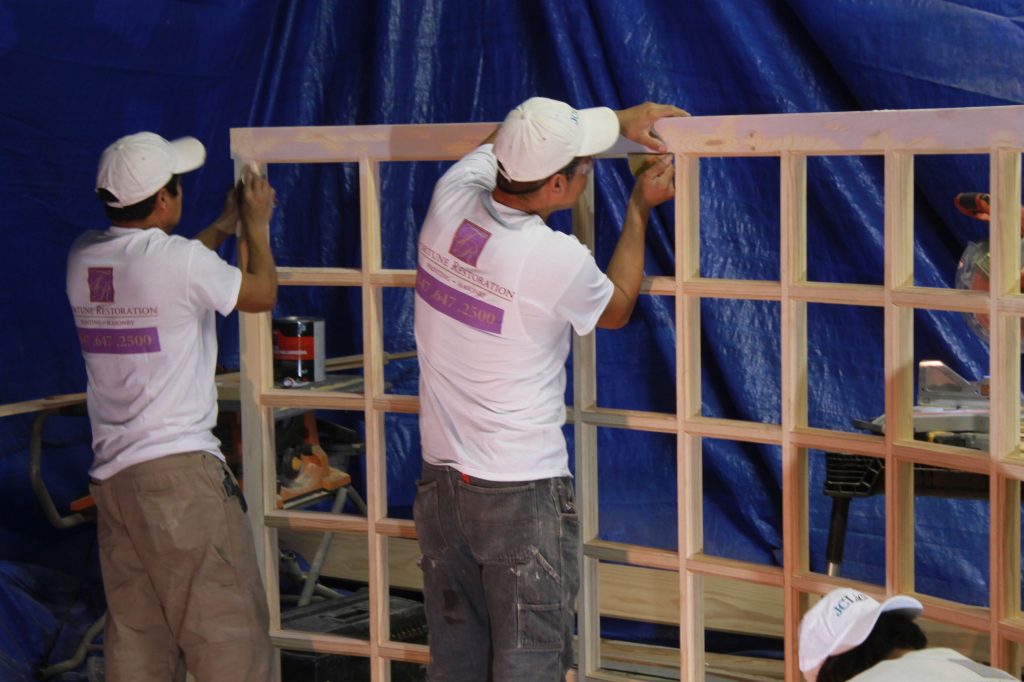
Whether your goal is cutting heating bills, ending drafts and noise, or replacing failed sashes without compromising a historic facade, our master carpenters handle the full project — measurement, removal, installation, flashing, caulking, interior and exterior trim, and final paint.
Request a free window replacement estimate →
Window Replacement Services We Provide
Our carpentry team handles every stage of window replacement on residential, commercial, multi-unit, and historic properties throughout the Chicago area:
- Full window replacement — removal of existing units and installation of new vinyl, fiberglass, aluminum-clad, or wood windows
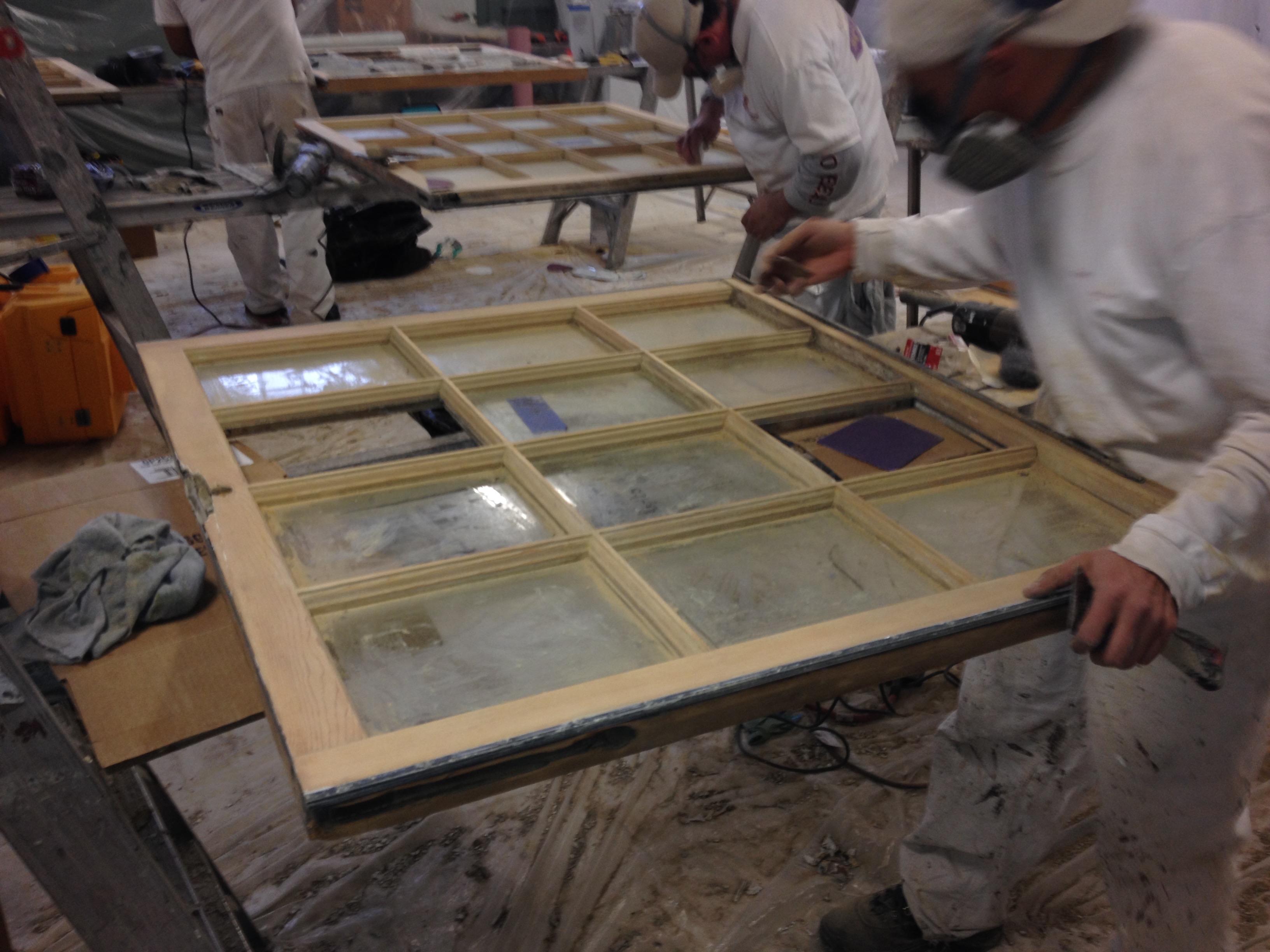
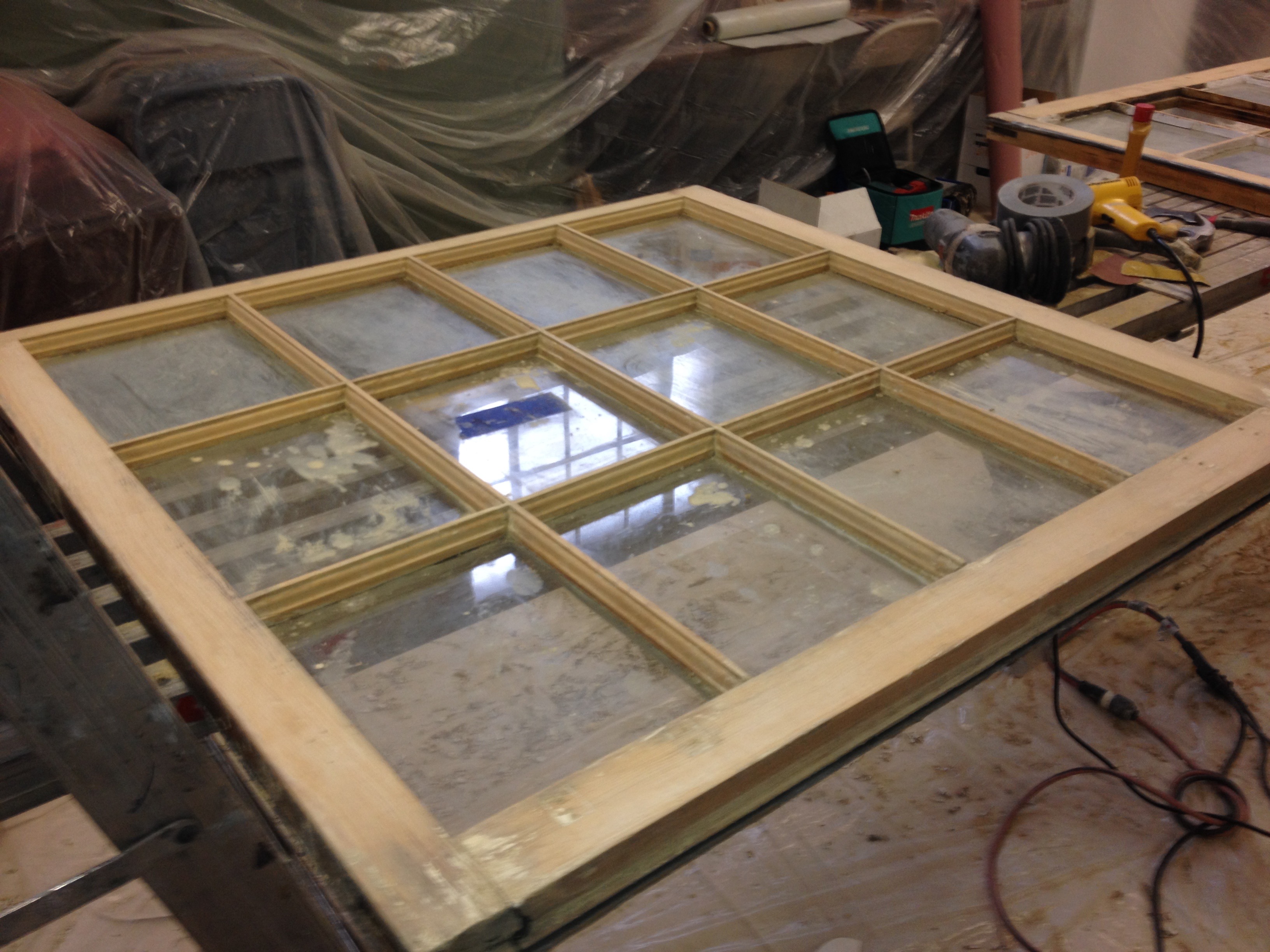
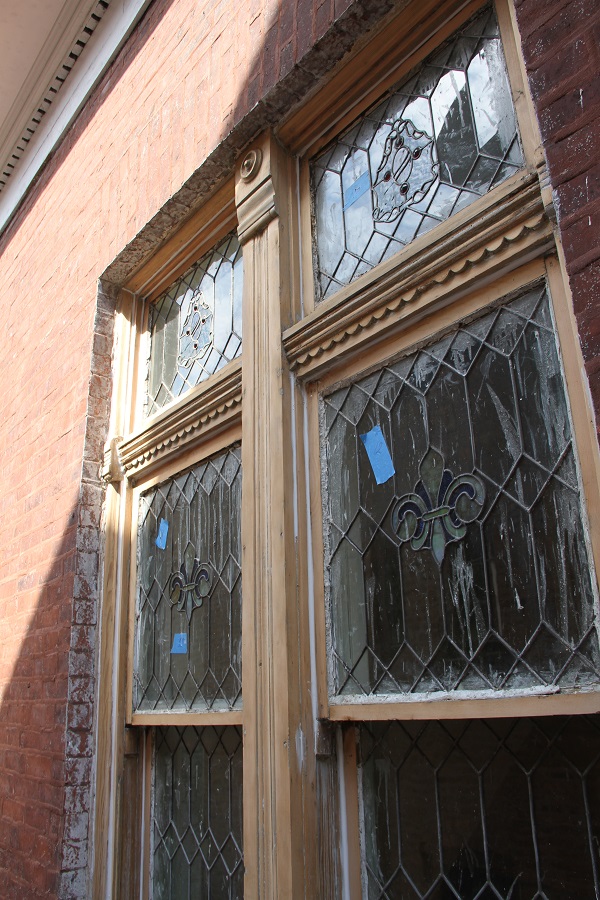
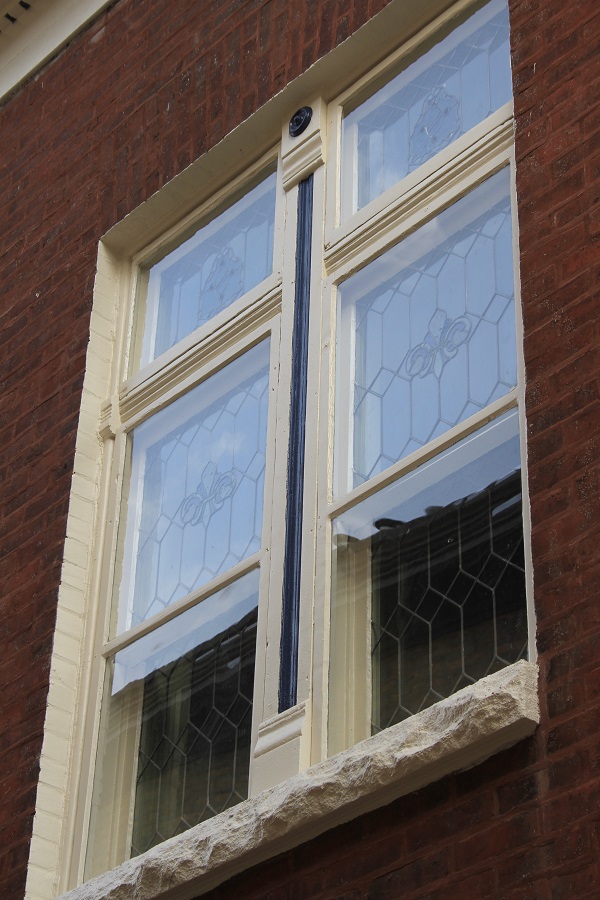
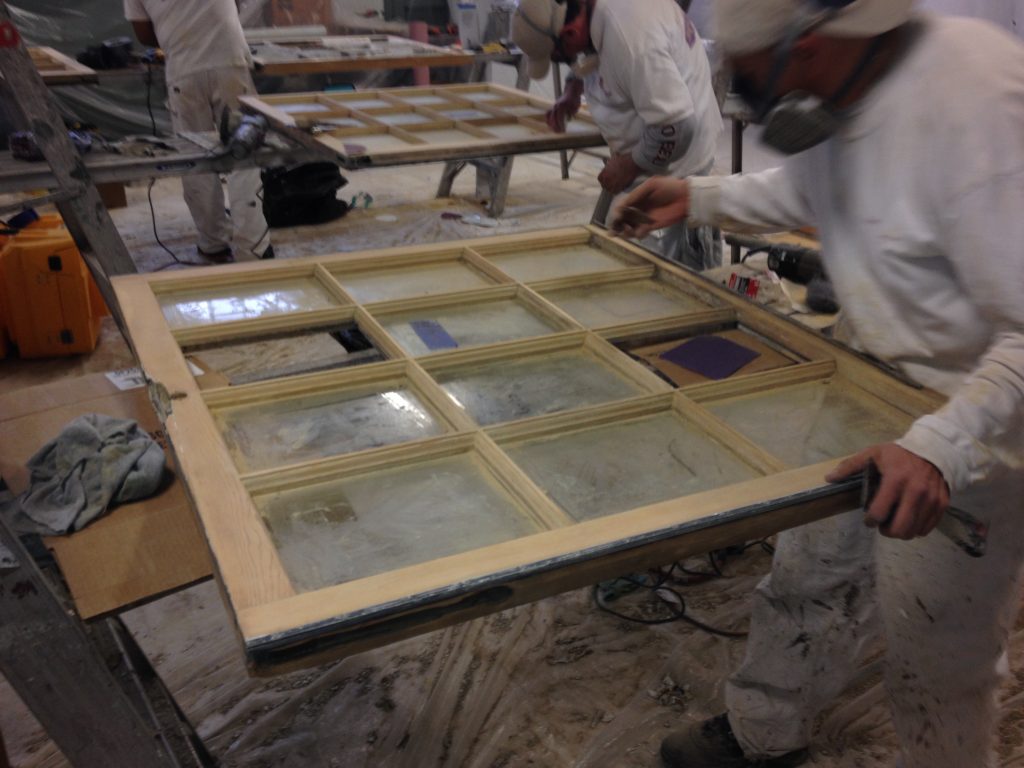
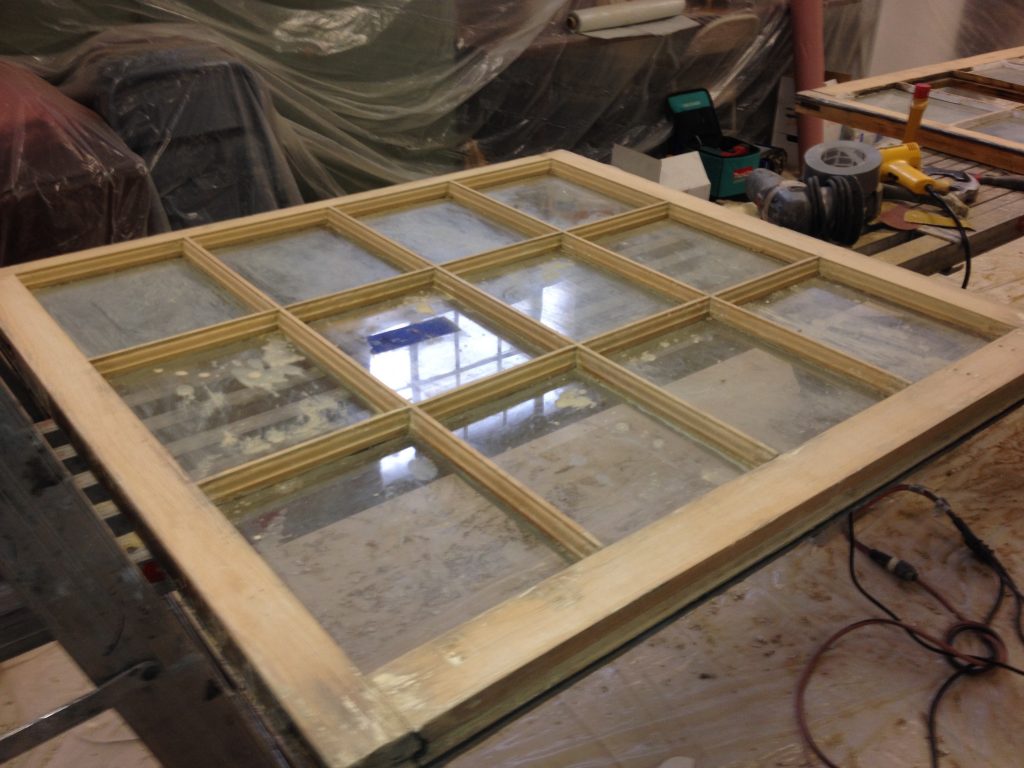
- Historic wood window restoration — repair and refinishing of original sashes, frames, and weight pockets where preservation is the priority
- Energy-efficient upgrades — double- and triple-pane insulating glass units (IGUs) with low-E coatings and inert gas fill
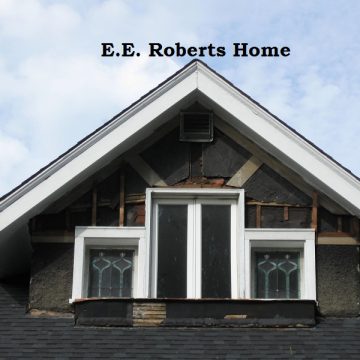
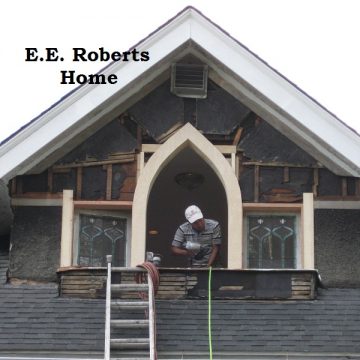
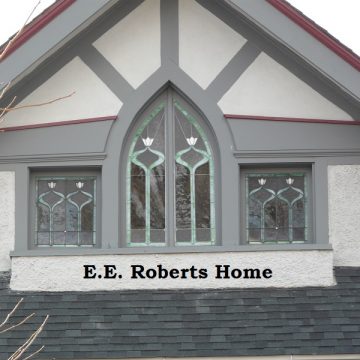
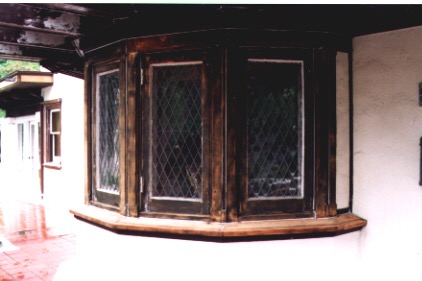
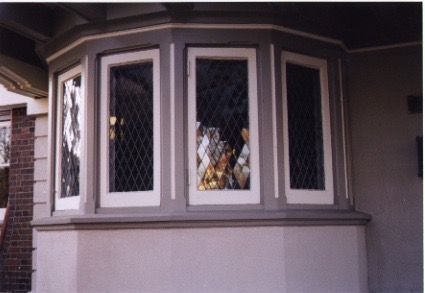
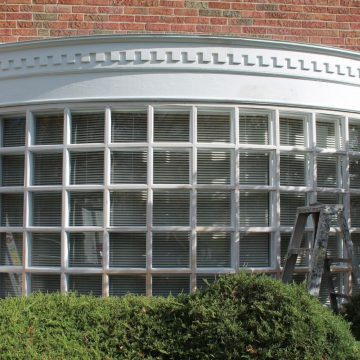
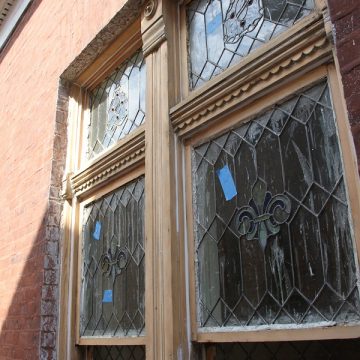
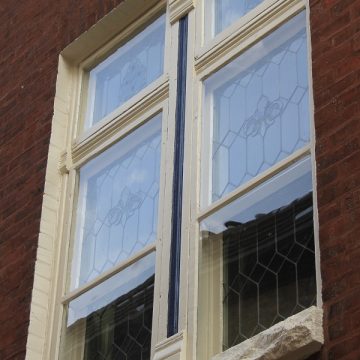
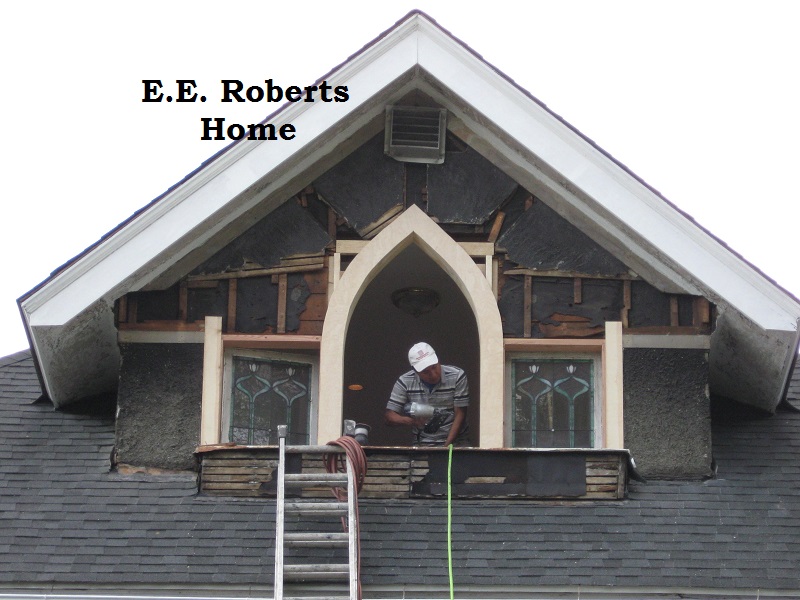
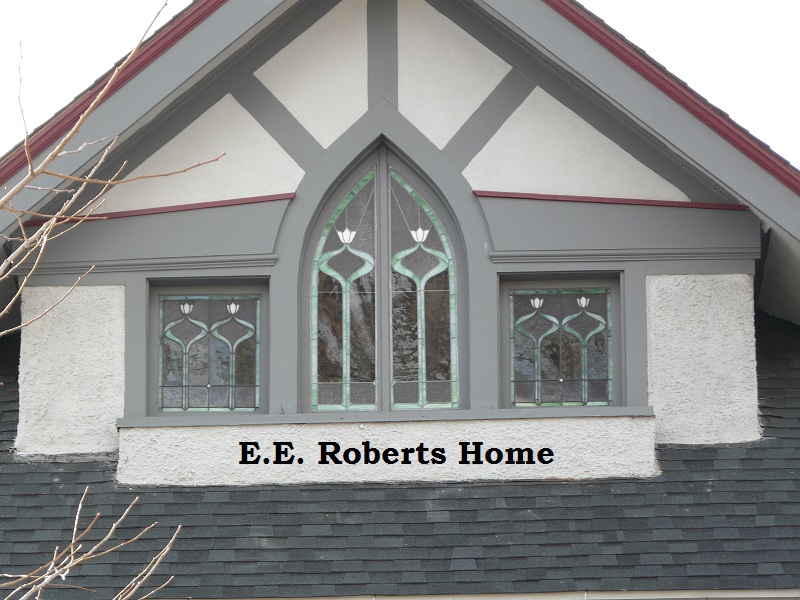
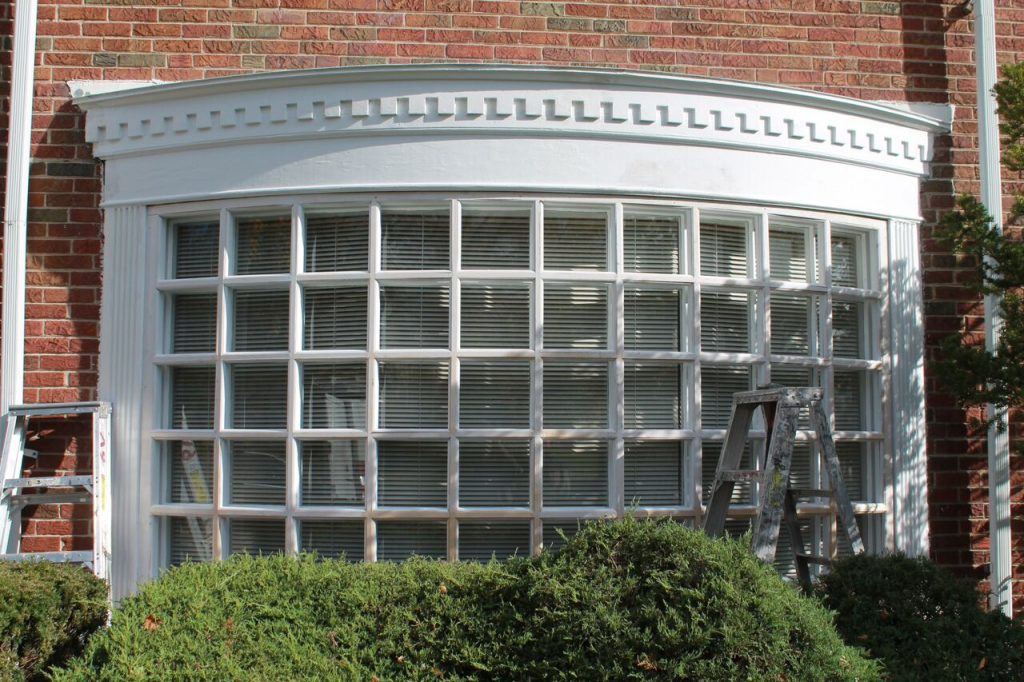
- Custom-size and custom-shape windows — arched, transom, oriel, and bay windows for vintage Chicago architecture
- Masonry opening repair — coordinated tuckpointing, lintel repair, and perimeter caulking at the window-to-masonry interface
- Storm window installation — interior and exterior storms for homes where original windows are being retained
- Glass-only replacement — see our dedicated glass replacement service when the frame is sound
Why Chicago Homes Need Window Replacement
Original windows in Chicago typically begin showing meaningful failure between 40 and 80 years of service. The dominant failure modes in our climate are sash rot at the bottom rails, glazing putty failure, weight cord breakage, hardware fatigue, and sash-to-frame air leakage that quietly drives up heating costs every winter.
Common signs it’s time to consider replacement:
- Drafts you can feel when standing near a closed window
- Condensation or frost forming between panes — indicates a failed seal in a double-pane unit
- Sashes that stick, won’t stay open, or rattle in their frames
- Visible rot at the sill, bottom rail, or jamb
- Single-pane glass on the primary heated levels of the home
- Paint failure concentrated at window heads — often a sign of water entering at the masonry-to-window interface, not a paint problem
When paint is failing in a horizontal band below the window head, the cause is frequently water entering through a failed lintel or perimeter sealant — not the window itself. Our team evaluates the full assembly before recommending a replacement scope.
Energy-Efficient Windows for Chicago’s Climate Zone 5
Chicago sits in U.S. Climate Zone 5 — cold winter, hot summer — which requires a U-factor of 0.30 or below and a balanced solar heat gain coefficient (SHGC) for optimal performance. The ENERGY STAR® window certification program publishes the specific performance thresholds qualifying products must meet for our region.
What to specify on a Chicago window replacement:
- Double or triple insulated glass with a low-emissivity (low-E) coating
- Argon or krypton gas fill between panes — argon is the standard, krypton is used in thinner triple-pane assemblies
- U-factor ≤ 0.30 per National Fenestration Rating Council (NFRC) certified ratings
- SHGC between 0.25 and 0.40 — enough winter solar gain to help heat the home, not so much that summer overheating becomes an issue
- Air leakage rating ≤ 0.30 cfm/sq ft — meaningful for Chicago wind exposure
The U.S. Department of Energy’s guide to energy-efficient windows provides additional background on how these specifications translate to real-world heating and cooling savings.
Window Frame Materials: What’s Right for Your Chicago Home
Each material has tradeoffs in cost, longevity, maintenance, and architectural compatibility:
- Wood — the traditional choice for historic and high-end homes. Excellent thermal performance, paintable, repairable. Requires periodic maintenance.
- Aluminum-clad and vinyl-clad wood — wood interiors with weather-resistant exterior cladding. A good compromise for homes that want the warmth of wood inside and lower maintenance outside.
- Fiberglass — the strongest material for window frames, with thermal expansion characteristics closest to glass. Excellent for large openings and energy performance.
- Vinyl — the most economical option. Solid performance in standard sizes; less suitable for very large openings or buildings where historic character matters.
- Composite — engineered materials that blend wood fiber and polymer. Comparable to fiberglass in durability at a moderate price point.
Window Replacement for Historic & Vintage Chicago Homes
Historic preservation guidance generally favors repair of original windows over replacement when the frames are structurally sound. A well-maintained, weatherstripped original double-hung with an interior storm panel can match the thermal performance of a new replacement unit while preserving irreplaceable architectural character.
On landmark and historically significant Chicago properties — Frank Lloyd Wright homes in Oak Park, Gold Coast mansions, Queen Anne homes in Wicker Park, Italianate two-flats throughout the neighborhoods — we always discuss repair-first options before recommending full replacement.
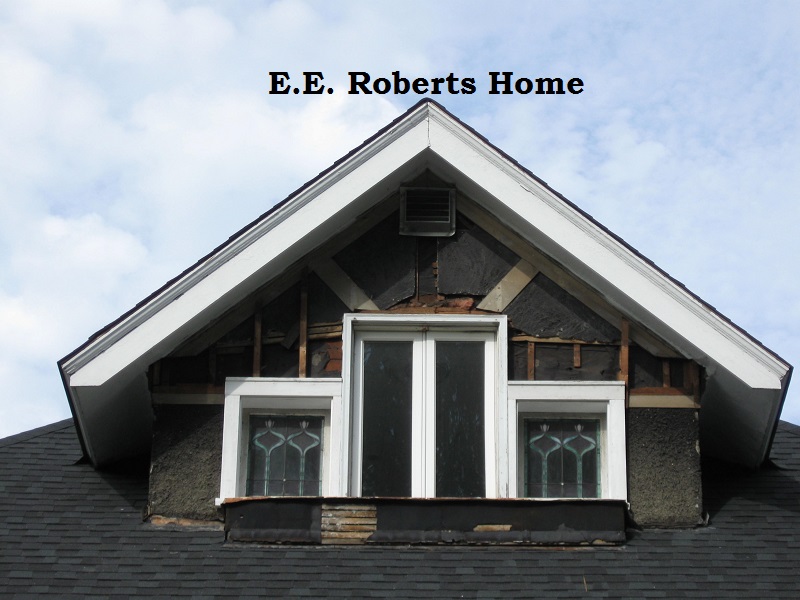
When replacement is the right call on a historic property, matching the original profile, muntin pattern, glass type, and sightlines matters for both curb appeal and (on landmark properties) compliance with the Chicago Commission on Chicago Landmarks and the Illinois State Historic Preservation Office. Fortune Restoration has navigated these approval processes on dozens of landmark projects across the Chicagoland area.
Lead Paint & Pre-1978 Homes
Chicago homes built before 1978 typically have lead-based paint on window frames and surrounding trim. The EPA Renovation, Repair and Painting (RRP) Rule requires certified contractors to follow specific containment and disposal practices when disturbing lead paint. Fortune Restoration is RRP-certified and handles lead-safe work as part of every pre-1978 window project.
The Window Replacement Process
A typical Fortune Restoration window replacement project follows seven steps from estimate to final inspection.
- On-site assessment. Master carpenter measures each opening, evaluates the surrounding substrate (masonry, framing, trim), and identifies any related repairs needed before installation.
- Specification and ordering. Window units, frame material, glass package, hardware, color, and trim profile are confirmed. Custom orders typically ship in 4–8 weeks.
- Substrate preparation. Failing lintels, deteriorated framing, rotted sills, or compromised masonry are repaired before the new window arrives.
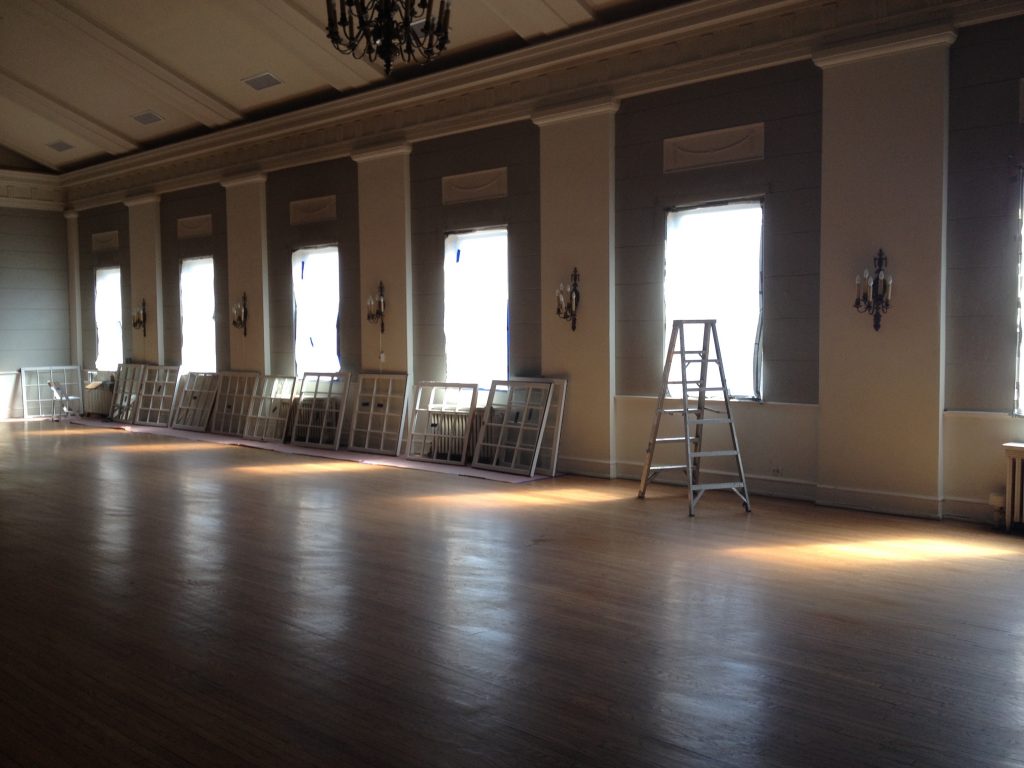
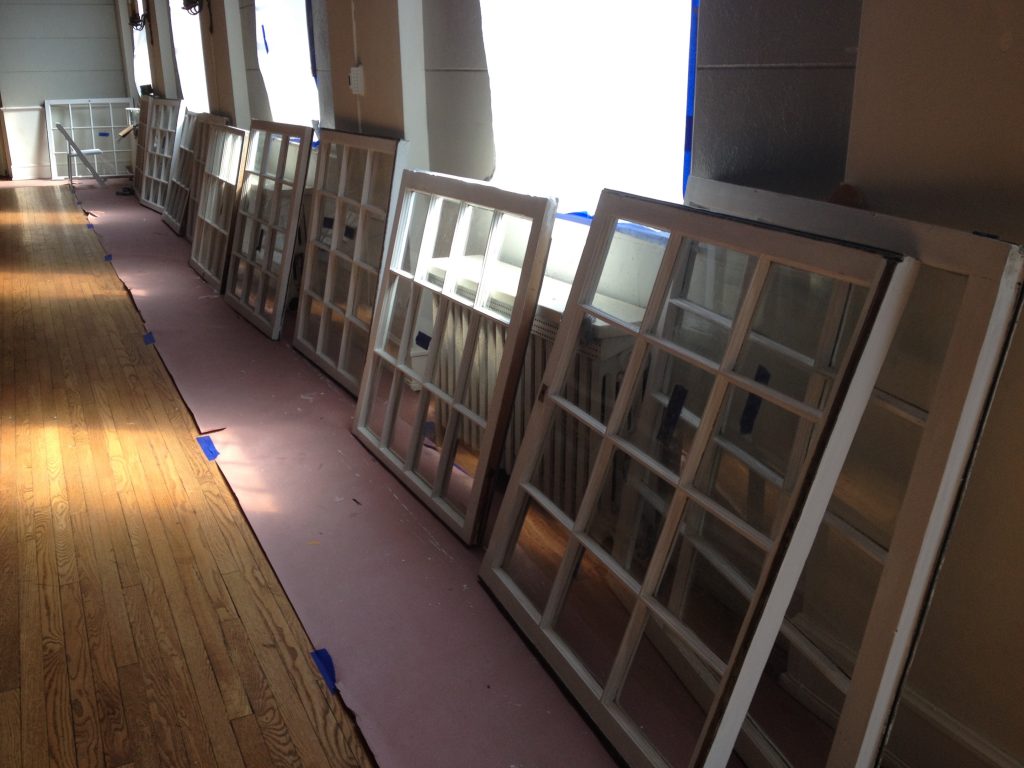
- Removal of existing units. Old windows are removed, openings cleaned, and rough openings squared and prepared.
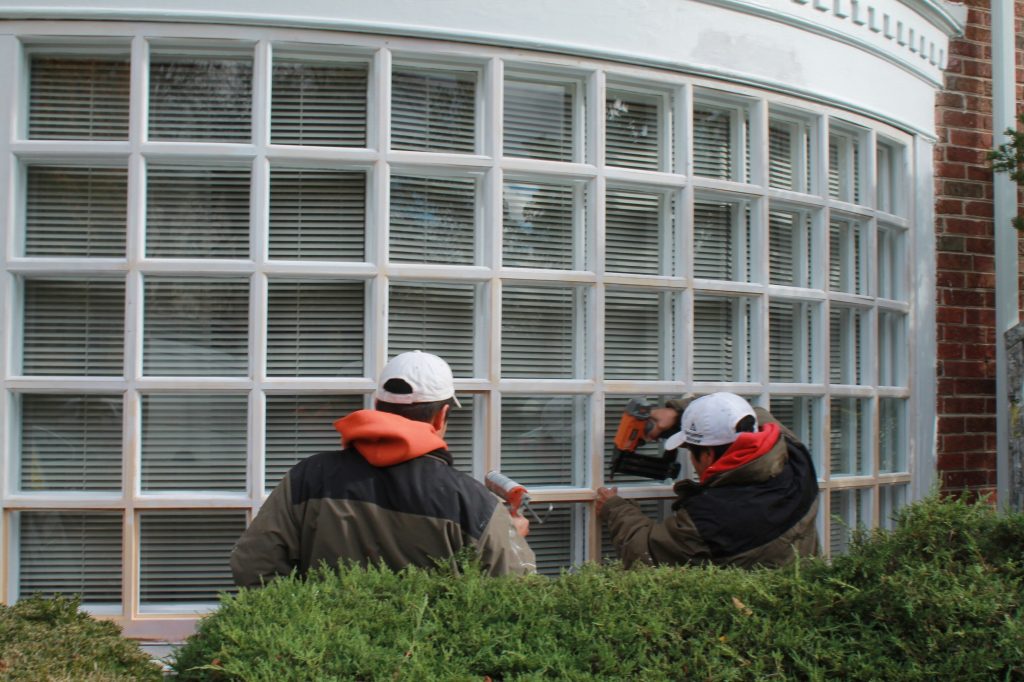
- Installation. New units are set, leveled, shimmed, and mechanically fastened per manufacturer specifications.
- Flashing and caulking. The window-to-substrate interface is the critical waterproofing junction. Compatible flexible sealants are applied at every perimeter joint.
- Interior and exterior trim, paint, and final inspection. Trim work, touch-up painting, and a final walkthrough complete the project.
For new construction and condo buildouts, see our new construction painting service — window installation is sequenced with other trades to protect finished surfaces.
Window Replacement in Masonry Buildings: The Integration Challenge
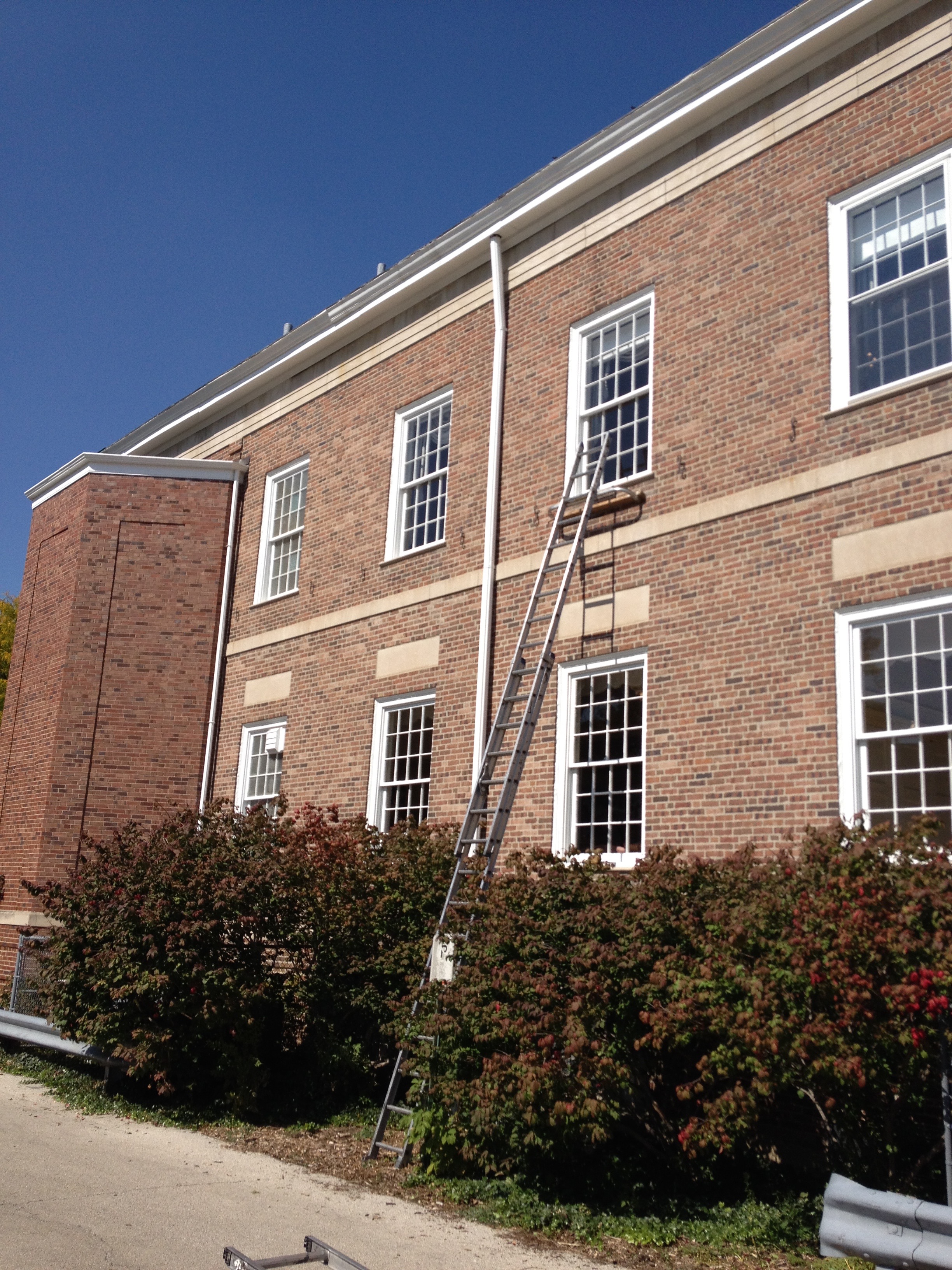
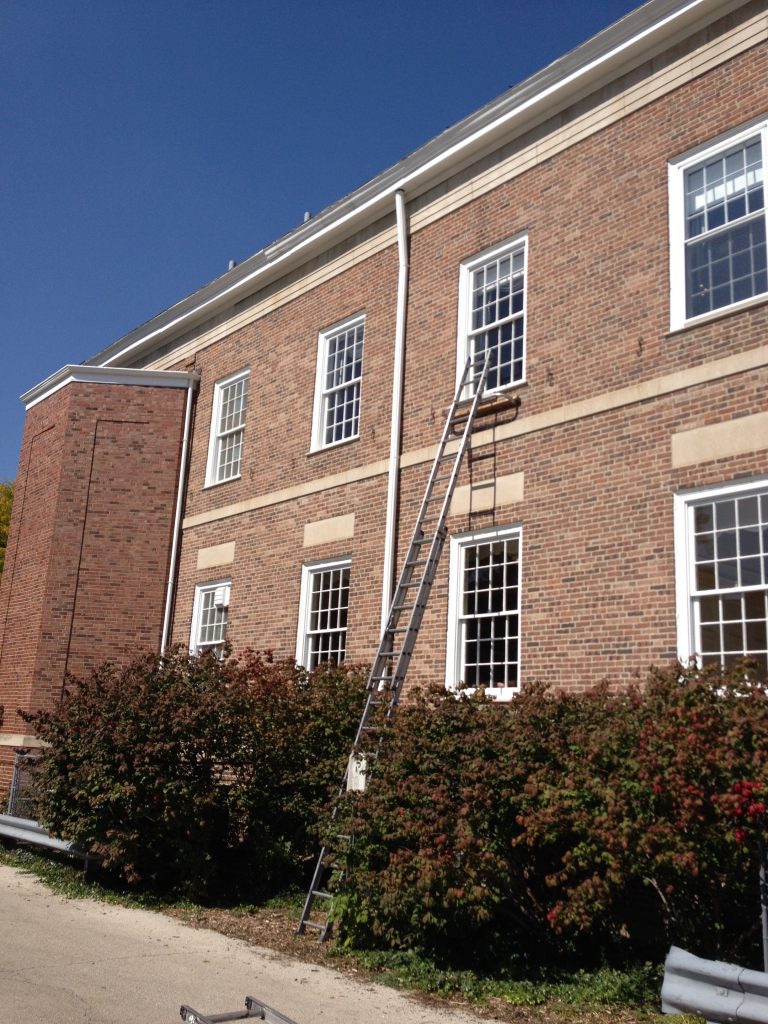
Installing replacement windows in Chicago’s brick and stone buildings is more complex than replacement in wood-frame construction. The masonry opening is fixed; the unit must fit it precisely. The perimeter is a critical waterproofing junction that must be properly flashed and sealed.
Improperly installed windows in masonry buildings are a leading source of interior water damage — and the symptoms (staining at the window head, plaster damage on the wall below) are often misdiagnosed as tuckpointing problems when the real source is a window-perimeter failure. Our masonry-trained crews handle the full assembly correctly the first time.
Chicago Service Area
Fortune Restoration provides window replacement services throughout the Chicagoland region from our Lincolnwood, IL headquarters:
- City of Chicago neighborhoods: Lincoln Park, Wicker Park, Bucktown, Logan Square, Lakeview, Wrigleyville, Edgewater, Hyde Park, Beverly, Norwood Park, Lincoln Square, Andersonville, Old Town, Gold Coast, Bridgeport, Pilsen
- North Shore: Evanston, Wilmette, Winnetka, Glencoe, Highland Park, Lake Forest, Glenview, Skokie, Northbrook, Deerfield, Lincolnwood
- Western Suburbs: Oak Park, River Forest, Forest Park, Hinsdale, La Grange, Western Springs, Riverside, Berwyn
Related Carpentry & Restoration Services
- Door & Eaves Replacement
- Shutter Replacement & Repair
- Glass Replacement
- Custom Millwork
- Siding Replacement & Repair
- Porch & Deck Restoration
- Exterior Painting
- Tuckpointing
Window Replacement FAQs
How long does window replacement take in a Chicago home?
Most residential window replacement projects take one to three days for installation once the units arrive. The full project timeline from estimate to completion is typically 6 to 10 weeks, with custom orders driving most of the lead time.
What is the best time of year to replace windows in Chicago?
Late spring through early fall (May–October) is the ideal window replacement season in Chicago. Installation is possible year-round, including winter, since openings are sealed and weatherproofed the same day — but mild conditions make trim, caulking, and exterior touch-up paint perform better.
How much does window replacement cost in Chicago?
Chicago window replacement typically ranges from $700 to $2,500 per window installed, depending on size, material, glass package, and installation complexity. Historic-match wood windows and large custom-shape units fall at the higher end of the range. Multi-window projects often qualify for volume pricing.
Should I repair or replace my original wood windows?
Repair is generally the better choice if the frames are structurally sound, the wood is solid, and the home has historic significance. Replacement makes more sense when frames have extensive rot, hardware is unrepairable, or maximum energy performance is the priority. Fortune Restoration evaluates both options before recommending a scope.
Do replacement windows really save energy in Chicago?
Yes — replacing single-pane or failed double-pane windows with ENERGY STAR-certified units typically reduces heating and cooling costs by 12% to 25% in Chicago homes, according to U.S. Department of Energy estimates. Savings depend on the condition of the windows being replaced and the home’s overall envelope.
Do I need a permit to replace windows in Chicago?
The City of Chicago requires a building permit when window openings are being altered (resized, added, or removed). Like-for-like replacement of existing windows in their existing openings does not typically require a permit, but landmark and historic district properties have additional approval requirements. Fortune Restoration handles permitting and approvals as part of the project scope.
Can you match windows on a historic Chicago home?
Yes. Our master carpenters specify replacement windows that match the original profile, muntin pattern, sightlines, and operation style — including arched, transom, oriel, and other custom configurations common in Chicago’s vintage building stock. On landmark properties, we navigate Chicago Commission on Chicago Landmarks and SHPO approvals as part of the project.
Request a Free Window Replacement Estimate
Fortune Restoration has been replacing and restoring windows on Chicagoland homes since 1979. Whether you’re upgrading to energy-efficient units, restoring original wood windows on a historic property, or coordinating window replacement with a larger exterior painting or masonry project, our master carpenters deliver the full scope from a single trusted contractor.