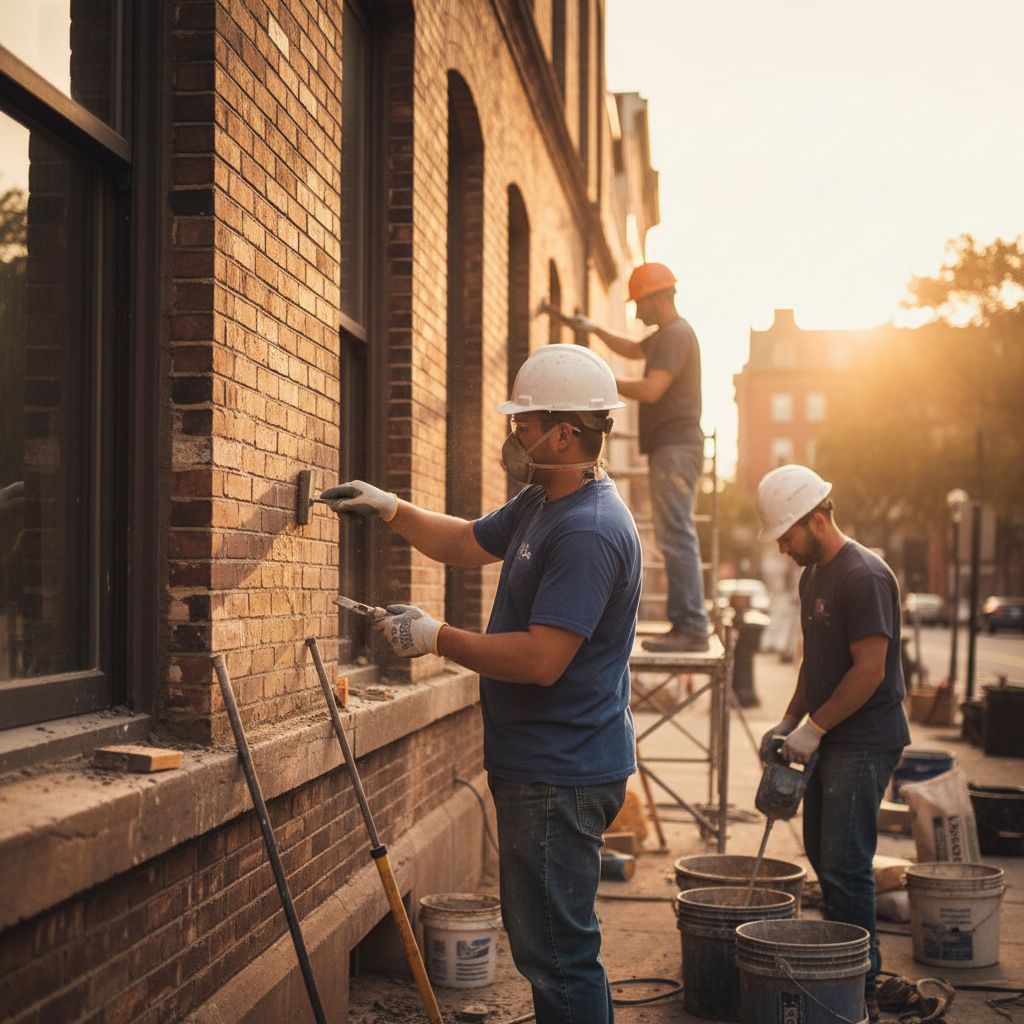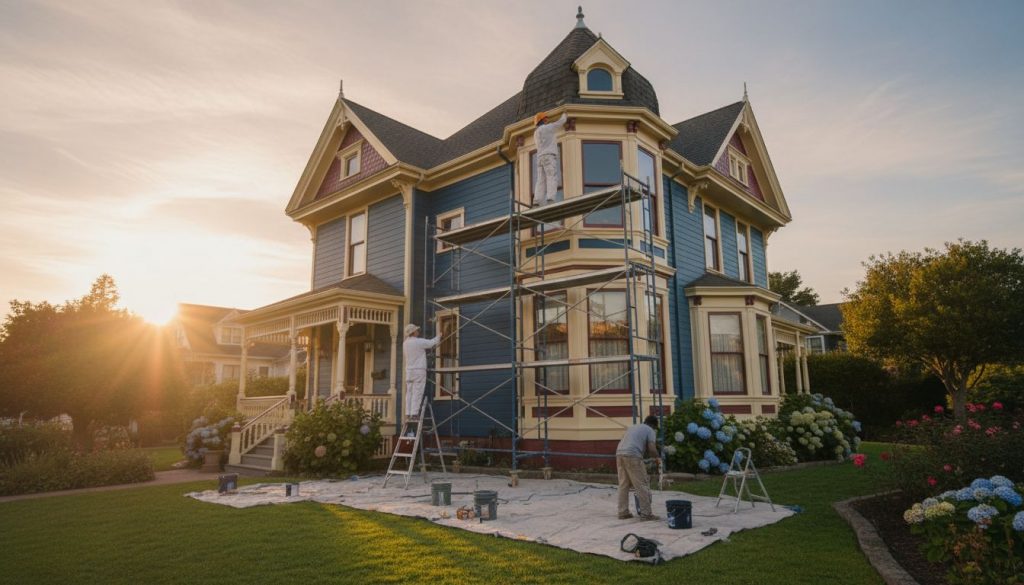
I’ve been doing exterior house painting across the Chicagoland area for over 45 years. And one thing I know for sure—Chicago weather does not care about your paint job. It doesn’t matter if you used the best paint for Chicago weather or hired the most experienced painting contractors in the area. If the prep work wasn’t right and the paint system wasn’t built for this climate, Mother Nature will tear it apart.
We sit in a zone that throws every destructive force at your home’s exterior. Sub-zero windchills in January. Intense sun in July. Humidity that lingers through August. And freeze-thaw cycles that repeat 40 or 50 times before spring arrives. Its a brutal combination. Most property owners don’t fully understand what’s happening to their exterior walls until the damage is visible from the sidewalk.
This post covers exactly how Chicago’s weather destroys exterior paint, what you can do about it, and when it makes sense to call in professional exterior painters. I’m also answering the masonry and tuckpointing questions we hear most from homeowners in neighborhoods like Lincoln Park, Evanston, Oak Park, and across the North Shore.
Need a professional opinion? Request a free exterior painting estimate from Fortune Restoration—a licensed and insured painting company serving Chicagoland since 1979.
How Freeze-Thaw Cycles Wreck Exterior Paint and Masonry
Here’s the basic process. Water gets into tiny cracks in the paint film or the masonry substrate below. When temperatures drop below 32°F, that water freezes and expands. It pushes outward and widens those cracks just a little. Then it thaws. Then freezes again. In a typical Chicago winter, this can happen dozens of times.
That’s why you see paint peeling in sheets off brick buildings every March. The freeze-thaw action has been silently destroying the bond between paint and substrate all winter long. Mortar joints between bricks take the same beating. Soft, deteriorated mortar crumbles faster when water keeps getting inside and expanding through each cycle.
The National Park Service’s Preservation Brief on repointing mortar joints explains that mortar is designed to be softer than brick. It’s sacrificial. When stress occurs, the mortar cracks instead of the brick. Smart design—but it means mortar joints need regular attention. Especially in a climate like ours that never gives masonry a break.
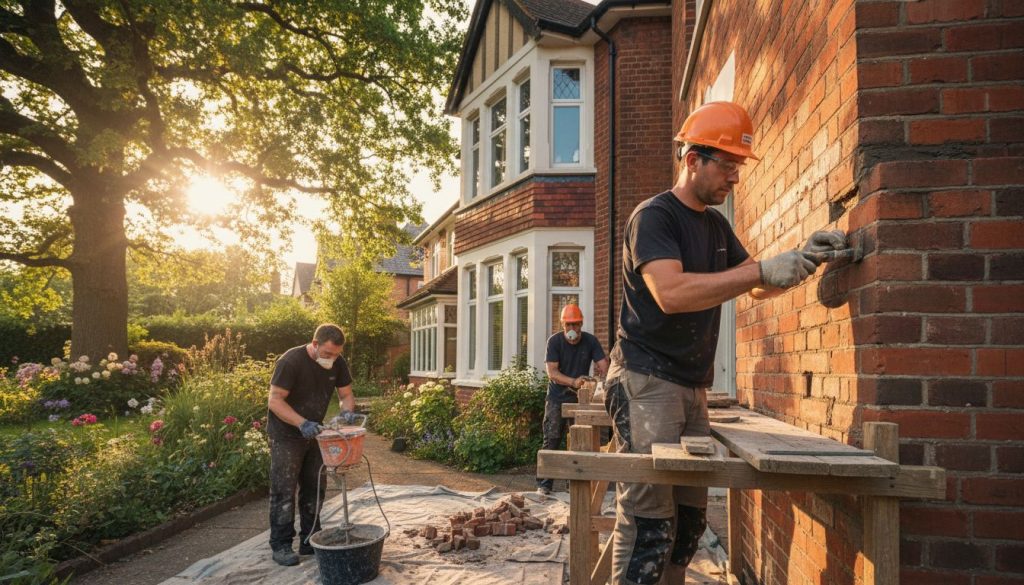
Moisture Intrusion: The Hidden Cause of Most Exterior Paint Failures
This is what I tell every homeowner. Paint almost never fails by itself. When you see blistering, bubbling, or widespread peeling, moisture got behind the film. Could be failed exterior caulking and sealing around a window. A crack in stucco. Deteriorated mortar on a brick wall. Even condensation in a wall assembly without proper vapor management.
Once water is behind the paint, no topcoat holds. The film loses adhesion, lifts, and eventually peels away. Preventing exterior paint peeling starts with finding and fixing the moisture source—not just rolling another coat. Pressure washing house exterior surfaces before repainting helps with surface contamination but does nothing for moisture trapped inside the wall. Repainting over a moisture problem without fixing it is like putting a bandage on a broken pipe.
Thats why at Fortune Restoration we always investigate the root cause before quoting an exterior paint repair. If the masonry needs tuckpointing or the substrate needs exterior wood repair before painting, we handle that first. Our exterior painting services are built around doing things in the right order. Crack and patch exterior walls, repair the building envelope, then protect everything with paint.
UV Damage and Thermal Stress on South-Facing Walls
Chicago summers are short but sun intensity is real. South-facing and west-facing walls take the worst UV exposure, which breaks down chemical binders in exterior paint finishes over time. These elevations fade first, chalk first, and fail first. The paint degrades at the molecular level from prolonged ultraviolet radiation.
On top of that, Chicago regularly swings over 100 degrees between winter lows and summer highs. Different materials on your home—wood siding, metal flashing, brick, vinyl siding—expand and contract at different rates. Weather-resistant exterior paint has to flex with that movement or it cracks. Hard, brittle formulas simply cannot handle this thermal range. When you’re comparing exterior painting quotes, ask specifically about paint flexibility and whether the product is rated for freeze-thaw climates.
Seasonal Exterior Painting Tips: When Damage Happens and What to Watch For
Each season brings its own kind of damage. The tricky part is that most deterioration happens where you cant see it easily. Winter is the heavy hitter—freeze-thaw cycles do their work silently behind the paint film. By the time spring arrives and you notice peeling or cracking, damage has been building for months.
Spring brings heavy rains that test every joint, seam, and caulk line on your building. If any mortar failed over the winter, spring rains push water deeper into the wall assembly. Summer humidity promotes mildew and biological growth on surfaces that stay damp, especially north-facing walls and shaded areas under eaves and gutters. Fall comes around and things might look okay from the street. But the cycle starts over in November and each year the problems compound.
A solid set of house exterior painting tips starts with walking your property’s perimeter every spring, checking all caulk lines, and looking at horizontal surfaces where water pools. Pay close attention to areas around garage door painting surfaces, gutter and fascia painting conditions, and anywhere wood meets masonry. Schedule a professional assessment every three to five years. These paint maintenance tips save thousands in the long run.
Worried about what winter did to your home’s paint? Fortune Restoration offers free exterior painting estimates for homeowners across Chicagoland. We’re bonded, insured, and RRP-certified.
The Painting Preparation Checklist That Actually Protects Your Chicago Home
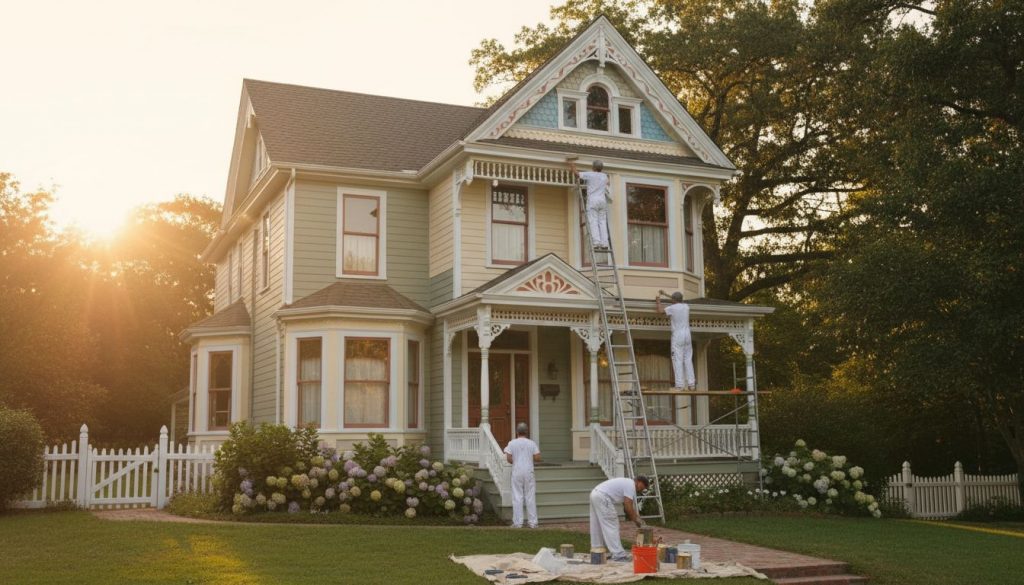
Protection starts with preparation. Not with the can of paint. Surface prep is where the longevity of an exterior house painting job gets determined, and it’s where budget painting contractors cut corners most often.
What Professional Exterior Painting Services Should Include for Prep
A proper painting preparation checklist for Chicago conditions includes power washing before painting to remove surface contamination, mildew, and chalking. Then scraping all loose paint back to a solid edge. Sanding transitions smooth so old paint ridges don’t telegraph through the topcoat. Completing any needed exterior wall repair and paint prep—filling cracks, patching holes, addressing wood rot. Caulking every gap and penetration with flexible sealant. And priming all bare surfaces with a quality primer matched to the substrate.
The EPA’s Renovation, Repair and Painting Rule is something every Chicago homeowner with a pre-1978 home should know about. Disturbing lead paint requires certified contractors who follow safe work practices including paint stripping and prep protocols. Fortune Restoration is RRP-certified and handles lead situations with proper containment.
Choosing the Best Paint for Chicago Weather
Not all exterior paint brands perform equally in freeze-thaw climates. What I recommend for residential exterior painting in Chicago is 100% acrylic latex in a high-solids formula. Acrylic stays flexible through temperature swings. It resists mildew in our humid summers. High-solids products deliver better coverage and long-lasting exterior paint performance per coat.
Always insist on two coats minimum. One coat is never enough here. Make sure the product includes mildewcide additives for north-facing or shaded sections. For homeowners interested in eco-friendly exterior paint options, several manufacturers now offer low-VOC acrylics that hold up well in cold climates. And when it comes to exterior paint finishes—flat, satin, gloss exterior paint—satin is usually the sweet spot for Chicago homes. It balances washability with a surface that hides minor imperfections. These same principles apply whether you’re dealing with wood siding, vinyl siding painting, or stucco painting services on a masonry building.
When Paint Problems Point to a Masonry or Carpentry Issue
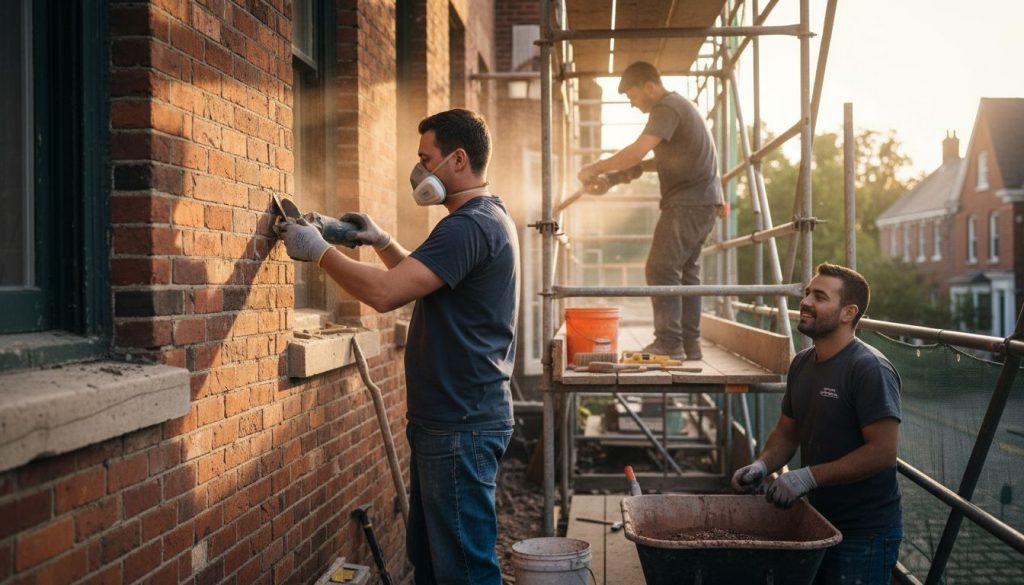
Something I see constantly in this business as a Chicago exterior paint contractor. A homeowner calls about peeling paint on their brick building and wants a repaint. But on site, the real issue is failing mortar, cracked coping on the parapet, or a corroding lintel pushing brick out of alignment. Masonry exterior painting only works if the masonry underneath is sound.
If exterior paint is failing in a specific area—especially around windows, at the roofline, or isolated to one elevation—there’s a decent chance moisture is entering through a masonry deficiency. White chalky stains on brick, called efflorescence, are another strong indicator. Exterior wood repair before painting is equally important. Rotted fascia, damaged window frames, and deteriorated siding all need to be addressed before any topcoat goes on.
Our tuckpointing service addresses deteriorated mortar joints across all building types. And for carpentry issues, our team handles gutter and fascia painting, window frame painting, painting trim and shutters, and full deck and fence painting as part of complete exterior projects. We always recommend resolving structural and substrate issues before any finish coat. It’s the only approach that works long-term.
Don’t paint over a masonry problem. Contact Fortune Restoration for a thorough assessment. We’ve been tuckpointing and painting Chicago brick since 1979.
The Real Cost to Paint a House Exterior in Chicago—And Why Waiting Is More Expensive
One of the most common searches we see is people looking for an exterior painting cost calculator or asking about the average cost to paint house exterior surfaces. The honest answer is that it depends on condition, size, and access. A well-maintained 2,500 square foot home might run very differently than a neglected greystone three-flat with scaffold requirements.
What I can tell you for certain is that delayed maintenance always costs more. I’ve seen it hundreds of times. A homeowner notices cracking mortar or peeling paint. They put it off. Three years later, what would have been a $3,000 tuckpointing job is now a $15,000 brick replacement project because water has been spalling brick faces through freeze-thaw cycles. The average cost to paint house exterior surfaces only tells part of the story—the real expense is repair work that becomes necessary when maintenance gets postponed. Smart homeowners treat exterior painting for curb appeal as both an aesthetic and a structural investment. Ask about exterior paint warranty coverage too, because a quality contractor stands behind their work.
The Brick Industry Association’s technical notes on masonry care are a great resource for property owners who want to understand maintenance cycles and protect their investment between professional visits.
How to Compare Exterior Painters in Chicago and Find the Right Contractor
Look, I’ll be direct. Anybody can buy a pressure washer and a case of paint. What makes the difference between a professional exterior painting company and an amateur one is knowledge of substrates, moisture dynamics, material compatibility, and sequencing. After 45-plus years of residential and commercial exterior painting in the Chicago area, we’ve seen every shortcut and the damage that follows.
When you’re reading exterior painting reviews Chicago homeowners have posted, or trying to compare exterior painting quotes, look past price and ask these questions. Are they licensed and insured painters? Do they carry workers compensation? Are they RRP-certified for lead paint work? Can they explain their prep process in detail—including whether they use brush vs spray exterior painting methods depending on the surface? Do they understand the interior vs exterior paint differences that matter for trim and threshold areas? Do they handle masonry and carpentry repair in-house or sub it out? A top-rated painting contractor should answer all of these without hesitation. Check painting contractor testimonials and ask to see their exterior painting portfolio of completed projects in your neighborhood.
Fortune Restoration handles exterior painting, tuckpointing, stucco painting services, masonry repair, and carpentry under one roof. That means better coordination, consistent quality, and accountability. From front door painting ideas to full exterior siding painting on a multi-unit building, our residential painting contractors bring the same level of care. We also offer paint color consultation and color matching for exterior paint to ensure your home looks exactly the way you envision it. We’ve worked on some of the most significant properties in Chicagoland, including Frank Lloyd Wright homes and other historic landmarks. Whether you need painting historical homes with period-accurate color matching for exterior paint or a straightforward residential exterior painting refresh, the same standards apply. Do the prep. Use the right materials. Respect the building.
Protect your home the right way. Request a free estimate from Fortune Restoration—top-rated painters in Chicago since 1979. Bonded. Insured. RRP-certified.
Frequently Asked Questions About Exterior Painting, Masonry, and Tuckpointing in Chicago
How often does Chicago brick need tuckpointing?
Mortar in original condition typically starts showing serious deterioration at 20 to 30 years in Chicago’s climate. Buildings previously repaired with overly hard Portland cement mortar may deteriorate faster because hard mortar transfers stress to the brick. Plan on inspecting mortar every five years after the 15-year mark. Budget for tuckpointing every 25 to 30 years as a baseline. Walls facing prevailing weather may need attention sooner.
What is the difference between tuckpointing and repointing?
In Chicago trade usage, the terms mean the same thing. Technically, repointing describes removing old mortar and replacing it. Tuckpointing can also refer to a decorative technique with a thin contrasting line. But when your contractor says tuckpointing, they almost always mean standard mortar replacement. The National Park Service’s guidance on cleaning and treating historic masonry provides additional context on these distinctions.
Can I do tuckpointing myself as a DIY project?
For small, ground-level areas where you can safely reach the work and match the mortar composition, minor touch-ups are doable for a careful homeowner. But full-elevation tuckpointing involves scaffold work, precise mortar mixing, and consistent joint profiles that require professional skill. Using the wrong mortar—especially on historic buildings—causes more damage than it prevents. Hard mortar on soft old brick leads to spalling, which means replacing bricks rather than just mortar.
What causes white stains on brick walls?
Those deposits are called efflorescence. Water moves through masonry and carries dissolved salts to the surface. When it evaporates, salts remain as white powder. On new buildings this is normal and temporary. On older buildings, recurring efflorescence means water is actively moving through the wall—often through failed mortar, cracked coping, or bad flashing. Cleaning off deposits without fixing the water source accomplishes nothing because they come right back.
How long should quality exterior house painting last in Chicago?
With proper surface preparation and professional-grade acrylic systems, 8 to 12 years is a reasonable expectation. South and west-facing walls may need attention around the 7 to 8 year mark due to UV exposure. Masonry substrates tend to hold paint longer than wood siding painting applications when the underlying brick and mortar are solid. The biggest factor in longevity is quality of prep work, not the brand name on the can.
Is it okay to paint over old lead paint on my Chicago home?
You can paint over intact, well-adhering lead paint with proper preparation. The issue arises when lead paint gets disturbed—scraped, sanded, or pressure washed—because that creates hazardous lead dust. Federal law under the EPA’s RRP Rule requires certified contractors for this work on pre-1978 housing. At Fortune Restoration we are RRP-certified and follow all containment and disposal protocols. Never let an uncertified contractor scrape paint on an older Chicago home without asking about lead safe practices.
What’s the best time of year for outside house painting in Chicago?
Late spring through early fall—roughly May through September. Paint needs temperatures between 50°F and 90°F and humidity below 85% for proper curing. Avoid painting in direct hot sun, which causes the film to skin over too fast and creates adhesion problems. Early mornings on warm days, working around the building to stay in shade, is how our experienced painting contractors have approached the exterior painting project timeline for over four decades.
Fortune Restoration has been protecting Chicago homes and buildings since 1979. We are a bonded and insured exterior painting company specializing in residential exterior painting, masonry tuckpointing, carpentry, stucco repair, and historic restoration across the Chicagoland area. Whether you’re searching for the best exterior painters near me or need a comprehensive building assessment, we’re here to help. Request your free exterior painting estimate today and let’s talk about what your property needs.