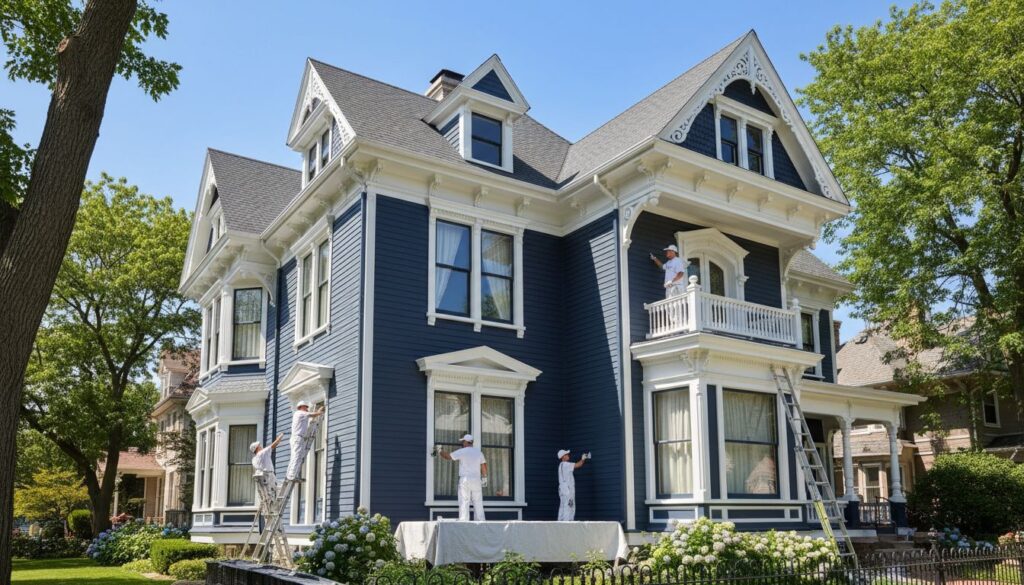
Exterior painting cost in Chicago runs $4,500 to $18,000 for a typical single-family home in 2026. Most projects land in the $7,000 to $12,000 range. I’ve been quoting and painting Chicago homes since 1979. The number you get from a contractor depends on far more than square footage. Fortune Restoration has been licensed, bonded, and insured for over four decades. We walk every building before we quote. This guide breaks down what really drives the price on a Chicago house painting project. You’ll know how to compare exterior painting quotes with your eyes open - and spot the corner-cutters before you sign.
What Does Exterior Painting Cost in Chicago in 2026?
Key Takeaways:
Exterior painting cost in Chicago typically runs $4,500 to $18,000 for a full single-family repaint. Most Chicago exterior painting projects in 2026 land in the $7,000 to $12,000 middle band. Reputable exterior paint contractors will not quote a flat price without first walking the building in person.
That range is wide on purpose. A small frame bungalow in Portage Park - one story, decent existing paint, easy ground-level access - is a different animal than a three-story Lincoln Park greystone with peeling lead-era paint and trim work that takes three days just to mask off. Painting both buildings the same gallon of premium acrylic does not mean the bill looks anything alike.
Here’s how the math tends to break down on a Chicago house painting project:
- Labor: 60 to 75 percent of the total
- Paint and materials: 15 to 20 percent
- Prep work and repairs: 10 to 20 percent (highly variable)
- Scaffolding, lift rental, or staging: 0 to 15 percent
Labor dominates because real outside work is not a one-day job. A quality project runs five to twelve days of crew time. That counts the prep, the priming, the cut-in work, the two topcoats, and the cleanup. Cheap quotes almost always cut corners on labor. Which means they cut corners on prep.
Why Is There Such a Wide Cost Range for Painting a Chicago Home?
Key Takeaways:
Chicago painting prices vary widely because each home has different siding materials, prep needs, and access challenges. A small ranch with intact siding costs far less than a multi-story Victorian with rotted trim. Insured exterior painters price every variable separately, not as a flat per-square-foot guess.
Here is what I look at on a walkthrough when putting together an exterior painting estimate:
Surface area and home size. Most Chicago homes fall between 1,500 and 3,500 paintable square feet of outside surface. That includes siding, trim, fascia, soffits, and any wood porch elements. A bigger house costs more - that part is obvious. But the relationship is not linear. A two-story home with simple siding can sometimes cost less than a one-story with complex trim profiles, because trim work is what eats labor hours.
Substrate type. Wood siding painting is different from vinyl siding painting. Vinyl siding painting is different from masonry exterior painting. Masonry exterior painting is different from stucco painting services. Each material has its own prep, primer, and coat counts. Painting trim and shutters on a Queen Anne with original turned millwork is a wildly different scope than rolling fresh paint over flat lap siding on a 1990s build.
Existing paint condition. If the previous coat is failing - peeling, alligatoring, chalking, or showing moisture damage - the prep takes over the labor budget. Painting preparation checklist items like scraping, sanding, spot priming, and exterior caulking and sealing can add 30 to 50 percent to the labor cost. This is where corner-cutters do the most damage. They cover up the failure. You watch it return inside of two winters.
Access. Two-story and three-story homes need ladders, scaffolding, or boom lifts. Boom rental costs real money - $400 to $1,200 a day depending on reach. A house with tight side yards, fenced neighbors, overhead wires, or limited lift access costs more to paint. The identical home on a corner lot is cheaper. Same paint, different exterior painting project timeline.
For a clear, walked-the-building estimate on your Chicago home, request an estimate from us. We do not quote sight-unseen.
How Is Paint Cost per Square Foot Calculated?
Key Takeaways:
Chicago paint projects typically price at $2 to $6 per square foot of outside surface. A simple one-story home runs closer to $2.50 per square foot. A multi-story Victorian with extensive trim can reach $5.50 or more per square foot.
The square-foot number helps with ballpark thinking. It can also mislead. Two contractors quoting the same building can come up with different square-foot totals. They measure differently. One counts only the siding face. Another counts every soffit, fascia run, garage door, gutter, and shutter. The painter quoting “less per square foot” is sometimes just measuring more square feet. Same dollar total, different math. An exterior painting cost calculator online won’t account for this.
When you compare exterior painting quotes, the right metric to compare is the total bottom-line price for the same itemized scope. Per-square-foot numbers are a starting point, not an answer.
Average Cost to Paint a Chicago House by Home Type
Here is what I see most often for full repaints in Chicago in 2026:
- Small bungalow or ranch (1,200-1,800 sq ft): $4,500 to $8,500
- Standard two-flat or two-story (1,800-2,800 sq ft): $7,000 to $13,000
- Larger single-family or three-flat (2,800-4,000 sq ft): $10,000 to $18,000
- Greystone or Victorian with extensive trim: $12,000 to $25,000 or more
These are full repaint numbers - siding, trim, doors, windows, fascia, soffits, gutters where applicable. Touch-up or partial scopes obviously price out lower. Historic restoration projects with custom color matching for exterior paint and lead-safe protocols can exceed these ranges, especially when paired with carpentry repairs or masonry tuckpointing. Painting historical homes is in our wheelhouse - see our historic landmark portfolio.
What Drives the Price of a Quality Exterior Paint Job?
Key Takeaways:
The biggest cost drivers on Chicago paint projects are prep labor, paint quality, coat count, and access. Pressure washing house exterior surfaces, scraping failed paint, and exterior caulking and sealing routinely account for 30 to 50 percent of total labor hours. Skimping on any of those drops the price but kills the warranty.
I’m going to walk through the four real drivers below. None of these are surprises if you’ve painted a house before. But the homeowners getting quoted unrealistic low numbers are usually the ones who don’t know which line items are getting quietly removed from the scope.
1. Prep Work - The Line Item Nobody Sees
A good outside job is mostly prep. The paint goes on at the end. If a contractor’s estimate doesn’t itemize the prep - pressure washing, scraping, sanding, priming bare wood, exterior wood repair before painting, caulk replacement at joints, glazing repair on old windows - they are either including it without writing it down (risky), or planning to skip it (worse). A real painting preparation checklist gets put in writing. Exterior painting safety tips - like containing lead paint debris and tying off above the second story - also belong in the scope.
Surface preparation guidelines from the National Park Service Preservation Brief on painting historic exterior wood are the gold standard. They apply to modern homes too. The brief is worth a read if you own anything pre-1940.
2. Paint Quality
There is a real difference between $25-a-gallon contractor-grade product and $75-a-gallon premium acrylic. The cheap stuff covers fewer square feet per gallon. It fades faster. It chalks within a few years. Premium long-lasting exterior paint - Sherwin-Williams Emerald, Benjamin Moore Aura Exterior, and a handful of others - costs more upfront and lasts twice as long. On a Chicago house, where the freeze-thaw cycles are brutal, the upgrade pays for itself before the second winter. Weather-resistant exterior paint is not a marketing line; it is a product category. The right exterior paint finishes also matter - flat hides flaws but holds dirt; satin and semi-gloss clean up better on trim.
3. Number of Coats
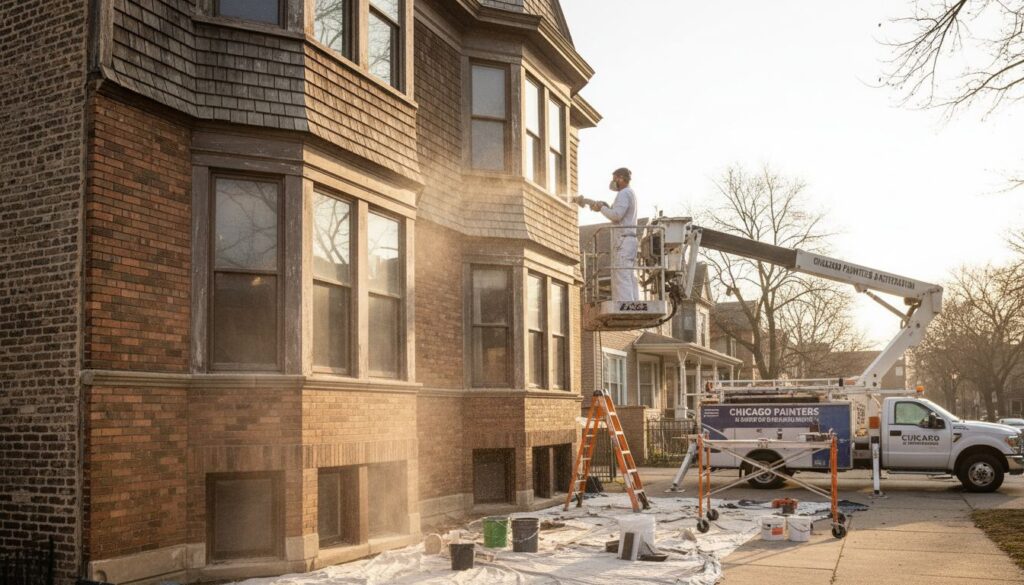
Two full topcoats is the minimum on any quality job. Some contractors quote “one coat over existing” to hit a lower price point. If the color isn’t changing and the existing paint is in great shape, one coat can technically work. In Chicago weather, I almost never recommend it. The U.S. Environmental Protection Agency’s Renovation, Repair, and Painting (RRP) Rule also matters here. If your home was built before 1978, lead-safe work practices add cost. They are not optional. Paint stripping and prep on older homes is a separate line item, and it should be priced that way.
4. Access and Staging
This is the variable that surprises homeowners the most. A two-story house that needs a 40-foot boom lift for three days adds $1,200 to $3,000 to the cost compared to the same house with full ladder access. Tight side yards, overhead wires, neighboring fences, and limited driveway space all increase staging time, which increases labor hours.
Want to know which line items belong on a real estimate for your home? Request an estimate from us, and we’ll walk every elevation before quoting.
When Is the Cheapest Paint Quote Actually the Most Expensive?
Key Takeaways:
Low Chicago painting quotes almost always mean cut corners on prep work, paint quality, coat count, or warranty coverage. Reputable Chicago painting contractors price the real scope, not the cheapest scope. The hidden cost is paying for the job twice in three years.
I’ve seen this pattern too many times to count. A homeowner gets three quotes. One at $11,000, one at $9,500, and one at $5,800. They go with the $5,800. Who wouldn’t want to save five grand? Then they call me eighteen months later. The south wall is peeling. The trim is showing bare wood. The contractor is no longer answering the phone.
Here is what a $5,800 quote on a $10,000 job usually skipped:
- No pressure washing, just a quick scrape
- One coat instead of two
- No primer on bare wood
- No exterior caulking and sealing
- Cheap paint
- An uninsured crew (which is its own problem)
- A vague or unenforceable paint warranty
The cost to redo a botched paint job is higher than the cost to do it right the first time. You’re not just paying again - you’re paying to remove the failed paint before the new paint goes on. That’s prep work on top of prep work.
How Long Should a Chicago Exterior Paint Job Last?
Key Takeaways:
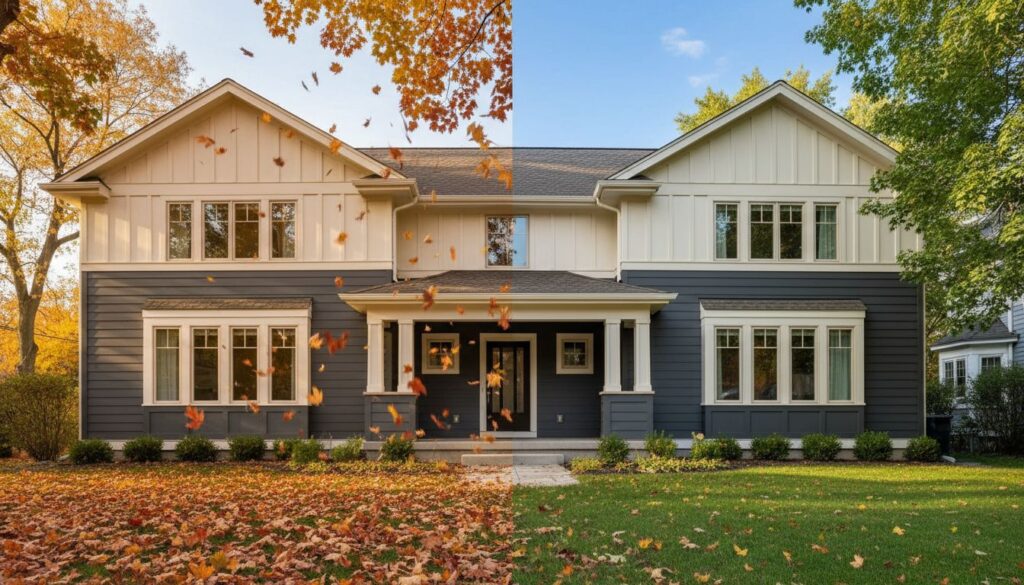
A quality Chicago exterior paint job should hold 8 to 12 years on most exposures. South-facing and west-facing walls take more UV and weather punishment and may need touch-ups sooner. Long-lasting exterior paint applied over proper prep is what makes the difference.
Eight years is the floor on a quality job. Twelve to fifteen is realistic when everything is done right. Proper prep. Two coats of premium paint. Sound substrate. Sealed transitions. Anything less than five years and something was wrong with either the application or the underlying surface. Preventing exterior paint peeling comes down to prep, not paint. Exterior paint repair on a young paint job almost always points back to a missed step in the original prep. The same applies to deck and fence painting and exterior deck and porch painting - both wear faster than siding and need their own maintenance cycle.
Paint maintenance tips for stretching the life of an exterior paint job: rinse the south and west elevations once a year with a garden hose to remove pollen and grime. Touch up nicks and chips as soon as you spot them. Keep an eye on caulk joints around windows and doors. A good exterior painting maintenance guide is the difference between a 10-year job and a 15-year job on the same building. Exterior painting for curb appeal lives or dies on this kind of routine upkeep.
What Real Chicago Exterior Painters Look Like
A real exterior painting contractor in Chicago is licensed, bonded, and insured. They carry general liability and workers’ compensation. They can produce certificates on request. Fortune Restoration has been doing this since 1979. That is over forty years of experience with Chicago weather, Chicago homes, and Chicago neighborhoods.
Our crews work under Field Superintendent Dan Stojak. He holds EPA RRP certification, lead-safe certification, and OSHA training. That credential set matters because of the EPA’s Renovation, Repair, and Painting Rule. The rule requires certified contractors for any work that disturbs lead-based paint in homes built before 1978. Most of Chicago’s housing stock falls into that bracket. Most contractors are not RRP certified. The U.S. Department of Energy’s guidance on weatherization and exterior maintenance makes the same point - protecting the building envelope starts with qualified contractors.
We have painted Frank Lloyd Wright homes in Oak Park, the Grosse Point Lighthouse in Evanston, and the birthplace of Walt Disney. The historic landmark portfolio has the photos. We do not subcontract our crews. The Fortune name has been on the truck for two generations.
Hiring a Chicago exterior painting company you can verify? Request an estimate from us - we’ll bring proof of insurance, license number, and references to the walkthrough.
What Should a Real Estimate Include?
Key Takeaways:
A real Chicago exterior painting estimate itemizes surface preparation, paint brand and product line, coat count, included repairs, scaffolding costs, color changes, warranty terms, and timeline. Vague single-line quotes hide scope creep. Free exterior painting estimates from reputable contractors are always in writing.
When you compare painters in Chicago, ask for these line items in writing:
- Pressure washing or hand-cleaning scope
- Scraping, sanding, and feathering of failed paint
- Spot priming of bare wood, metal, and stained areas
- Caulking - product type and joints covered
- Substrate repair - wood replacement, glazing, stucco patching, crack and patch exterior walls
- Paint brand, product line, and finish (flat, satin, gloss exterior paint)
- Number of coats on each surface
- Color changes and accent coats
- Garage door painting, gutter and fascia painting, window frame painting, front door painting ideas - itemized
- Cleanup and disposal
- Workmanship warranty term and exclusions
- Brush vs spray exterior painting application method
- Start and completion dates for the exterior painting project timeline
If any of those are missing from a written estimate, that’s not a complete bid. Ask for them before you compare prices.
Frequently Asked Questions About Chicago Exterior Paint Cost
How much does it cost to paint a 2,000 square foot house in Chicago?
A 2,000 square foot Chicago home typically costs $7,000 to $13,000 to repaint in 2026. The final number depends on siding type, condition, trim complexity, access, and paint quality. Two-story homes trend toward the higher end because of staging costs. Residential vs commercial exterior painting also priced differently - commercial exterior painting on retail or industrial buildings runs on different square-foot math.
What time of year is cheapest for outside painting in Chicago?
Late fall - October and early November - is usually the most flexible pricing window in Chicago, because the painting calendar slows down before winter. Spring and summer are peak season with full crews and full prices. Seasonal exterior painting tips: winter painting is generally not recommended because most paints need surface temperatures above 50 degrees to cure properly.
Can I save money by painting only one side of my house?
Yes, partial repaints cost less than full repaints, but the savings are not proportional. Mobilization, staging, and setup are largely the same whether you paint one elevation or all four. Most contractors price partial repaints at 30 to 40 percent of a full repaint when the scope is one side or one face.
How much does pressure washing add to the cost?
Power washing before painting typically adds $300 to $700 to a Chicago project, depending on home size and dirt level. It is not an optional add-on. A professional paint job requires a clean substrate, period.
Are eco-friendly exterior paint options more expensive?
Eco-friendly exterior paint options - low-VOC and zero-VOC acrylics from major brands - generally cost $5 to $15 more per gallon than standard exterior paint brands. On a typical 2,000 square foot home that adds $75 to $200 to the materials line. Performance is comparable to conventional formulas in most cases.
Does a longer warranty mean a better paint job?
Not automatically, but a contractor offering a 5-year or longer workmanship warranty in writing is generally putting more on the line than one offering 1 year. Read the exclusions. Exterior paint warranty terms that exclude “weather damage” in Chicago are not really warranties - every winter is weather damage here.
Should I get multiple exterior painting quotes?
Yes - get three written quotes from licensed and insured residential painting contractors. Compare them line-item by line-item, not bottom-line by bottom-line. The middle quote is often the right one. The cheapest is almost never the best deal in this trade.
Cost Is the Answer to the Wrong Question
The right question isn’t “what does exterior painting cost in Chicago.” It’s “what does it cost to paint my Chicago home correctly and have it last.” Those are different numbers. The first question gets you a range. The second one gets you a real bid from a contractor who walked your building. Who looked at your substrate. Who measured your access. Who put it all in writing.
Fortune Restoration has been doing that walk since 1979. Licensed. Bonded. Insured. Family-run. Same name on the truck. Same standards on the wall. Painting contractor testimonials and our exterior painting portfolio speak to the rest.
Ready to see what a real estimate looks like for your Chicago home? Request an estimate from us. Read more about our preparation process on Chicago weather and exterior paint protection, and check out our recent post on what to ask before hiring a masonry contractor in Chicago for the contractor-vetting playbook.