The single best time to paint a Chicago home’s interior is the gap between closing day and move-in day. I’ve been running crews here since 1979. The homeowners who paint before the furniture arrives are happier with the result. They pay less for the work. They get back weeks of their lives they would have otherwise spent living through a renovation. Fortune Restoration has been licensed, bonded, and insured for over four decades. This is the conversation I have with new homeowners every week. Here’s why painting an empty house is almost always worth it - and the handful of cases where it isn’t.
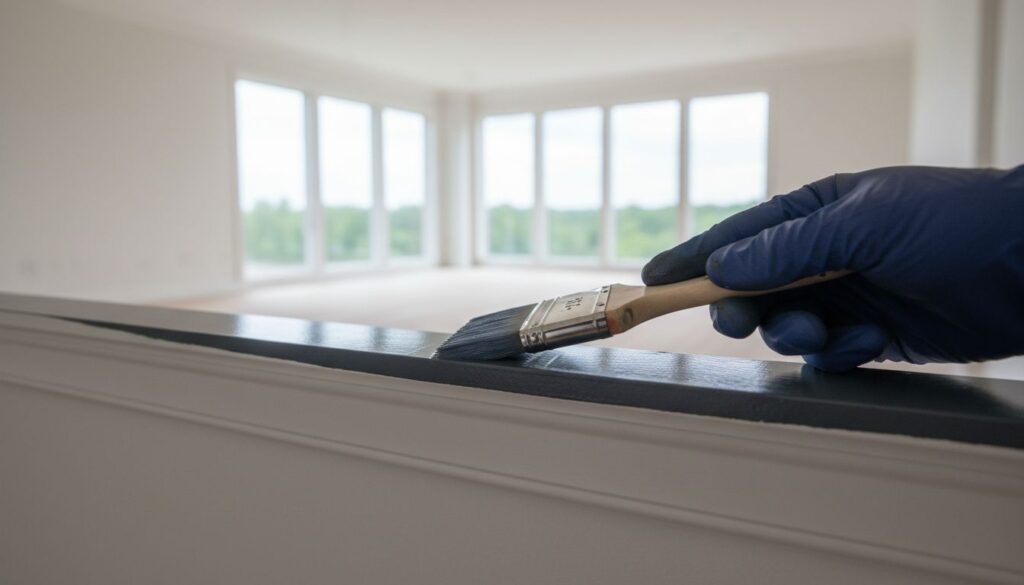
Why Is Doing It Before Move-In Such a Big Deal?
Key Takeaways
Painting an empty house before moving in costs less, finishes faster, and produces a cleaner result than painting an occupied home. Empty rooms let professional interior painters work continuously without moving furniture or protecting belongings. Most Chicago projects that take two weeks in a furnished home finish in five to seven days when the house is empty.
A furnished home is a logistical puzzle for any painting crew. We move couches into the middle of the room. We tarp them. We unbolt curtain rods. We pull artwork off walls. We work around dressers, beds, and kids’ toys. Every step adds hours. Hours add up to days. Days add up to billable time on your invoice.
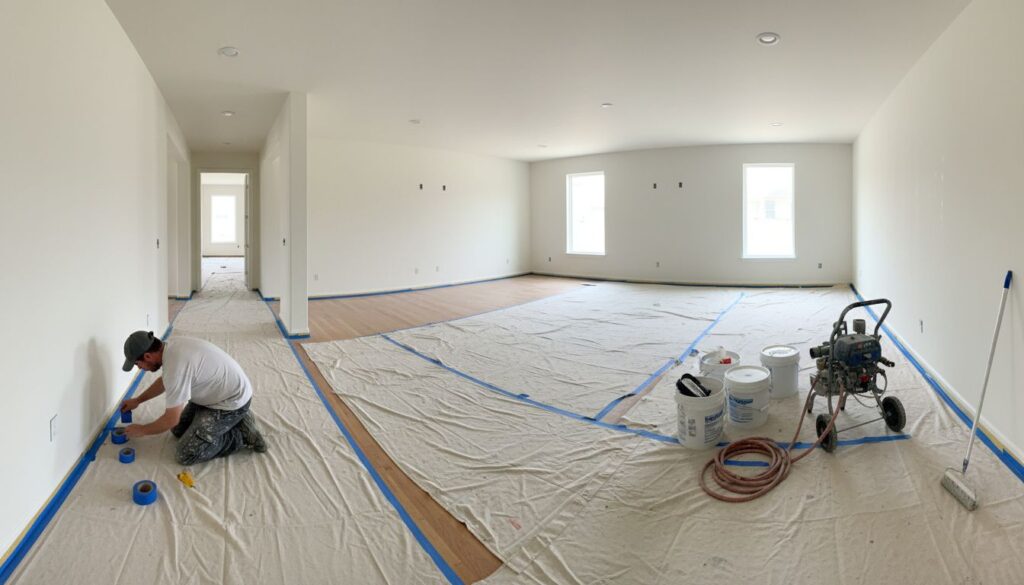
An empty room is a different job entirely. The crew walks in, drops a single set of drop cloths, masks the trim, cuts in the corners, and rolls the walls. No protection of belongings. No shuffling furniture. The efficiency shows up in cost, timeline, and the quality of the finish.
How Much Does It Cost to Paint an Empty Chicago Home?
Key Takeaways
Interior painting cost in an empty Chicago home typically runs 15 to 30 percent less than the same job in a furnished home. A full-interior repaint in an empty 2,000-square-foot Chicago home generally lands between $5,000 and $9,500 in 2026. Cost of interior house painting depends on room count, ceiling height, trim complexity, and the condition of the existing walls.
The savings come from labor, not materials. Paint costs the same whether your couch is in the living room or in a moving truck. But the crew hours required to protect, move, and work around furniture can add 20 to 40 percent to the labor side. On a $9,000 furnished-home project, that’s $1,500 to $3,000 that simply disappears when the home is empty. Estimating interior paint supplies is also simpler in an empty house - the crew can measure walls directly without working around shelves.
Here is how interior painting cost per room generally breaks down in 2026 for empty Chicago homes:
- Standard bedroom (10×12, 8-foot ceiling): $350 to $700
- Living room or family room (15×20, 8-9 foot ceiling): $600 to $1,400
- Kitchen (cabinets not included): $400 to $900
- Bathroom: $250 to $550
- Hallways and staircases: $300 to $900
- Ceiling alone, per room: $150 to $400
- Trim and molding, per room: $150 to $500
A full-interior repaint of a typical Chicago two-bedroom condo runs $3,500 to $6,500 in an empty unit. A three-bedroom single-family runs $5,500 to $10,000. A larger four-bedroom with detailed trim and high ceilings can land between $8,000 and $14,000. Painting kitchen cabinets, decorative painting techniques, and painting staircases and railings are priced separately.
For an itemized quote on interior painting services in your new Chicago home, request an estimate from us. We walk every property before quoting.
What Are the Real Benefits of Painting Before You Move In?
Key Takeaways
Painting an empty home before move-in protects furniture from drips and fumes, shortens the project timeline by 30 to 50 percent, and lets crews use efficient methods like sprayers on trim and ceilings. Same-day painting services and continuous work shifts are only practical in empty homes.
Six real benefits show up every time I work an empty home:
1. Speed. A three-bedroom interior that takes 10 to 14 days in a furnished home routinely finishes in 5 to 7 days when empty. The crew can spray ceilings, spray trim, and roll walls in sequence. No half-day lost when the homeowner needs the kitchen.
2. Cleaner cut lines. When trim is masked off in an empty room, the crew can pull crisp lines without working around a sectional sofa. The difference is visible from across the room.
3. Better color decisions. Swatches on bare walls under empty-room lighting let you see a color the way it will actually look. Most people choose interior paint colors from tiny chip samples on a furnished wall, then hate the result. An empty house lets you test color consultation for interiors at scale. Painting color trends for interiors look different on a 12-foot wall than on a 2-inch chip.
4. Cabinet and built-in access. Painting cabinets and built-ins is hard when they’re full of dishes. Empty kitchens make this a one-day job instead of a three-day operation. Kitchen painting tips: prime the boxes, spray the doors off-site, rehang at the end.
5. Floor protection. Hardwood floors are easier to protect when nothing is on them. Protecting hardwood floors during painting is also cheaper because the crew uses one continuous drop cloth instead of working around furniture footprints.
6. No fumes in your living space. Even low-VOC interior paints have a smell for 24 to 48 hours. Moving in after the paint has fully cured means you’re never breathing fresh paint at night. This matters for kids, pregnant women, anyone with asthma, and pets.
What Should Be Covered Before Moving In?
Key Takeaways
Walls, ceilings, trim, doors, and any built-in cabinetry should all be addressed before moving furniture into a Chicago home. Kitchens and bathrooms benefit most because access to cabinets and tight corners is easier without belongings in the way. Accent wall painting and decorative finishes also belong in the pre-move-in window.
The honest answer is “most of it.” If your budget allows a full repaint, do it now. The marginal cost of doing the second bedroom while the crew is already there is almost always less than bringing them back six months later.
Here’s the priority order I recommend when budgets are tight:
First priority: kitchens, bathrooms, and any room you’ll see daily. Bathroom moisture-resistant paint, satin or semi-gloss in the kitchen, and a quality eggshell in the main living areas pay off for years. Bathroom painting tips: prime first, finish in semi-gloss for moisture resistance, and budget extra time for ceiling work over tubs.
Second priority: trim, doors, and baseboards. Painting interior trim and molding, baseboard painting, and door and window frame painting are visible from every angle. Crisp white trim against any wall color is the fastest way to make a tired house look new. Living room painting ideas and bedroom painting ideas almost always benefit from a fresh trim coat first.
Third priority: ceilings. White ceilings hide a lot. Yellowed ceilings from previous owners’ smoking, cooking, or age make every wall look dingy by comparison. Ceiling paint tips: use a flat finish, spray rather than roll if the room is empty, and don’t skip the primer if there are stains. Painting high-traffic areas like hallways with a tougher finish pays off long-term.
Fourth priority: closets, pantries, mudrooms, and utility spaces. Easy to skip, easy to regret. Closet and pantry painting takes a couple of hours per room. A home office painting ideas list almost always includes the closet - same paint, same day, ten minutes of extra labor.
Not sure where to start? Request an estimate from us and we’ll walk the house with you to prioritize what gets painted before the moving truck arrives.
When Does Painting Before Moving In Not Make Sense?
Key Takeaways
Painting before move-in does not make sense when the home is structurally compromised, when major renovations are planned for the same rooms, or when the closing-to-move-in window is too tight for proper prep and curing. Interior repainting services scheduled correctly need at least 5 to 10 days for a typical home.
I will tell a homeowner to delay in three specific situations:
If the home needs significant repair first. Drywall patching and repair, interior wall crack repair and painting, water damage remediation, or replacing damaged plaster all need to happen before paint. Painting over unresolved damage just means you’ll be repainting in six months. Interior wall prep techniques are the floor of any quality job. They can’t be rushed.
If you’re planning a kitchen or bath renovation in the next 12 months. There’s no reason to paint a kitchen you’re tearing out next summer. Wait. Spend the budget on the rooms that aren’t getting renovated.
If your closing-to-move-in window is under five days. Compressed timelines are where mistakes happen. Interior painting mistakes to avoid almost always start with a rushed schedule. A three-day paint job will look like a three-day paint job. If the schedule is genuinely tight, paint the priority rooms only. Bring the crew back for the rest after you’re settled.
The U.S. Environmental Protection Agency provides clear guidance on indoor air quality and paint, including its position on low-VOC and zero-VOC products. Worth a read if anyone in the household has respiratory sensitivity.
How Do Pros Prep an Empty House Differently?
Key Takeaways
Professional interior painters in Chicago can use spray equipment, full-coverage masking, and continuous work shifts in empty homes that are impossible in furnished spaces. The result is faster turnaround, smoother finishes on trim and ceilings, and a cleaner cut between wall and trim colors.
Three things change about how we work in an empty house:
Spray applications open up. Cabinets and built-ins, doors and trim, and painting vaulted ceilings all benefit from sprayed finishes. Spray gives you a glass-smooth result that a brush and roller can’t match. But spraying in a furnished home requires plastic-tenting every surface - labor-intensive enough that we usually brush and roll instead. Empty rooms let us spray where it matters. Brush vs roller vs spray is a real choice, not a hypothetical.
Wall texture preparation gets thorough. Interior wall prep techniques like priming walls before painting, drywall patching and repair, and addressing painting textured walls or repairing damaged plaster all require open access. In a furnished home we tend to work around obstacles. In an empty home, we treat every wall with the same care. Painting around electrical outlets, switches, and HVAC registers is also easier when the room is clear.
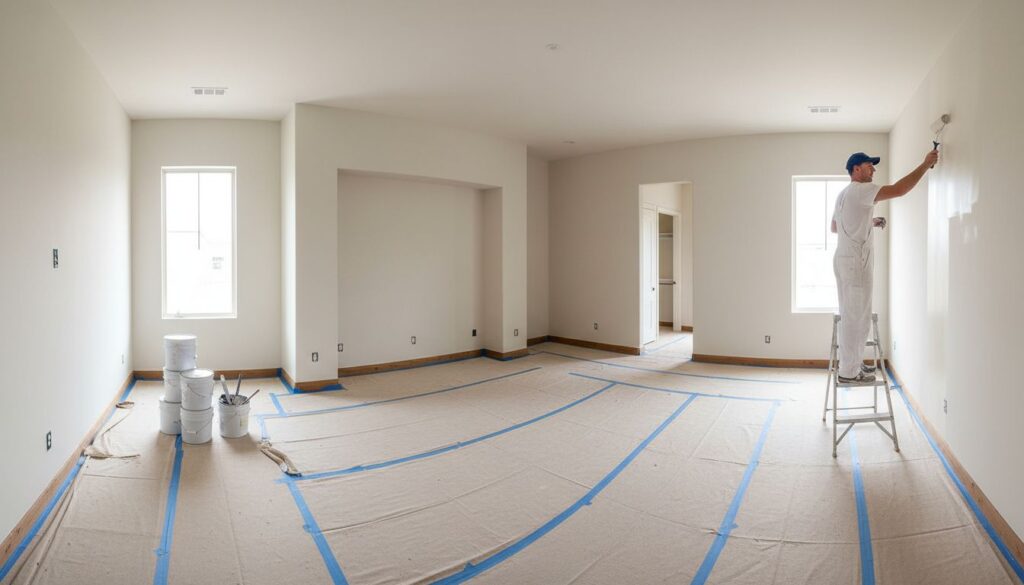
Floor protection is continuous. Protecting hardwood floors during painting is easier with one long run of paper or rosin instead of cut-around pieces. Drop cloth and painter’s tape tips matter less when the floor itself is fully covered. The result is fewer drips reaching the wood and a faster, cleaner cleanup. Paint cleanup and disposal tips are also simpler - one trip out at the end of the day instead of moving through occupied rooms.
How Long Does It Take to Paint an Empty Chicago Home?
Key Takeaways
Work in an empty Chicago home typically takes 3 to 10 days depending on home size, prep needs, and scope. A standard two-bedroom condo finishes in 3 to 5 days. A three-bedroom single-family finishes in 5 to 7 days. Same-day interior painting services are realistic only for single-room scopes.
Here’s a typical interior painting project timeline for a 2,000-square-foot empty Chicago home:
- Day 1: Prep - wall texture preparation, drywall patching, masking, priming
- Day 2: Ceilings and trim sprayed
- Day 3: First coat on walls, all rooms
- Day 4: Second coat on walls; touch-ups
- Day 5: Final walk-through, cabinet doors rehung, cleanup, paint touch-up techniques applied to imperfections
Skip the prep and you can shave a day. Add custom finishes - striping and pattern painting, faux finishes for walls, or painting crown molding and cornices in a contrast color - and you add a day or two. Detail work is where the timeline grows. Interior painting warranty terms we offer assume the prep was done right, which is why we don’t shortcut day one.
Need a clear timeline for your move-in painting project? Request an estimate from us - we’ll lay out a day-by-day schedule that respects your closing date.
Hiring a Real Chicago Interior Painting Company
A real Chicago interior painting company is licensed, bonded, and insured. They carry general liability and workers’ compensation. They produce certificates on request. Fortune Restoration has been working in Chicago homes since 1979 - over forty years of experience with the city’s housing stock. Lincoln Park greystones. Logan Square two-flats. North Shore single-families. Customer reviews tell part of the story; the work itself tells the rest.
Our crews work under Field Superintendent Dan Stojak. He holds EPA RRP certification, lead-safe certification, and OSHA training. RRP certification matters for any home built before 1978 - most of Chicago’s housing stock. Disturbing lead-based paint is regulated by the EPA. The rule is not optional. Most contractors are not RRP certified. That’s a credential to verify, not assume.
We have painted Frank Lloyd Wright homes in Oak Park, the Grosse Point Lighthouse in Evanston, and the birthplace of Walt Disney. The historic landmark portfolio has the photos. We do not subcontract our crews. The Fortune name has been on the truck since 1979.
What Should a Real Estimate Include?
Key Takeaways
A real Chicago interior painting estimate itemizes wall prep, primer specification, paint brand and product line, coat count per surface, trim and ceiling scope, color changes, daily timeline, and warranty terms. Get a quote for interior painting in writing - vague single-line proposals hide scope creep. How to hire an interior painter starts with comparing itemized scopes, not bottom-line totals.
When you book an interior painting estimate, ask for these line items:
- Wall prep scope - patching, sanding, caulking, priming
- Drywall repair and painting where needed
- Interior wallpaper removal if applicable
- Primer brand and where it gets used
- Paint brand and product line (Sherwin-Williams Emerald, Benjamin Moore Aura, etc.)
- Finish per surface (matte, satin, eggshell, semi-gloss paint)
- Number of coats on walls, ceilings, trim, and doors
- Color changes and accent wall painting scope
- Trim and molding, baseboards, doors
- Cabinet and built-in scope if included
- Furniture protection - anything left behind needs to be tarped
- Cleanup and disposal
- Workmanship warranty term and exclusions
- Day-by-day timeline
The CDC’s National Institute for Occupational Safety and Health and the EPA both publish guidance on low-VOC and eco-friendly interior paint, which is worth referencing if anyone in the household has chemical sensitivities. Most major brands now offer zero-VOC formulas that perform comparably to traditional paints.
Frequently Asked Questions About Painting Before Moving In
Should I paint before or after moving in?
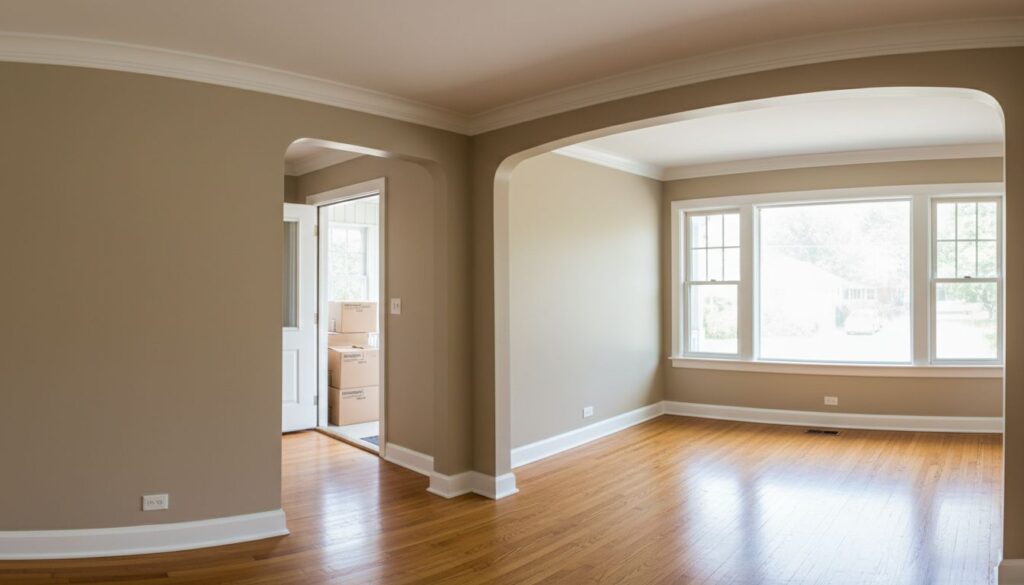
Paint before moving in whenever the schedule allows. An empty home costs 15 to 30 percent less, finishes 30 to 50 percent faster, and produces cleaner results. The only times to delay are when major repairs are needed first or when major renovations are planned for the same rooms in the next 12 months.
How long should I wait after painting before moving in?
Wait 24 to 48 hours after the last coat before moving furniture against painted walls. Most modern latex paints are touch-dry in 1 to 2 hours and recoatable in 4. Full cure takes a few days. Low-VOC interior paints off-gas faster, so the air will be safe to breathe well before the paint is fully cured.
Can painters work while I’m moving in?
Technically yes, but it slows them down and risks damage to belongings. If timing forces overlap, schedule the crew in rooms you haven’t loaded yet. The smartest approach is to delay move-in by two or three days so the work finishes clean.
What rooms should I prioritize if I can only paint some of the house?
Prioritize kitchens, bathrooms, and main living spaces - the rooms you and guests will see daily. Then trim and doors. Then bedrooms. Then ceilings. Then closets and utility spaces last. Accent wall color ideas still fit in this order.
Can I just paint one or two rooms now and the rest later?
Yes, and many homeowners do. Savings of doing all rooms at once are real but not enormous if you’re hiring the same crew twice. The bigger argument for upfront is the disruption - working through the back half of your house after move-in means living through a project for a week.
Are eco-friendly interior paints worth the extra cost?
For most Chicago homeowners, yes. Low-VOC and zero-VOC formulas from major brands cost about 10 to 20 percent more than standard paint. They smell less, off-gas faster, and are safer for kids and pets. Eco-friendly interior paint is now standard for our projects unless a client specifies otherwise.
Will fresh paint help my home’s resale value?
Yes. Interior painting for resale value consistently shows 75 to 100 percent return on investment in real estate data. For a new homeowner painting before move-in, that ROI is locked in immediately.
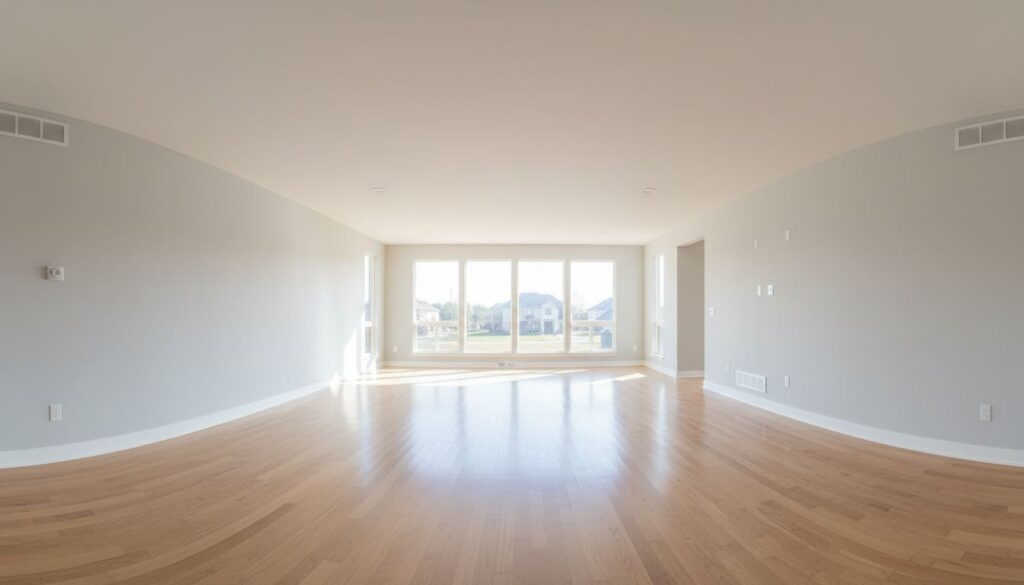
The Math Is Rarely Close
The math on an empty house is rarely close. You pay less, you wait less, and the finish is cleaner. The crew works faster and safer. Your furniture stays clean. Color decisions get a fair test on bare walls.
The handful of cases where it doesn’t make sense - major repairs first, big renovation coming, impossibly short closing-to-move-in window - are real but rare. For the other 90 percent of Chicago homeowners, the answer is the same. Paint the house empty, then move in.
Fortune Restoration has been doing this since 1979. Licensed. Bonded. Insured. Family-run. Same name on the truck. Same standards on the wall.
Closing on a Chicago home soon? Request an estimate from us before the moving truck is booked. Read more about our color testing service for picking the right palette, and check out our complete guide to interior painting for Chicago homes for room-by-room recommendations.