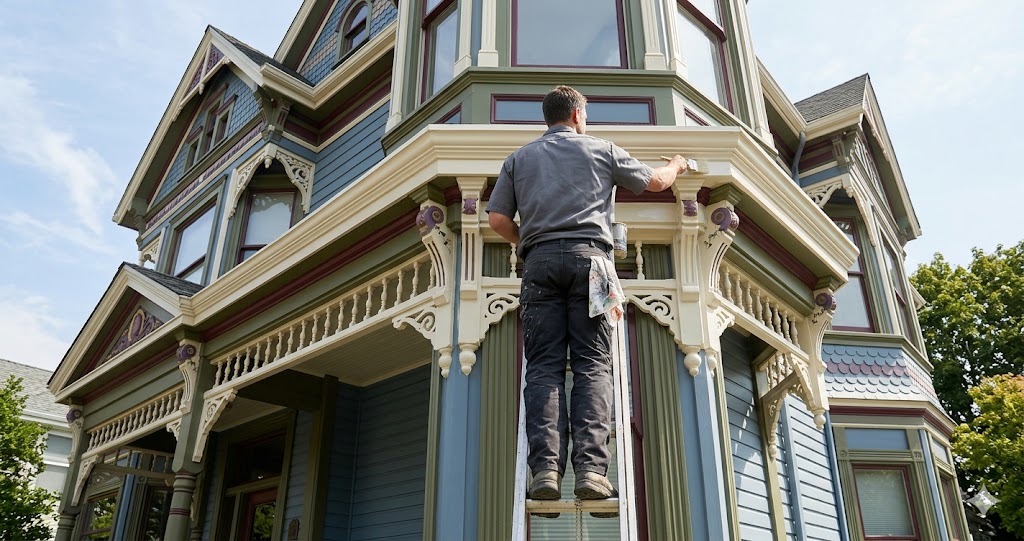
What Is Historic Landmark Restoration?
Key Takeaways:
Historic landmark restoration returns a protected building to a true earlier appearance using period-correct, compatible materials. Restoration saves original fabric, while renovation freely changes a space for modern use. Designated landmark properties almost always require restoration, not a standard remodel.
People mix up a few words all the time, so let me sort them out. Restoration means putting a building back to how it really looked at an important point in its life. We save the old stuff and only replace what is truly gone. Renovation is different. Renovation changes a space so it works better for today, and it does not worry much about keeping the past.
There is also rehabilitation, which sits in the middle. Rehab keeps the historic look but lets you add a modern kitchen or a new use. The national rules for all of this are spelled out in the Secretary of the Interior’s Standards for Rehabilitation, and most landmark approvals lean on them.
Restoration Versus Renovation
Here is the short version. If your building is a designated landmark, or sits in a historic district, restoration is usually the path. Architectural restoration respects the original brick, stone, wood, and color. A renovation crew might rip out a 1890s porch and bolt on something from the lumber yard. We will not do that to a historic property restoration job, because once the original is gone, it is gone for good.
Why Does Historic Restoration in Chicago Take Special Skill?
Key Takeaways:
Historic restoration in Chicago demands skill because the climate and old materials punish shortcuts. Freeze-thaw cycles, soft historic brick, and original lime mortar all behave differently than modern materials. Using the wrong product on a hundred-year-old wall causes damage that is costly and often permanent.
Chicago weather is rough on every building, but it is brutal on old ones. We get freeze-thaw swings that repeat dozens of times each winter. Water sneaks into a tiny crack, freezes, grows, and pops the face right off a brick. Old buildings were made with softer materials than the ones a builder uses now, so they react to all this in their own way.
The other problem is that a lot of well-meaning repairs from the 1960s and 70s used hard modern cement. That hard mortar traps stress and shoves it into the brick instead of giving a little. The result is spalled brick, ugly cracks, and walls that look worse five years later. A historic preservation contractor has to know the material before touching the wall. That knowledge is the whole job, honestly.
Got an old building that needs a careful eye?
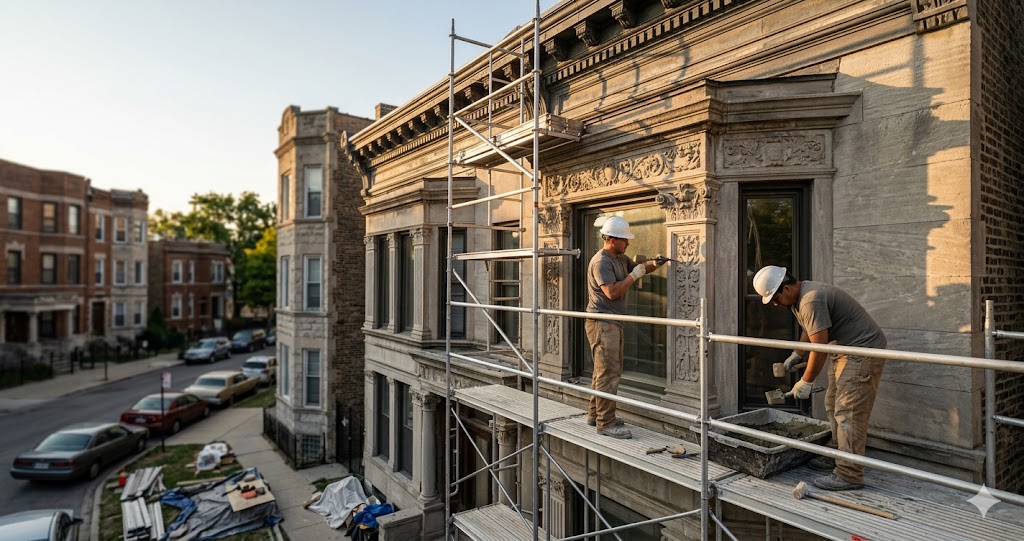
How Do You Match Old Brick and Mortar?
Key Takeaways:
Matching old brick and mortar starts with analysis of the original color, sand, and binder. Pre-1930 walls usually need soft lime mortar instead of hard Portland cement. Correct historic brick matching and lime mortar tuckpointing let a wall move safely and protect the brick.
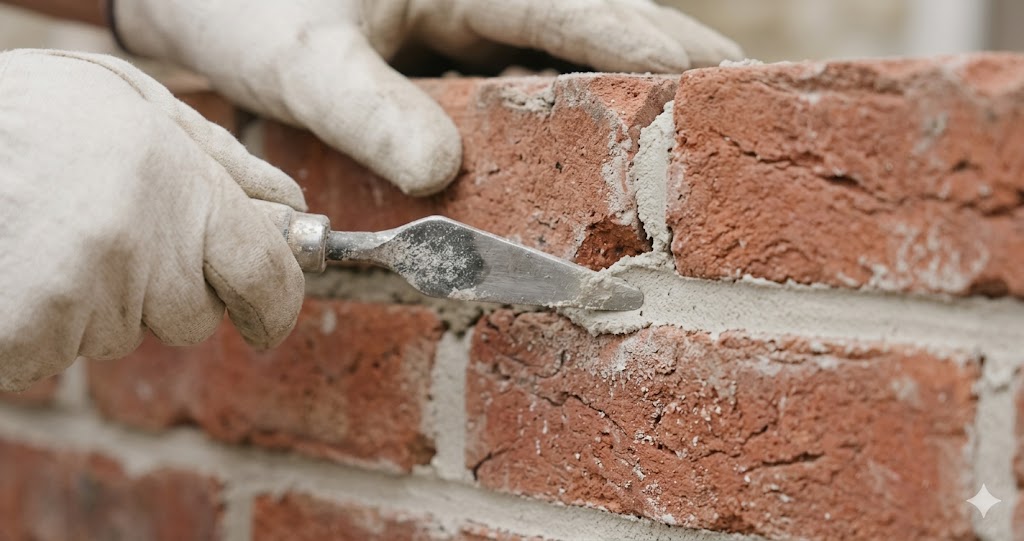
This is the part I love most, so bear with me. Before we mix anything, we study the old mortar. We look at the color, the sand, and what binds it together. That is mortar analysis, and it tells us what the building was actually built with. On most pre-1930 Chicago walls, the answer is lime.

Why Lime Mortar Matters
Lime mortar is soft, that softness is the whole point. A soft joint lets the wall expand and shrink without cracking the brick. When someone repoints a pre-1930 brick wall with hard cement, the brick takes the beating instead. So our historic masonry restoration and historic tuckpointing in Chicago use soft mortar repointing, mixed to match the original. We treat lime mortar tuckpointing as a craft, not a quick patch. You can read more about our day-to-day approach on our tuckpointing service page, and there is a whole story on our blog about the tuckpointing your brick house is secretly begging for.
Brick and Terra Cotta Matching
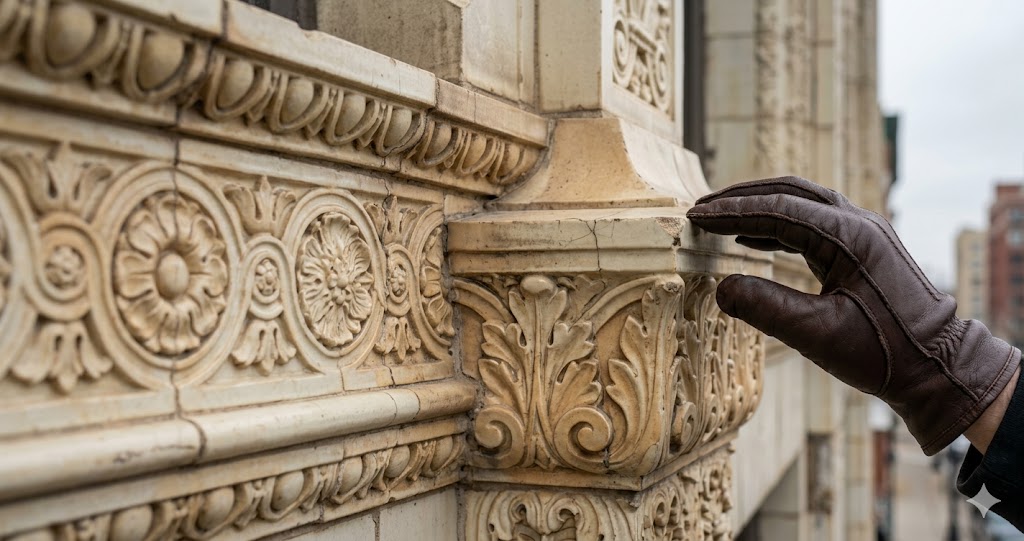
Old Chicago brick comes in colors and shapes you can not buy today. When a brick is too far gone, we hunt down a salvage match or have one made for historic brick replacement. Terra cotta is even trickier. Terra cotta restoration means saving the glazed clay ornament that makes Chicago facades so pretty, and it cracks if a crew rushes it. For deep guidance we trust the National Trust for Historic Preservation. Less guesswork up front means fewer surprises later.
What Happens to Old Paint and Woodwork?
Key Takeaways:
Old paint and woodwork get saved whenever possible, not torn out. Lead-safe paint removal protects workers and families on pre-1978 homes. Historic wood stripping and refinishing, plus custom historic millwork, bring back original trim, spindles, and brackets that define a building’s character.
Under all those layers of paint, Chicago homes hide gorgeous wood. Quarter-sawn oak doors. Carved trim. Turned spindles on a Queen Anne porch. When the paint gets thick, the detail disappears, so we do historic wood stripping refinishing to bring the shape back. Sometimes a piece is rotted past saving, and then we do historic millwork reproduction, running a custom profile to match the old one. Spindle and bracket reproduction keeps a Painted Lady looking like herself.
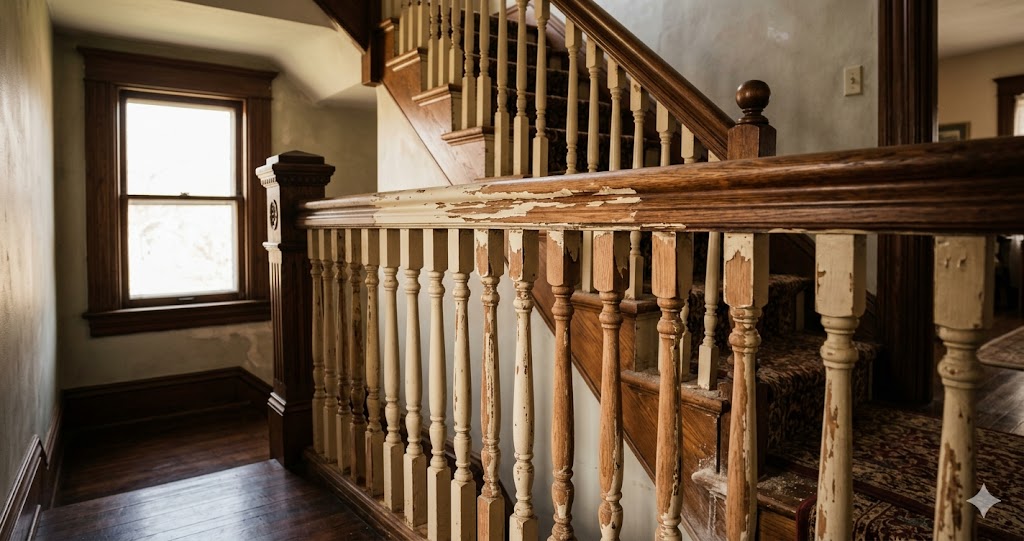
Lead-Safe Work on Old Homes
Almost every Chicago home built before 1978 has lead paint somewhere in the stack. Disturbing it the wrong way is a real health risk, especially for kids. RRP certified paint removal is the law, and it is also just the right thing to do. Our team handles lead-safe paint removal with proper containment, so historic house painting and Victorian house painting stay safe for your family and ours.
Period-Correct Color
Color is its own art on an old house. A real Painted Lady restoration uses three to five coordinated tones, not two. We help pick a period-correct color scheme through our wood stripping and refinishing service, then finish it with modern, durable paint that survives a Chicago winter. Old soul, tough skin.
Ready to uncover what your old home is hiding?
How We Restore Chicagoland Landmarks
I would rather show than tell, so here is a little of our real work. Over four decades, our landmark restoration company has been trusted with some of the area’s most loved buildings. A few that I am proud of:
- We restored the exterior of the birthplace of Walt Disney here in Chicago, saving original details that tell a real American story.
- We worked on the Grosse Point Lighthouse in Evanston, a National Register property that takes the full force of the lake.
- We have cared for Frank Lloyd Wright home restoration projects in Oak Park, where Prairie style detail demands a gentle hand.
- We have done historic church restoration on sacred architecture across the city, from Gold Coast parishes to North Shore congregations.
Every one of these jobs taught us something. You can see more of our story on the main historic landmark restoration page. The thread running through all of them is respect. These are not just buildings. They are the memory of a place.
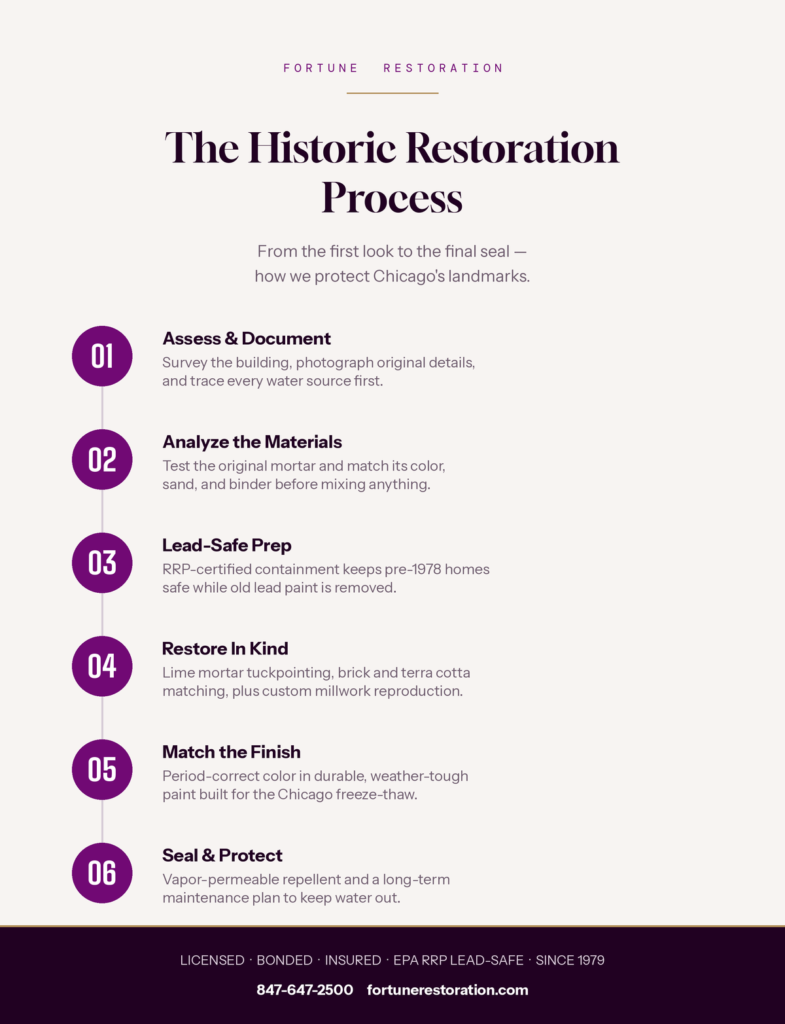
What Permits Do Historic Projects Need in Chicago?
Key Takeaways:
Designated landmark buildings in Chicago usually need Commission on Chicago Landmarks review before exterior work begins. Projects must follow the Secretary of the Interior’s Standards. Routine upkeep is often exempt, but window, masonry, and color changes on a protected property typically require approval.
Permits scare people, but they should not. If your building is a designated Chicago landmark, or it contributes to a landmark district, exterior changes usually need a sign-off from the Commission on Chicago Landmarks first. Bigger or federally tied projects may also involve the State Historic Preservation Office. The paperwork wants proof that the work matches the building’s history.
This is where a seasoned historic restoration contractor in Chicago earns their keep. We know which jobs need review and which are simple maintenance. We document the existing conditions, pick approved materials, and keep the project moving so you do not get stuck in a back-and-forth. Doing this part right also protects you down the road, which leads to my next point about money.
Can You Get Tax Credits for Historic Restoration?
Key Takeaways:
Tax credits can reward qualifying historic restoration. The federal program offers a 20% credit on certified rehabilitation of income-producing certified historic structures. Illinois adds a state credit for eligible properties. Both require work that meets the Secretary of the Interior’s Standards, so plan paperwork early.
Yes, and this surprises a lot of owners. The federal government offers a 20% income-tax credit for the certified rehabilitation of an income-producing certified historic structure. You can read the basics straight from the IRS Rehabilitation Credit page. The building has to be listed, or contribute to a registered historic district, and the work has to meet the federal Standards.
Illinois stacks its own help on top. The state runs a historic preservation tax credit too, and you can check eligibility through the Illinois historic preservation tax credit program. I am a contractor, not a tax advisor, so please talk to your accountant. But I will say this: when the work is done to standard from the start, you keep that door open. Cut corners and the credit can vanish.
Want to know if your building qualifies for a careful restoration?
What Should You Look For in a Historic Restoration Contractor?
Key Takeaways:
A strong historic restoration contractor proves real landmark experience, RRP lead-safe certification, and knowledge of the Secretary of the Interior’s Standards. Mortar analysis, material matching, and permit experience separate a true historic preservation contractor from a general remodeler. Licensing, bonding, and insurance are non-negotiable.
Picking the right team is the single biggest choice you will make. A general remodeler is fine for a kitchen. A historic property needs someone who lives and breathes old materials. Before you sign anything, ask hard questions and watch how they answer.
Here is my honest checklist for hiring any landmark restoration company:
- Real landmark experience, with photos and references you can call.
- RRP lead-safe certification for any pre-1978 home.
- Willingness to do mortar analysis testing before quoting masonry work.
- Clear knowledge of the Secretary of the Interior’s Standards.
- Experience pulling landmark permits without drama.
- Licensed, bonded, and insured, in writing.
At Fortune Restoration, our Field Superintendent Dan Stojak carries EPA RRP, lead-safe, and OSHA credentials. We have done architectural restoration on National Register properties since 1979. If a contractor dodges these questions, that is your answer right there.
The Real Cost of Cutting Corners on Old Buildings
I want to be straight with you, because I have seen it too many times. Skipping the right materials feels cheaper on day one. Then water gets in. The cheap repair fails faster than the original ever did, and now you are paying twice. A wall that needed a careful repointing becomes a wall that needs rebuilding.
Historic building restoration done right is an investment that holds. It protects the structure, it protects the look, and it protects the value. For the deeper standards behind all of this, the national rehabilitation guidance is worth a read. The cheapest bid is rarely the cheapest job in the end.
How Long Does a Historic Restoration Take?
Key Takeaways:
Historic restoration timelines depend on scope and approvals. A focused masonry or porch project may take two to six weeks. A full landmark facade with permit review and custom fabrication can run several months. Approvals and material lead times often shape the schedule more than the labor.
The honest answer is that it depends. A focused job, like a historic porch restoration or a single elevation of tuckpointing, often runs two to six weeks. A full landmark facade is a different animal. Once you add permit review, scaffolding, custom millwork, and made-to-order terra cotta, you can be looking at several months.
What slows things down is usually not the hands-on work. It is the waiting. Approvals take time. Custom materials have lead times. We build all of that into the schedule up front so you are never left guessing. A real plan beats a hopeful guess every single time.
Frequently Asked Questions
What is the difference between historic restoration and renovation?
Historic restoration returns a building to a true earlier appearance using compatible, period-correct materials. Renovation simply updates a space for modern use and feels free to change layout, finishes, and details. Restoration protects original fabric, while renovation prioritizes new function over historic accuracy. That is why landmark properties almost always call for restoration rather than a standard remodel.
Do I need approval from the Commission on Chicago Landmarks?
Approval from the Commission on Chicago Landmarks is required for exterior changes to designated landmark buildings and contributing properties in landmark districts. Work usually needs a permit review before it begins. Routine maintenance is often exempt, but replacing windows, masonry, or paint colors on a designated property typically triggers a review.
Are there tax credits for restoring a historic building in Illinois?
Tax credits exist for qualifying historic buildings in Illinois. The federal program offers a 20% income-tax credit on certified rehabilitation of income-producing certified historic structures. Illinois also offers a state historic preservation credit for eligible properties. Both require work that meets the Secretary of the Interior’s Standards, so plan documentation early.
How do you match old mortar on a historic building?
Matching old mortar starts with analysis of the original mix, including its color, sand, and binder. Pre-1930 walls usually need soft lime mortar, not hard Portland cement. The correct mix lets the wall move and protects the brick. A mortar that is too hard cracks brick faces and speeds up decay.
How long does a historic restoration project take?
Timelines vary with scope and approvals. A focused masonry or porch restoration may run two to six weeks. A full landmark facade with permit review, scaffolding, and custom material fabrication can run several months. Approvals and material lead times often shape the schedule more than the hands-on work itself.
How much does historic home restoration cost in Chicago?
Cost depends on condition, materials, height, and the level of detail being saved. Small targeted repairs can land in the low thousands, while full landmark facades reach well into five or six figures. Custom millwork, terra cotta replacement, and scaffolding raise totals. A site assessment gives the only honest number.
Is Fortune Restoration licensed and insured for historic work?
Fortune Restoration is licensed, bonded, and insured, and has served Chicagoland since 1979. Field Superintendent Dan Stojak is EPA RRP and lead-safe certified, with OSHA training for safe work on older buildings. That certification matters on pre-1978 homes, where disturbing lead paint demands trained, regulated handling.
Let’s Protect Your Piece of Chicago History
Your landmark deserves a crew that treats it like the treasure it is. We would be honored to take a look and give you a clear, honest plan.