Why Is My Stucco Cracking in the First Place?
Key Takeaways:
Stucco cracks because cement-based plaster shrinks as it cures and moves as temperatures swing. In Chicago, freeze-thaw cycles and missing or poorly placed control joints turn small stresses into visible cracks. Most hairline cracking is cosmetic, but cracks that grow, widen, or stain point to a deeper moisture problem.
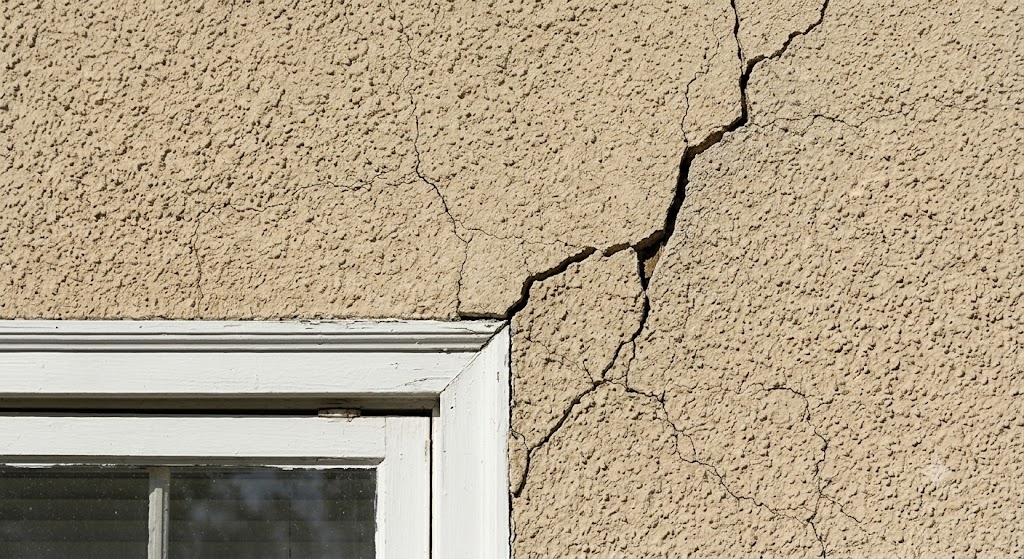
Stucco is a hard, brittle skin over a building, and brittle things crack when they’re pushed. The most common cause is simple drying shrinkage. As the cement plaster cures it pulls in on itself, and if there aren’t enough control joints to give that movement somewhere to go, the wall finds its own crack lines instead. The Concrete Masonry & Hardscapes Association notes that drying shrinkage, building movement, and thermal change are all routine crack triggers in cement plaster, which is why proper control-joint spacing matters so much.
Then Chicago piles on. Our walls go through dozens of freeze-thaw cycles every winter, and water that sneaks into a tiny crack expands when it freezes and pries that crack a little wider every single time. A crack that looked harmless in October can be a real opening by April. The same moisture that destroys mortar joints is the moisture that wrecks stucco, which is why stucco trouble and masonry trouble so often show up together on the same house.
Reading Stucco Damage by Type
Not all cracks mean the same thing, and learning to read them saves you money. When my Field Superintendent Dan Stojak walks a property, the first thing he does is sort the damage into a few buckets. Here’s how we think about it.
Hairline and Spider Cracks
These are thin, shallow cracks, often in a web pattern across the finish coat. Nine times out of ten they’re cosmetic shrinkage and nothing structural. They still matter, because they let water in, but the fix is usually a sealant or a patch and a fresh finish, not a tear-off.
Diagonal and Stair-Step Cracks
Cracks that run diagonally from the corners of windows and doors are a louder signal. Openings concentrate stress, and a crack marching away from a window corner can mean the building is moving or settling underneath the stucco. These need a closer look before any patch goes on.
Bulging and Hollow Areas
If a section of stucco bulges, sounds hollow when you tap it, or feels loose, the plaster has lost its grip on the lath behind it. That’s delamination, and patching the surface won’t fix it. The bond is gone and the section has to come off and be rebuilt.
Rust Stains and Dark Streaks
Orange staining usually means corroding metal lath or a rusting lintel behind the wall. Dark vertical streaks point to water running where it shouldn’t. Both are clues that the problem lives behind the finish, not on it.
Not sure what your cracks mean? Request a free stucco assessment →
What’s the Difference Between Stucco and EIFS?
Key Takeaways:
Traditional stucco is a hard, cement-based plaster applied in coats over lath, and it can dry out after it gets wet. EIFS is a synthetic foam-and-acrylic system that looks identical but traps moisture if water gets behind it. Identifying which system a Chicago home has is the first step in any honest repair.
This is the question almost nobody asks, and it’s one of the most important ones. From the street, traditional stucco and EIFS (Exterior Insulation and Finish System, sometimes called synthetic stucco) look the same. Same texture, same clean lines. Under the surface they could not be more different. Traditional stucco is cement, lime, sand, and water, applied over metal lath, and it’s hard as a rock when you press on it. EIFS is foam board with a thin acrylic coating, and it gives a little when you push.
The reason this matters is moisture. Real stucco is forgiving, it can absorb some water and dry back out. EIFS, especially the older barrier-style systems from the 1980s and 90s, was designed to keep water out completely, so when water does get in through a crack or a failed caulk joint it has nowhere to go. Home inspectors treat the two as completely separate risk categories during an inspection, and they’re right to. Repairing EIFS like it’s stucco can hide a wall that’s quietly rotting underneath. We always confirm what we’re working with before we quote a single repair.
What Are the Signs of Stucco Water Damage?
Key Takeaways:
Signs of stucco water damage include soft or crumbling stucco, bulging sections, rust stains, efflorescence, and interior wall stains or musty smells. Damage often hides behind an intact-looking surface. Catching it early, before sheathing and framing rot, is the difference between a patch and a major repair.
Water damage is sneaky with stucco because the wall can look fine while the trouble happens behind it. Stucco is what building scientists call a reservoir cladding, meaning it soaks up and holds water rather than shedding it perfectly. Trade-education sources describe stucco as a layer that’s water-resistant but never truly waterproof, which is exactly why drainage and flashing matter as much as the stucco itself.
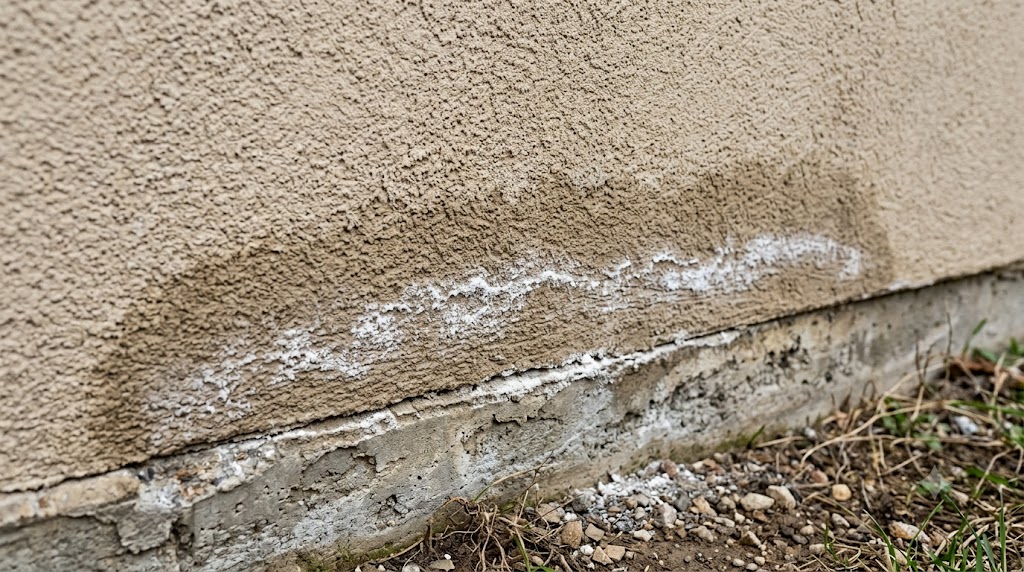
So what should you actually look for? Soft spots you can press in. Stucco that crumbles or flakes when touched. White, chalky efflorescence, which is salt left behind by water moving through the wall. Rust streaks. And inside the house, watch for staining near windows, peeling paint at the base of walls, or a damp, musty smell in a room with an exterior stucco wall. The freeze-thaw connection runs deep here, and the same water cycle that ruins brick mortar is worth understanding too, which I cover in our piece on what your brick walls are quietly begging for. If you’re seeing several of these signs at once, don’t wait, water damage only gets more expensive the longer it sits.
Should You Patch or Replace Your Stucco?
Key Takeaways:
Patch stucco when the damage is surface cracking or small isolated areas with sound plaster behind them. Replace stucco when large sections are delaminated, hollow, water-damaged, or pulling away from the lath. The decision rests on how much of the wall has lost its bond, not on how the surface looks.
This is the question every homeowner wants answered, and the honest answer is that it depends on the scope, not the looks. A wall can look rough and only need patching, or look mostly fine and need a full section rebuilt because the bond underneath is shot.
Here’s the rough framework we use. If the damage is hairline or spider cracking, or a few small spots where the plaster is still solid behind them, patching and refinishing is the smart, economical call. If you’ve got widespread delamination, big hollow areas, wet or rotting sheathing, or stucco that’s lost contact with the lath across a whole elevation, patching just papers over a failing system. At that point a tear-off and rebuild costs less in the long run than chasing the same problem every spring. A lot of times the right answer is somewhere in between, repair the sound areas and rebuild the failed ones, and a good estimate will spell out which is which.
Get a clear patch-or-replace recommendation in writing →
How Do You Repair Stucco Cracks and Patches?
Key Takeaways:
Repairing stucco cracks means cleaning and widening the crack, applying a flexible sealant or fresh plaster, and matching the surrounding texture and color. Patch repairs rebuild the scratch, brown, and finish coats over lath. Done right, the repair blends in and seals the wall against water.
The repair process changes with the damage, so let me walk through both ends of it.
Fixing Cracks
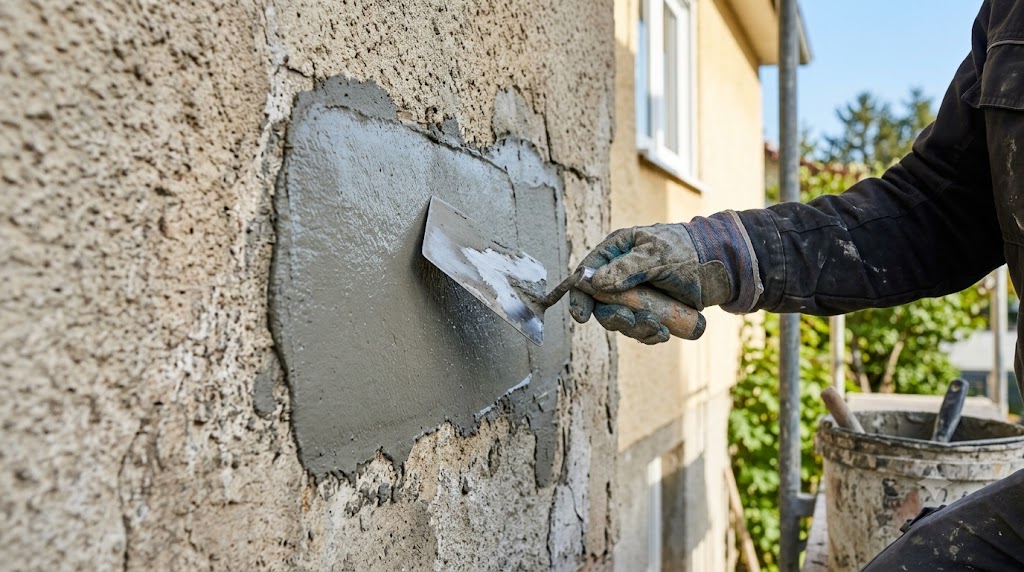
For a crack, we clean it out and slightly widen it so the patch material has something to grab. Narrow surface cracks get a flexible, paintable masonry sealant. Wider cracks get fresh stucco worked in, then the area is textured to match. The trick is in the finish, a sloppy patch reads as an obvious scar from across the street.
Rebuilding Patches
For a delaminated or damaged section, we remove the failed stucco down to clean lath, repair or replace lath and the water-resistive barrier where needed, then rebuild the coats. Traditional stucco is a three-coat system: a scratch coat keyed into the lath, a brown coat that builds thickness, and a finish coat that carries the texture and color. The Stucco Manufacturers Association publishes the installation standards we follow for coat thickness, curing, and weep-screed drainage, and they exist for a reason, skip a step and the patch fails early.
One thing we almost always do first is wash the surface so the repair bonds and the color reads true. Our professional power washing clears off dirt, chalk, and biological growth that would otherwise telegraph through a new finish. After the repair cures, we’ll often seal the wall to slow future moisture, and you can read more about the whole approach on our stucco repair and patching page.
Matching Historic Stucco on North Shore Homes
Chicago and the suburbs are full of stucco worth saving. The bungalow belt through Old Irving Park and Lincoln Square, the older stucco-and-half-timber homes scattered across Evanston, Winnetka, Kenilworth, Highland Park, and Glencoe, the stately places in Oak Park, River Forest, La Grange, and Hinsdale, they often have original three-coat stucco that’s a century old. Matching it is real craftsmanship.
Two things have to match: texture and color. The texture might be a sand finish, a dash finish, or a smooth troweled surface, and each takes a different hand and tool to reproduce. Color is trickier, because old stucco has weathered and original colored finish coats fade in ways that don’t come out of a modern bag mix. On historic homes there’s also the question of lime stucco versus portland cement stucco, older walls were often softer lime-based systems, and slapping a hard portland patch onto a soft lime wall can do more harm than good. North Shore stucco repair done well respects the original material instead of fighting it.
Our experience on landmark and historic properties since 1979 is what lets us blend a patch so you can’t find it later. That’s the whole point of historic stucco matching, the repair should disappear.
Restoring a historic stucco home? Let’s talk →

How Much Does Stucco Repair Cost in Chicago?
Key Takeaways:
Stucco repair cost in Chicago depends on the size of the damage, access, and whether the wall needs patching or rebuilding. Small crack repairs are modest, while full-section replacement runs higher per square foot. An on-site estimate is the only way to get an accurate number for your specific wall.
I’ll be straight with you: there’s no honest flat price for stucco repair, and anyone who quotes you one over the phone is guessing. Cost rides on a handful of things, how much area is affected, whether it’s patch or full replacement, how high up the work is and whether we need scaffolding, how much lath or sheathing is rotted behind the surface, and how hard the texture and color are to match.
As a very rough guide, sealing a few cracks is a small job, while rebuilding a full elevation of three-coat stucco is a meaningful per-square-foot investment that climbs with access and substrate repairs. The figure that actually matters is the one tied to your wall, after someone has put hands on it. What I can promise is that catching a problem at the crack stage costs a fraction of what it costs after water has been getting into the framing for three winters. (None of this is a quote, it’s just how the math tends to work.)
Can You Paint Stucco in Chicago?
Key Takeaways:
Yes, stucco can be painted, and the right product is a breathable masonry paint or an elastomeric coating that flexes with the wall. New or repaired stucco must cure fully before painting. Paint that seals stucco too tightly traps moisture and leads to peeling and spalling.
You can absolutely paint stucco, and a good coating both protects and refreshes a tired wall. The key is breathability. Stucco needs to let water vapor move through it, so the best paints for stucco in Chicago are high-quality breathable masonry paints or elastomeric coatings that stretch over hairline cracks without trapping moisture behind a sealed film. A cheap, non-breathable paint is how you end up with peeling and blistering a couple winters later.
Timing matters too. Fresh stucco and new patches have to cure before paint goes on, otherwise the finish won’t hold. And because we’re in Chicago, the weather window for exterior coating work is real, which is the same reason I’m careful about scheduling all our exterior painting, something I get into in our guide to how Chicago weather wrecks exterior paint. Get the product and the timing right and a painted stucco wall looks sharp for years.
The Best Time to Repair Stucco in Chicago
Stucco is cement, and cement needs reasonable temperatures to cure properly. Industry guidance keeps surface and air temperatures above 40°F before, during, and for at least a day after the work, and the plaster has to be protected from freezing while it sets. In practice that means our prime stucco repair season runs from late spring through early fall, roughly May into October.
That doesn’t mean a winter emergency can’t be handled, we can stabilize and protect a failing wall in cold weather to stop water damage from spreading. But for a lasting repair, especially anything involving fresh three-coat work, warmer months win. If you spot cracking in fall, the smart move is to get on the schedule early so the repair happens in good curing weather rather than after another freeze-thaw season has chewed it wider.
Choosing a Stucco Repair Company in Chicago
Plenty of outfits will patch a stucco wall. Far fewer will diagnose why it failed, match the finish so the repair disappears, and stand behind the work. When you’re picking stucco contractors in Chicago, ask whether they’ll confirm if you have stucco or EIFS, whether they’ll identify the water source instead of just covering the crack, and whether they can match historic textures and colors.
Fortune Restoration has been doing exactly this since 1979, more than four decades of stucco, masonry, and historic restoration across the city and the North Shore. We’re licensed, bonded, and insured, our crews are EPA RRP certified for the lead-safe work that pre-1978 homes require, and our Field Superintendent Dan Stojak personally assesses the tricky jobs. Whether it’s a hairline crack on a Rogers Park two-flat or a full historic restoration in Winnetka, we treat the repair like it’s our own house. Because for forty-plus years, this city’s homes have basically been the family business.
Request your free stucco repair estimate today →
Stucco Repair FAQs
How long does stucco last on a Chicago home?
Properly installed three-coat stucco can last 50 to 80 years or more, but the finish and any sealant need attention far sooner. In Chicago’s freeze-thaw climate, expect to inspect for cracks yearly, reseal or repaint roughly every 7 to 10 years, and address small repairs as they appear. Maintenance, not age alone, determines how long your stucco truly lasts.
Is stucco repair a DIY job?
Small surface cracks can be a reasonable DIY task with the right sealant and patience. Anything beyond that is best left to professionals. Matching texture and color convincingly is genuinely hard, and delamination, water damage, or rusting lath all involve hidden problems behind the wall. A poor patch usually has to be redone, so for visible or structural repairs, hiring an experienced stucco contractor saves money.
What is three-coat stucco?
Three-coat stucco is the traditional cement plaster system applied in three layers over metal lath: a scratch coat keyed into the lath, a brown coat that builds thickness, and a finish coat that carries the color and texture. Each coat must cure before the next is applied. It is harder, thicker, and more durable than thinner one-coat or synthetic systems, which is why it has protected Chicago homes for a century.
Does stucco need to be sealed?
Stucco benefits from a breathable water repellent, but it should never be sealed with a film that blocks vapor. The goal is to slow water absorption while still letting the wall dry. A penetrating, vapor-permeable sealer applied after repairs helps protect against Chicago moisture. Avoid heavy waterproof coatings on traditional stucco, since trapped moisture causes spalling and worse damage than no sealer at all.
How long does stucco need to cure before painting?
New or freshly repaired stucco should cure before painting, generally a minimum of 7 to 14 days for patches and longer for new installations, depending on temperature and humidity. Painting too soon traps moisture and causes peeling. In cooler or damp Chicago conditions, allowing extra cure time is wise. A breathable masonry paint applied to fully cured stucco gives the longest-lasting result.
What causes stucco delamination?
Stucco delamination happens when the plaster loses its bond with the lath or substrate beneath it, usually because water got in and corroded the lath, rotted the sheathing, or broke down the connection. Poor original installation and incompatible patch materials also contribute. Delaminated stucco sounds hollow when tapped and cannot be fixed with surface patching; the affected section must be removed and rebuilt.