Key Takeaways:
Most masonry waterproofing fails because the product is wrong for the wall or the masonry was sealed before it was repaired. Trapped moisture freezes, expands, and spalls the brick. Sealing is a maintenance step, not a repair.
Here’s the hard truth I share with almost every homeowner who calls: most failed waterproofing wasn’t bad luck, it was a bad decision made up front. There’s a few reasons a good sealer goes bad early, and almost none of them are about the brand on the bucket.
The first reason is the wrong product. Brick and stone are porous by design – they soak up rain and then let it dry back out. When someone coats that surface with a thick, plasticky film, the wall can’t breathe anymore. Water that’s already inside (and there’s always some) gets stuck. Come January, it freezes, expands, and pops the face right off the brick. We call that spalling, and once it starts you’re into replacement, not sealing.
The second reason is sequence. People seal a wall that should have been repaired first. A penetrating repellent is brilliant at slowing absorption across a sound surface. It does nothing for an open mortar joint, a cracked coping, or a gap around a window. Water just walks right past the sealer through the defect, and now you’ve spent money making the wall look protected while it keeps leaking.
The third reason is honestly just expectations. Folks treat waterproofing like a permanent fix. It isn’t. It’s maintenance – a layer that wears, fades on the sunny elevations, and needs renewing on a schedule. Treat it that way and it serves you well. Treat it as one-and-done and you’ll be disappointed in about year four. So before we talk about which products work, get the mindset right: waterproofing is the last step in a system, not a shortcut around the rest of it.
What does “breathable” really mean for brick?
Key Takeaways:
Breathable masonry means the sealer lets water vapor pass out of the wall while blocking liquid rain. Brick acts as a mass wall that absorbs and then dries moisture. Vapor-impermeable coatings stop that drying and cause hidden damage.
You’ll hear every masonry contractor in Chicago throw around the word “breathable.” It’s worth understanding what it actually means, because it’s the single most important property in any masonry waterproofing product.
Think of a solid brick wall as a sponge with rules. Building scientists call it a mass wall, and the research on rain control in buildings describes how these walls handle water: they absorb rain at the surface, hold it for a while, and then release it as vapor once the weather turns dry. That wet-then-dry cycle is the whole reason century-old Chicago greystones and two-flats are still standing.
A breathable, vapor-permeable sealer respects that cycle. It makes the surface hydrophobic so liquid rain beads off and rolls away, but it stays open enough that water vapor can still escape from inside the wall. Picture a one-way trapdoor – rain stays out, trapped moisture gets out. That’s the behavior you want.
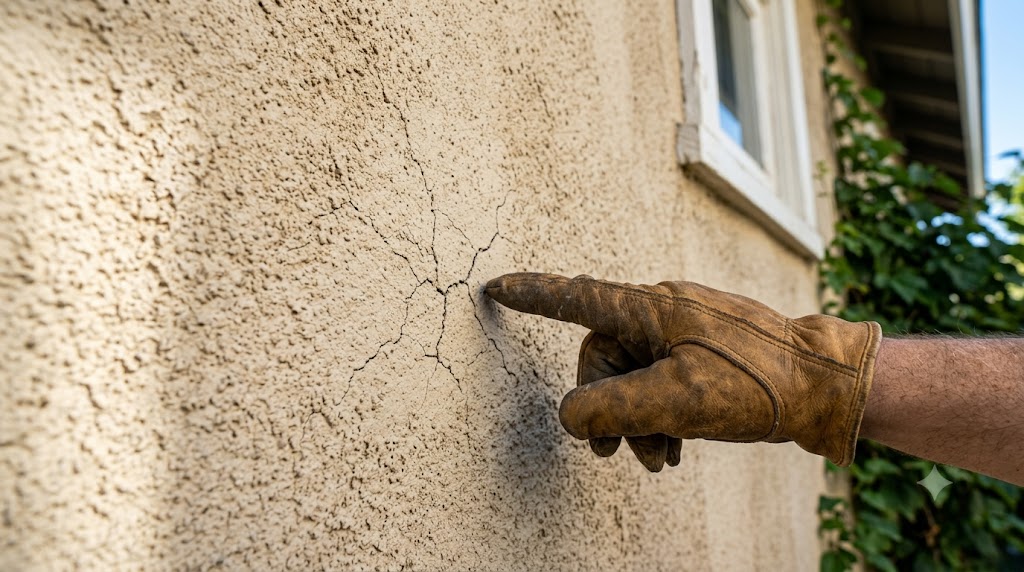
A film-forming coating breaks the cycle. It lays a continuous skin over the brick that blocks liquid water and vapor both. The first season it looks great. Then the moisture that’s naturally in the wall – from humidity, from a small leak somewhere, from the ground – hits that skin from behind and can’t leave. When the wall can’t dry, that’s when the trouble starts. The coating blisters, the brick spalls, and the salts inside crystallize under the surface and push it apart. I’ve scraped failed elastomeric coatings off Chicago buildings that were in worse shape than the untreated walls next door. This is why, for almost every brick and stone building in this city, breathable wins – not because it’s trendy, but because the physics of our freeze-thaw climate punishes anything that traps water.
The Repair-First Rule
If you remember one thing from this whole post, make it this: you repair the masonry first, then you seal it. Never the other way around. I’ve turned down jobs where the customer only wanted the sealer, because I knew it would fail and I didn’t want my name on it.
Waterproofing is a surface treatment. It assumes the wall underneath is doing its job. So before any repellent goes on, the wall has to actually be a wall again. Failed mortar joints get ground out and re-pointed – this is the big one in Chicago. Open or crumbling joints are the number-one water entry point on a brick building, and no sealer bridges a gap you can fit a fingernail into. Our tuckpointing work is almost always step one on a waterproofing project.
Cracked or loose coping and parapet caps get reset, because water pours in at the top of the wall and runs down inside where you won’t see it until the plaster stains. Spalled or missing brick gets replaced. The flashing around windows, doors, and rooflines gets checked, since a failed flashing detail will defeat the finest repellent ever made.
Only when the envelope is sound does sealing make sense. At that point a breathable repellent is the cherry on top – it slows the absorption a sound wall already handles, buys you years between freeze-thaw insults, and cuts down on the staining and efflorescence that drive owners crazy. Skip the repairs, though, and you’ve just gift-wrapped a leaking wall.
Which sealer actually works for your masonry?
Key Takeaways:
The sealer that works depends on the masonry type, since brick, limestone, and block all absorb water differently. Penetrating silane and siloxane repellents suit most brick and stone. A test panel confirms the right product before full application.
There isn’t one magic product. The sealer that works on your building depends on what your building is made of, and Chicago is a patchwork of brick, limestone, block, and stucco – sometimes all on the same structure. The technical guidance on water repellents for masonry walls makes the same point: the right treatment, the application rate, even whether the surface tolerates it at all, vary by substrate. So you test, you don’t guess.
Solid Brick Walls
For the classic Chicago common-brick or face-brick wall, a penetrating silane or siloxane water repellent is the workhorse. It soaks in, bonds inside the pores, and leaves the look of the brick alone while shedding rain. It’s breathable, it’s basically invisible, and on a properly re-pointed wall it’s exactly what works.
Limestone And Stone
Limestone behaves different than brick – it’s softer, more porous in spots, and acid-sensitive, so the product and the cleaning that comes before it have to be chosen carefully. Decorative limestone bands, sills, and copings on our greystones drink water fast, which is why a permeable repellent designed for stone matters here. This is core to our masonry waterproofing and sealing work on stone facades.
Split-Face Block And CMU
Split-face block is its own headache. The rough, fractured face is gorgeous and incredibly thirsty, and concrete block permeability swings widely from batch to batch – industry analysis of waterproofing concrete masonry walls notes there’s no one-size-fits-all prescription because the units absorb so differently. Split-face usually needs a heavier penetrating treatment, sometimes more than one coat, plus tight joint sealing to keep water out of the cells.
Stucco And Cladding
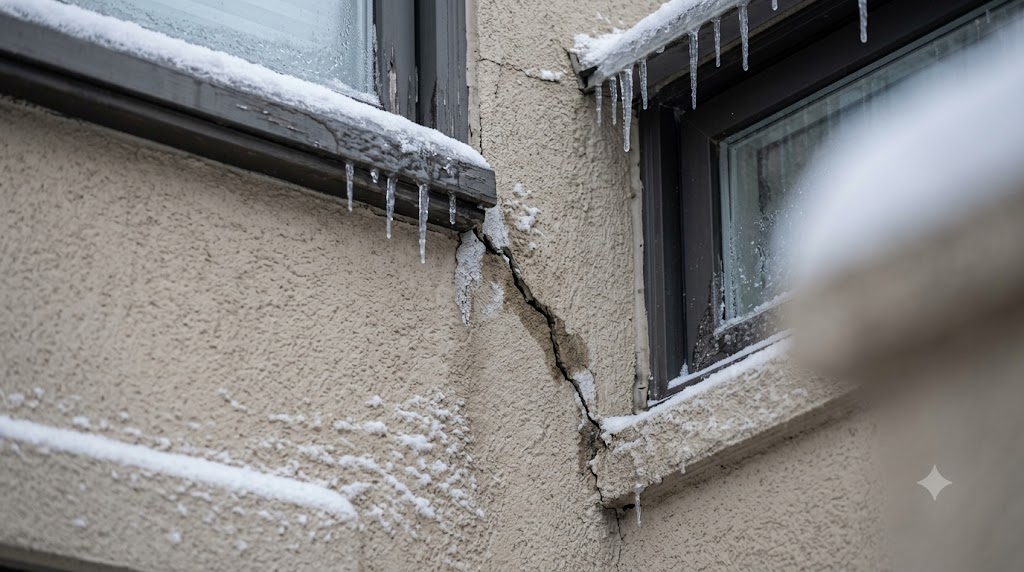
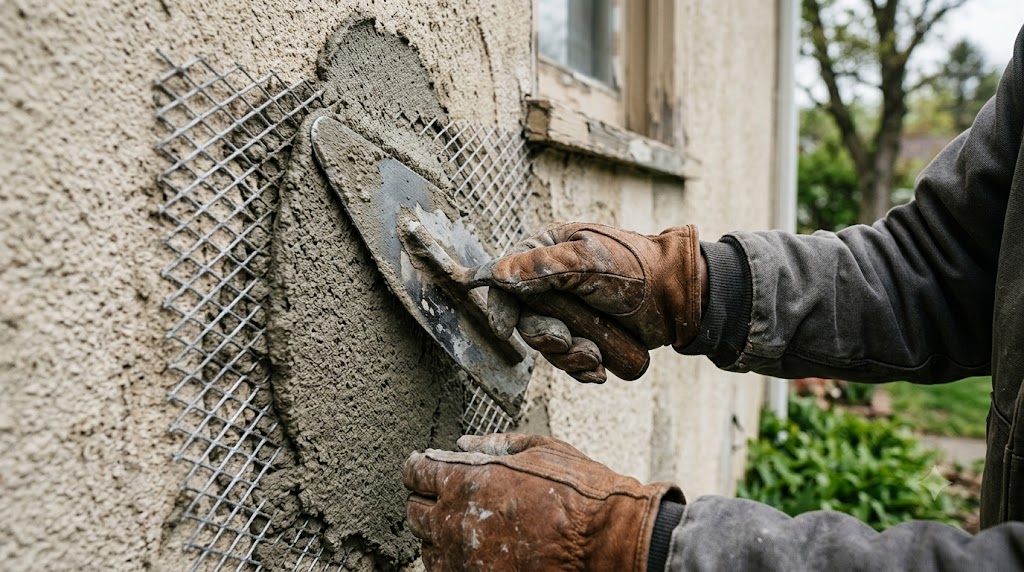
Stucco is a cladding that fails the same way masonry does when water gets behind it. Cracks, bad flashing, and failed caulk let moisture in, and sealing the face won’t save a system that’s leaking at the edges. Our guide to stucco repair in Chicago walks through that in detail.
Application Quality Decides The Outcome
Two crews can use the exact same pail of sealer and get wildly different results. The product gets the credit or the blame, but the application is what actually decides whether your masonry waterproofing lasts ten years or ten months. This is the part our field superintendent, Dan Stojak, is fanatical about – and he’s right to be.
Coverage And Saturation
Penetrating repellents work by saturating the surface, not dusting it. Under-apply and you get a thin, patchy barrier that fails fast. The pros flood the surface, often wet-on-wet, so the chemistry gets down into the pores. Coverage rate isn’t a polite suggestion on the data sheet – it’s the difference between protection and a wasted afternoon.
Dry Weather Window
Masonry has to be dry going in, and it needs dry weather coming out so the repellent can cure. Sealing a damp wall, or right before rain, locks moisture in and weakens the bond. In Chicago that means watching the forecast closely and, frankly, walking away from days that won’t cooperate.
The Test Panel
Every careful job starts with a test panel on a hidden spot. We apply the planned product at the planned rate, let it cure, and check for color change, blotching, or any surface the sealer doesn’t like. It takes a day. It also prevents the nightmare of discovering a bad reaction across an entire elevation.
How long does masonry waterproofing last?
Key Takeaways:
Penetrating masonry waterproofing typically lasts seven to ten years in Chicago before reapplication. South and west walls face more sun and weather, so coverage there fades sooner. A quick check every few years catches thinning protection early.
Let me give you a straight number, because everybody asks. On a sound, properly prepped wall, a quality penetrating repellent in Chicago’s climate generally holds up for seven to ten years before it needs renewing. That’s a real range, not a dodge – where your wall sits changes everything.
South and west elevations take the brunt of the sun and the driving rain, so the repellent there wears thinner and faster. I’ve seen the sunny face of a building need attention while the shaded north wall still beads water like new. Buildings near the lake, or anything exposed to constant wind-driven rain, also run toward the shorter end of that range.
Film-forming coatings are a different story – they can look fine for a couple of seasons and then fail suddenly and ugly, which is one more reason I steer owners toward breathable penetrating products that age gracefully. The practical move is a quick look every couple of years: splash a little water on the wall, and if it soaks in instead of beading, that elevation is ready for another coat. Catch it at the beading-stopped stage and you stay ahead of the freeze-thaw damage instead of chasing it.
When is sealing the wrong answer?
Key Takeaways:
Sealing is the wrong answer when the masonry has cracked joints, spalling brick, failed flashing, or rising damp from the ground. Those are repair problems that a coating cannot solve. Fixing the water source always comes before any sealer.
Sometimes the most honest thing I can tell a customer is “don’t seal this yet.” Waterproofing is the wrong move whenever there’s an active problem the sealer would only hide.
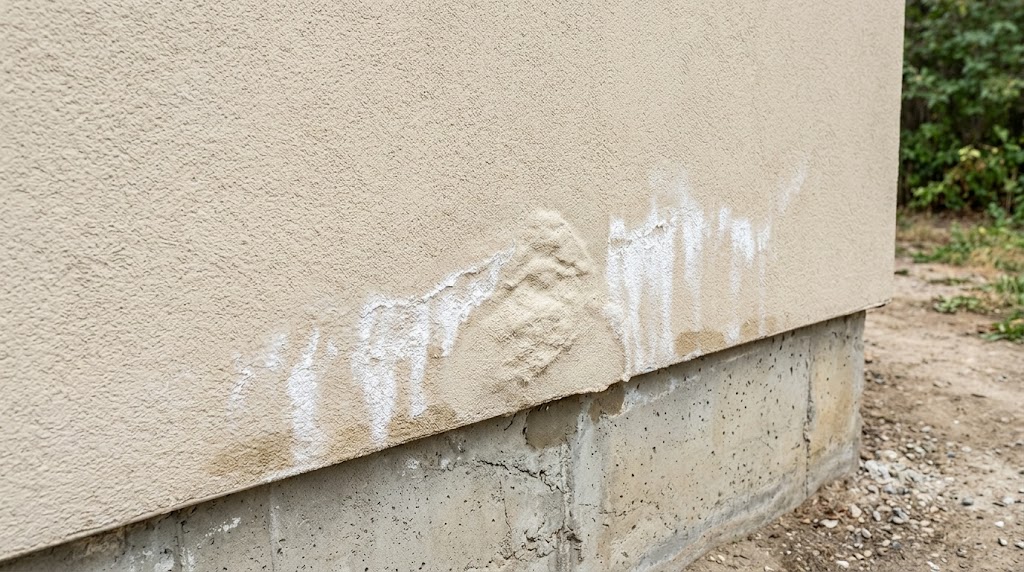
Efflorescence is the classic example. Those chalky white deposits aren’t a stain to coat over – they’re salts that water carried to the surface from inside the wall, and government technical guidance on efflorescence in masonry walls ties them squarely to moisture moving through the masonry, including rising damp from the ground. Seal the face without finding that water and you can trap the salts behind the surface, where they do real damage. Find the source first.
Structural cracks are another. Stair-step cracking, displaced brick, a wall that’s bowing – those are repair and sometimes engineering problems. A coating on top is lipstick. It changes nothing about why the wall is moving.
The chimney is the sneaky one. It’s the most exposed masonry on the whole building – open on four sides above the roofline – and it fails first. Crown cracks, open joints, and bad flashing send water straight down inside, and sealing the brick face does nothing for any of that. We cover the full picture in our guide to chimney repair for Chicago homeowners. And rising damp – water wicking up from soil at grade – won’t be stopped by sealing a wall three feet up; that’s a drainage and grading fix. The pattern is always the same: if water has a path in, close the path before you ever reach for a sealer.
Why Chicago Owners Trust Fortune Restoration
We’ve been doing this since 1979 – more than forty years of Chicago winters teaching us what holds and what doesn’t on real buildings. Fortune Restoration is licensed, bonded, and insured, and we’re EPA RRP certified for the lead-safe work that older Chicago masonry and trim so often require. Our field superintendent, Dan Stojak, runs every waterproofing project to the same standard: repair the wall, test the product, apply it right, and stand behind it.
Most of what we fix on waterproofing calls is somebody else’s shortcut – a film coating that trapped water, or a wall that got sealed instead of repaired. We’d rather do it once, correctly, and not see your building again until it’s time for routine renewal. That’s the whole job: keep the water out, let the wall breathe, and protect the masonry you’ve already paid for.
Frequently Asked Questions
Should I seal my brick?
Seal your brick only if it is sound and the mortar joints are intact. Sealing healthy masonry slows water absorption and reduces freeze-thaw damage. But sealing brick with cracked joints, spalling faces, or active leaks just hides the problem and traps water inside. Repair the wall first, then decide whether a breathable repellent adds value.
What is the best masonry sealer for Chicago weather?
For most Chicago brick and stone, a penetrating silane or siloxane water repellent is the best choice. It soaks in, repels rain, and stays vapor permeable, so the wall can still dry. Film-forming coatings look protective but trap moisture that freezes and spalls the masonry. The right product depends on your substrate, so testing matters.
What is the difference between a penetrating sealer and a film-forming coating?
A penetrating sealer soaks into the masonry and bonds inside the pores, repelling water while letting vapor escape. A film-forming coating sits on top as a skin and blocks both liquid water and vapor. On Chicago brick, breathable penetrating sealers usually last longer, while film-formers tend to blister, peel, and trap damaging moisture behind them.
Will waterproofing stop efflorescence on my brick?
Waterproofing alone will not stop efflorescence, because the white deposits are a symptom of water moving through the wall. Sealing the surface without finding the water source can even trap salts inside. The fix is to repair the leak, let the masonry dry, clean the deposits, and then apply a breathable repellent to slow future moisture.
Can I waterproof brick myself, or do I need a contractor?
Small, ground-level areas can be sealed by a careful homeowner using a breathable penetrating product. Full buildings are different. Even coverage, the correct application rate, weather timing, and repairing joints first all affect whether the job lasts. For multi-story walls or any wall showing damage, a professional crew protects you from costly mistakes.
Will a masonry sealer change the color of my brick?
A quality penetrating water repellent dries clear and usually leaves the brick looking the same. Some products slightly deepen the color or add a faint sheen, so results vary by substrate. That is why we test on a small, hidden panel before treating a whole wall. Film-forming coatings change appearance the most.