

Highland Park, IL is where the Prairie style grew up. Frank Lloyd Wright’s Willits House on Sheridan Road, designed in 1901, is widely considered the first of his mature Prairie houses, and the National Register lists Highland Park homes by John S. Van Bergen, Howard Van Doren Shaw, Robert E. Seyfarth, and David Adler alongside it. Add the artists’ colony character of the Ravinia District, the cottages and estates threaded between deep wooded ravines, and a 100-foot bluff running along six miles of Lake Michigan shoreline, and you have one of the most architecturally rich and physically demanding places on the North Shore to maintain a home. Fortune Restoration has cared for exactly this kind of building for more than four decades, including our long-running work on Frank Lloyd Wright homes. Family-run since 1979 and headquartered in nearby Lincolnwood, we bring historic painting, tuckpointing, masonry, and carpentry to Highland Park’s ZIP code 60035 under one contract, licensed, bonded, insured, and EPA RRP lead-safe certified.
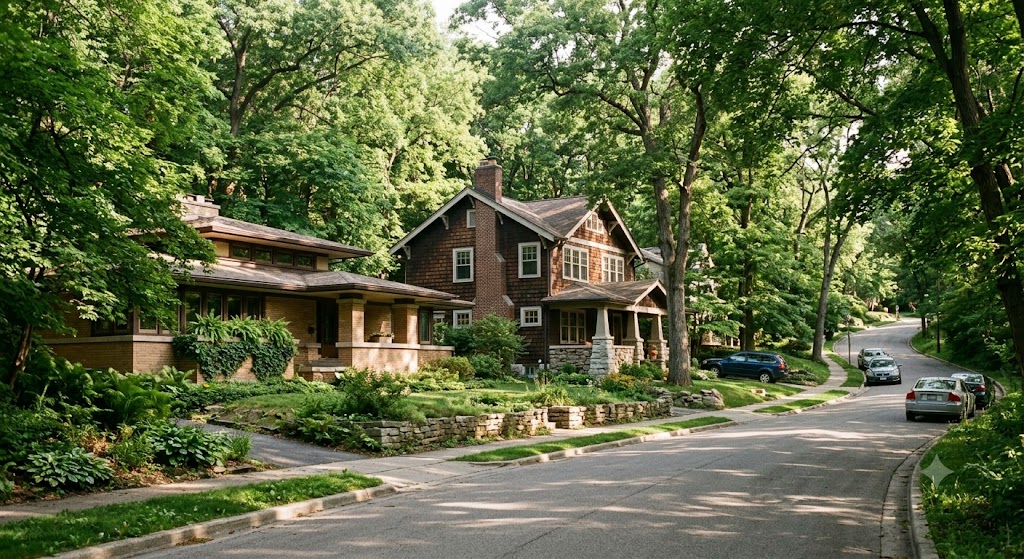
What Does It Take to Restore Highland Park’s Architect-Designed Homes?
A community whose landmark inventory includes the Willits House, documented by the Frank Lloyd Wright Trust as the first of Wright’s mature Prairie designs, sets a high bar for anyone working on its housing stock. Prairie homes live and die by their horizontal wood banding, deep overhanging eaves, and stucco planes. Ravinia District cottages carry a century of layered paint over original detail. Nearly everything predates 1978, so lead-safe RRP containment is standard practice, not an upgrade.
Our Painting Historical Landmarks service was built for this class of work: full scrape-and-feather preparation, substrate repair before any finish coat, and paint systems chosen for historic materials. Where paint buildup has buried original woodwork, our Wood Stripping & Refinishing crews recover the detail safely, and when a bracket or trim run is beyond saving, our Custom Millwork shop replicates the original profile instead of substituting lumberyard stock.
Why Do Highland Park’s Bluff and Ravine Lots Age Homes Faster?
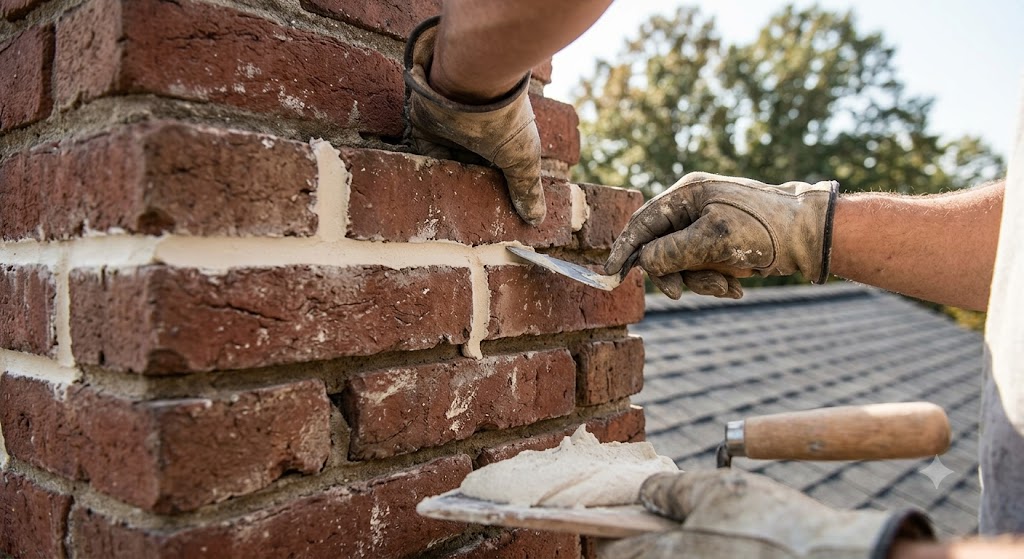
The geography that makes Highland Park beautiful is the same geography that works against its buildings. Homes along the bluff take lake wind and driven rain on their east elevations season after season. Homes on ravine lots sit under dense canopy where shaded stucco, siding, and masonry stay damp long after every rain, feeding mildew and pushing finishes through faster cycles. Both conditions reward owners who inspect and maintain a few years ahead of the inland schedule.
The masonry math is equally direct. Brick, stone, and stucco homes from Highland Park’s early decades were built with soft lime-based mortar that must be matched, not replaced with hard modern mixes that crack historic brick. Our tuckpointing and masonry repair crews analyze and match the original mortar in composition, color, and joint profile. Chimneys go first on any exposed lot, so our chimney repair and restoration service handles crowns, caps, flashing coordination, and brick replacement before a leak reaches the framing, and our exterior painting systems close the envelope with full preparation and mildew-resistant two-coat coverage.
Who Maintains Highland Park’s Business Districts and Larger Properties?
Beyond the houses, Highland Park runs on its districts: the Central Business District downtown, Port Clinton Square, the shops of the Ravinia District, and the commercial blocks around the City of Highland Park‘s four Metra stations at Highland Park, Ravinia, Ravinia Park, and Braeside. Vintage commercial masonry and mixed-use buildings age on the same freeze-thaw schedule as the housing stock, with higher stakes when water finds a path in. Our property management services team provides owners and managers with condition assessments and multi-year planning, and our Multi-Unit Buildings & Community Associations program brings the same discipline to condominium and townhome boards.
Services Fortune Restoration Provides in Highland Park, IL
One contractor, one contract, and the painting, masonry, and carpentry get sequenced correctly. Additional Fortune Restoration services for Highland Park homes include:
- Interior Painting: plaster-friendly preparation, trim and millwork finishing, and clean work in occupied homes
- Color Testing: on-site samples so historically appropriate palettes are judged in Highland Park light, not on a chip card
- Porch & Deck Restoration: rebuilt railings, decking, and structural framing on historic porches and ravine-side decks
Bluff, ravine, or Ravinia District, your Highland Park home has a maintenance clock. Let’s read it together.
Frequently Asked Questions
Does Fortune Restoration serve Highland Park, Illinois?
Fortune Restoration provides historic painting, tuckpointing, masonry, and carpentry services throughout Highland Park, Illinois, ZIP code 60035, from the bluff homes along Sheridan Road to the Ravinia District and the neighborhoods around all four Metra stations. Fortune Restoration is a family-run company headquartered in nearby Lincolnwood and has served the North Shore since 1979.
What types of homes does Fortune Restoration restore in Highland Park?
Fortune Restoration restores Highland Park’s full range of housing, including Prairie style, Arts and Crafts, Tudor, and Colonial Revival homes by architects such as Frank Lloyd Wright, Howard Van Doren Shaw, and David Adler, along with Ravinia District cottages, postwar homes, and newer custom construction. Restoration work on older Highland Park homes includes lead-safe paint preparation, lime mortar matching, and custom millwork replication.
Why do Highland Park’s bluff and ravine lots need extra exterior maintenance?
Bluff lots in Highland Park take wind-driven moisture off Lake Michigan on their east-facing walls, chimneys, and trim, while ravine lots sit under dense tree canopy that keeps surfaces damp and shaded long after rain. Both exposures shorten the life of paint, mortar, and exterior wood, so Highland Park homes benefit from maintenance cycles a few years tighter than inland suburbs.
How often do Highland Park’s brick and stucco homes need masonry attention?
Brick and stucco homes in Highland Park typically need tuckpointing every 25 to 30 years, and homes built before 1930 require soft, lime-based mortar matched to the original rather than modern Portland cement mixes. Warning signs on a Highland Park home include crumbling or recessed mortar joints, white efflorescence stains, spalling brick, stucco cracking, and stair-step cracks near window openings.
Which communities near Highland Park does Fortune Restoration serve?
Fortune Restoration serves Highland Park along with the neighboring communities of Highwood, Glencoe, and Bannockburn, plus Deerfield to the west and Lake Forest to the north. Fortune Restoration is headquartered in Lincolnwood, Illinois and serves the entire North Shore and Chicago area.
Caring for the North Shore’s landmark homes since 1979.