

Fortune Restoration provides painting, tuckpointing, masonry, and carpentry throughout Hyde Park, Chicago, ZIP code 60637, backed by masonry restoration experience at the University of Chicago.
Hyde Park has been building seriously since the old Hyde Park Township was annexed to Chicago in 1889, and the University of Chicago’s arrival the following year set the tone: limestone, brick, and craftsmanship meant to last. The neighborhood that grew up around the campus and Jackson Park, home of the 1893 World’s Columbian Exposition, is now one of the most architecturally rich square miles in the city. Greystones and brick rowhouses line the side streets, courtyard buildings and grand vintage co-ops fill out the blocks toward the lake, and Frank Lloyd Wright’s Robie House sits right on Woodlawn Avenue. Most of that building stock is a century old or more, and a century of freeze-thaw cycles is exactly the kind of problem we have been solving since 1979.
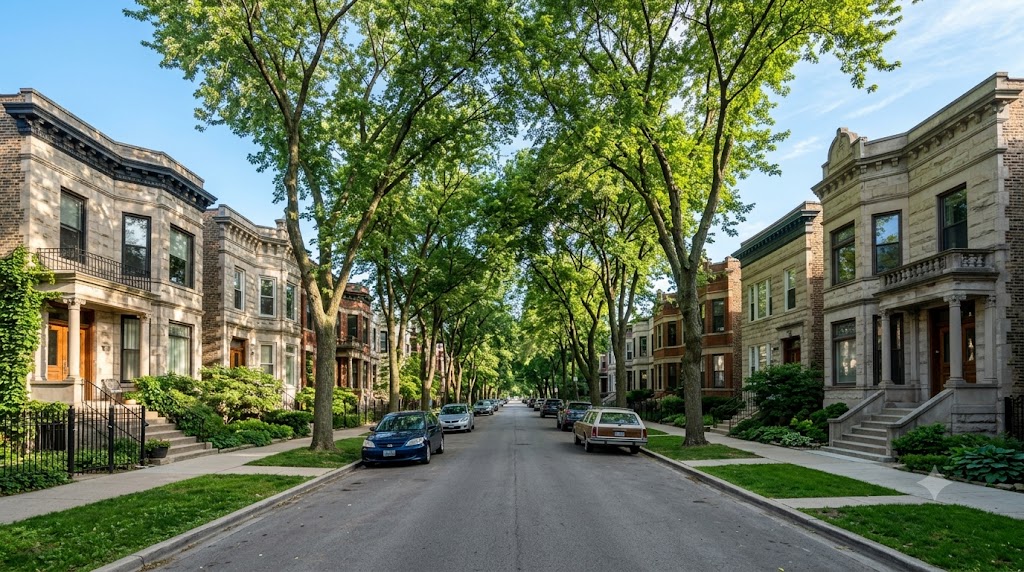
What Makes Hyde Park’s Greystones and Rowhouses Different to Maintain?
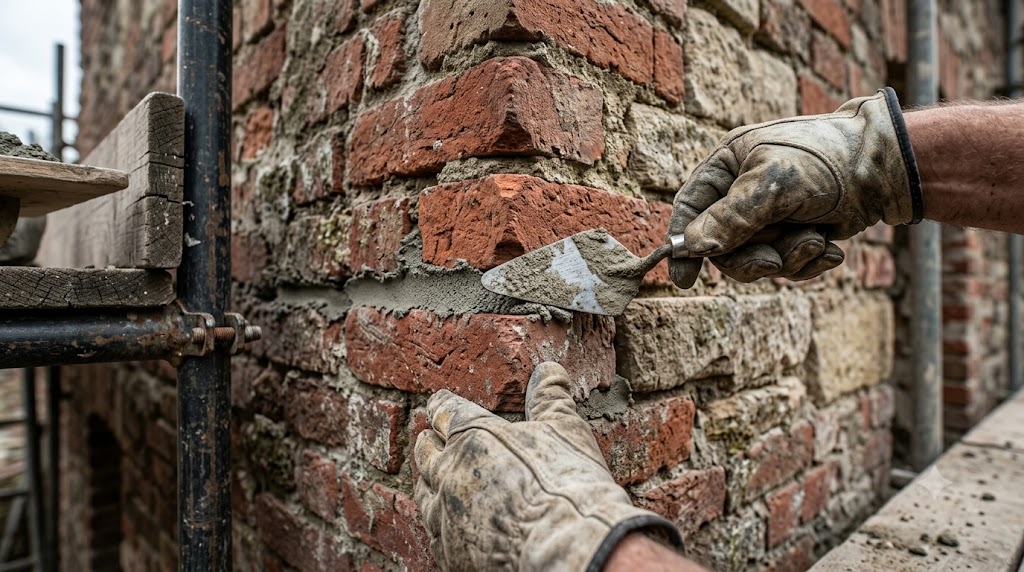
The limestone fronts and brick walls of Hyde Park were assembled with lime-based mortar that is intentionally softer than the masonry around it. The mortar takes the stress so the brick and stone do not, which means the mortar wears out on a schedule, and after 100-plus years much of the neighborhood is due or overdue. The warning signs build slowly: crumbling or recessed joints, white efflorescence staining, spalled brick faces, and stair-step cracks at window corners that usually trace back to rusting steel lintels rather than the mortar itself.
Repointing a 1905 greystone with a hard modern Portland cement mix transfers stress into the original masonry and causes spalling, which is why the National Park Service’s Preservation Briefs on historic masonry call for matching the original material. Our tuckpointing crews analyze the existing mortar and match color and tooling before a grinder ever touches a joint, and when individual units have spalled past saving, our brick replacement work sources compatible material so the repair disappears into the wall.
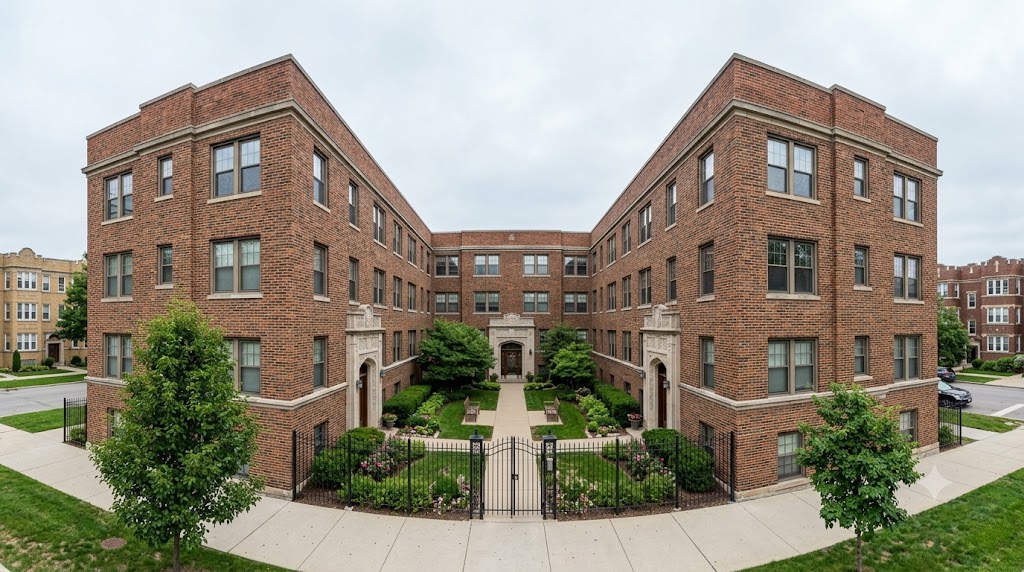
Why Do Hyde Park’s Vintage Co-ops and Courtyard Buildings Fail at the Roofline First?
Hyde Park has one of the city’s great inventories of vintage co-op and condo buildings, from the courtyard walk-ups near campus to the larger buildings of East Hyde Park. Nearly all of them share a weakness: the parapet takes weather on three sides while the walls below take it on one. Failed coping joints and deteriorated parapet mortar are the most common source of top-floor water damage we see in buildings like these, and the stain in a unit rarely appears anywhere near where the water got in. Chimneys age on the same accelerated schedule for the same reason.
Our parapet wall repairs and chimney repair services address the roofline before it becomes an interior problem, and our multi-unit building and association services are built for exactly the boards and managers who run Hyde Park’s co-ops. Loose brick and failing facades also generate citations from the Department of Buildings. Our City of Chicago violation correction team prioritizes that work, and associations that would rather never receive the notice use our property management services for planned envelope maintenance instead.
How Does Fortune Restoration Approach Historic and Landmark Work in Hyde Park?
Hyde Park takes its architecture seriously, and so do we. The neighborhood holds Wright’s Prairie style masterpiece, the Robie House at 5757 South Woodlawn Avenue, along with Rockefeller Chapel, the former Palace of Fine Arts that now houses the Museum of Science and Industry, and block after block of buildings that would be landmarks anywhere else. Our own portfolio fits the setting. We have restored Frank Lloyd Wright homes, our masonry crews have performed restoration work for the University of Chicago, and just south of Jackson Park we completed the interior restoration of St. Philip Neri, matching the church’s original decorative finishes.
The painting side of the work carries the same obligations. Because Hyde Park’s housing overwhelmingly predates 1978, our crews follow EPA RRP lead-safe practices whenever painted surfaces get disturbed, and we carry that certification. Our exterior painting teams build paint systems around full prep, and our carpentry crews repair rotted trim, porches, and millwork before paint goes on rather than painting over the problem.
Services Fortune Restoration Provides in Hyde Park
One contractor, one contract, and the painting, masonry, and carpentry get sequenced correctly. Our Hyde Park services include:
- Exterior painting for vintage homes: full-prep, lead-safe paint systems for frame houses, trim, and masonry buildings
- Interior painting: whole-unit repaints for co-ops, condos, and greystone apartments, plus color consultation
- Tuckpointing and mortar matching: lime-mortar analysis for Hyde Park’s greystones, rowhouses, and limestone facades
- Parapet and roofline masonry: coping, parapet, and chimney work for flat-roofed co-ops and courtyard buildings
- Porch and deck restoration: structural and cosmetic repair of front porches and rear decks
- Property management maintenance: envelope assessments and violation correction for associations and managers
Your contractor already knows the neighborhood’s buildings. Let’s look at your project.
Frequently Asked Questions
Does Fortune Restoration serve the Hyde Park neighborhood of Chicago?
Fortune Restoration provides painting, tuckpointing, masonry, and carpentry services throughout Hyde Park, Chicago, ZIP code 60637, including the University of Chicago campus area and East Hyde Park. The family-run company has served Chicago neighborhoods from its Lincolnwood headquarters since 1979.
How often do Hyde Park’s greystones and rowhouses need tuckpointing?
Greystones and brick rowhouses in Hyde Park typically need tuckpointing every 25 to 30 years, and much of the neighborhood’s masonry dates to the 1890s through the 1920s. Warning signs on a Hyde Park masonry building include crumbling or recessed mortar joints, white efflorescence stains, and stair-step cracking near window and door openings.
Has Fortune Restoration worked on historic buildings near Hyde Park?
Fortune Restoration has performed masonry restoration for the University of Chicago and completed the interior restoration of St. Philip Neri, a historic Catholic church just south of Jackson Park. The company has also restored Frank Lloyd Wright homes in the Chicago area, experience directly relevant to Hyde Park’s Prairie style and landmark-caliber architecture.
What services does Fortune Restoration offer Hyde Park co-op and condo associations?
Fortune Restoration offers Hyde Park co-op and condo associations tuckpointing, parapet and coping repair, lintel repair, facade assessments, City of Chicago violation correction, and common-area painting. Planned envelope maintenance protects a vintage Hyde Park building far more economically than emergency repairs after water gets in.
Is Fortune Restoration lead-safe certified for Hyde Park’s older homes?
Fortune Restoration is licensed, bonded, and insured, and holds EPA RRP lead-safe certification for work on pre-1978 buildings, which covers nearly all of Hyde Park’s housing stock. The company has been family-run since 1979 and is headquartered at 6619 North Lincoln Avenue in Lincolnwood.
Family-run in Chicagoland since 1979. Talk to the contractor who already works on buildings like yours.