
Column Restoration in Chicago
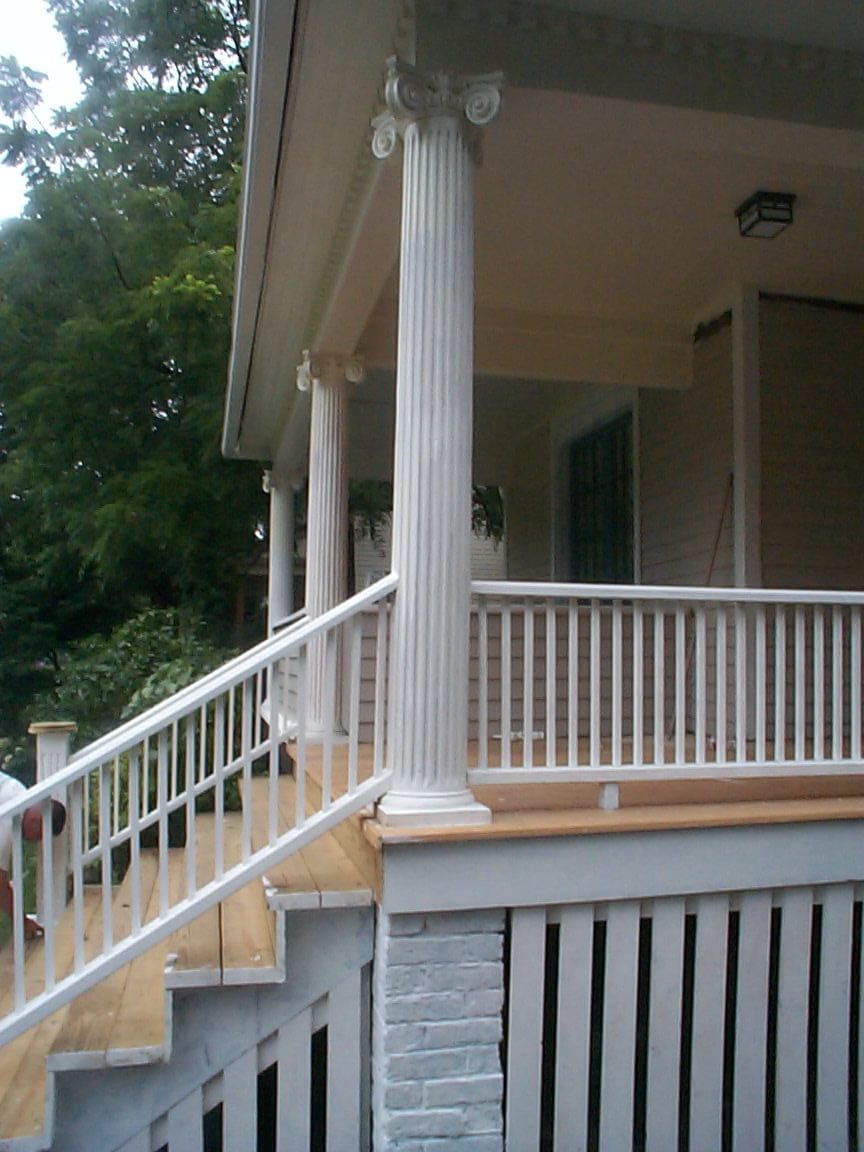
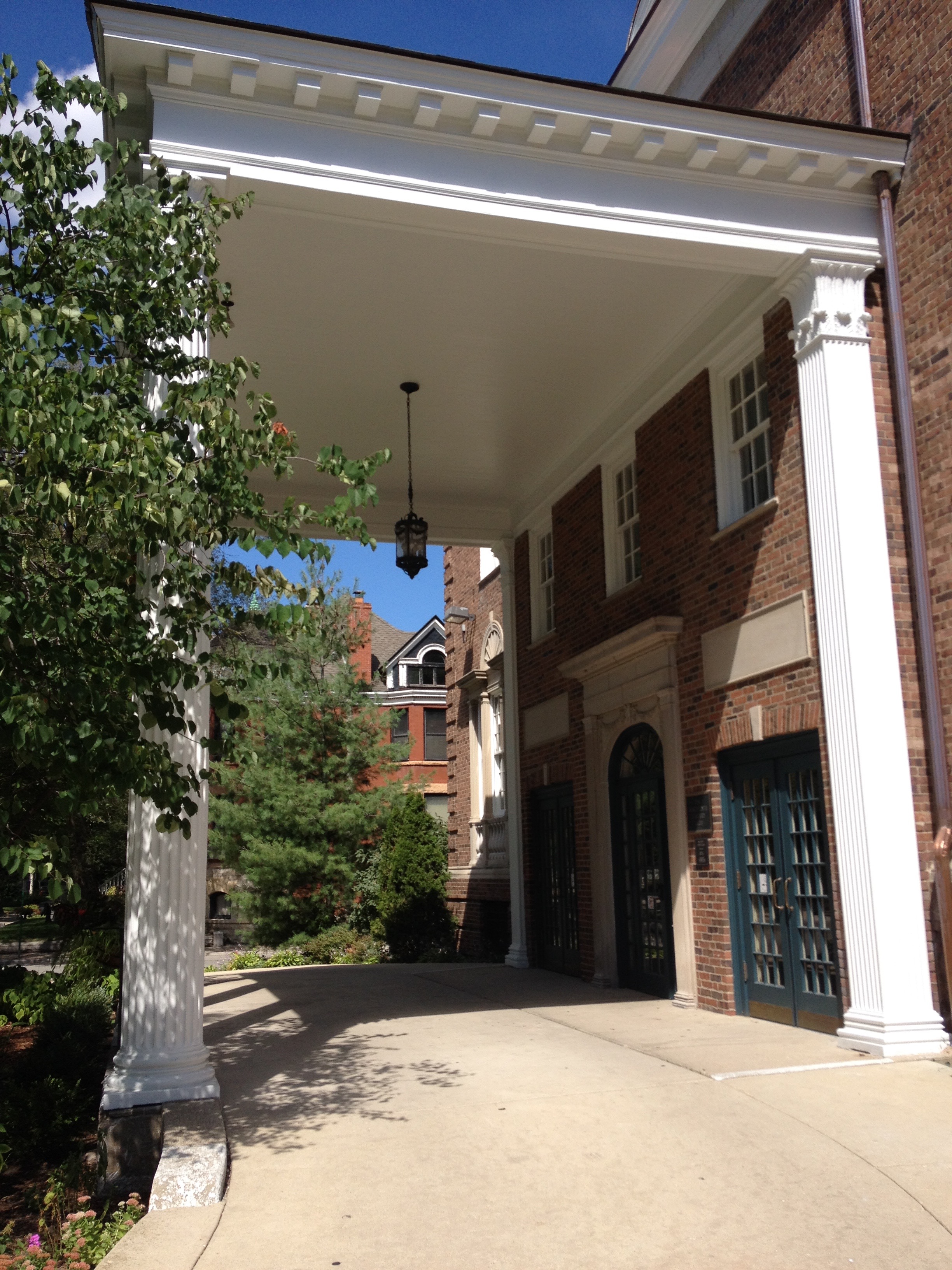
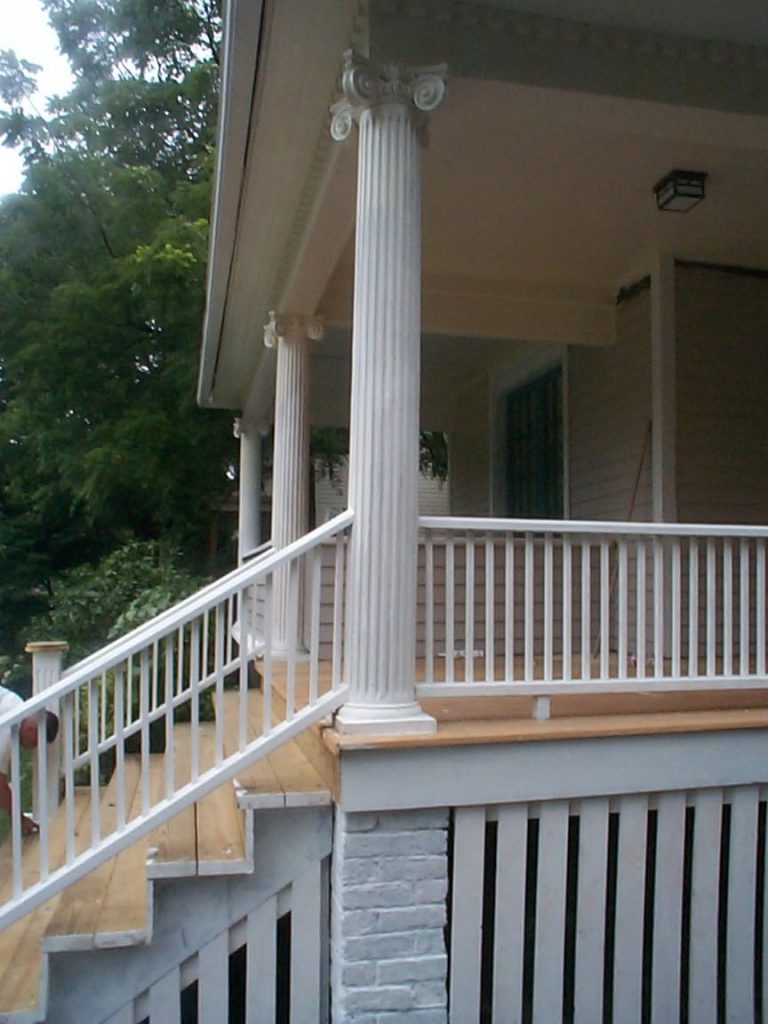
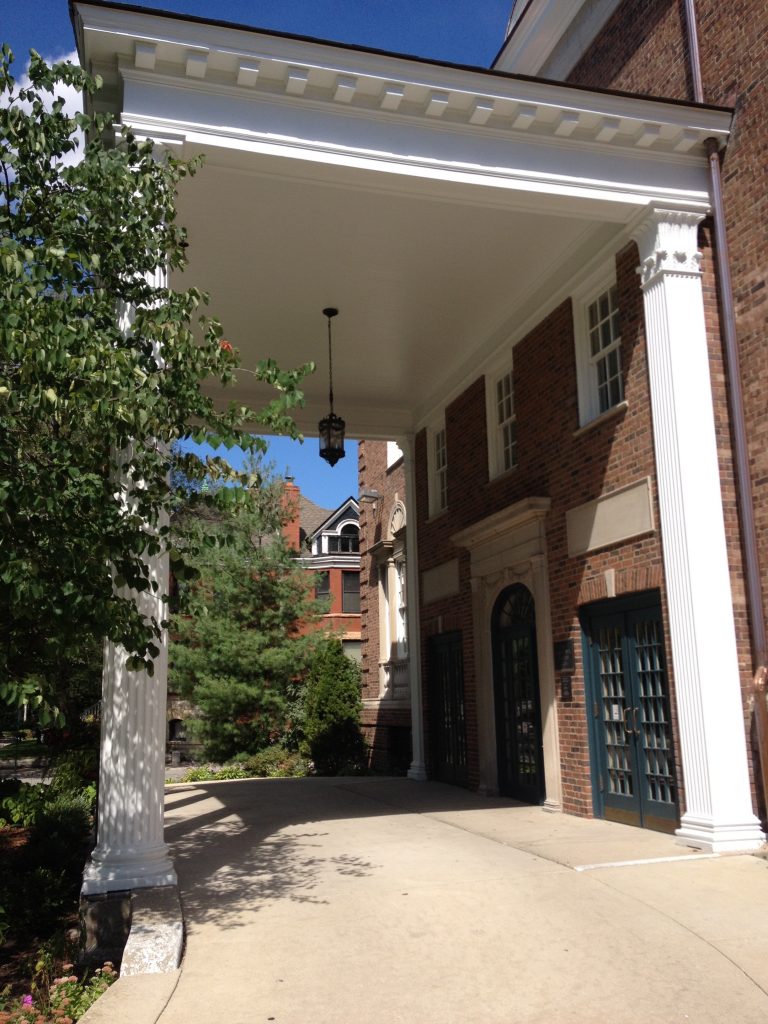
Columns are some of the most architecturally important — and most exposed — elements on any building. Originating in ancient Greece and Rome, they’re the defining feature of Georgian, Federal, Greek Revival, Renaissance Revival, Colonial, and Italianate architecture, and they appear on porches, porticos, verandas, entryways, and grand interiors throughout Chicago and the surrounding suburbs.
They’re also structural. A failing column isn’t just a cosmetic issue — it’s carrying real load, and when wood rot reaches the base or the joinery fails, the porch roof or pediment above goes with it. Properly restoring columns requires understanding both the architectural intent and the structural reality, an approach documented in the National Park Service’s preservation brief on historic wood porches.
Fortune Restoration has been restoring wood and composite columns across Chicagoland since 1979 — from grand Greek Revival porches in Oak Park and Hyde Park to Victorian wraparound verandas in Wicker Park to North Shore Colonial entries in Wilmette and Winnetka. Our master carpenters can repair what most contractors would simply replace.
Request a free column restoration estimate or call 847-647-2500.
The Anatomy of a Column (and Where Things Go Wrong)
Understanding the parts of a column helps you understand what’s failing and what repair will involve:
- Base — the bottom segment that sits on the porch floor or pedestal. This is the most common failure point because water collects where the column meets the deck.
- Plinth — the square block at the very bottom on some classical orders, between the column and the floor.
- Shaft — the main vertical body. May be fluted (Doric, Ionic, Corinthian) or plain. On wood columns, often built up from multiple staves or made from a single turned piece.
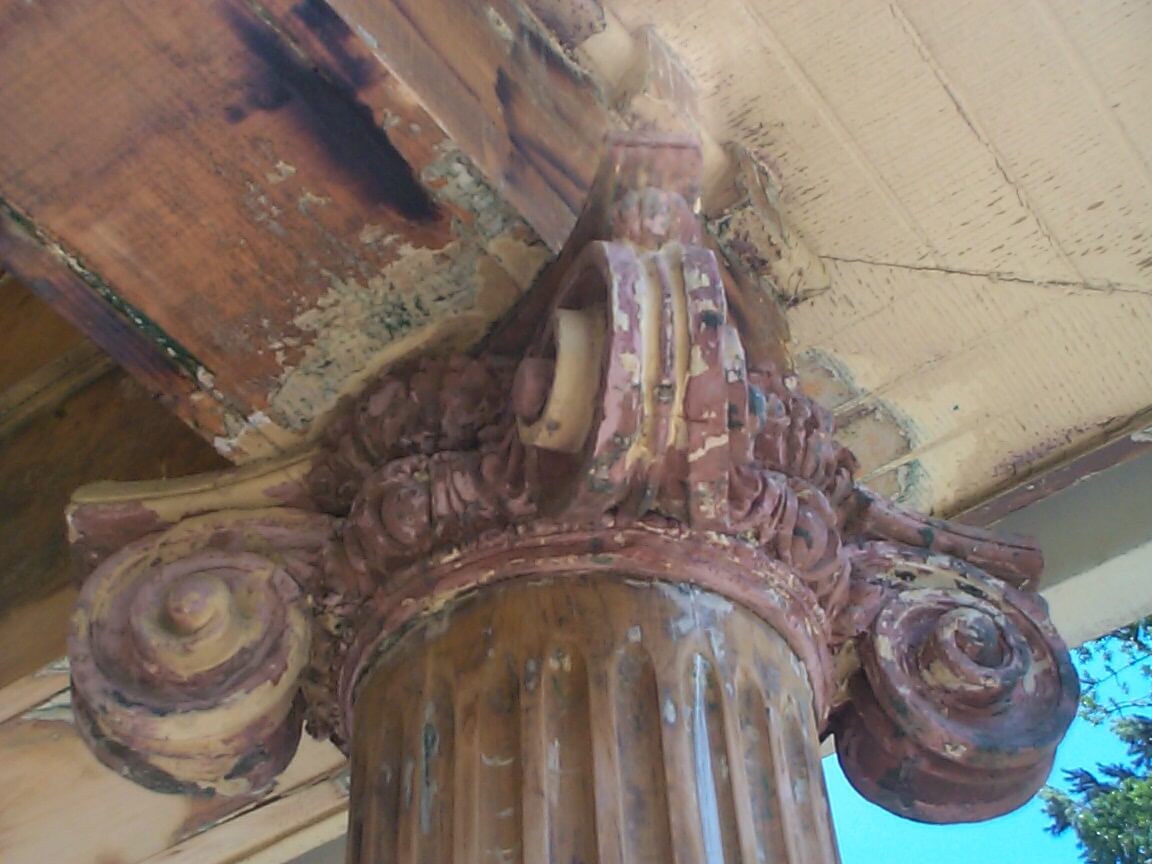
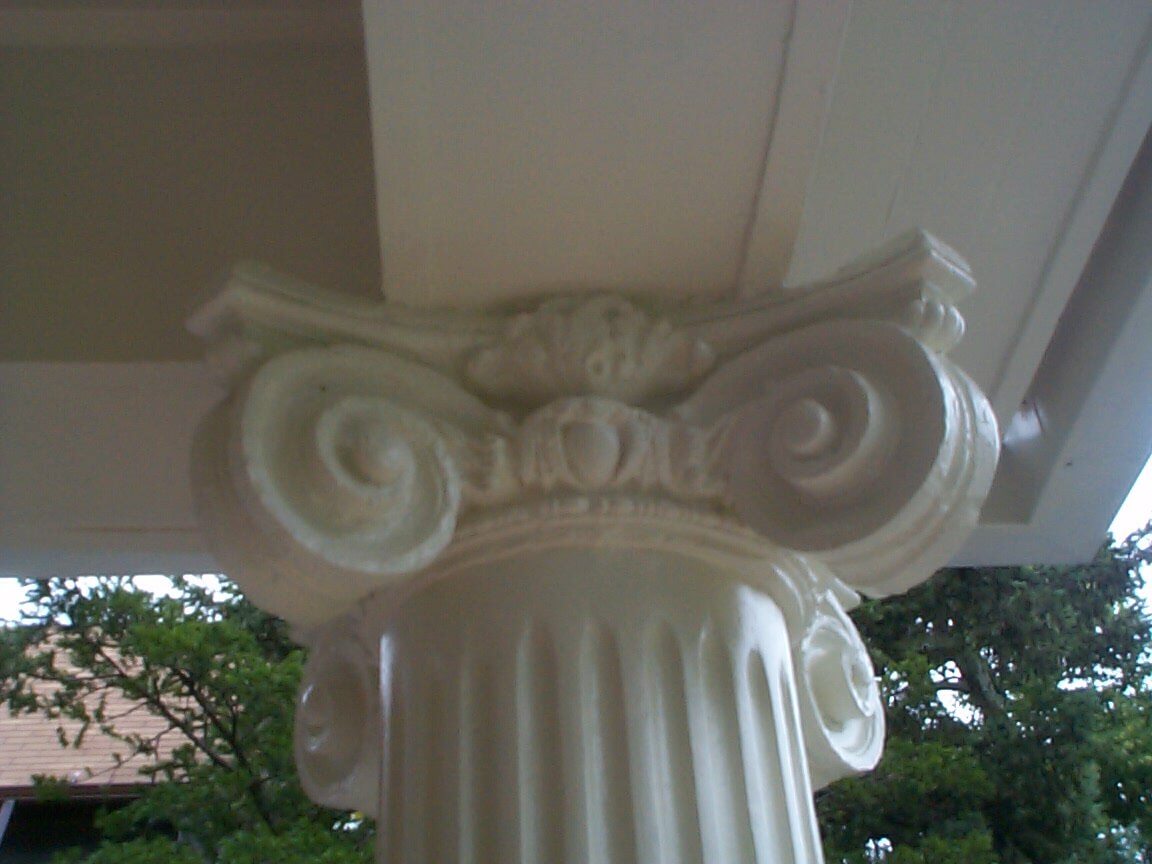
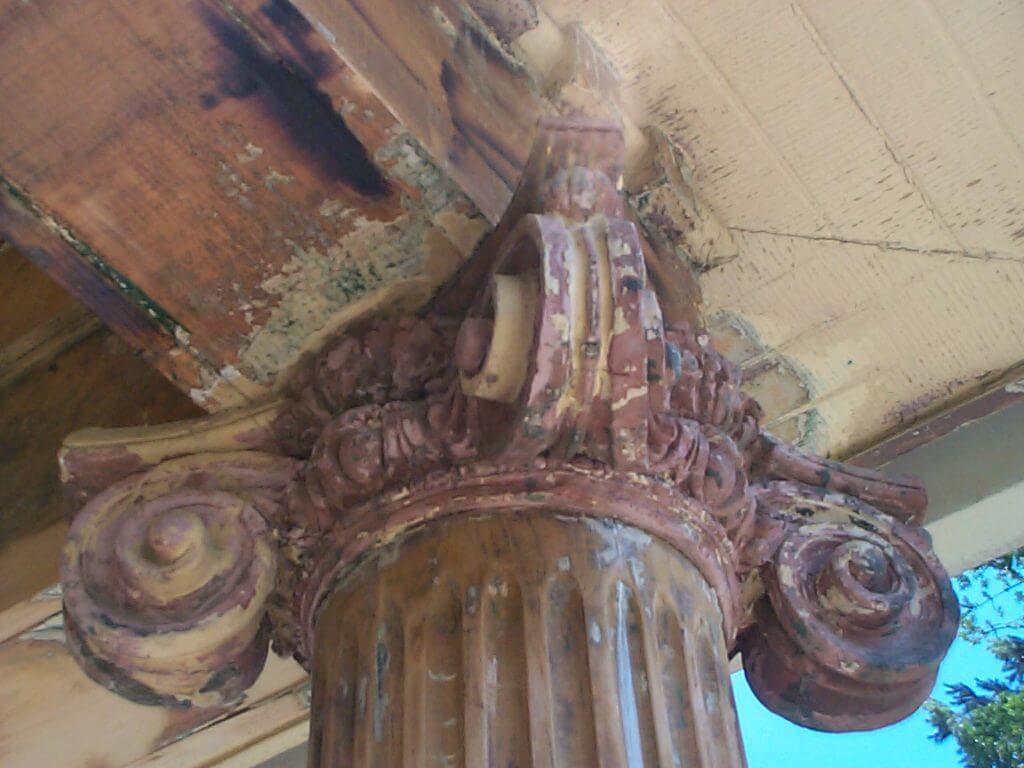
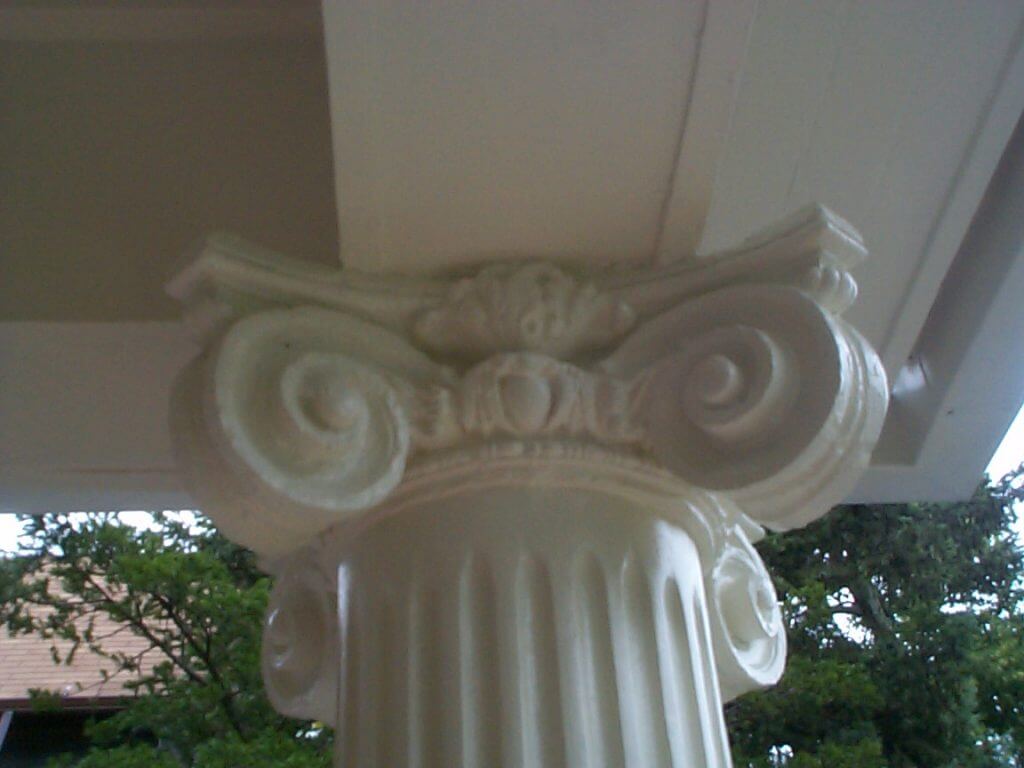
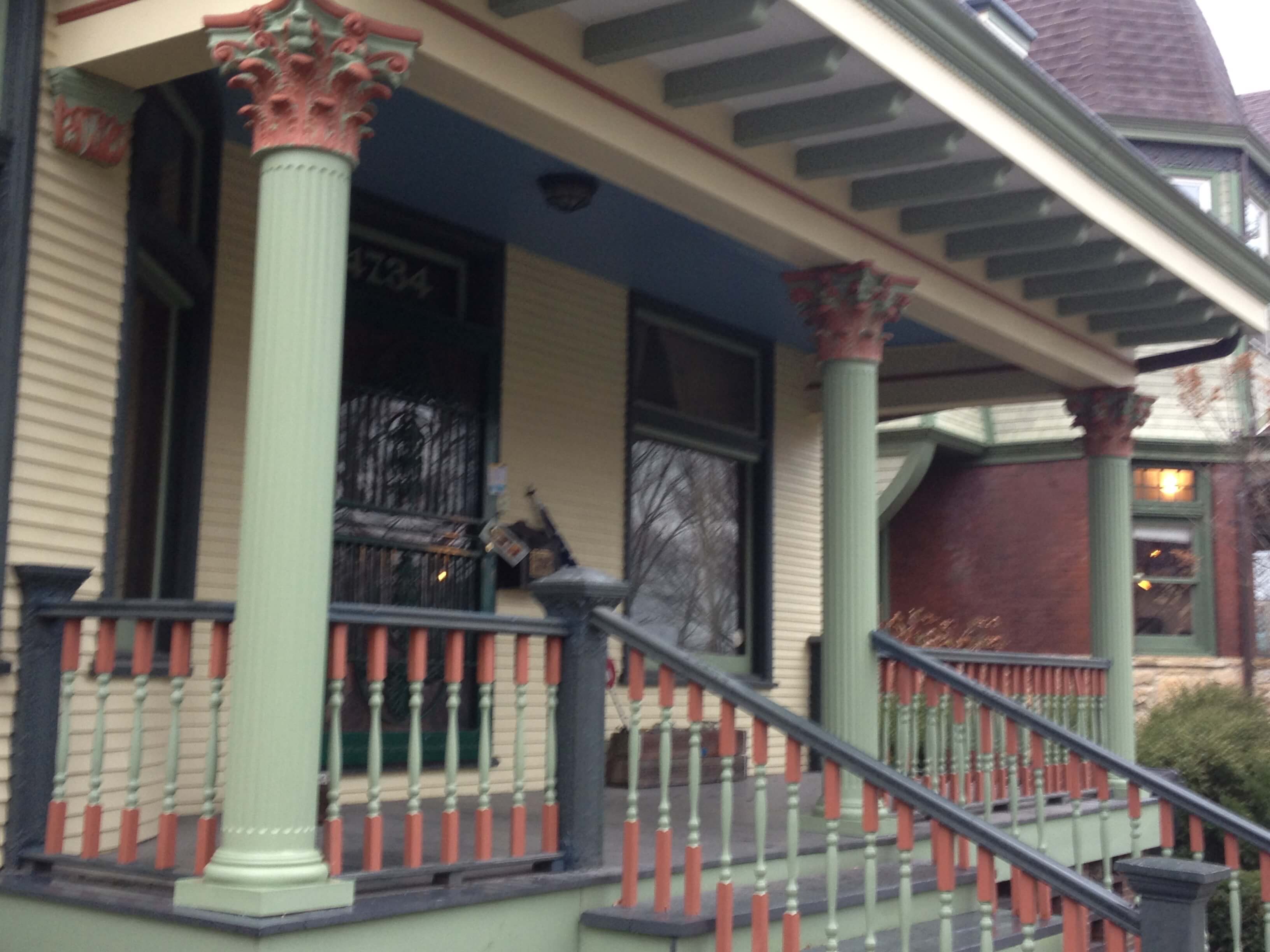
- Capital — the decorative top. From simple Doric and Tuscan caps to elaborate Ionic volutes and Corinthian acanthus leaves.
- Astragal, entasis, and other classical details — the subtle profile elements that distinguish a historically correct column from a builder-grade approximation.
The two parts that fail most often are the base and the capital — the joints where water enters and where the most exposed wood lives. Surprisingly, the shaft is usually the most salvageable part of an aging column.
Common Column Failure Modes in Chicago
Column failure on Chicago homes follows predictable patterns, virtually all of them moisture-driven. The NPS preservation guidance on exterior paint problems on historic woodwork documents how the failure modes compound — water enters, paint fails, more water enters, wood rots:
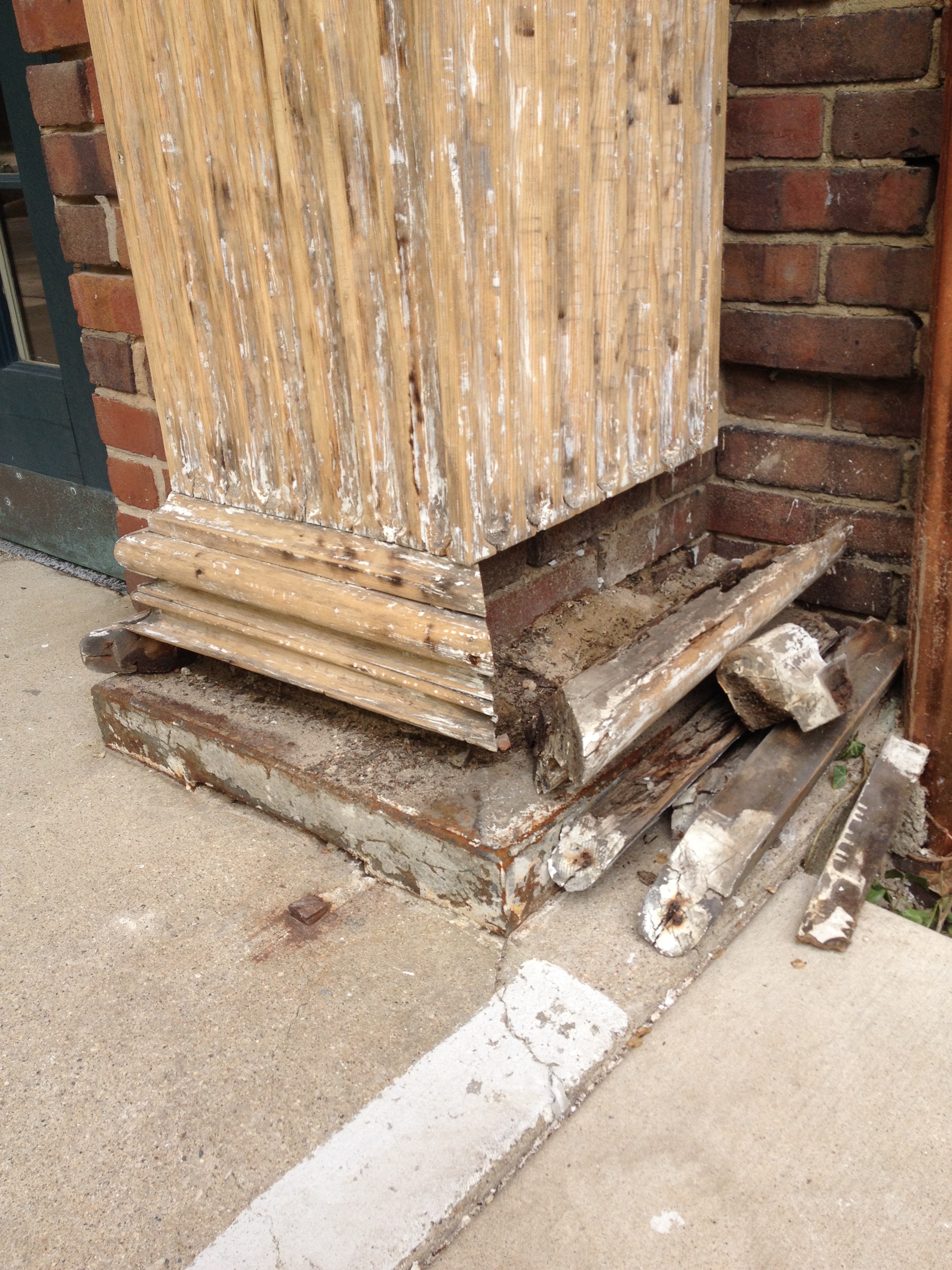
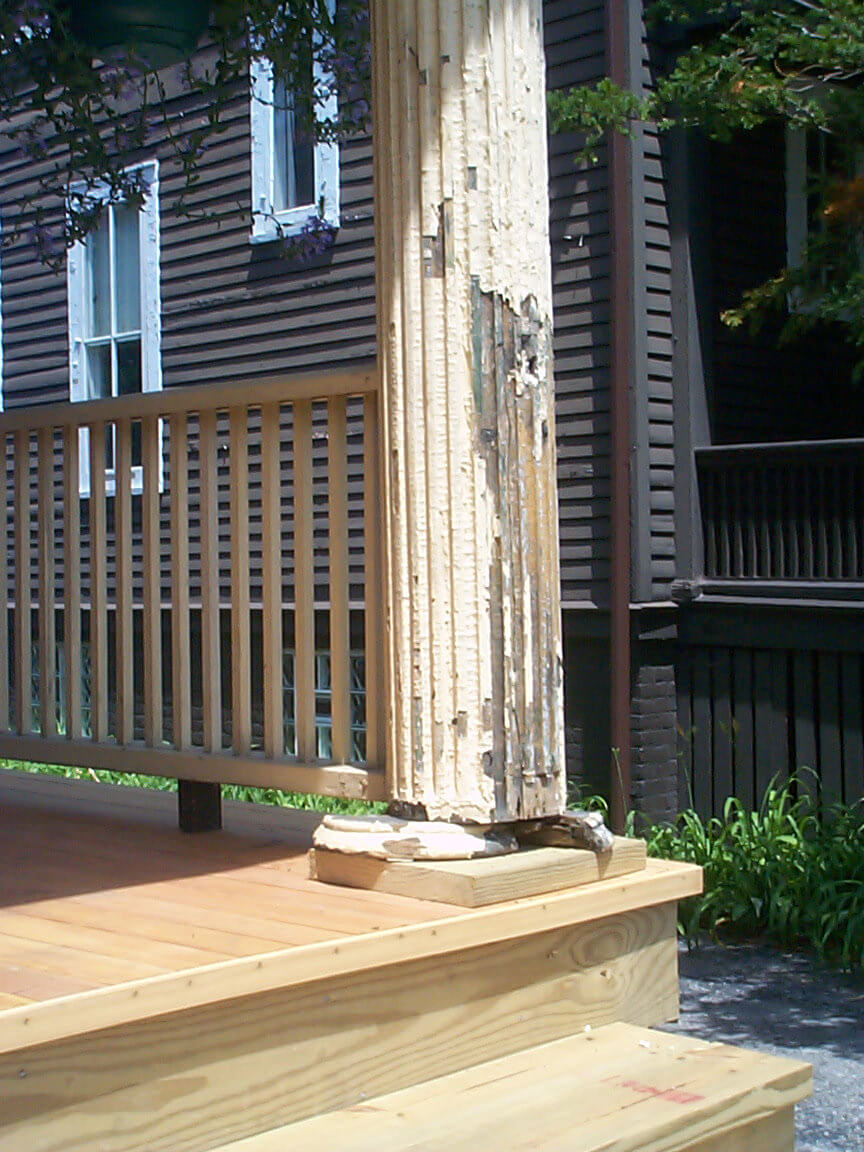
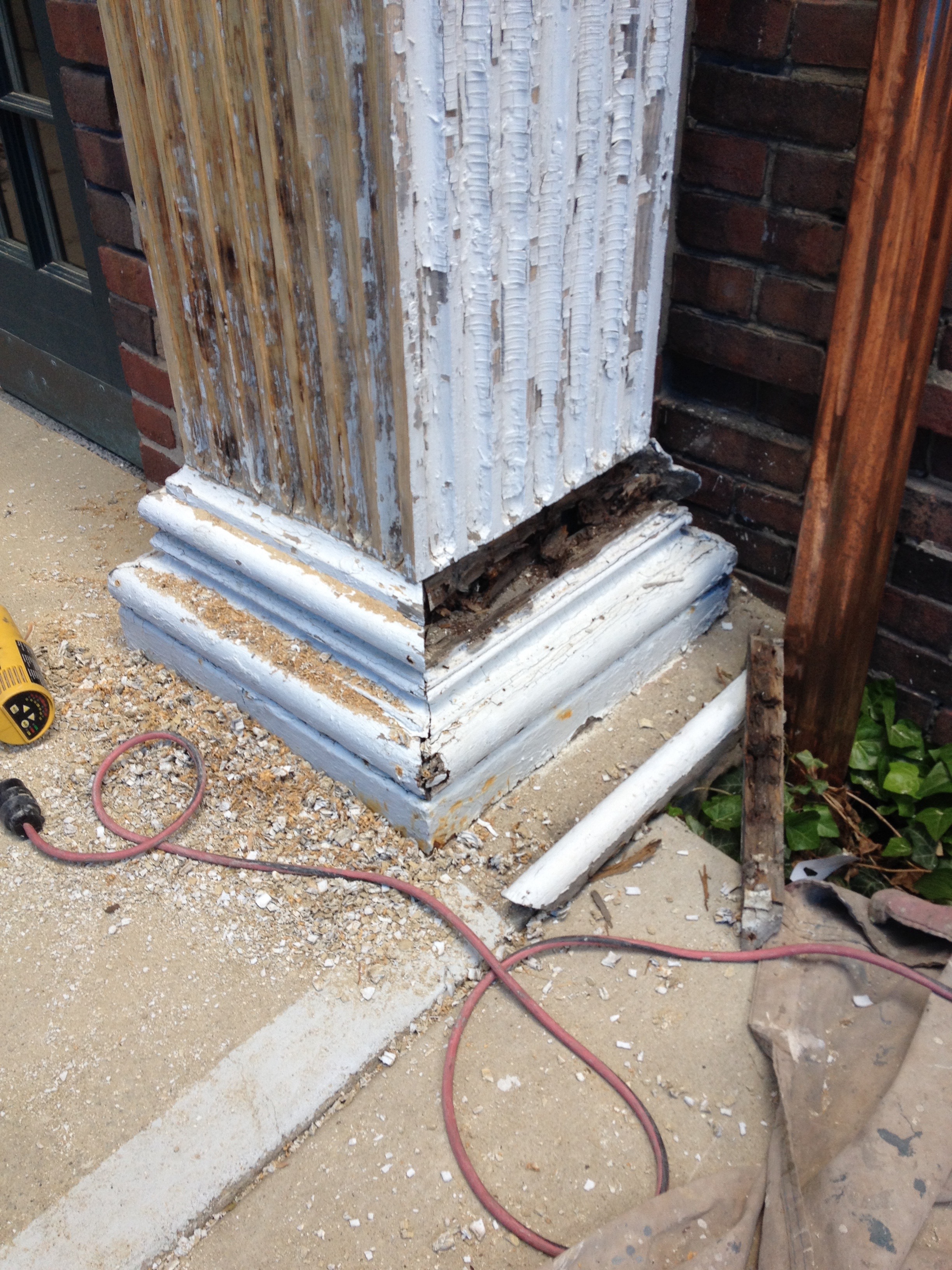
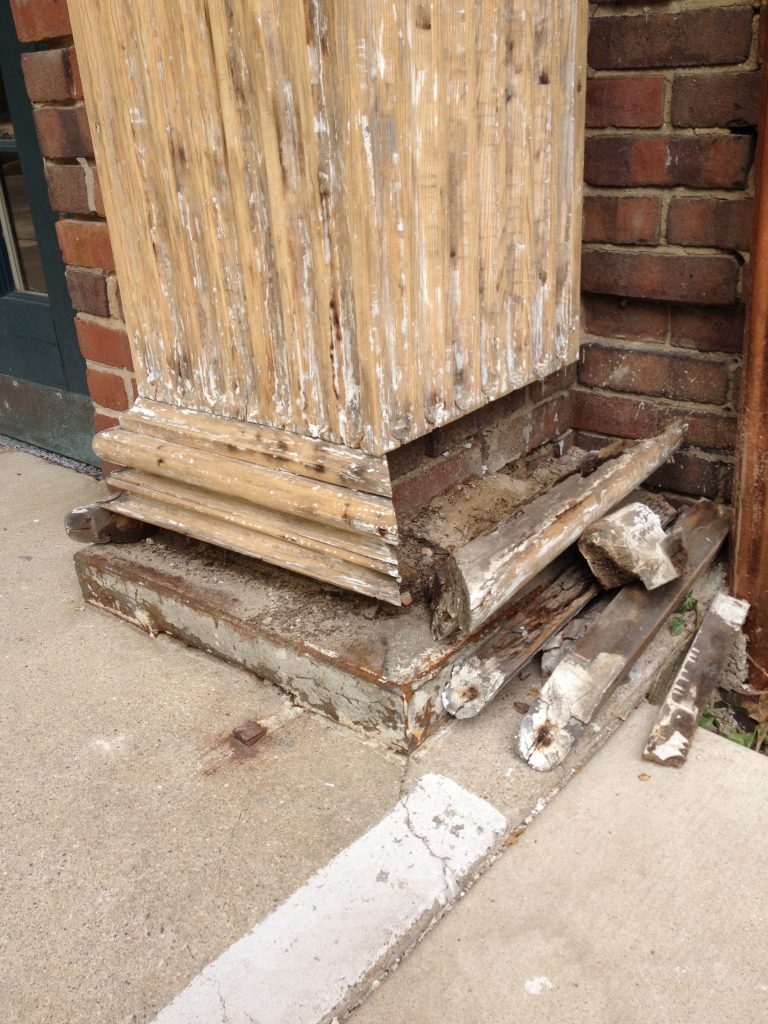
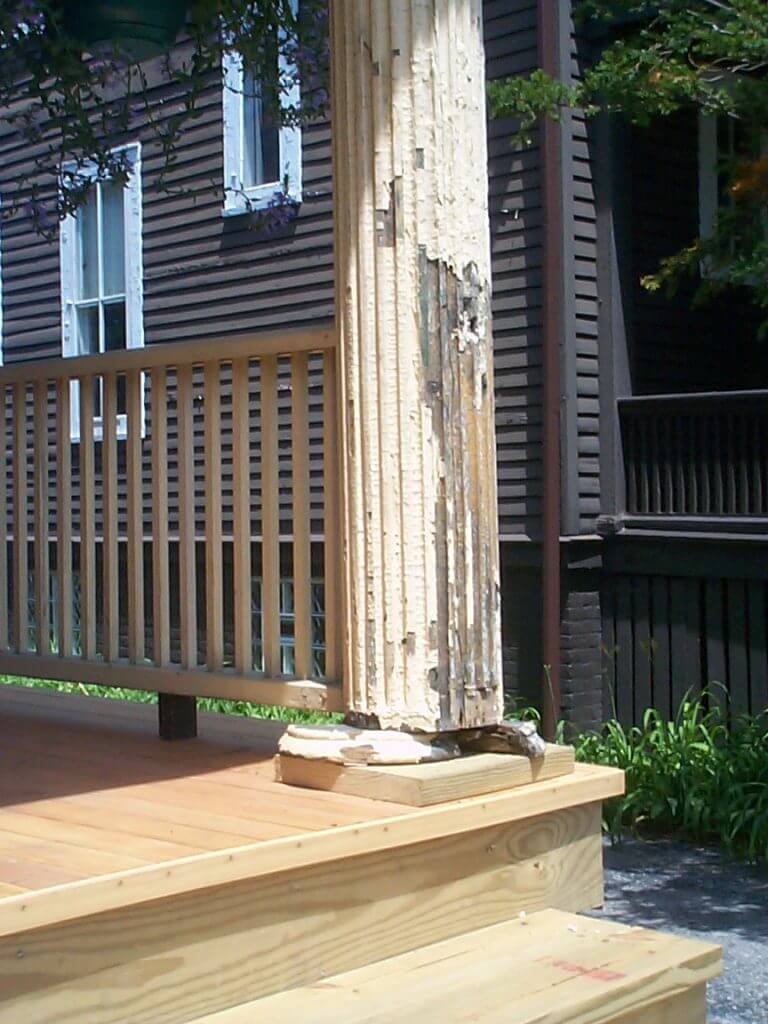
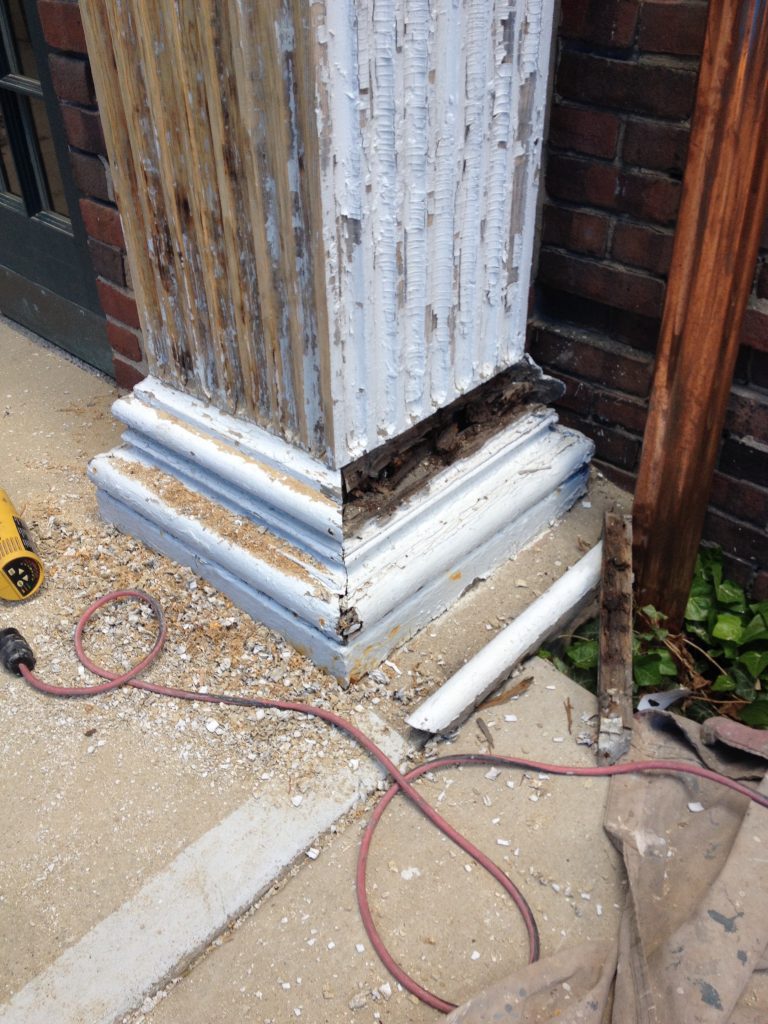
- Rot at the base — water sits where the column meets the floor and wicks up into end grain. The most common failure on Chicago porches.
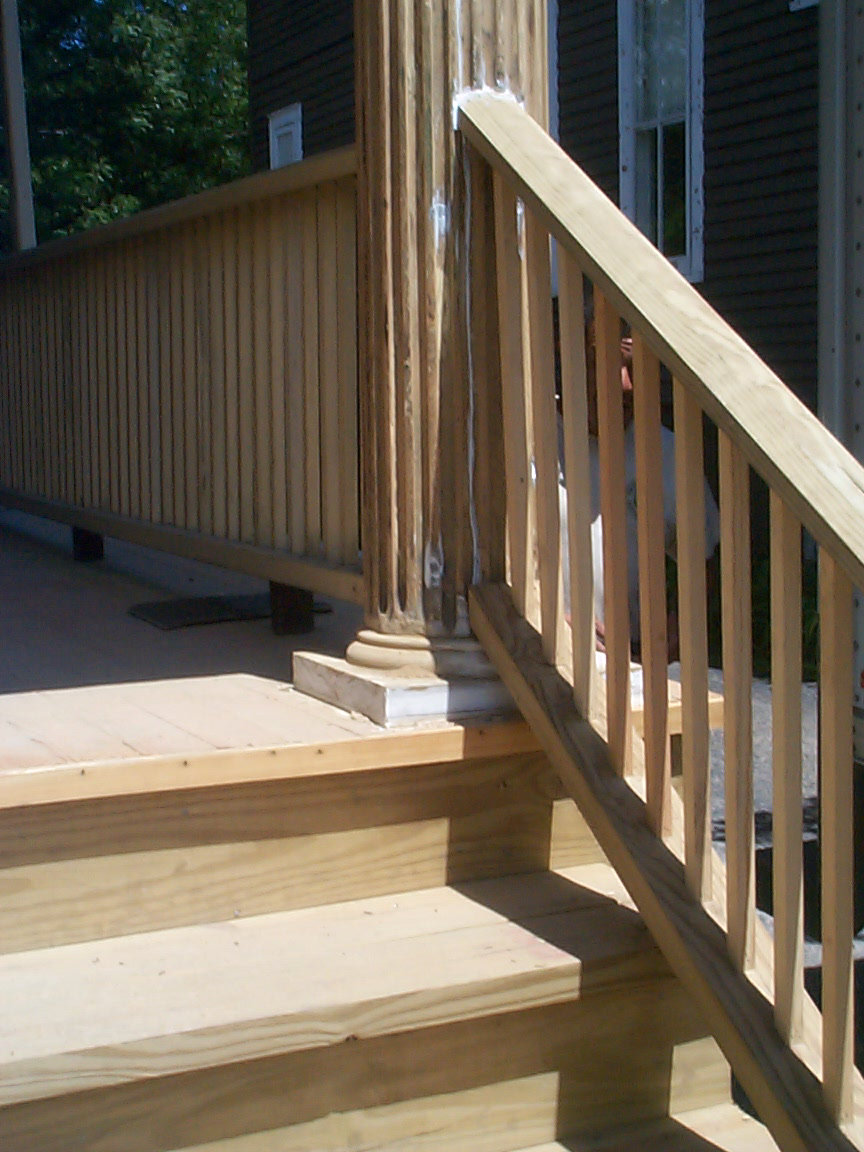
- Splits in the shaft — built-up wood columns can develop seam splits as the wood expands and contracts through Chicago’s freeze-thaw cycles.
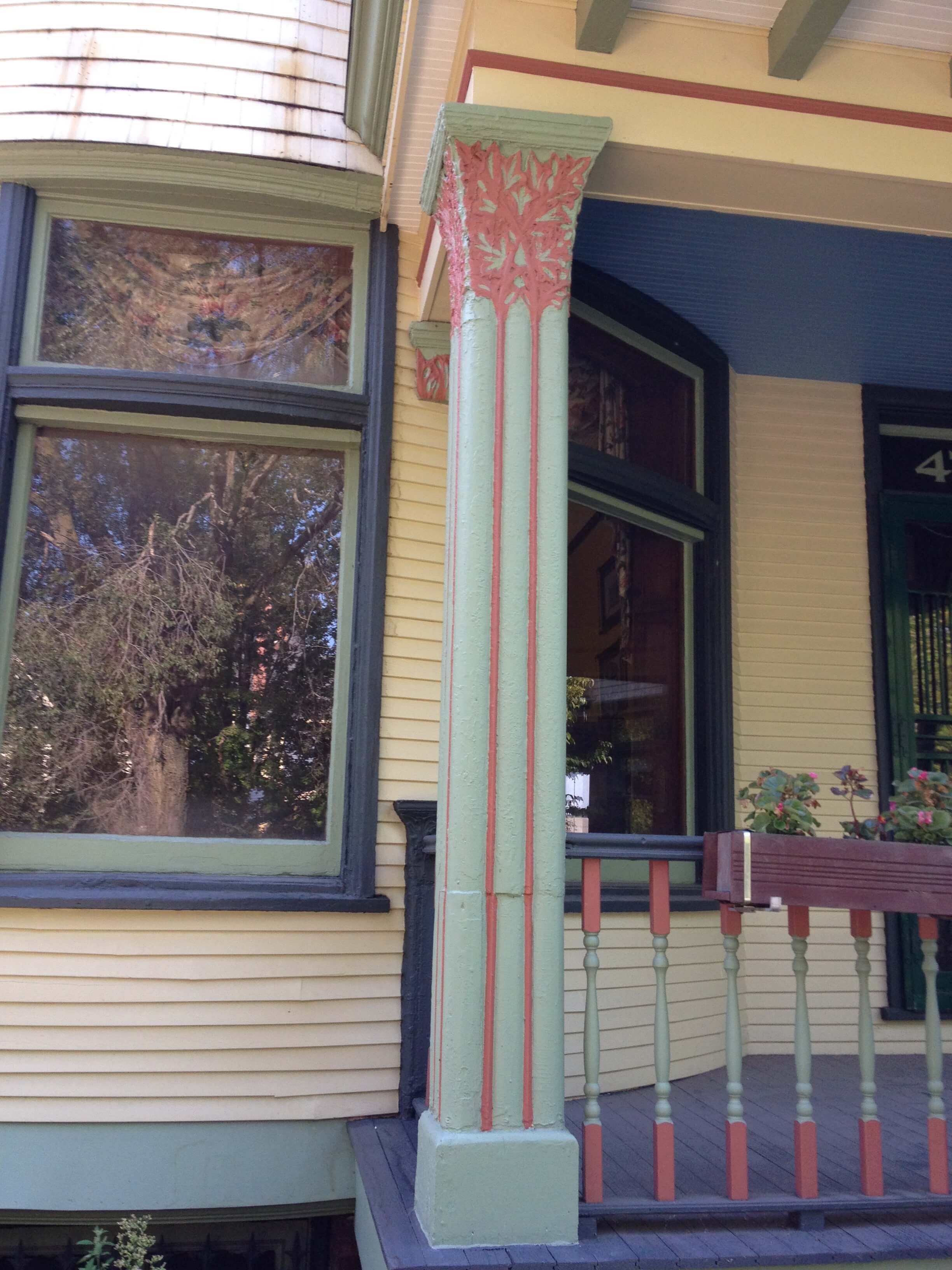
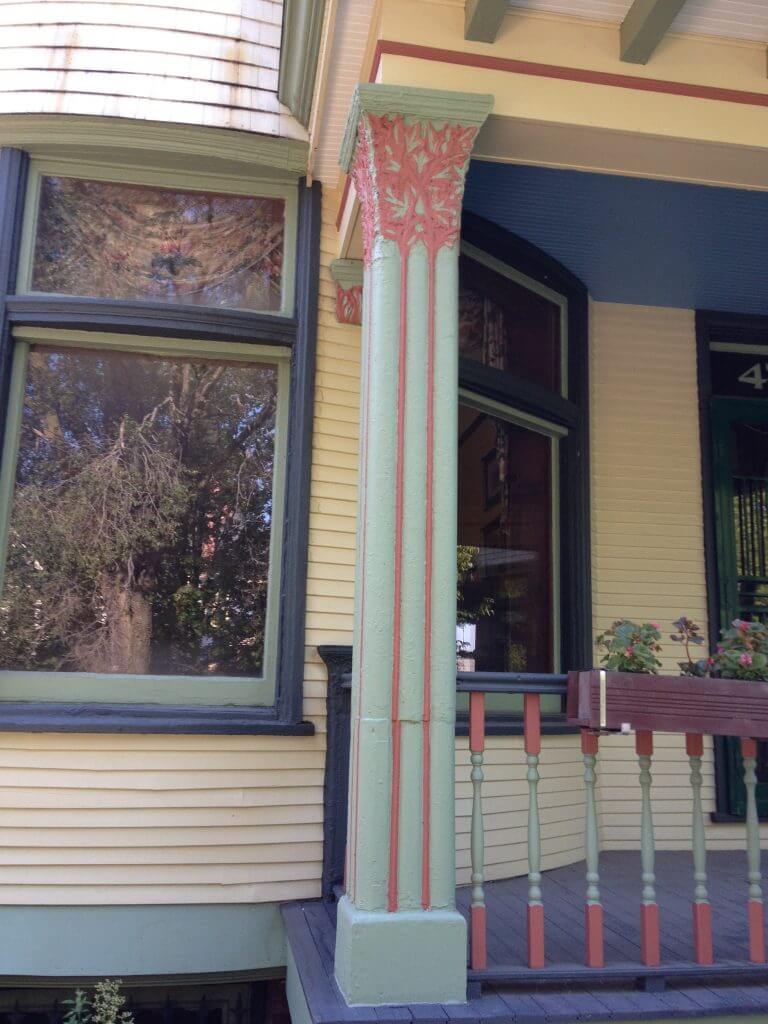
- Damaged or missing capitals — ornamental capitals on Victorian and Greek Revival columns are often hand-carved or cast, and once damaged are difficult to find replacements for off the shelf.
- Paint failure — columns are paint-intensive. Decades of buildup, peeling, and trapped moisture beneath failed paint film accelerate underlying wood damage.
- Insect damage — carpenter ants and termites can hollow out a column from the inside while it still looks paint-perfect from the outside.
- Settling and racking — when the porch structure itself shifts, columns can lean, lose their plumb, or transfer load unevenly.
Repair, Replace in Kind, or Replace With Composite?
The most important decision on any column project is which path to take — and the right answer depends on the property, the condition, and what the homeowner values.
Wood Column Repair (Preferred Where Possible)
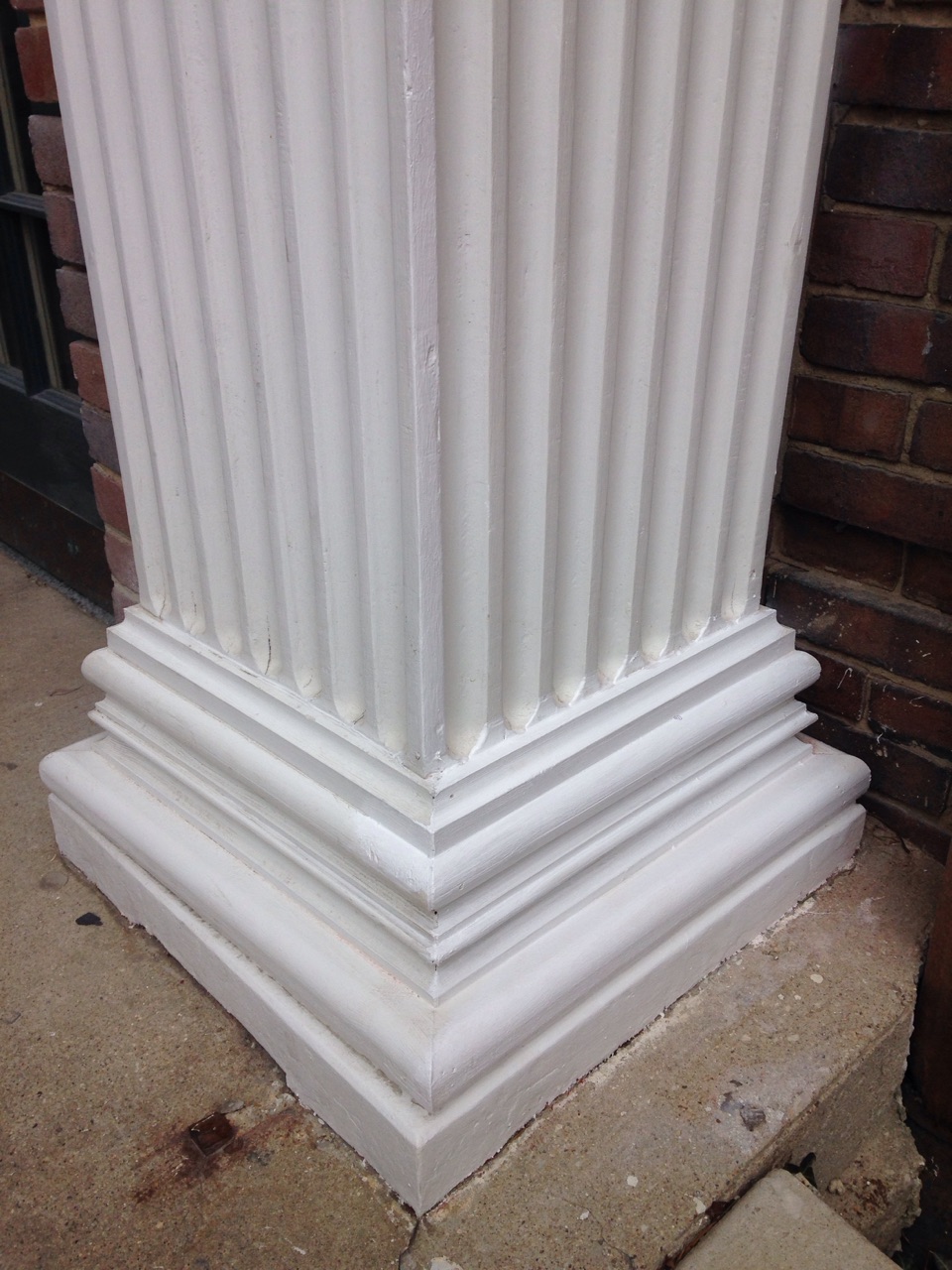
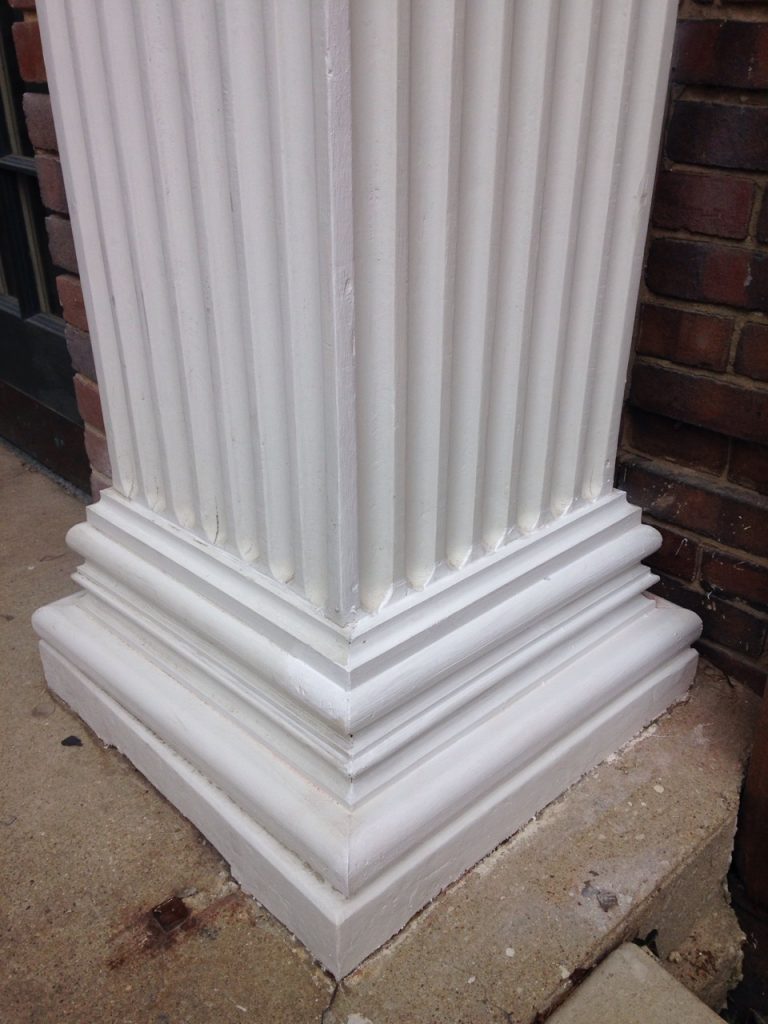
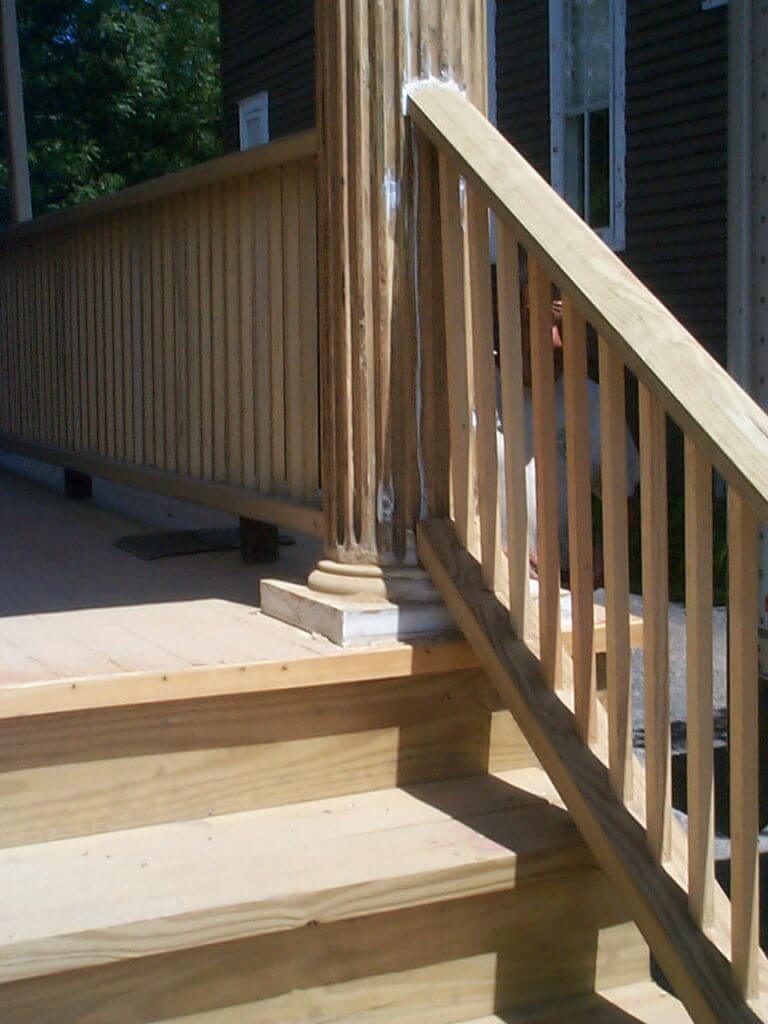
For historically significant homes and for owners who value the natural character of original wood, targeted repair is almost always the right answer when condition allows. We dutch in new wood where rot has been removed, consolidate softened-but-salvageable wood with epoxy systems, and rebuild damaged areas with matched species and grain orientation. The column retains its original character, its irreplaceable hand-carved details, and the patina that synthetic replacements never quite capture. On any pre-1978 column, this work follows EPA Lead-Safe (RRP) protocols as standard practice.
Wood Column Replacement (In-Kind)
When a column is too far gone to repair — structural rot through the shaft, missing capital with no template to match, or insect damage that has compromised the entire piece — replacement in matching wood is the right call on historic and high-end properties. Our custom millwork capabilities let us replicate existing columns in matching species, dimensions, fluting pattern, and capital style.
Composite Replacement (Fiberglass, PVC, Cellular Composite)
Modern composite columns — particularly load-bearing fiberglass-reinforced units — can be appropriate replacements when historic authenticity isn’t the priority and long-term maintenance reduction is. Composites won’t rot, hold paint indefinitely, and are dimensionally stable. The tradeoffs: they don’t age the way wood does, the profiles available are limited, and once damaged they’re harder to repair than wood.
For landmark properties, we typically recommend wood repair or in-kind replacement — composite alternatives often aren’t permitted under landmark commission review. For modest porches where the column is functional rather than featured, composite can be a reasonable economic choice.
The Fortune Restoration Process
- Structural assessment. Before any cosmetic decision, we evaluate whether the column is still carrying its load safely and whether the porch structure above it requires temporary shoring during the work.
- Diagnosis. Probe for rot, inspect for insect damage, check shaft seams, evaluate capital and base condition, and document what’s actually failing versus what only looks bad.
- Path recommendation. Repair, in-kind replacement, or composite replacement — with the tradeoffs explained clearly. Cost, longevity, historical compatibility, and maintenance expectations all on the table.
- Temporary support. If the column is removed for shop work or full replacement, the load above is supported with appropriate shoring during the work.
- Restoration or replacement. Repair work happens in place where possible. Custom replacements are fabricated to match through our custom millwork shop.
- Substrate prep, priming, and painting. Lead-safe practices on all pre-1978 properties, with methods aligned to the NPS preservation guidance on appropriate methods for reducing lead-paint hazards in historic housing. Back-priming where exposed. Finish coats applied as part of the project, coordinated with broader exterior painting work where applicable.
- Walkthrough. We’re not done until you’ve inspected the work and signed off.
Materials for Chicago’s Climate
- Western Red Cedar — the standard for new wood column components. Naturally rot-resistant, dimensionally stable through freeze-thaw cycles, holds paint exceptionally well.
- Mahogany — premium option for high-end and landmark properties. Excellent stability and finish quality.
- Clear vertical-grain Douglas Fir — traditional choice for built-up column shafts; more stable than flat-grain stock.
- Quarter-sawn White Oak — historically used on premium columns; appropriate for landmark restorations.
- Epoxy wood consolidants and fillers — used to stabilize softened-but-salvageable wood and rebuild missing material; allow for retention of original components that would otherwise have to be replaced.
- Load-bearing fiberglass composite — used selectively for full replacement where appropriate, particularly on production porches where historic authenticity isn’t the priority.
Column Restoration on Notable Properties
Column restoration has been central to our work on many of Chicagoland’s significant historic properties, including:
- Frank Lloyd Wright homes in Oak Park
- Patterson-McCormick Mansion in Chicago’s Gold Coast
- Noble-Seymour-Crippen House in Norwood Park
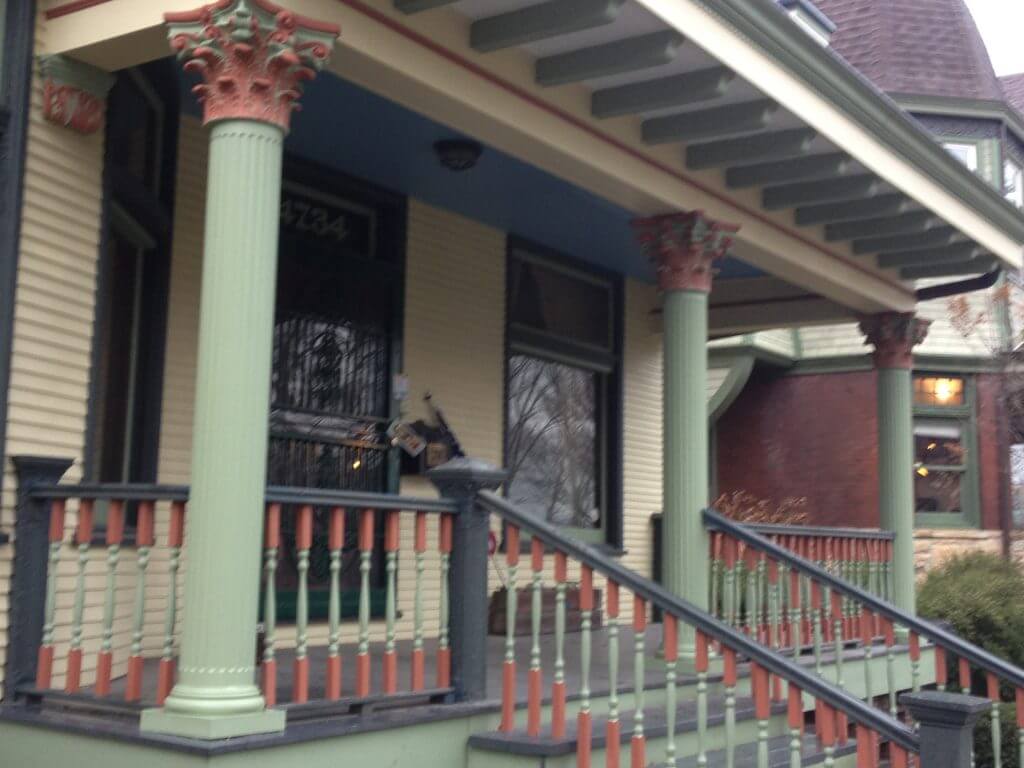
- Victorian Painted Ladies across Chicago, Oak Park, and the North Shore
- Chicago-area churches — portico, narthex, and entry columns
Coordinating Column Work With Other Trades
Column restoration rarely happens in isolation. Most projects coordinate with:
- Porch and deck restoration — columns and the porch they support typically need work together; the porch floor that holds water at the column base is often the underlying cause of column rot
- Custom millwork — capital replication, fluted shaft fabrication, and decorative column elements
- Exterior painting — new column finishes integrate with the home’s color scheme and broader exterior paint cycle
- Wood stripping and refinishing — for historic columns with thick paint buildup, stripping back to bare wood is often the right starting point
- Siding and trim repair — the entablature, frieze board, and trim above columns frequently need work as part of a comprehensive porch restoration
- Historic landmark coordination — landmark commission review where the property is designated
Service Area
Fortune Restoration provides column restoration throughout the Chicagoland area:
Chicago (Hyde Park, Lincoln Park, Wicker Park, Beverly, Lincoln Square, Old Irving Park, Gold Coast, Rogers Park) · Evanston · Wilmette · Winnetka · Kenilworth · Glencoe · Highland Park · Lake Forest · Oak Park · River Forest · Hinsdale · Lincolnwood · Skokie · Niles · Park Ridge · Glenview · Northbrook · Deerfield · Wheaton · Naperville
Why Property Owners Choose Fortune Restoration
- 47+ years of Chicagoland restoration experience
- Master carpenters who can repair columns most contractors would simply replace
- In-house custom millwork for replicating historic profiles, fluted shafts, and ornamental capitals
- Multi-trade integration — column work coordinated with porch restoration, painting, and siding under a single contractor
- EPA Lead-Safe (RRP) certified for work on pre-1978 properties — lead paint on historic columns is extremely common
- Landmark-property experience — trusted by stewards of Chicago’s most significant historic homes
- Licensed, bonded, and insured in the State of Illinois
Frequently Asked Questions
Can a rotted wood column really be repaired, or does it have to be replaced?
In most cases, repair is the right call — especially on historic homes. Rot at the base, splits in the shaft, and damaged decorative elements are all repairable using techniques like dutch-in patching, epoxy consolidation, and matched-wood reconstruction. Full replacement is only necessary when structural integrity is compromised through the shaft, when key components like the capital are missing entirely, or when insect damage has hollowed out the column from inside.
Should I replace my wood columns with composite or fiberglass?
It depends on the property. On a historic, landmark, or architecturally significant home, we recommend repairing original wood or replacing in kind with new wood — composite alternatives often aren’t permitted under landmark review, and they never age the way wood does. On modest production porches where columns are functional rather than featured, load-bearing fiberglass composite can be a reasonable choice for maintenance reduction.
What causes wood columns to rot in the first place?
Almost always water sitting where the column meets the porch floor. End-grain wood at the base wicks moisture up into the column, and once trapped behind paint, that moisture rots the wood from the inside out. Failed flashing, poor porch drainage, and paint buildup that traps moisture all contribute. Fixing a rotted column without addressing the underlying water management means the new work fails just like the old one did.
How long does column restoration take?
It varies with scope. A targeted repair on one or two columns — dutch-in patching a rotted base, repainting — can be a 3 to 5-day project. Full custom replacement of multiple matching columns, requiring shop fabrication, typically runs 4 to 8 weeks from initial measurement to installed. Larger landmark restorations involving capital replication or unusual classical orders can run longer. We provide specific timelines with every estimate.
Can you match an existing column on the rest of the porch?
Yes — this is one of the most common requests. Our custom millwork shop can replicate an existing column in matching species, diameter, fluting pattern, capital style, and base profile. The replacement is then painted to match adjacent original columns so the new piece integrates seamlessly.
Are the columns on my house structural or just decorative?
On almost every residential porch, columns are structural — they’re actually holding up the porch roof, pediment, or second-floor balcony above. Even ornate Victorian columns that look purely decorative are usually carrying real load. This is why we always begin column work with a structural assessment and use temporary shoring when columns need to be removed or fully replaced.
Do you handle the painting after the column restoration?
Yes. Our column restoration service includes the full sequence — structural and substrate work, custom milling where needed, priming, and finish painting. Most projects coordinate the columns with broader exterior painting work or a porch and deck restoration so the finished result is unified.
Ready to restore the columns on your Chicago-area home?
Call 847-647-2500 · Email sales@fortunerestoration.net · Request a Free Estimate